Online Arabic Classes: How They Work, What They Cost and How to Choose
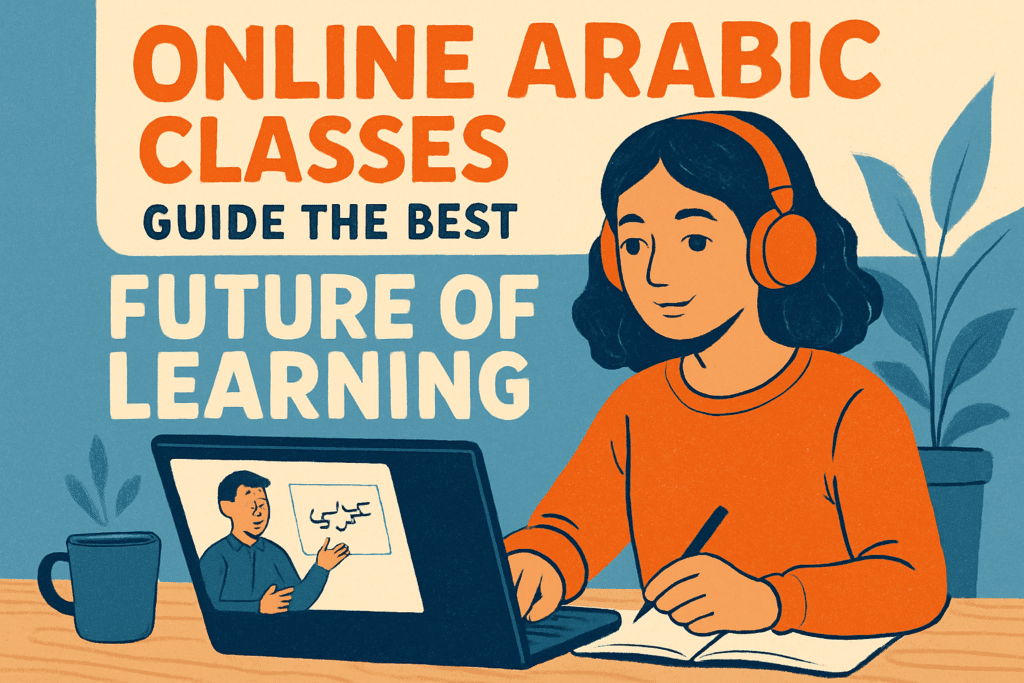
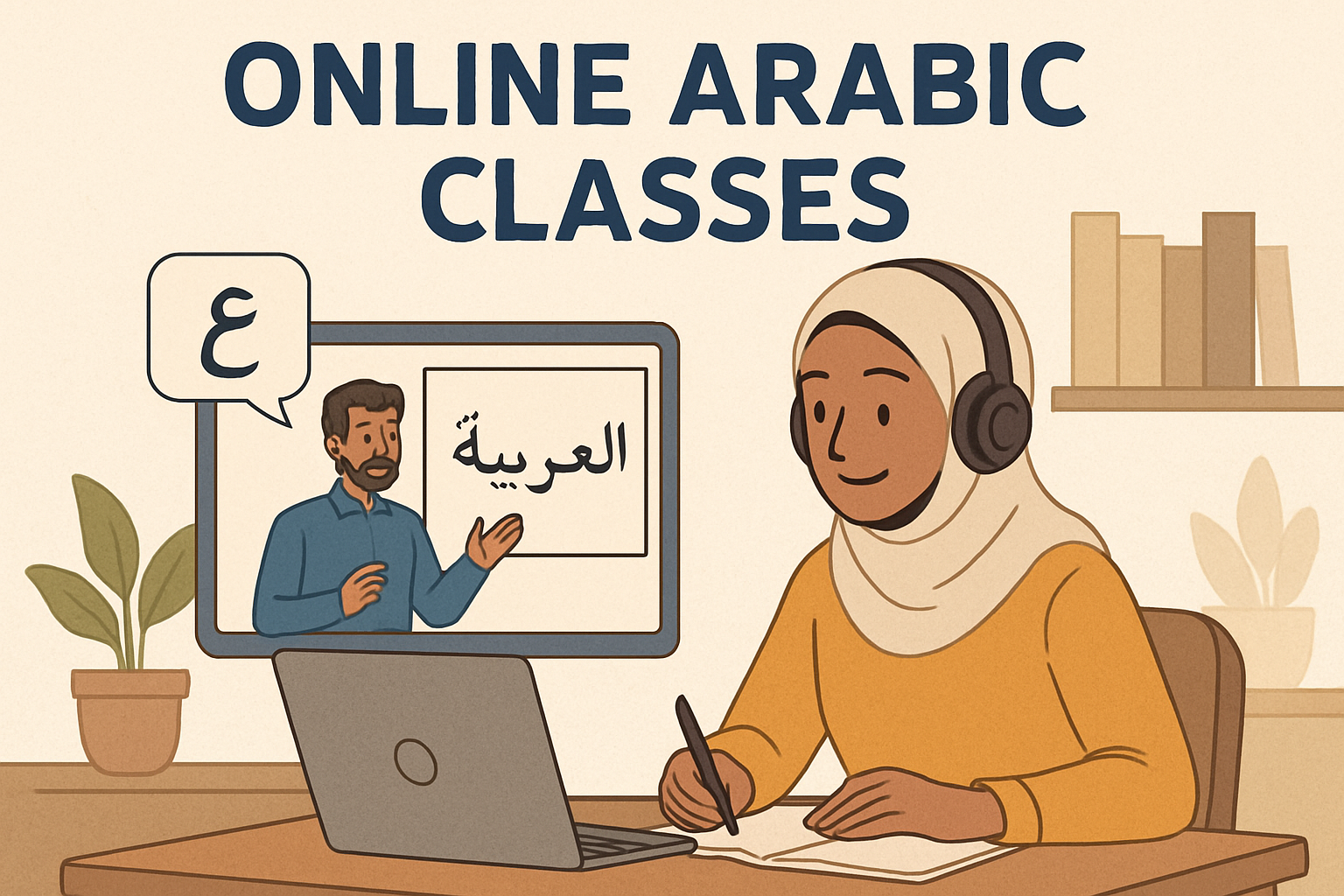
Online Arabic classes are live lessons with a teacher over video, usually one-to-one or in a small group. You need a computer or tablet, a microphone and a stable connection. Prices depend on lesson length, lessons per week and how many months you book. Choose a teacher who speaks in your language at first, and always try a trial lesson.
| Question | Short answer |
|---|---|
| What do I need? | Computer or tablet, microphone, internet, notebook |
| One-to-one or group? | One-to-one gives more feedback, groups cost less |
| Live or recorded? | Live for speaking and pronunciation, recorded for review |
| How is price set? | Lesson length, lessons per week, number of months |
| Can I try first? | Look for a free trial lesson |
What happens in an online Arabic class
You join a video call at a time you agreed with your teacher. Most lessons look like this:
- A quick check-in and a review of last time.
- New material: letters, words, a grammar point or a text.
- Practice, where you speak, read and write.
- A short wrap-up and a note on what to practise before the next lesson.
Honestly, the format matters less than the teacher. A good teacher on a basic video call beats a fancy platform with a teacher who just talks at you.
What you need to get started
- A computer or tablet. A phone works, but a bigger screen is easier for reading Arabic script.
- A headset with a microphone. Clear sound matters more than a high-resolution camera.
- A stable internet connection. Test it before your first lesson.
- A notebook and pen. Writing by hand helps with the letters.
- A quiet space. Even a corner of a room is enough.
Teachers use common video tools like Zoom, Google Meet or Microsoft Teams. One thing to know: Skype is no longer an option. Microsoft retired Skype on May 5, 2025 and moved users to Teams, so older articles that mention “Arabic lessons over Skype” are out of date.
One-to-one, group or self-paced?
| Format | Pros | Cons |
|---|---|---|
| One-to-one live | Your pace, constant feedback, flexible schedule | Costs more per hour |
| Small group live | Cheaper, you hear other learners | Less speaking time, set pace |
| Recorded course | Flexible, low cost | No feedback on pronunciation |
If you can, pick one-to-one for the first months. Pronunciation and reading habits form early, and a teacher can fix them while they’re still easy to fix. You can add group classes or recorded lessons later for extra practice.
Which Arabic will you learn?
Before you pay for anything, decide what kind of Arabic you need.
- Modern Standard Arabic (MSA): reading, news, formal writing. See our Modern Standard Arabic course.
- A spoken dialect, like Egyptian: conversation with people. See our colloquial Egyptian Arabic course.
- Quranic reading and Tajweed: see our Quran online classes.
Not sure? Take the free Arabic placement test, then talk it through with a teacher.
How online Arabic classes are priced
Prices differ a lot, so compare how they’re built, not just the headline number. At our academy, the price depends on three things:
- Lesson length (for example 30 or 60 minutes),
- Lessons per week,
- How many months you book. Longer bookings get a discount: 10% for 3 months and 20% for 6 months.
You can see the current numbers on our pricing page. When you compare any provider, ask for the total monthly cost in your currency, whether there are registration fees, and what happens if you cancel.
I’ll be straight with you: the cheapest class isn’t cheap if you quit after a month. Pick the one you’ll actually attend.
Seven questions to ask before you join
- Is the teacher a native speaker, and can they explain in my language?
- Is the lesson live and one-to-one, or a recording?
- Which type of Arabic will I learn first?
- Can I take a trial lesson?
- How are lessons scheduled across time zones?
- What do I get between lessons: notes, practice, homework?
- What’s the cancellation and refund policy?
For help choosing the person on the other side of the screen, read how to choose the right Arabic teacher.
Common mistakes
- Choosing by price alone.
- Starting without a goal. “Learn Arabic” is too vague. “Read signs in Cairo” or “recite properly” is a goal.
- Skipping practice between lessons. The lesson is the guide. The practice is the progress.
- Switching teachers every few weeks. Give a good teacher a month before judging.
Try one before you commit
The easiest way to know if online classes suit you is to take one. You can book a free trial lesson, ask your questions and see how the teacher works. If you want a full comparison of options first, see our guide to the best online Arabic courses.
A sample week of online classes
Here’s what a realistic week might look like for a beginner who takes two live lessons:
| Day | What you do | Time |
|---|---|---|
| Monday | Live lesson: new letters or words | 30 to 45 min |
| Tuesday | Review notes, flashcards | 15 min |
| Wednesday | Listening clip, repeat aloud | 15 min |
| Thursday | Live lesson: practice and corrections | 30 to 45 min |
| Friday to Sunday | Short daily review, one voice note | 10 min a day |
It’s a modest schedule. That’s the point. A plan you can keep beats a heroic plan you drop.
Time zones and scheduling
Online classes work across time zones, but you have to say yours. When you book, share your city and your best days and times, including your time zone. A good academy matches you with a teacher whose hours overlap with yours, and will tell you honestly if a slot isn’t available. Many learners pick the same time each week so the lesson becomes part of their routine.
Online vs in-person classes
| Online | In person | |
|---|---|---|
| Teacher choice | Wide, from any country | Limited to your area |
| Schedule | Flexible | Fixed |
| Travel | None | Yes |
| Feedback on pronunciation | Good with live video | Good |
| Cost | Often lower | Often higher |
If you’re comparing options in your own city, see our guide to Arabic classes near you vs online.
FAQ
Are online Arabic classes effective? They can be, especially live lessons with feedback. Your results depend on consistent practice and a teacher who corrects you.
Can complete beginners join online Arabic classes? Yes. Good classes start with the alphabet and sounds.
How long should an online Arabic class be? Many learners use 30 to 60 minutes. Beginners often do well with shorter, more frequent lessons.
Do I need to speak Arabic to join? No. Choose a teacher who can explain in your language at the start.
What platform do online Arabic classes use? Usually Zoom, Google Meet or Microsoft Teams. Skype was retired in 2025.
Can I try a class for free? Many academies offer a trial lesson. Ask before you pay.