Both options work. But one of them works better for most people — and this guide is going to tell you exactly which one, and why.
If you typed “learn Arabic classes near me” into Google, you’re probably ready to actually start. Not browse. Not bookmark. Start. So let’s skip the filler and get straight to what matters: what your real options are, how they compare, and how to choose the path that fits your life.
Why You’re Really Searching for “Arabic Classes Near Me”
Learn Arabic Near Me : The 10 Options now
You didn’t search this by accident.
Something brought you here — maybe it’s a desire to connect with your heritage. A career opportunity that requires Arabic. A wish to help your children read the Quran. Or the quiet feeling that learning this language will open a door you’ve been standing in front of for years.
Whatever it is, your reason is valid. And your goal is achievable.
Here’s the thing though: “near me” doesn’t mean what it used to.
A few years ago, finding an Arabic class near you meant driving to a local language center, a mosque, a community college, or a university department. Those options still exist — and for some learners, they’re a great fit. But for most people today, the best Arabic class “near you” is the one that comes directly to your screen: live, interactive, and taught by a native instructor who actually adapts the lesson to your level and goals.
Whether you’re in New York, Texas, Seattle, Washington DC, London, Dubai, or somewhere no local Arabic program has ever existed — live online classes give you access to exactly the same quality of instruction. The classroom just moved.
The Honest Comparison: Local Classes vs Online
Let’s put both options on the table without any spin.
Local, In-Person Arabic Classes
In a major city — Boston, Los Angeles, Chicago, Washington DC — you may have access to strong local institutes, university language departments, or Islamic schools with structured Arabic curricula. The face-to-face experience is real. You sit across from a qualified instructor, practice speaking in real time, and occasionally participate in cultural events tied to the program.
For learners who thrive on physical social interaction and community, this can be deeply motivating.
But the limitations are significant for most modern learners.
Local classes follow rigid schedules that don’t accommodate working adults, parents, or busy students. Quality varies enormously depending on your city. Teacher credentials are inconsistent. And the total cost — tuition plus commute time and transport — is frequently higher than online alternatives.
Worst of all, if you live in a smaller city or suburban area? Your options may simply not exist.
Live Online Arabic Classes
Online Arabic classes, when done right, eliminate most of those limitations.
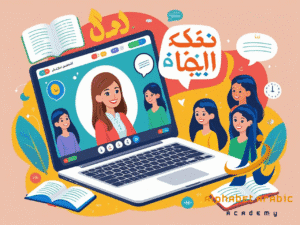
Live sessions via Zoom or Skype with a native-speaking tutor offer real-time interaction and genuine correction — not passive video-watching. You choose your schedule. You learn from home, from work, or from anywhere. You access the most qualified teachers regardless of your ZIP code or country. And in most cases, you pay significantly less.
At Alphabet Arabic Academy, live 1-on-1 sessions start from $40/month, with a free first lesson and a 7-day money-back guarantee. No commute. No rigid schedule. No compromises on teacher quality.
The one thing online learning approximates but doesn’t fully replicate is physical community — the casual conversations before and after class, the shared cultural experiences in one room. For learners who value this deeply, the hybrid approach works well: structured online sessions for consistency and expert access, supplemented by local Arabic-speaking community events, mosque circles, or language meetups.
For most learners in most locations, online classes are the stronger choice. Especially when the program uses live instruction, native teachers, and a real structured curriculum.
The 10 Real Options for Learning Arabic Near You
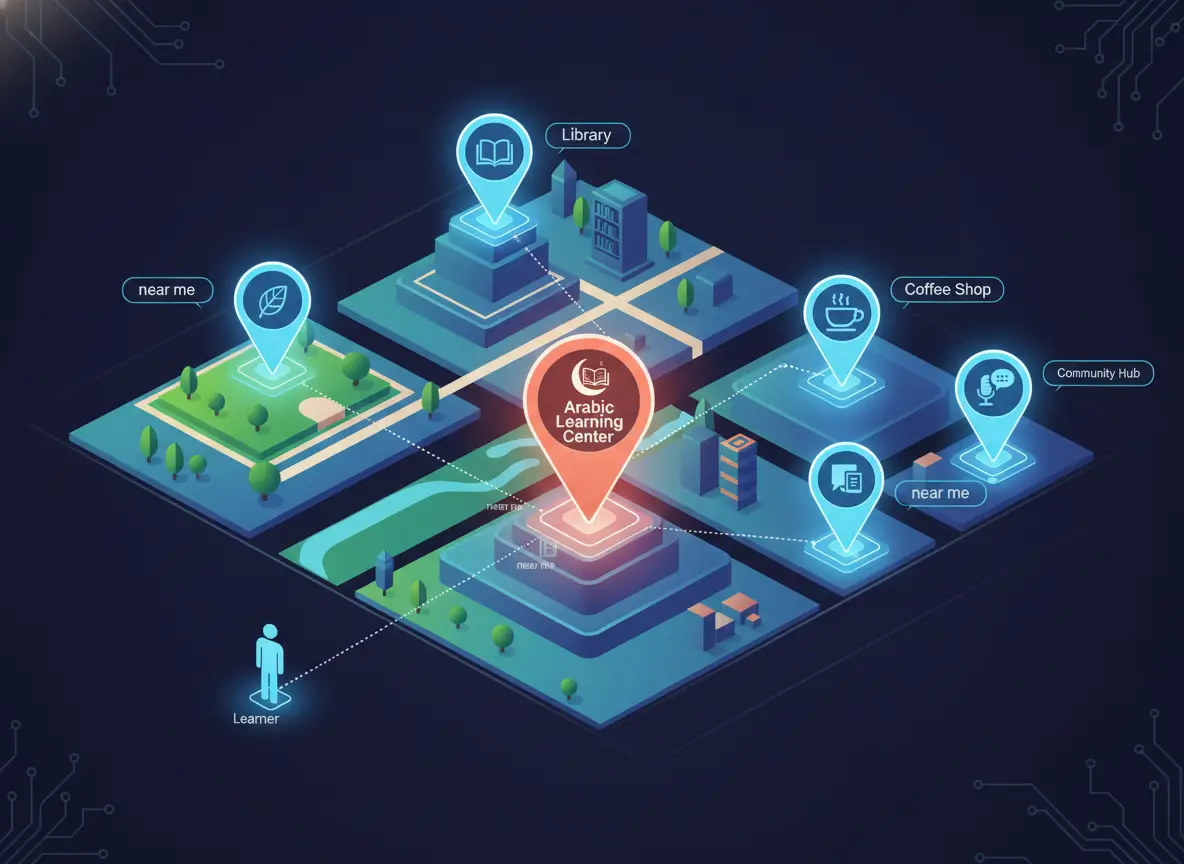
“Near me” can mean a lot of things. Here’s the full honest breakdown of what’s actually available — local and online — so you can pick what fits.
1. Live Online Arabic Academy (Best Overall)
This is the top recommendation for most learners. A structured online academy like Alphabet Arabic Academy gives you native Al-Azhar-trained teachers, level-based progression from A0 to advanced, 1-on-1 live sessions, and verified certificates — all from your home. 5,000+ students across 80 countries. Rated 4.9/5 on Trustpilot.
Before you enroll anywhere, take the Arabic placement test to find your real starting level. It’s free and takes a few minutes.
2. Local Language Schools and Institutes
Available in most large cities. Look for structured curricula, native teachers, and clear level progression. Quality varies — check Google reviews and ask about teacher credentials before committing.
3. University Language Departments
Universities with Arabic departments (especially in cities with large Muslim communities) sometimes offer Arabic as a credit or non-credit course. Often MSA-focused, academically rigorous, and structured well. Can be expensive and schedule-inflexible.
4. Mosques and Islamic Centers
Community-based Arabic and Quranic classes are available in most cities with Muslim populations. Often free or low-cost, focused on Quranic Arabic and Tajweed. Quality and structure vary by location and teacher.
5. Private Local Tutors
Hiring a native Arabic speaker locally gives you personalization and real-time correction. The challenge: finding genuinely qualified teachers, not just fluent speakers. Vetting is on you. Rates typically range from $30–$80/hour.
6. Online Private Tutors (italki, Preply, Superprof)
Wider selection than local tutors, often more affordable. Still requires careful vetting. No guarantee of curriculum structure — sessions depend heavily on individual tutor quality.
7. Community Centers and Cultural Organizations
Arab-American cultural centers, Egyptian community organizations, and similar groups sometimes offer conversational Arabic classes or heritage language programs. Social, accessible, and affordable — but rarely structured for full fluency development.
8. Language Apps (Duolingo, Pimsleur, Rosetta Stone)
Useful for vocabulary exposure and basic familiarization. Not a replacement for structured learning. No pronunciation correction, no real feedback, no certificates. Best used as a supplement alongside live instruction.
9. Summer Language Camps and Intensive Programs
Available in Jordan, Morocco, Egypt, and some US locations. Combine cultural immersion with structured Arabic instruction. Excellent for serious learners with the time and budget. Strong for speaking and listening development in particular.
10. University Exchange and Immersion Programs
For students who can spend a semester or year in an Arab country — programs through institutions like AUC in Cairo, the University of Jordan, or SOAS-linked programs — this is the fastest route to advanced fluency. High investment, high return.
15 Places to Learn Arabic: From Local to Global

Whether you’re looking for a local experience or thinking bigger, these are the 15 best environments for learning Arabic with qualified instruction.
Online Platforms and Academies
Anywhere you have an internet connection. The most flexible, accessible, and — when done right — equally effective as in-person instruction. Alphabet Arabic Academy serves students from the US, UK, Canada, Australia, Germany, Malaysia, and 70+ other countries. Meet the teachers here before booking anything.
Cairo, Egypt
Egypt has one of the strongest traditions of teaching Arabic as a foreign language. Home to Al-Azhar University, the Arab world’s most prestigious institution for Arabic and Islamic studies. Also the source of the Egyptian dialect — the most widely understood spoken Arabic in the world, thanks to Egypt’s dominance in film and television.
Amman, Jordan
A top destination for Arabic learners, known for its high-quality language institutes, welcoming culture, and relatively clear pronunciation of MSA. Programs here attract learners from universities like Harvard, Georgetown, and SOAS.
Cairo (AUC — American University in Cairo)
The American University in Cairo offers intensive Arabic programs recognized internationally. Academically rigorous, immersive, and excellent for learners aiming for academic or professional proficiency.
Amman (QASID Arabic Institute)
One of the most respected Arabic language institutes in the world, with students from Harvard, Oxford, Georgetown, and SOAS. Two full-time tracks: Classical Arabic and Modern Standard Arabic.
Rabat and Fes, Morocco
A different dialect experience — Moroccan Arabic (Darija) mixed with French and Amazigh influences. Great for learners interested in North African culture and Francophone Arab contexts.
Dubai and Abu Dhabi, UAE
World-class language institutes in a multilingual, multicultural environment. Strong for business Arabic, Gulf dialect exposure, and professional development in the GCC region.
Riyadh and Jeddah, Saudi Arabia
For deep cultural and religious immersion. Strong connection to Classical Arabic and Islamic scholarship. Madinah University’s online Arabic program is accessible from here and worldwide.
Beirut, Lebanon
Levantine Arabic in a cosmopolitan, historically rich environment. Strong for media Arabic, cultural depth, and Levantine dialect acquisition.
Istanbul, Turkey
A growing hub for Arabic learners, particularly from the Muslim world. Several institutes offer Arabic courses in an environment with strong historical Arab-Islamic connections.
Local Mosques (Worldwide)
Most cities with Muslim populations have mosques offering Arabic and Quranic classes. Often free or low-cost. Community-oriented. Great starting point — especially for Quranic focus.
Language Meetups and Conversation Circles
In major cities, Arabic conversation meetups happen regularly in cafes, libraries, and cultural centers. Perfect for practicing speaking in a social, low-pressure environment.
University Campuses (US, UK, Canada, Australia)
Many universities with Arabic programs offer community access or non-credit courses. Check language department pages for public offerings.
Language Summer Camps
Jordan, Morocco, and Egypt host summer Arabic camps for kids, teens, and adults. Structured, immersive, and a powerful fast-track for spoken fluency.
Your Own Home — With the Right Program
Don’t underestimate this one. With a structured online academy, a qualified native teacher, and consistent practice, your home is one of the most effective Arabic learning environments that exists. No commute. No rigid schedule. And the same depth of instruction as any institute on this list.
What Makes Online Arabic Classes Actually Work
A lot of people try online Arabic and quit. But that’s not because online doesn’t work — it’s because they picked the wrong kind of online.
Here’s the difference between what works and what doesn’t.
What doesn’t work: Pre-recorded video libraries. Apps with no feedback. Self-paced platforms where you can go weeks without anyone checking your pronunciation or correcting your grammar. These feel productive. They’re not.
What does work: Live 1-on-1 sessions with a qualified native teacher who hears you, corrects you in real time, and adapts each lesson to where you actually are. Not where the curriculum assumes you are. Where you actually are.
At Alphabet Arabic Academy, every session is live and 1-on-1. Every teacher is a certified native Egyptian Arabic speaker with a university degree. All materials — PDFs, audio files, vocabulary lists — are included at no extra cost.
Interactive tools used in sessions include digital whiteboards for writing Arabic script live, audio recordings for pronunciation review, and progress-tracking quizzes at each milestone.
You speak Arabic in every session. Not just listen. Not just fill in gaps. Speak.
And if you’re not sure where to start, the Arabic placement test takes a few minutes and tells you your real level — so you don’t waste time in the wrong tier.
The Full Range of Arabic Courses Available to You
Modern Arabic academies offer far more than a single generic “learn Arabic” course. The right program depends on what you actually need.
Modern Standard Arabic (MSA)
The formal written Arabic used in news, literature, government, and official communication across all Arab countries. The foundation for academic study and professional use. View MSA course options and pricing.
Egyptian Colloquial Arabic
The most widely understood spoken dialect in the Arab world. If you want to travel to Egypt, watch Egyptian films and TV, or connect with Egyptian communities — this is your starting point. Separate certification track available.
Quranic Arabic and Tajweed
Specialized tracks for Muslims seeking deeper engagement with Islamic texts. Tajweed covers the rules of pronunciation and recitation. Available for both children and adults, with certificates issued at each level.
Arabic for Kids (Ages 4–17)
Children learn best through play, stories, music, and games. Alphabet Arabic Academy’s kids program is built specifically for young learners — interactive, visual, age-appropriate, and delivered by teachers experienced in childhood Arabic education. Starting from $35/month.
Arabic for Business and Professionals
Formal vocabulary, business correspondence, negotiation language, and sector-specific Arabic for diplomacy, journalism, medicine, and international business.
Conversational Arabic
Speaking-focused. 80% of class time is you speaking. Designed to get you talking quickly — minimal grammar theory, maximum real-world practice.
Who Is Learning Arabic, and Why?
The student body of any serious Arabic program is far more diverse than people expect.
There are the children of Arab families who grew up speaking a dialect at home but never learned to read or write in Arabic script.
There are professionals who’ve discovered that Arabic fluency is the single most valuable skill they can add to a career in diplomacy, journalism, international business, or government.
There are Muslims — from every background — who want to understand the Quran in the original language it was revealed in. Not through translation. Through direct understanding.
There are travelers who want to navigate the souks of Marrakech, the streets of Cairo, and the mountain villages of Lebanon without relying on anyone else.
And then there are people like Sarah — a 34-year-old mother from Texas who searched for “Arabic classes near me” for months, tried apps and YouTube channels, and found nothing stuck. Until she found a live program with real native instructors. Within two months of weekly sessions, she was helping her kids read Arabic and learning Quranic verses alongside them.
Or Adam, a high school student in Texas, who wanted to speak Arabic with his grandparents. One class per week, personalized lessons, and two months later, he was holding basic conversations with the people he loved most.
Common Mistakes When Searching for “Arabic Classes Near Me”
These mistakes waste months and money. Know them before you choose.
Mistake 1: Choosing based on proximity, not quality.
The closest Arabic class is rarely the best one. Committing to a local program just because it’s local — when the teacher is unqualified or the curriculum is inconsistent — will cost you more time than a 30-second internet connection to a great online teacher.
Mistake 2: Using apps as a primary learning method.
Duolingo can teach you 50 words. It can’t correct your pronunciation of ع or ق. It can’t adapt when you’re struggling with verb conjugation. It can’t build the speaking confidence that comes from real conversation with a native instructor. Apps are supplements. Not programs.
Mistake 3: Enrolling without knowing your level.
Starting at the wrong level — too easy or too challenging — kills motivation fast. Always take a placement assessment before enrolling anywhere. The Arabic placement test at Alphabet Arabic Academy is free and accurate.
Mistake 4: Prioritizing price over structure.
The cheapest option is almost never the most efficient. A poorly structured $15/month program where you drift without progression will waste 6 months that a $40/month structured program would resolve in 6 weeks.
Mistake 5: Skipping speaking practice entirely.
Many learners focus on grammar, reading, or vocabulary — and avoid speaking because it feels intimidating. This is the single biggest plateau creator in Arabic learning. From your first session, you should be speaking. Making mistakes. Getting corrected. Building the confidence that only comes from real use.
Who Is This For?
This is for you if:
- You’ve been meaning to start Arabic for a while and keep postponing
- You want to learn but can’t find a quality local class that fits your schedule
- You’re a parent looking for a real structured Arabic program for your children
- You want to understand the Quran directly — not just through translation
- You need Arabic for a professional reason — career, research, academic study
- You’ve tried apps and videos before and nothing stuck
This is NOT for you if:
- You’re looking for a completely free solution with no commitment whatsoever
- You want to learn “a few Arabic words” casually without real progression
- You’re expecting fluency in 2 weeks (that doesn’t exist in any language)
How to Choose the Right Arabic Class — A Practical Framework
Image suggestion: Checklist on a clean background with six clear questions Alt text: How to choose Arabic class near me online practical framework six questions
Stop comparing marketing pages. Start with these six questions.
1. What exactly is your goal?
Write it down before you search. Conversational Arabic for travel is a different program from Quranic Tajweed, which is different from academic MSA. The clearest goal leads to the most focused program.
2. Are the teachers native speakers with real teaching credentials?
Fluency and teaching ability are not the same thing. The best instructors are native Arabic speakers with degrees in Arabic studies or Arabic education, trained to teach non-native learners. Browse Alphabet Arabic Academy’s teacher profiles to see what qualified instruction looks like.
3. Does the schedule work for your life?
The best intention fails without consistency. A program with rigid scheduling will fall apart the moment your life intervenes. Look for morning, evening, and weekend options with genuine flexibility to reschedule.
4. What do real students say?
Look for reviews on Google and Trustpilot — not just the testimonials on the program’s own website. Pay attention to comments about how beginners are handled, how patient instructors are, and whether students actually improved.
5. Is pricing transparent?
Quality Arabic instruction starts at around $40/month for live online programs. Local classes range from $100–$400/semester. Be cautious of suspiciously cheap programs and programs that hide costs behind vague “packages.” Check Alphabet Arabic Academy’s pricing page for a clear, no-surprises breakdown.
6. Does the curriculum prioritize speaking?
From your very first session, you should be speaking Arabic. Not just filling in grammar exercises. A program that doesn’t include spoken practice from day one won’t build the fluency you’re looking for.
Arabic Is More Than a Language — It’s a Civilization
Here’s something most Arabic learning guides don’t say clearly enough.
When you learn Arabic, you’re not just adding a communication skill. You’re gaining access to one of the richest intellectual and artistic traditions in human history.
Arabic was the language of the Islamic Golden Age — the centuries during which Arab and Muslim scholars preserved and advanced Greek philosophy, invented algebra, mapped the stars, and produced some of the most beautiful poetry ever written. It remains the sacred language of over a billion Muslims worldwide. It’s the key to understanding more than 1,400 years of civilization.
The best Arabic programs weave this cultural depth into every lesson. Regional differences between dialects. Historical context behind vocabulary. The relationship between formal MSA and the spoken Arabic of daily life. Social customs across Arab countries.
Language and culture can’t be separated. Understanding why a phrase is used — and when — transforms vocabulary from memorization into genuine fluency.
Frequently Asked Questions
Q1: Are online Arabic classes as effective as in-person ones?
Yes — when they use live instruction, not pre-recorded content. Research consistently shows no significant difference in outcomes between high-quality online and in-person language instruction. The key phrase is high-quality. Passive video content doesn’t compare. Live 1-on-1 sessions with a native teacher do.
Q2: How long does it take to learn Arabic?
Most beginners reach basic conversational ability in 3–6 months of consistent weekly study. Intermediate fluency typically develops over 1–2 years. Full professional or academic proficiency requires several years of dedicated practice. The good news: you’ll have meaningful conversations and real reading ability long before you reach full fluency.
Q3: How much do Arabic classes cost?
Online programs start from $40/month for live instruction. Local language center courses range from $100–$400/semester. Private in-person tutors typically charge $30–$80/hour. Quality and flexibility vary widely — look for transparent pricing and no hidden fees. See Alphabet Arabic Academy’s full pricing here.
Q4: What’s the best Arabic class near me?
Honestly — for most learners in most locations, the best option is a live online program with a qualified native teacher and a structured curriculum. The “best class near you” is no longer limited by geography. It’s determined by teacher quality, curriculum structure, and how well the program matches your goal.
Q5: Can kids learn Arabic online?
Absolutely. Children as young as 4 learn Arabic remarkably well through interactive, game-based online sessions. Alphabet Arabic Academy’s kids program uses stories, songs, and activities specifically designed for young learners — and children consistently look forward to their sessions. Starting from $35/month.
Q6: Is Arabic hard to learn for English speakers?
Arabic is one of the more challenging languages for native English speakers — primarily because of the script and grammatical structures that have no English equivalent. But with a structured program and a qualified teacher, the initial difficulty fades quickly. Most students are surprised by how fast it begins to feel natural. The alphabet, which seems intimidating, is typically mastered within the first few weeks.
Q7: How do I know which level to start at?
Take the free Arabic placement test — it gives you an accurate baseline in minutes and tells you exactly where to start.
Conclusion
Image suggestion: Happy learner speaking Arabic confidently on a video call, smiling Alt text: Learn Arabic classes near me online right choice start today
You searched for “Arabic classes near me” because something inside you said: now is the time.
Don’t let that motivation fade into another bookmarked tab.
The real question isn’t local vs online. It’s whether the program you choose has qualified teachers, a real structure, genuine feedback, and a curriculum that matches your goal. On those measures, a live online program with Al-Azhar-trained native instructors — available from anywhere, on your schedule — is hard to beat.
Here’s how to take the next step:
👉 Take the free Arabic placement test — know your level before you commit to anything.
👉 View course options and pricing — starting from $40/month, with a free first lesson and 7-day money-back guarantee.
👉 Meet the teachers — see exactly who’ll be teaching you before you book.
Serving students in Boston, Seattle, Washington DC, New York, Texas, California, London, Dubai, and 80+ countries worldwide via live online sessions.
Continue Reading
- Explore 15 Unique Places to Learn Arabic with Experts
- Online Arabic Classes Near Me: Whatever Country
- Arabic Teaching Classes Near Me: Start Learning Now
- Arabic Learning Center Near Me: Best 7 Options
- Best Place to Learn Arabic
- Arabic Courses Pricing
- Meet the Teachers
- Arabic for Kids
- FAQs — Arabic Learning