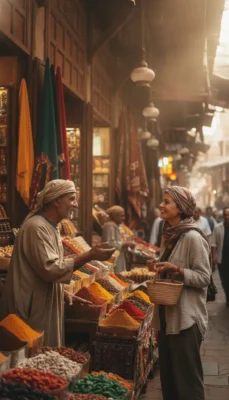
You land in Cairo. Or maybe you’re just video-calling an Egyptian friend for the first time. Either way, the first thirty seconds go something like this: a greeting, your name, “where are you from,” and then — somehow — a question about your family. That’s not small talk gone off the rails. That’s just how Egyptians talk to people.
Here’s the thing — most Arabic courses teach you Modern Standard Arabic first. Which is great for reading the news or a book. But nobody in Cairo says “كَيْفَ حَالُكَ” to their neighbor. They say “عامل إيه.” If you show up with textbook Arabic, people will understand you, sure. They’ll also smile at you the way you’d smile at someone who learned English entirely from Shakespeare.
So let’s fix that. This is everything you need to introduce yourself, greet people properly, and actually hold a real conversation in Egyptian Arabic — the way it’s spoken on the street, not the way it’s printed in a grammar book.
Why Egyptian Introductions Feel So Different From What You Studied
If you’ve been learning MSA, you already know some vocabulary. The problem is tone. MSA is formal by default. Egyptian Arabic (Masri) is warm by default. It’s the difference between writing a cover letter and texting a friend.
I’ll be straight with you — this trips up a lot of learners. They memorize “اسمي…” (my name is…) from a textbook, say it correctly, and then freeze because the Egyptian in front of them just said something completely different back. Egyptians drop letters, swap sounds (that ث becomes a ت or س, ق often disappears entirely), and pack way more feeling into a greeting than MSA ever does.
Once you get used to it, though, Egyptian Arabic is honestly one of the friendlier dialects to learn. It’s forgiving. People will help you finish your sentence. Nobody expects grammatical perfection from a foreigner who’s clearly trying.
The Greetings You’ll Actually Use
Let’s start at the very beginning, because the greeting sets the whole tone of the interaction.
أهلاً (Ahlan) — “Hi.” Simple, safe, works everywhere.
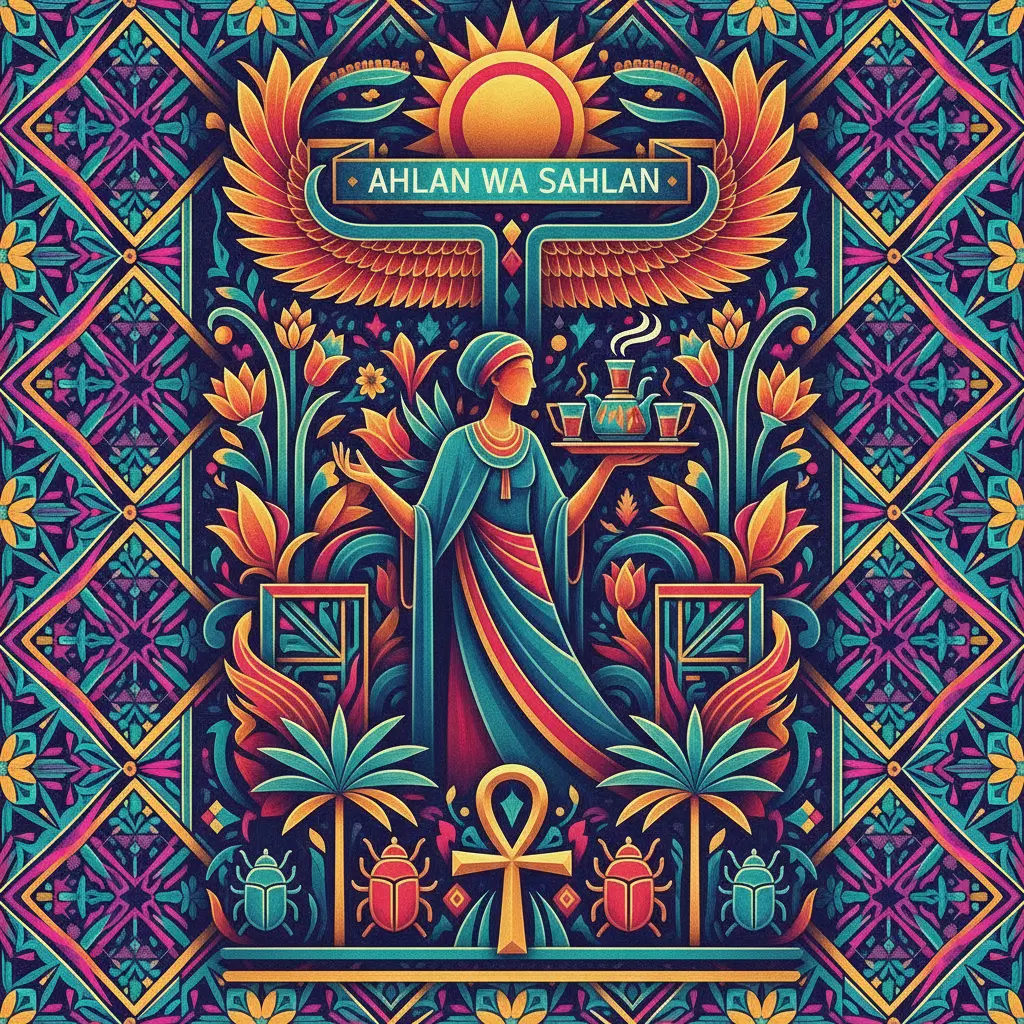
أهلاً وسهلاً (Ahlan wa sahlan) — The warmer version. Literally something like “you’ve arrived among family, on easy ground.” Egyptians use it constantly — welcoming you into a shop, a home, a conversation.
إزيك / إزيك (Izayak for a man, Izayik for a woman) — “How are you?” This is the one you’ll hear a dozen times a day. Not “كَيْفَ حَالُكَ.” Nobody says that outside of a classroom.
صباح الخير (Sabah el-kheir) — “Good morning.” The reply is صباح النور (Sabah el-noor) — literally “morning of light.” You don’t just repeat the greeting back in Egyptian Arabic, you respond to it. That pattern shows up everywhere, and it’s one of the fastest ways to sound less like a student and more like someone who’s actually spoken Arabic before.
مساء الخير (Masa’ el-kheir) — “Good evening,” answered with مساء النور (Masa’ el-noor).
تمام، الحمد لله (Tamam, el-hamdu lillah) — The standard answer to “how are you.” “Fine, thank God.” Egyptians say this even on a rough day. It’s less a literal status report and more a social reflex, kind of like how “good, you?” works in English even when you’re not great.
If you want the fuller list — there are about fifty of these that come up constantly — we put together a breakdown of the most common Egyptian Arabic phrases worth learning first, greetings included.
Introducing Yourself: The Actual Phrases
Here’s where most learners get stuck, because the textbook version and the street version genuinely don’t match.
اسمي… (Ismi…) — “My name is…” This one’s fine, actually — MSA and Egyptian Arabic agree here. You’ll hear it and say it exactly like this.
أنا اسمي… (Ana ismi…) — Adding “أنا” (I/me) in front is very natural in speech, even though it’s technically redundant. Egyptians do it all the time. “أنا اسمي محمد” — “I, my name is Mohamed.”
أنا من… (Ana min…) — “I’m from…” Then just add your country or city. “أنا من أمريكا” — “I’m from America.”
بتشتغل إيه؟ (Bitishtaghal eh?) — “What do you do for work?” (asking a man). For a woman, it’s بتشتغلي إيه؟ (Bitishtaghali eh?). This question comes up almost immediately in Egypt. Work, background, family — Egyptians get there fast, and it’s not nosiness, it’s genuine interest.
تشرفنا (Tasharrafna) — “Pleased to meet you,” literally “we are honored.” A little formal, a little warm, and a nice thing to say right after someone tells you their name.
فرصة سعيدة (Forsa sa’ida) — Another version of “pleased to meet you,” more common in slightly more formal introductions — meeting a friend’s parent, for example.
Honestly, if you only learn five phrases from this whole article, learn these. They’ll carry you through the first minute of almost any interaction in Egypt.
Small Talk: What Egyptians Actually Ask You
This is the part that surprises a lot of learners the most. Small talk in Egypt isn’t weather and traffic. It’s personal, fast, and warm — sometimes uncomfortably fast if you’re used to a more reserved culture.
إنت متجوز؟ / إنتي متجوزة؟ (Enta metgawwez? / Enti metgawwiza?) — “Are you married?” Yes, this comes up early. It’s not rude in Egyptian culture — it’s just how people build a picture of who you are.
عندك عيال؟ (Andak eyal?) — “Do you have kids?”
دي أول مرة ليك في مصر؟ (Di awwil marra leek fi masr?) — “Is this your first time in Egypt?” Extremely common if you’re a visitor.
عايز تشرب حاجة؟ (Ayez tishrab haga?) — “Do you want something to drink?” Egyptians offer tea or coffee constantly, and it’s genuinely rude to refuse outright — a polite “لأ، شكراً” (no, thank you) is fine, but expect some gentle insisting.
بتتكلم عربي كويس أوي! (Bititkallim ‘arabi kwayyis awi!) — “You speak Arabic really well!” You’ll hear this the moment you string together three coherent sentences. Egyptians are generous with compliments when you’re learning their language — it’s part of what makes the dialect so rewarding to practice out loud early, instead of waiting until you feel “ready.”
The standard, humble response to a compliment like that is مش قوي كده (Mish awi keda) — “not that much” — even if you’ve been studying for a year and you know it’s more than “not much.” Deflecting a compliment a little is just the polite move.
The Physical Side of Greeting Someone
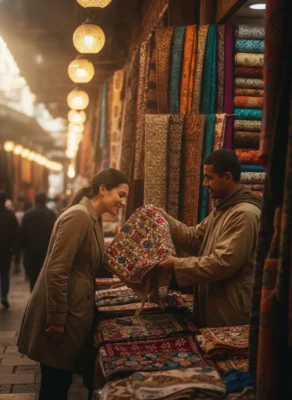
This part isn’t a phrase, but it matters just as much. Egyptian greetings often come with a handshake, and among people who know each other well — especially same-gender friends — a cheek kiss (one, two, or even three, depending on the region and how close you are) is completely normal.
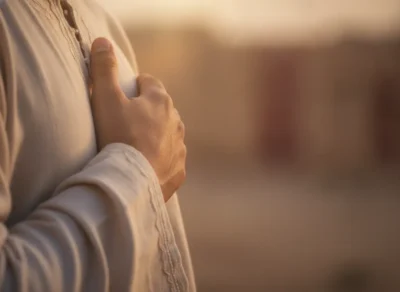
Between men and women who don’t know each other, a handshake is common in cities, but it’s not universal — some people, particularly in more religious or conservative settings, will greet you verbally without physical contact, especially across genders. The easiest approach as a learner: let the other person lead. If they extend a hand, take it. If they place a hand on their chest instead with a nod, that’s your cue too, and it’s a respectful greeting on its own.
A Few Mistakes to Avoid
Using كَيْفَ حَالُكَ instead of إزيك. Not wrong, exactly — just stiff. It’s the Arabic equivalent of walking into a coffee shop and saying “Good day to you, sir.”
Answering “تمام” and stopping there. Egyptians almost always add “الحمد لله” after. Dropping it isn’t incorrect, but it sounds a little clipped and rushed compared to how the phrase naturally flows.
Being thrown off by personal questions. If someone asks about your marital status or your salary bracket within the first five minutes, that’s not an invasion of privacy by Egyptian standards — it’s how people show interest. You’re free to redirect politely if a question feels too personal, but don’t assume it’s rude on their end.
Refusing food or drink too firmly. A flat “no” can come across as cold. Softening it — “لأ، متشكر أوي بس لسه شبعان” (“no, thank you very much, but I’m still full”) — lands much better.
Skipping the response greeting. If someone says صباح الخير, don’t just repeat صباح الخير back. Say صباح النور. It’s a small thing, but it’s one of the clearest tells of someone who’s actually spent time speaking the dialect versus someone who’s memorized a vocabulary list.
What a Real Introduction Sounds Like
Theory is nice. Here’s what this actually looks like strung together, the way it would go if you met someone at a café in Cairo.
Ahmed: أهلاً! إزيك؟ (Hi! How are you?)
You: أهلاً بيك، تمام الحمد لله، وإنت؟ (Hi, I’m good thank God, and you?)
Ahmed: الحمد لله. إنت من فين؟ (Thank God. Where are you from?)
You: أنا من كندا. وإنت من هنا، من القاهرة؟ (I’m from Canada. And you’re from here, from Cairo?)
Ahmed: أيوة، من القاهرة. بتتكلم عربي كويس أوي! (Yes, from Cairo. You speak Arabic really well!)
You: مش قوي كده، لسه بتعلم. (Not that much, I’m still learning.)
Ahmed: عايز تشرب حاجة؟ شاي ولا قهوة؟ (Want to drink something? Tea or coffee?)
Notice what’s happening: nobody’s using a single MSA phrase. Every response builds on the last one instead of just answering and stopping. And within five lines, you’ve already gone from “hello” to being offered tea — which, in Egypt, is basically a sign the conversation is going well.
Questions People Actually Ask About This
Is it rude if an Egyptian asks about my age, salary, or marital status right after meeting me? No — and this catches a lot of people off guard. In most Western contexts, that would feel intrusive within the first minute of meeting someone. In Egypt, it’s closer to genuine curiosity and warmth. You’re allowed to answer vaguely or redirect (“خلينا نتكلم عن حاجة تانية” — “let’s talk about something else”) without it being awkward.
Do I have to use “أنتِ” and “أنتَ” correctly for gender, or will people understand me anyway? People will understand you either way — Egyptians hear foreigners mix this up constantly. But getting it right (أنتَ for a man, أنتِ for a woman, and adjusting verb endings to match) is one of the fastest ways to sound more natural, and it’s worth drilling early rather than fixing later.
What’s the actual difference between Egyptian Arabic greetings and Modern Standard Arabic greetings? MSA greetings like كَيْفَ حَالُكَ are grammatically correct everywhere in the Arab world, but they’re formal — closer to how you’d address someone in a written speech. Egyptian Arabic greetings like إزيك are what people actually say to each other on the street, at work, with friends. If your goal is real conversation in Egypt specifically, learn the Egyptian versions first and layer MSA on top later if you need it for reading or writing.
Can I get by using only greetings I memorized, without understanding the responses? For about ten seconds, yes. After that, the other person keeps talking, and if you don’t recognize the reply pattern (سبح النور, تمام الحمد لله, and so on), the conversation stalls fast. That’s why practicing greeting-and-response pairs together matters more than memorizing a long vocabulary list.
How to Actually Practice This (So It Sticks)
Reading through a list of phrases feels productive. It isn’t, not on its own. The words above only become useful once they’re coming out of your mouth in real exchanges, with real back-and-forth, ideally with someone who can catch your mistakes before they turn into habits.
A few things that genuinely help:
- Say the greeting-and-response pairs out loud, together, every time. Don’t drill “صباح الخير” alone. Drill “صباح الخير → صباح النور” as one unit. That’s how they actually get used.
- Record yourself. Egyptian Arabic has sounds — the ع and غ especially — that don’t exist in English. You won’t hear what’s off in your own pronunciation unless you play it back.
- Practice with a real person, not just an app. Apps are fine for building vocabulary. They can’t tell you that your “إزيك” sounded a little too formal, or correct your ع in real time. If you’re wondering how long it actually takes before you can hold a real exchange like this, we broke that down honestly in how long it takes to hold a basic Arabic conversation — spoiler, it’s faster than most people assume, if you’re consistent.
- Build it into a short daily habit. You don’t need hour-long sessions. A focused fifteen minutes a day, repeated, beats an occasional two-hour cram every time. Our daily Arabic study routine walks through exactly how to structure that.
Not Sure Where You’re Starting From?
If you already know some Arabic but you’re not sure whether it’s strong enough to build on, or you’re starting completely from zero, it’s worth figuring that out before you dive in. Take the free Arabic placement test — it takes a few minutes and tells you exactly where to focus instead of guessing.
Speak With Confidence
Reading about Egyptian greetings and small talk gets you halfway there. The other half is saying them out loud, getting corrected, and doing it again until it feels natural instead of rehearsed. That’s the part a list of phrases can’t do for you — but a real conversation partner can.
Our Colloquial Egyptian Arabic course is built exactly for this: real greetings, real small talk, real conversations, with a native teacher who’ll catch the small stuff — the ع that’s a little off, the response greeting you forgot, the moment you hesitate instead of just saying إزيك. Check the pricing page for a plan that fits your schedule, or meet the teachers who’ll be the ones actually talking with you.
Start small. Learn the greeting-and-response pairs first. Say them out loud today, even alone in your room. That’s genuinely how it starts.