

People ask me this all the time.
“How long until I can actually talk to someone in Arabic?”
And I get it. You don’t want to wait three years just to say “where’s the bathroom?” You want a real answer. Not a motivational speech. Not a vague “it depends on you!”
So here it is. The honest, unsexy truth.
First — What Does “Basic Conversation” Actually Mean?
This matters more than people think. Because “basic conversation” means different things to different people.
Some people mean: being able to greet someone, ask how they are, and not freeze up.
Some mean: order food at a restaurant without pointing at the menu.
Some mean: having a 5-minute back-and-forth with an Egyptian about where they’re from and what they do.
Those are three very different skill levels. And the time it takes to reach each one is very different too.
For this article, let’s define “basic conversation” as: you can greet someone, introduce yourself, handle simple questions, and keep a short exchange going without panicking. That’s a realistic and useful goal — especially if you’re learning Egyptian Arabic, which is exactly what we’re going to talk about.
The Honest Timeline: What to Expect
Here’s where most blogs go wrong. They either give you an impossibly optimistic number (“30 days to fluency!”) or a discouraging one (“Arabic takes 2,200 hours for English speakers!”)
Both are misleading.
The 2,200 hours figure comes from the Foreign Service Institute (FSI) — and that’s for professional working proficiency in Modern Standard Arabic. Not a basic chat. Not Egyptian dialect. It’s for diplomats who need to write formal reports in Arabic.
That’s not you. That’s not your goal right now.
Here’s a more realistic breakdown:
4–6 Weeks: First Real Exchange
If you’re studying Egyptian Arabic consistently — even just 20–30 minutes a day — you can have your first real exchange within 4 to 6 weeks.
We’re talking: “Ahlan, ana [your name], ana min [country]. Izzayak?” (Hello, I’m [name], I’m from [country]. How are you?)
And understanding the response. That’s a milestone. It feels small. It’s not.
Most of our students at Alphabet Arabic Academy hit this around week 4-5 when they focus on speaking from day one — not grammar tables.
2–3 Months: Comfortable in Simple Situations
Two to three months in, if you’ve been consistent, you can handle everyday situations. Shopping. Introducing yourself at a dinner party. Talking to an Egyptian driver or neighbor.
You’ll still make mistakes. You’ll still pause to think. But you won’t shut down. That’s the difference.
This is what we call the “functional beginner” stage. You’re not fluent. But you’re useful.
4–6 Months: Holding a Real Back-and-Forth
This is the sweet spot most learners aim for. Four to six months of consistent, conversation-focused study gets you to the point where you can actually converse.
Not just survive. Converse.
You can talk about your life, ask questions, understand most of what’s said to you (especially if the other person speaks clearly), and hold a 10–15 minute conversation without it being painful for either of you.
At this stage, most of our students describe the same thing: “I met an Egyptian and we just… talked. For real.”
That feeling? Worth every minute of practice.
The Biggest Factor Nobody Talks About: Which Arabic?

Honestly, this is the thing I wish more people knew before they started.
Arabic has many dialects. And if you pick the wrong one for your goals, you waste months.
If you want to speak — actually have conversations with real people, watch movies, make friends — Egyptian Arabic is your best bet. Not MSA. Not Classical. Egyptian.
Why? Because Egyptian Arabic is the most widely understood dialect in the Arab world. Thanks to Egypt’s massive presence in film, TV, and music, someone from Morocco, Lebanon, Kuwait, or Tunisia will understand you the moment you speak Egyptian Arabic. No other dialect does that.
MSA (Modern Standard Arabic) is formal written Arabic. Nobody speaks it naturally at home. Learning MSA first and expecting to hold a real conversation is like learning Shakespearean English to talk to your American coworker. Technically the same language. Practically useless in casual conversation.
So if your goal is conversation — especially basic conversation — start with Egyptian Arabic. You’ll reach your goal faster. And you’ll actually use what you learn.
We also have a full guide on learning Egyptian Arabic if you want to go deeper on this.
What Actually Slows People Down

I’ve been teaching Arabic for years. And I see the same patterns over and over with learners who get stuck.
1. They wait until they “know enough” to speak.
This is the number one mistake. If you wait until you’re “ready” to speak, you’ll never be ready. Speaking IS how you learn. The discomfort is the lesson.
2. They study MSA and expect to have colloquial conversations.
We covered this above. But it’s worth repeating. If your goal is speaking to Egyptians or watching Egyptian TV, MSA won’t get you there fast. Egyptian dialect will.
3. They study inconsistently.
30 minutes every day beats 3 hours once a week. Always. The brain needs repetition to build habits. Consistency matters more than intensity.
4. They don’t speak with native speakers early enough.
You can listen to podcasts, do apps, watch videos — and still be shocked the first time a real Egyptian speaks to you. Because real people speak fast. They use slang. They don’t wait for you to finish your mental translation.
Get in front of a native speaker early. Make mistakes. It’s fine. Egyptians are incredibly patient with Arabic learners.
Check out our guide on building a daily Arabic study routine — it’s exactly what consistent learners do differently.
What Actually Speeds You Up
Here’s the flip side. Things that genuinely accelerate your progress:
Focus on spoken phrases, not grammar rules.
You don’t need to understand why Egyptians say “ana mesh fahem” (I don’t understand) before you say it. Just say it. The understanding comes later through use.
Learn the 50–100 most common Egyptian Arabic phrases first.
Forget trying to memorize 1,000 words. Start with the phrases that come up in literally every conversation. Greetings, questions, responses, numbers, directions. We put together a list of the 50 most common Egyptian Arabic phrases — that’s a good starting point.
Practice with a real teacher, not just an app.
Apps are fine for vocabulary. But they can’t tell you when your pronunciation sounds weird. They can’t adjust to your level in real time. A real Egyptian teacher can do all of that — and push you to actually speak, not just tap the right answer.
Speak before you feel ready.
I’ll be straight with you — this is uncomfortable. Everyone hates the stage where they’re fumbling for words and the other person is smiling patiently. But that discomfort is doing more for your Arabic than ten more flashcard sessions. Push through it.
A Realistic Study Plan (20–30 Minutes a Day)
You don’t need hours. You need consistency.
Here’s what 20–30 minutes a day looks like when done right:
Week 1–2: Learn the basics. Greetings, introductions, how to say you don’t understand, please speak slowly. That’s it. No grammar yet.
Week 3–4: Start adding everyday phrases. Shopping, asking for directions, talking about yourself. Practice out loud. Always out loud.
Month 2: Have your first simple conversation. With a teacher, a language partner, an Egyptian friend — anyone. Record yourself. Compare. Adjust.
Month 3–4: Add topics. Talk about your job, your family, your daily life. Start watching short Egyptian content with subtitles. Your ear will start adjusting.
Month 4–6: Longer conversations. Real scenarios. Go through situations that feel hard — ordering food, haggling at a market, asking for help. Get comfortable with being uncomfortable.
By month 4–6, if you’ve been doing this daily, you’re holding basic conversations. Real ones.
If you want help figuring out where you are right now, we have a free Arabic placement test that helps you understand your starting level.
Egyptian Arabic vs. Other Dialects: Why It Matters for Your Timeline
Here’s something most people don’t consider: the dialect you choose directly affects how fast you reach your goal.
Egyptian Arabic is simpler in some ways that matter a lot for beginners. The verb system is more consistent. The grammar is more forgiving than MSA. And the sounds are more accessible for English speakers than some Gulf or Moroccan dialects.
That means less time fighting the structure, more time actually talking.
If your goal is conversation with Arabic speakers anywhere in the world, Egyptian Arabic is the most efficient path. And it’s the heart of what we teach in our Colloquial Egyptian Arabic course.
You can also explore our teachers page to see who you’d be learning from — all native Egyptian speakers, trained for exactly this.
So… How Long? The Real Answer.
Let me give you the straight answer you came here for.
With 20–30 minutes of daily focused study:
- 4–6 weeks → First real exchange (greetings, introductions, simple responses)
- 2–3 months → Comfortable in everyday situations
- 4–6 months → Holding a real basic conversation
With structured classes + a native teacher + daily practice:
You can cut those timelines. Some students hit the “basic conversation” milestone in 6–8 weeks when they have real speaking practice built into their week.
The key variables? How consistent you are. Whether you speak early and often. And whether you’re learning Egyptian Arabic (for conversation) or MSA (for everything else).
Nobody can give you a magic number. But “a few months” is realistic. “Years before you can say anything” is not.
Ready to Start Speaking?
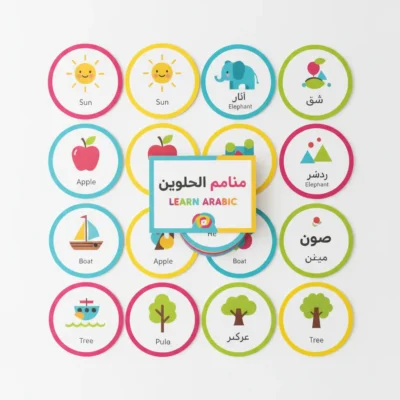
You can read about Arabic timelines all day. But the only timeline that matters is yours — and it starts when you decide to actually begin.
If you want to hold a basic Egyptian Arabic conversation, our Colloquial Egyptian Arabic course is built exactly for that. Native Egyptian teachers, conversation-first approach, real phrases from day one.
Not sure where you’re starting from? Take our free placement test — it takes 5 minutes and tells you exactly where you are.
And if you want to see our course pricing first, we’ve kept it accessible on purpose.
The conversation is waiting. Start it.