learn egyptian arabic through songs
Short answer: yes, but not the way you’re probably imagining.
I get this question a lot. Usually from someone who just discovered Amr Diab or fell down a Mohamed Mounir rabbit hole on YouTube and thought, “wait, could I actually learn Arabic just by listening to this?”
Here’s the honest answer from someone who teaches this stuff every day. Songs are one of the best tools you’ll ever use for Egyptian Arabic. And they’re also, on their own, not enough to get you fluent. Both of those things are true at the same time. Let me explain why, and then let me show you how to actually use songs so they work instead of just sitting in the background while you scroll your phone.
So, Can You Actually Learn Egyptian Arabic From Songs?
You can learn a lot. Vocabulary that sticks. Real pronunciation, the kind that doesn’t sound like a textbook. A feel for how sentences flow in Masri, which honestly matters more than people think. Songs also teach you emotion and tone — how someone actually sounds when they’re begging, joking, complaining, or falling in love in Egyptian Arabic.
What songs don’t teach you well: grammar rules, verb conjugation patterns, how to build your own original sentences from scratch, or how to hold a real conversation where someone talks back to you. Music is one-directional. It gives you input. It never corrects you.
Think of it this way. Songs are seasoning, not the meal. They make everything else you’re learning taste better and stick longer. But you can’t survive on seasoning alone.
Why Songs Actually Work (And It’s Not Just “Fun”)
There’s a reason your brain holds onto song lyrics better than word lists. Rhythm and melody act like glue. Ever notice how you can’t remember what you had for lunch three days ago, but you can still sing the full chorus of a song you haven’t heard in five years? That’s not a coincidence. Music engages memory in a way flashcards just can’t compete with.
I’ll be straight with you — this is also why Egyptian Arabic specifically benefits so much from songs. Egyptian music is everywhere in the Arab world. It’s not a regional niche thing like some other dialects. Amr Diab, Mohamed Mounir, Sherine, Tamer Hosny, even older legends like Umm Kulthum and Abdel Halim Hafez — these names carry weight across the entire Middle East, not just in Cairo. Learning through Egyptian songs doesn’t just teach you the dialect. It plugs you into decades of shared culture that every Egyptian, and honestly most Arabs, grew up with.
There’s also a practical reason. Song lyrics repeat. A chorus comes back three, four, five times in one track. That repetition does the memorization work for you, without it feeling like memorization.
The Catch Nobody Tells You
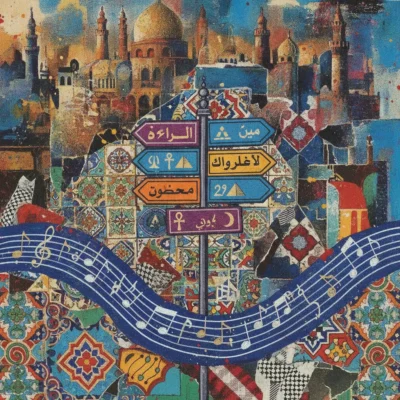
Here’s the thing people leave out when they hype up “learn a language through music” as some magic hack. A lot of song Arabic isn’t the Arabic people actually speak on the street.
Older songs, especially the classic Umm Kulthum and Abdel Halim era, lean heavily poetic. They mix in Modern Standard Arabic, formal structures, and metaphors that no one uses when they’re asking for the check at a café. Beautiful? Absolutely. Useful for ordering koshary or chatting with your neighbor? Not really.
Newer pop songs are closer to real spoken Masri, but even then, songwriters bend grammar for rhyme and rhythm all the time. Just like English songs do. Nobody talks the way Adele sings. Same idea here.
So if your only Arabic exposure is song lyrics, you might end up sounding like you’re reciting poetry at someone who just wants directions to the metro station. That’s the trap. Songs give you real vocabulary and real sounds, but they don’t always give you real, everyday sentence structure.
What Songs Are Actually Good For
Let me break down exactly what to expect from this method, so you’re not disappointed and you’re not overhyping it either.
Pronunciation and accent. This is where songs shine the hardest. Singing forces your mouth into shapes it wouldn’t naturally make. You start picking up the Egyptian “g” sound instead of “j,” the way certain letters soften in casual speech, the natural music of the dialect itself. Even just mumbling along in the shower does something for your accent that reading never will.
Emotional vocabulary. Love, longing, heartbreak, joy, missing someone — Egyptian music is obsessed with these themes, and it teaches you how to actually express feelings, not just describe objects on a table.
Listening comprehension. Training your ear to catch fast, connected, native-speed Arabic is brutal at first. Songs help because you can replay the same three minutes fifty times without anyone judging you.
Cultural fluency. Understanding why a certain song makes an entire wedding go silent, or why one line from an old Umm Kulthum track still gets quoted in memes today — that’s not a small thing. That’s real fluency. The kind that goes beyond grammar and actually lets you connect with people.
What Songs Won’t Do For You
I’ve had students who spent months only listening to music, convinced they were making huge progress, and then froze completely in their first real conversation. Not because they didn’t try hard. Because listening and speaking are different muscles.
Songs won’t teach you how to conjugate verbs in the present, past, and future correctly on your own. They won’t teach you question formation. They definitely won’t teach you how to respond when someone asks you something unexpected, because a song never asks you anything — it just talks at you.
Honestly, this is the biggest myth in language learning content online. Passive input alone doesn’t build active speaking ability. You need output. You need to actually produce the language, mess it up, get corrected, and try again. That part has to come from somewhere else — structured lessons, conversation practice, a teacher who tells you when you got it wrong.
How To Actually Learn Egyptian Arabic Through Songs (Step by Step)
Okay, method time. This is what I tell my own students who want to add music into their routine.
Step 1: Pick one song. Not ten. Resist the urge to build a 40-song playlist right away. One song, deeply studied, teaches you more than twenty songs played in the background while you cook dinner.
Step 2: Listen once with zero goals. Just enjoy it. Get the melody in your head. No pen, no notebook. This step matters more than people think — it builds emotional connection to the song, which is what makes the vocabulary stick later.
Step 3: Find the lyrics and translation. Search the song title plus “كلمات” (lyrics) to find the Arabic text. Cross-reference an English translation so you understand the meaning, not just the sound.
Step 4: Go line by line. Pick out five or six words or phrases per song that you don’t know. Write them down. Not the whole song — just the pieces you can realistically absorb.
Step 5: Sing it. Out loud. Yes, really. I know it feels awkward. Do it anyway. Singing activates muscle memory in your mouth and throat that passive listening never touches.
Step 6: Use the phrases outside the song. This is the step almost everyone skips, and it’s the one that actually matters. If you learned “بحبك” (I love you) from a love song, use it in a real sentence of your own. Take the vocabulary out of the song and put it into your own speech.
Step 7: Repeat with a new song weekly. Consistency beats intensity here. One well-studied song a week for three months teaches you more than three months of passive playlist listening.
If you want a wider routine to plug this into — not just music, but daily habits that actually build fluency — this piece on building a daily Arabic study routine walks through exactly that.
Good Songs and Artists To Start With
You don’t need to start with 1960s poetry. Start with something modern and closer to spoken Egyptian.
- Amr Diab — huge catalog, clear pronunciation, mainstream pop structure that’s easier to follow.
- Tamer Hosny — modern, upbeat, lots of everyday expressions mixed into the lyrics.
- Mohamed Mounir — a bit more poetic, but iconic, and worth working up to.
- Sherine — emotional ballads with clear, expressive vocal delivery, great for catching pronunciation.
- Cairokee — if you want something more current and rock-influenced, with lyrics that lean closer to real street Arabic.
Once you’re comfortable, going back to the classics like Umm Kulthum and Abdel Halim Hafez is genuinely worth it — not for beginner-level learning, but for understanding the cultural backbone that every Egyptian grows up with.
If music gets you hooked on Egyptian pop culture generally, movies and TV shows are the natural next step, and they push you closer to natural conversational Arabic than songs do. I’ve actually written a whole guide on understanding Egyptian Arabic in movies and TV shows if you want to go there next.
Real Questions People Ask About This
“Can I get fluent just by listening to Arabic music every day?” No, and I’d be lying if I told you otherwise. You’ll build a strong ear and a decent vocabulary bank, but fluency needs speaking practice, correction, and structure. Music is a supplement, not a curriculum.
“Is the Arabic in songs too formal or too poetic to actually use?” Depends on the song. Modern pop is generally close to spoken Masri. Older classics lean more poetic and formal. Mix both, but lean modern if your goal is everyday conversation.
“How many songs should I study before I notice a difference?” Most students notice a real shift in listening comprehension after working deeply through 15 to 20 songs, spread out over a few months, not crammed in a weekend.
“Should I focus on Egyptian songs specifically, or does any Arabic dialect work?” If your goal is Egyptian Arabic, stick to Egyptian artists. Lebanese, Gulf, or Moroccan songs will teach you different vocabulary and different pronunciation habits, and mixing dialects too early just confuses your ear.
“Do I need to understand every single word in a song before moving on?” No. Aim to understand the overall meaning and pull out a handful of new words per song. Chasing 100% comprehension on every line will slow you down and burn you out.
Where Songs Fit Into a Real Learning Plan
Music is the fun part. It’s the part that keeps you motivated on the days you don’t feel like opening a grammar book. But if you actually want to speak Egyptian Arabic — order food, joke with a taxi driver, understand your in-laws, hold your own in a real conversation — you need someone correcting your mistakes in real time. That’s the piece songs can never give you.
Not sure where your level actually stands after all that music listening? Take our free Arabic placement test and find out exactly where to start.
Start With a Fun Style
Here’s my honest advice, after years of watching students try both approaches. Don’t choose between fun and structure. Use both. Let songs be the thing that keeps your ears trained and your motivation alive. Let real lessons build the grammar and speaking skills that actually let you use what you’re hearing.
If you want to start learning Egyptian Arabic the fun way — with real conversation, real culture, and yes, room for the music you already love — check out our Colloquial Egyptian Arabic course. You can see full course options and rates on our pricing page, or meet the native teachers who’ll actually correct your Masri on our teachers page.
Put on your favorite Amr Diab track today. Then come practice using what you heard with someone who’ll tell you if you got it right.