

You’ve probably seen the debate online. Someone asks “should I learn MSA or a dialect first?” and the comments turn into a small war. Half the replies say MSA is a waste of time because “nobody speaks it.” The other half say skipping it is the biggest mistake a beginner can make.
I’ve taught Arabic for years. I’ll tell you straight — the second group is right, and I can prove it.
This isn’t going to be a wishy-washy “it depends on you” article that dodges the question. It does depend on your goal, sure. But if your goal is serious, long-term Arabic ability — reading, writing, speaking with confidence across the Arab world, not just ordering coffee in one city — Modern Standard Arabic is where you start. Here’s why.
What Modern Standard Arabic Actually Is
Modern Standard Arabic, or الفصحى, is the standardized form of Arabic used across all 22 Arab countries. It’s the language of the news, of books, of official documents, of university lectures, of formal speeches. It’s not tied to Egypt, Jordan, Morocco, or the Gulf specifically. It belongs to all of them and none of them at once.
Nobody grows up speaking MSA at home. That’s true, and I won’t pretend otherwise. Kids in Cairo grow up speaking Egyptian Arabic. Kids in Beirut grow up speaking Lebanese Arabic. MSA is the language they learn in school on top of their native dialect — the same way you learned “proper” grammar in school even though you didn’t talk that way with your friends.
That’s actually the whole point. MSA is the shared layer. It’s what lets a Moroccan journalist and a Kuwaiti news anchor understand each other perfectly, even though their spoken dialects are barely mutually intelligible.
The Real Reason MSA Wins: It’s the Only Version That Scales
Here’s the thing people miss when they debate MSA vs. dialects. Arabic dialects don’t really transfer to each other. Egyptian Arabic, Levantine Arabic, Gulf Arabic, Moroccan Darija — these aren’t accents of the same language. They’re different enough that a beginner who learns pure Egyptian Arabic will genuinely struggle in Morocco.
MSA doesn’t have that problem. Learn it once, and you can read a newspaper in Baghdad, follow a lecture in Riyadh, and write a formal email to someone in Rabat. No other version of Arabic gives you that kind of reach.
If you’re a beginner who isn’t 100% sure yet which country or dialect you’ll end up needing — and honestly, most beginners aren’t — MSA is the version that doesn’t lock you into a corner. You can always add a dialect later. Going the other way is much harder.
MSA Gives You the Grammar Engine. Dialects Don’t.

I’ll be straight with you — dialects are fantastic for speaking fast and sounding local. But most of them were never designed to be taught systematically. There’s no dialect textbook that breaks down verb conjugation the way MSA grammar resources do. There’s no dialect equivalent of a structured, rule-based system you can lean on when you’re stuck.
MSA gives you that system. Once you understand how Arabic roots work, how verbs change with gender and number, how sentences are actually built — you have a framework. And that framework doesn’t disappear when you switch to a dialect. It just gets adapted.
Students who start with a dialect and skip MSA often hit a wall around month four or five. They can say a lot of things, but they can’t explain why those things are said that way. When they hit a sentence structure they haven’t memorized, they’re stuck. MSA students rarely hit that wall the same way, because they’re not memorizing — they understand the mechanics.
Real Questions People Actually Ask About This
I get some version of these questions constantly — on WhatsApp, in trial lessons, in forums. Let me answer them directly.
“Isn’t MSA useless since nobody actually speaks it?”
No, and this is the most common misunderstanding out there. MSA isn’t a spoken-conversation tool the way a dialect is — that’s true. But “useless” isn’t the right word. Try reading an Arabic news site, a contract, a textbook, or a formal letter using only Egyptian Arabic. You can’t. MSA is the reading, writing, and formal-speaking layer of the entire language. Skip it, and huge parts of the language stay locked away from you forever.
“Will people laugh at me if I speak MSA on the street?”
Nobody’s laughing at you. You might sound a bit formal, a bit like a newscaster — same as if you walked into a casual bar speaking textbook English. People will still understand you completely, and honestly, most Arabic speakers respect the effort more than they judge the register. And once you’re comfortable in MSA, picking up the casual layer on top is fast, because the grammar bones are already there.
“Should I learn MSA or Egyptian Arabic first?”
This comes up so often that we wrote a full comparison for it. Short version: if your goal is reading, writing, formal use, or you’re not sure yet which dialect you’ll actually need, start with MSA. If you’re moving to Egypt next month and just need to survive in the street, Egyptian Arabic first makes sense. We break the whole decision down — including how much vocabulary actually overlaps between the two — in our MSA vs Egyptian vs Quranic Arabic guide.
“Is MSA harder to learn than a dialect?”
Different kind of hard, not more hard. MSA has more grammar rules up front — case endings, more complex verb forms, formal vocabulary. A dialect feels easier at first because you’re just repeating phrases. But that early ease is deceptive. Dialects get harder later because there’s no system to fall back on. MSA feels harder at first and gets easier, because you’re building a structure instead of memorizing scattered phrases.
“If I learn MSA, can I understand the Quran?”
Partially, and it’s worth being honest about this instead of overselling it. MSA and Quranic Arabic share the same alphabet, the same root system, and a lot of vocabulary — studying MSA seriously makes Quranic Arabic far more approachable than it would be otherwise. But they’re not identical. Quranic Arabic has its own grammar patterns and vocabulary that MSA study alone won’t fully cover. If understanding the Quran is your main goal, MSA is still an excellent foundation to build on, just not the whole path by itself.
“Do universities and jobs actually require MSA?”
Yes, consistently. If you’re applying to a graduate program in Middle Eastern studies, working in diplomacy, journalism, translation, or any field that touches official Arabic documents — that’s MSA. Nobody hires a translator who only knows a spoken dialect. MSA is the professional and academic standard across the entire region, full stop.
Who MSA Is Genuinely Perfect For

Not everyone needs MSA first, and I’d rather tell you that honestly than sell you a one-size-fits-all answer. But MSA is the right starting point if:
- You want to read Arabic — books, news, official documents, social media posts written in formal register
- You’re not sure yet which country or dialect you’ll end up needing most
- You’re studying Arabic for academic, diplomatic, or professional reasons
- You want a foundation that makes learning a dialect later much faster
- You want to eventually understand Quranic Arabic and need the grammar base first
- You value structure and want to actually understand the language, not just memorize phrases
If your only goal is ordering food and chatting with friends in one specific city, sure, a dialect alone might get you there faster in month one. But that’s a narrow goal. Most people who say they want to “learn Arabic” mean something bigger than that, even if they haven’t said it out loud yet.
What Happens If You Skip MSA
I’ve seen this pattern play out more times than I can count. A student starts with a dialect only, makes fast early progress, feels great for a few months — and then plateaus hard. They can’t read anything beyond WhatsApp messages. They can’t write a proper sentence. If they ever need to speak in any semi-formal setting, they freeze, because they never built that register.
Then they come to us to fix it, and guess what we start with. MSA. Every time.
Starting with MSA just means you build the foundation once, in the right order, instead of building it twice.
How to Actually Start Learning MSA the Right Way
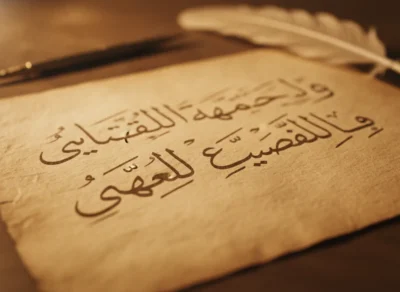
Getting motivated is easy. Staying consistent is the actual challenge. A few honest pointers before you dive in:
Don’t try to learn everything at once. Start with the alphabet, then basic vocabulary, then simple sentence structure. Layer it. Trying to absorb grammar and vocabulary and reading all in week one is how people burn out by week three.
Build a daily habit, even a short one. You genuinely don’t need hours a day. We put together a full 15-minute daily Arabic study routine that’s built specifically around this — small, consistent sessions beat occasional long ones every time.
Get feedback from a real teacher. You can’t hear your own pronunciation mistakes. You can’t catch your own grammar errors. A native teacher fixes both in real time, which is the difference between slow self-taught progress and fast guided progress.
Know your starting point. If you’re not sure how much Arabic you already know, or where exactly to jump in, take our free Arabic placement test first. It takes about 10 minutes and saves you from wasting weeks on material that’s either too easy or too advanced.
The Honest Bottom Line
MSA isn’t the flashy choice. It won’t have you cracking jokes with locals in week two the way a dialect might. But it’s the version of Arabic that doesn’t expire, doesn’t box you into one country, and doesn’t leave you stuck when things get more advanced. It’s the foundation that everything else — reading, writing, dialects, Quranic Arabic, professional Arabic — gets built on top of.
If you’re serious about Arabic, not just curious about it, start here.
Our Modern Standard Arabic course is taught one-on-one by certified native Egyptian teachers, built entirely around your pace and your goals. Not sure where to begin? Meet our teachers or check the course pricing — and when you’re ready, book a free trial lesson.