
You’ve seen both terms thrown around. Someone in a Facebook group says “learn MSA first.” Someone else says “no, learn Fusha first.” Are they arguing about two different things, or the same thing with two names?
I’ll be straight with you — this question trips up almost every new Arabic student, and honestly, most articles online make it more confusing, not less. So let’s fix that right here.
Short answer: MSA and Fusha are not two separate languages. MSA is a type of Fusha. Fusha is the big umbrella. MSA sits under it. There’s another form under that same umbrella too — Classical Arabic — and that’s where most of the confusion actually starts.
Let’s break it down properly.
What “Fusha” Actually Means
الفصحى — Fusha — literally means “the most eloquent.” It’s not a specific course or textbook. It’s a category. It’s the formal, grammatically “correct” register of Arabic, as opposed to the dialects people speak at home.
Here’s the thing most people miss: Fusha isn’t one fixed version of the language frozen in time. It’s changed over 1,400 years. The Fusha of pre-Islamic poetry doesn’t read exactly like the Fusha in today’s newspapers. Vocabulary shifted. Some grammar simplified in practice. New words got added for things that didn’t exist in the 7th century (nobody in the Quran was talking about Wi-Fi).
So when someone says “I want to learn Fusha,” the honest follow-up question is: which Fusha? Because there are two flavors sitting under that umbrella.
The Two Types of Fusha
1. Classical Arabic This is the Fusha of the Quran, hadith literature, classical poetry, and centuries-old manuscripts. It’s older, denser, and in some ways more grammatically rigid. If your main goal is reading the Quran in its original language or working through classical texts, this is the register you’re aiming at.
2. Modern Standard Arabic (MSA) This is the modern, streamlined descendant. It’s what you hear on Al Jazeera, read in a newspaper, find in a contemporary novel, or hear in a formal speech. Same grammatical backbone as Classical Arabic — the case endings, the verb patterns, the sentence structure — but with modern vocabulary layered on top and slightly less ornate phrasing.
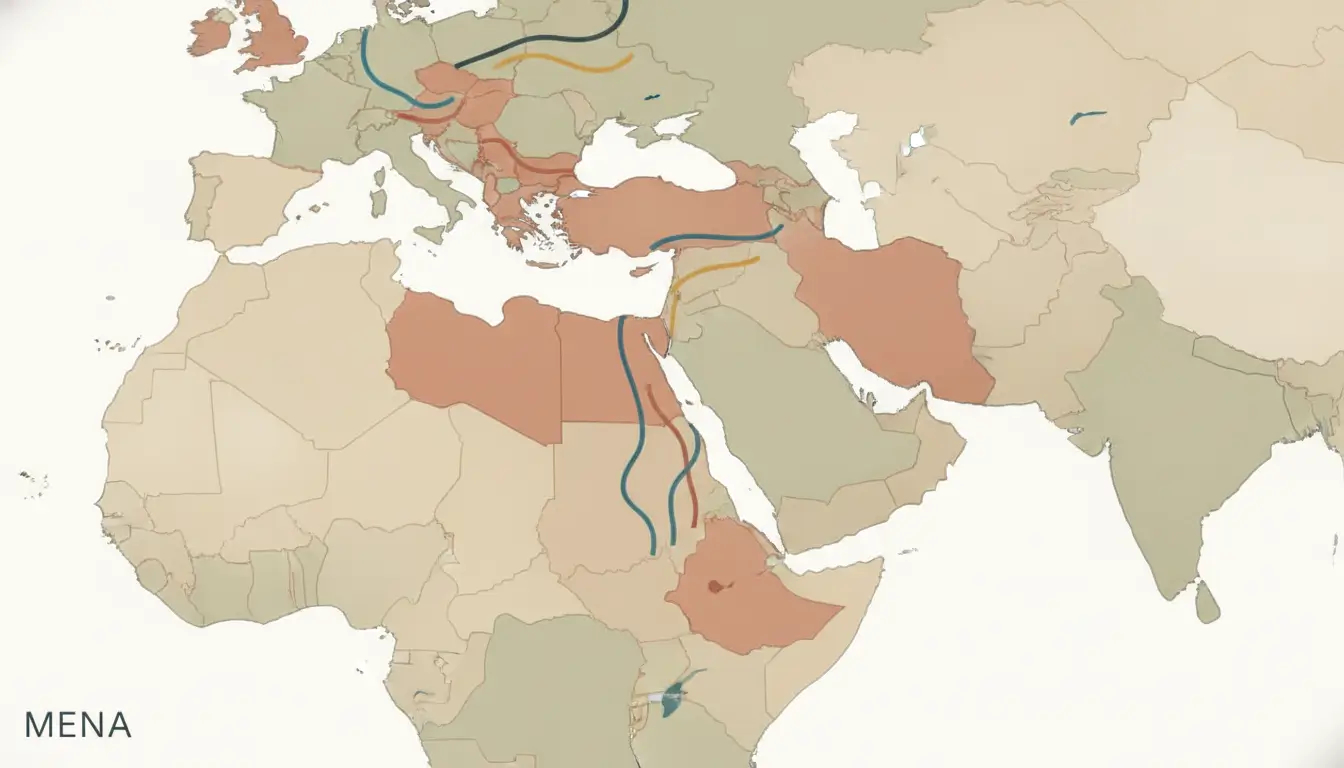
Every single Arab country uses MSA in schools, government documents, and news broadcasts, regardless of which dialect people speak at home. That’s true whether you’re in Morocco or Oman.
So to put it plainly: MSA is Fusha. Just not all of Fusha. Saying “MSA vs Fusha” is a bit like asking “sedan vs car.” One is a specific type inside the bigger category.
If you want to go deeper into how Fusha branches into MSA and Classical Arabic, and which path fits Quranic study specifically, our complete Fusha guide walks through the whole map.
What the Difference Actually Looks Like on the Page

Talk is easy. Let me show you, because this is where it actually clicks for most students.
Take a simple sentence: “The man went to the house.”
- MSA: ذَهَبَ الرَّجُلُ إِلَى الْمَنْزِلِ
- Classical: ذَهَبَ الرَّجُلُ إِلَى الدَّارِ
Same grammar. Same verb form, same case endings, same sentence structure. The only thing that shifted is one word — الْمَنْزِلِ (house, modern usage) vs الدَّارِ (house/dwelling, classical usage). Both are correct. One just sounds more “today’s newspaper,” the other more “centuries-old text.”
That’s the pattern across almost every MSA vs Classical comparison: the skeleton stays the same, the vocabulary and style shift. This is exactly why a solid MSA foundation transfers so well into Classical Arabic later — you’re not relearning grammar, you’re expanding vocabulary and getting used to a more elevated, poetic register.
Does That Mean MSA and Classical Arabic Are the Same Thing?
Not quite, and this matters if you’re choosing what to study.
They share the same grammar system — the three case endings, the root-and-pattern structure, dual forms, all of it. A student who’s solid in MSA grammar can read Classical Arabic without starting from zero. But the vocabulary and style are different enough that jumping straight from MSA news articles into, say, classical Arabic poetry can feel like a jump in difficulty.
Think of it this way: Classical Arabic is denser, more literary, closer to the source. MSA is the practical, everyday-formal version built for modern life — journalism, contracts, textbooks, official speeches. Most learners today start with MSA because it’s more useful day to day, and because strong MSA fundamentals make Classical Arabic far easier to pick up later, especially for Quranic study.
So When Should You Actually Study Classical Arabic?
This is the part most guides skip, so let me give it to you straight.
- Want to understand the Quran at a real, textual depth — not just the general meaning? That’s Classical Arabic. MSA gets you close, but the Quran’s vocabulary and rhetorical style live in the Classical register.
- Want to read classical poetry, hadith literature, or centuries-old manuscripts in their original form? Same answer. Classical Arabic.
- Want to read the news, write formal emails, follow a lecture, or pass a certification like CEFR or ACTFL? MSA is genuinely enough. You don’t need Classical Arabic for any of that.
Here’s the move that actually works, and it’s not “pick one and ignore the other.” Build MSA first. It gives you the grammar engine — the case system, verb conjugation, sentence structure — that Classical Arabic runs on too. Then layer Classical vocabulary and style on top once you’re comfortable. Starting with Classical Arabic cold, with no MSA foundation, is a much slower and rockier road for most learners.
Does Anyone Actually Speak Fusha at Home?
No. And this surprises a lot of beginners.
No Arab country uses Fusha — in either its MSA or Classical form — as the language of daily conversation. Not one. If you walked into a café in Cairo, Amman, or Casablanca and started speaking pure MSA to order coffee, people would understand you, but it would sound the way it sounds when someone recites a legal document out loud in casual conversation. Technically correct. Weirdly stiff.
This is called diglossia — a fancy linguistics term for a language having two clearly separate lanes: a formal “High” version (Fusha) and an everyday “Low” version (the dialects — Egyptian, Levantine, Gulf, Maghrebi, and so on). Educated Arabic speakers move between both lanes constantly, often without even noticing they’re switching.
If you want a full breakdown of how dialects fit into this picture and which one might suit your goals, we’ve got a complete guide on Arabic dialects and how to choose the right one — worth a read if travel or conversation is part of your “why.”
Not sure if you’re ready to jump into MSA, or if you still need to build the foundation first? Take the free Arabic placement test — it takes a few minutes and tells you exactly where you stand.
MSA vs Fusha vs Dialect: The Full Picture
Let’s put the whole thing in one place, because three terms flying around at once is where people really get lost.
| Term | What it actually is | Where you’ll encounter it |
|---|---|---|
| Fusha | The umbrella term for formal Arabic (both types below) | Used loosely by native speakers to mean “proper Arabic” |
| Classical Arabic | The older form under the Fusha umbrella | Quran, hadith, classical poetry, religious texts |
| MSA | The modern form under the Fusha umbrella | News, books, official documents, formal speeches, schools |
| Dialect (Ammiya) | The spoken, everyday language | Homes, markets, TV shows, social media, real conversation |
Notice dialect isn’t a type of Fusha at all. It’s the other half of the diglossia — the “Low” variety. So when people ask “should I learn MSA, Fusha, or a dialect,” they’re really only choosing between two real paths: formal Arabic (MSA, and later maybe Classical) or a spoken dialect. “Fusha” by itself isn’t really a third option — it’s the category that MSA and Classical both live in.
Real Questions People Actually Ask About This
“Is Fusha the same as MSA?” Not exactly. MSA is one of the two forms of Fusha — the modern one. Fusha is the broader term covering both MSA and Classical Arabic.
“If I learn MSA, will I understand the Quran?” Partly, and this is important to be honest about. MSA grammar overlaps heavily with Quranic Arabic, so you’ll recognize sentence structure and a lot of vocabulary. But the Quran uses classical vocabulary, poetic structures, and rhetorical devices that go beyond standard MSA. Strong MSA is a genuinely great foundation for Quranic study — it’s just not the finish line.
“Do native Arabic speakers even use the word ‘MSA’?” Rarely, in everyday speech. Most educated Arabs just say الفصحى (al-Fusha) to mean “proper, formal Arabic,” without splitting it into MSA vs Classical the way language schools do. The MSA/Classical distinction is more of a teaching and linguistics framework than something Arabs argue about at the dinner table.
“Should I start with Fusha or a dialect?” Depends entirely on your goal. Quran, formal writing, news, academic work, or wanting to be understood across all 22 Arab countries — start with MSA. Talking to family, traveling, watching shows, or making friends in a specific region — start with the relevant dialect. Trying to do both at full speed on day one is the fastest way to burn out. We break this decision down in more depth over on our dialects guide.
So Which One Should You Actually Learn?
Honestly? For most learners, MSA is the smarter starting point, and here’s the practical reasoning, not just tradition talking:
- It’s understood across every Arab country, unlike a dialect that might only get you far in one region.
- It gives you the grammar backbone — case endings, verb conjugation patterns, sentence structure — that makes every other form of Arabic, including dialects and Classical Arabic, easier to pick up later.
- It’s what you need for reading, writing, formal speaking, news, and academic or professional contexts.
- It’s the most direct bridge toward Quranic and Classical Arabic, if that’s part of your journey.
That said, MSA won’t get you through casual conversation with your Egyptian neighbor or your Lebanese in-laws the way it sounds in a movie. If your only goal is chatting with people, a dialect might genuinely be the faster win. There’s no universally “correct” answer here — just the answer that matches what you actually want Arabic for.
Not sure where you currently stand or which path fits your goals? Our free Arabic placement test takes a few minutes and gives you a clear starting point instead of a guess.
How We Teach MSA at Alphabet Arabic Academy
We build our MSA courses around the actual grammar backbone I mentioned above — case endings, verb forms, sentence structure — taught by native Egyptian teachers who know exactly where English speakers get stuck. No 500-page grammar dump on day one. Just a structured path from zero to reading, writing, and speaking formal Arabic with real confidence.
If you’re serious about starting, or restarting, pair your lessons with a simple daily habit — our 15-minute daily study routine is built specifically around MSA beginners and it works even on your busiest weeks.
You can see full course structures and options on our pricing page, or head straight to our Modern Standard Arabic program to see exactly how the lessons are structured from your first class onward.
Bottom Line
MSA isn’t a rival to Fusha. It’s part of it. Fusha is the umbrella, MSA is the modern branch living under that umbrella, and Classical Arabic is the older branch next to it. Dialects sit completely outside that umbrella — they’re the everyday spoken half of the language.
Once that clicks, the whole “MSA vs Fusha” debate kind of disappears. The real question was never MSA vs Fusha. It was always: formal Arabic or spoken dialect, and which one gets you where you actually want to go.
Take the guesswork out of it. Take the free placement test, see where you stand, and choose the right path with actual clarity instead of forum debates.