
msa vs egyptian vs quranic arabic So you’ve decided to learn Arabic. Good. That’s a big decision and I respect it.
But now you’re stuck. Because everyone has an opinion. Some people say start with MSA. Some say go straight to Egyptian. And if you’re Muslim, someone’s definitely told you “just learn Quranic Arabic first.”
Here’s the thing — all of that advice is incomplete. Because none of those people asked you why you want to learn Arabic. And that’s the only question that actually matters.
Let me break this down properly.
First, Let’s Get Something Clear
Arabic isn’t one language. Not really.
That’s the thing nobody explains to beginners, and it causes so much confusion. When someone says “I’m learning Arabic,” they could mean three completely different things.
They could mean Modern Standard Arabic — the formal written version used in newspapers, books, official speeches, and education across the Arab world.
They could mean Egyptian Arabic — the spoken dialect of Egypt, which is also the most widely understood dialect in the Arab world because of Egyptian TV, movies, and music.
Or they could mean Quranic Arabic — the classical language of the Quran, which is older than MSA and has its own grammar rules, vocabulary, and style.
These three overlap. But they are not the same thing. And treating them like they are is one of the most common mistakes beginners make.
What Is MSA (Modern Standard Arabic)?
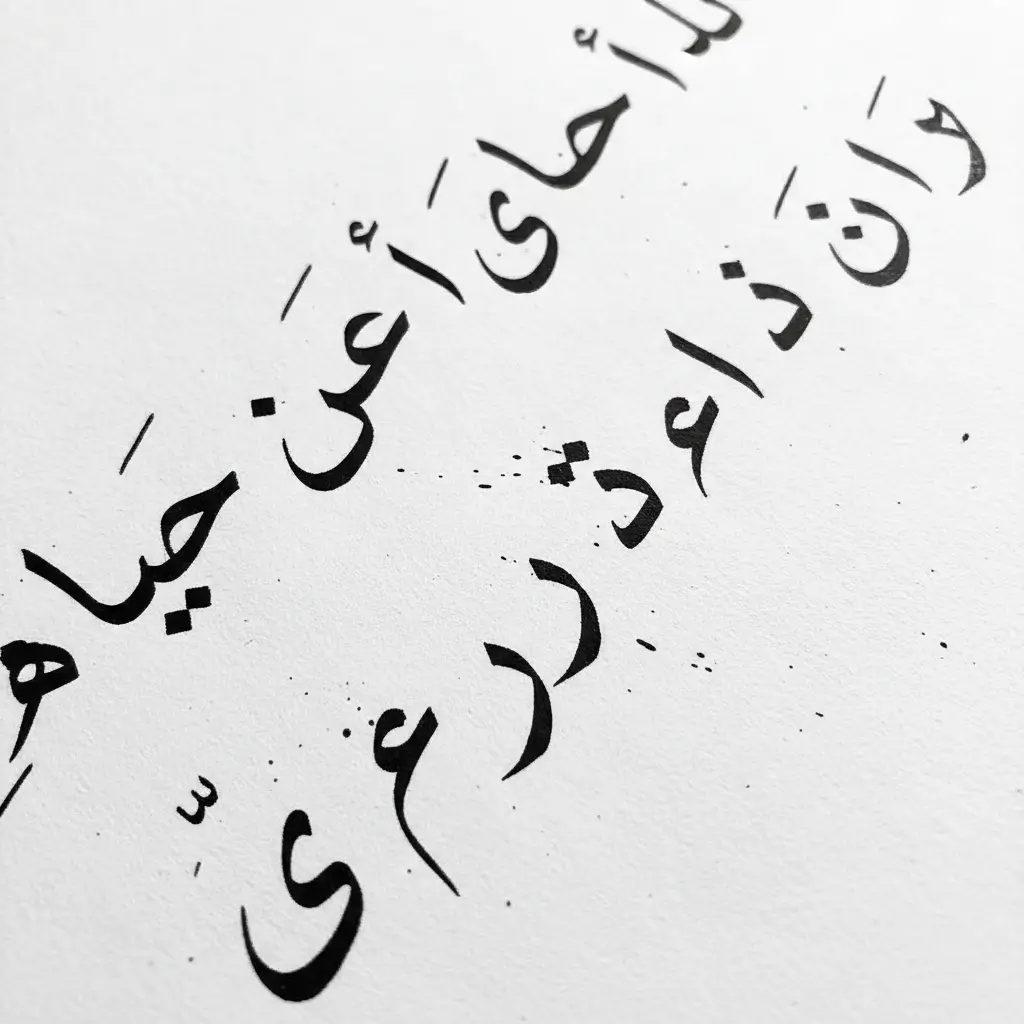
MSA, or الفصحى الحديثة, is the standardized version of Arabic used across the Arab world today. No one is born speaking MSA. No one’s mom says “تعال هنا” in perfect MSA at the dinner table.
But it’s everywhere. News anchors use it. Teachers use it in classrooms. Official documents are written in it. If you pick up an Arabic newspaper in Cairo, Baghdad, or Casablanca — it’s MSA.
Why people choose MSA:
- It works everywhere. All 22 Arab countries understand it
- It’s the language of literacy — you need it to read and write properly
- It’s the best foundation if you want to learn multiple dialects later
- It’s essential for professional or academic purposes
- It’s what most serious Arabic courses teach
The honest downside: Nobody actually speaks MSA in daily conversation. If you go to Egypt and start speaking MSA on the street, people will understand you — but you’ll sound like a news anchor. A little stiff. A little formal. And sometimes people will switch to English just to make it easier.
So MSA gives you broad reach and literacy. But it won’t help you make friends in a Cairo café.
If you’re serious about building that strong foundation — the kind that can take you anywhere — our Modern Standard Arabic course is a great place to start.
What Is Egyptian Arabic?
Egyptian Arabic, or العامية المصرية, is the dialect spoken by roughly 100 million people in Egypt. It’s also the most widely understood dialect across the entire Arab world.
Why? Because of Egyptian media. For decades, Egyptian cinema, TV shows, and music dominated the Arab world. People from Morocco to the Gulf grew up watching Egyptian content. So even if you’re talking to a Jordanian or a Yemeni, there’s a good chance they understand Egyptian Arabic just fine.
Why people choose Egyptian Arabic:
- You can actually use it in real conversations immediately
- It’s understood by more Arabic speakers than any other dialect
- Egyptian media is everywhere — you have tons of learning resources
- If you want to make Egyptian friends or travel to Egypt, it’s essential
- It’s more informal and natural-sounding in day-to-day life
The honest downside: Egyptian Arabic is a spoken language. Written material is almost always in MSA. So if you only learn Egyptian Arabic, you’ll be able to talk — but reading a newspaper, writing an email, or understanding formal content will still be hard.
It’s also a dialect, which means it’s specific. Yes, it travels well. But if you’re working in the Gulf or Morocco, you’ll encounter words and expressions that Egyptian Arabic doesn’t cover.
What Is Quranic Arabic?
Quranic Arabic is the classical Arabic of the Quran. It’s the oldest of the three, and in many ways the most precise and structured.
Quick note on a common question: A lot of people ask about “MSA vs Classical Arabic” — and get confused because the terms blur together. Here’s the simple version. Quranic Arabic and Classical Arabic are often used interchangeably. But technically, Classical Arabic is the broader category — it includes pre-Islamic poetry, early Islamic texts, and the Quran. Quranic Arabic refers specifically to the language of the Quran. For learning purposes, they’re essentially the same path. So when people say “I want to learn Classical Arabic,” they almost always mean they want to understand the Quran and early Islamic texts.
Here’s what surprises a lot of learners: Quranic Arabic is NOT the same as MSA. They’re related — MSA actually evolved from classical Arabic — but there are real differences in vocabulary, grammar, and style.
For example, Quranic Arabic uses certain verb forms and sentence structures that you won’t find in MSA newspapers. And some words mean something slightly different in the Quran versus in modern usage.
Why people choose Quranic Arabic:
- Spiritual motivation is incredibly powerful as a learning driver
- It gives you direct access to the Quran in its original language
- The grammar is precise and well-documented
- It builds a strong understanding of classical Arabic roots
The honest downside: I’ll be straight with you — Quranic Arabic alone won’t make you “fluent in Arabic” in the way most people mean that phrase. You’ll be able to read and understand the Quran, but you won’t necessarily be able to hold a conversation, read a modern Arabic article, or watch an Egyptian movie and follow along.
If your goal is purely to understand the Quran, that’s completely valid and it’s a meaningful goal. But if you also want to communicate with Arabic speakers, Quranic Arabic isn’t the full answer.
The Big Overlap Question: How Similar Are They?

This is a question that comes up constantly on Reddit and Quora, and it deserves a real answer with actual numbers.
MSA vs Quranic Arabic: MSA and Quranic Arabic share the same writing system, the same root-based grammar structure, and a lot of vocabulary. If you study MSA seriously, you’ll find that reading Quranic Arabic becomes much more accessible — maybe 60-70% familiar. But that remaining 30-40% includes some important differences in grammar and vocabulary that you’ll need to study specifically.
MSA vs Egyptian Arabic: Linguists estimate roughly 60-75% vocabulary overlap between MSA and Egyptian Arabic. The grammar differs more — maybe 50-60% similar. You’ll recognize a lot, but enough is different that you can’t just “convert” MSA into dialect. Pronunciation shifts, sentence structures flip, and entire categories of everyday vocabulary are completely different. An MSA student can sometimes figure out what an Egyptian is saying from context — but they won’t understand everything, and they definitely won’t sound natural when they speak.
The bottom line: learning one version helps with the others, but none of them fully substitutes for another.
So Which One Should YOU Start With?
Honestly, the answer depends 100% on your goal. Let me make this as simple as possible.
Start with MSA if:
- You want to read and write Arabic properly
- You’re interested in Arabic literature, journalism, or media
- You’re a student or working in academia, diplomacy, or international relations
- You want a foundation that works across the entire Arab world
- You’re not sure which dialect to eventually focus on
- You want to pass formal Arabic exams or certifications
MSA is the safest and most flexible starting point for most learners. It’s the backbone of the language. Everything else builds on top of it.
→ Explore our MSA courses here
Start with Egyptian Arabic if:
- You’re planning to travel to Egypt or live there
- You want to speak with Egyptians specifically
- You’re interested in Egyptian media — movies, music, TV shows
- Your goal is conversational fluency first
- You learn better through listening and speaking than reading and writing
- You have an Egyptian partner, family, or friends
Egyptian Arabic gets you speaking faster. And because it’s so widely understood, it travels better than people think.
Start with Quranic Arabic if:
- Your primary goal is to understand the Quran in its original language
- You’re taking Islamic studies or want to understand Islamic texts
- Spiritual connection to the language is your main motivation
- You want to deepen your understanding of Islamic worship
This path has real spiritual depth and meaning. Just be clear with yourself about what you’re trying to achieve. Quranic Arabic study is rich and rewarding — but it’s a specific path, not a general Arabic path.
Can You Learn More Than One?
Yes. And actually, many learners do exactly that.
A common approach that works really well:
- Start with MSA to build your foundation — alphabet, grammar, core vocabulary
- Once you have that base, add Egyptian Arabic for conversational skills
- If you’re Muslim or interested in Islamic studies, layer in Quranic Arabic alongside your MSA study
The reason MSA + Egyptian Arabic is such a popular combo is that they actually reinforce each other. Your MSA grammar helps you understand Egyptian Arabic at a deeper level. And Egyptian Arabic helps you feel the language in a way that pure grammar study never can.
There’s no rule that says you have to pick one forever. But at the beginning — pick one. Trying to learn all three simultaneously from zero is a fast way to get confused and give up.
What About Other Dialects?
Quick note here, because some people ask: what about Levantine Arabic? Gulf Arabic? Moroccan Arabic?
All of those are valid dialects. But for most learners — especially beginners — Egyptian Arabic is the most practical starting point among dialects because of its wide comprehension across the Arab world. Once you have any solid Arabic foundation, picking up another dialect is genuinely much easier.
The Honest Summary
| MSA | Egyptian Arabic | Quranic Arabic | |
|---|---|---|---|
| Used for | Writing, news, formal speech | Everyday conversation in Egypt | Reading the Quran |
| Who understands it | All Arabic speakers | Most Arabic speakers | Scholars, students of Islam |
| Great for | Broad foundation, literacy | Speaking, travel, Egypt | Spiritual/religious understanding |
| Limitation | Not spoken naturally | Hard to use for reading/writing | Not modern or colloquial |
| Best for | Most beginners | Conversational learners | Muslims, Islamic studies students |
Ready to Start?
If you’re genuinely not sure which type of Arabic is the right fit for you, the best thing to do is take a proper level assessment. That way, you know exactly where you’re starting from — and you can talk to someone about which path makes the most sense for your specific goals.
Take our free Arabic placement test here — it takes about 10 minutes and gives you a clear picture of your current level.
Want to know who’ll be teaching you? Meet our certified native teachers or check our course pricing plans before you decide.
اختر مسارك — Choose your path. The best time to start was yesterday. The second best time is today.