

Feeling stuck with Arabic after a few months? You’re not alone — and it’s probably not what you think.
Most people who struggle with Arabic aren’t struggling because Arabic is too hard. They’re struggling because they’re making the same beginner Arabic mistakes — over and over — without realizing it.
I’ve taught Arabic online for years. I’ve seen the same stuck points. The same frustration at month three.
And the good news? Every single mistake on this list is fixable.
Quick Summary: The 15 Beginner Arabic Mistakes at a Glance
Before we go deep — here’s the full list in one shot:
- Starting with transliteration instead of the alphabet
- Mixing up MSA and dialects without a clear goal
- Translating word-by-word from English
- Skipping pronunciation in the early weeks
- Cramming vocabulary lists without context
- Avoiding Arabic grammar entirely
- Never practicing speaking out loud
- Only reading, never listening
- Inconsistent study habits
- Quitting during the plateau phase
- Studying without a teacher
- Having a vague or wrong goal
- Not knowing your current Arabic level
- Expecting results too fast
- Studying without a structured plan
Now let’s go through each one — with the fix.
Mistake #1: Starting With Transliteration Instead of the Alphabet
Why beginners do it
The Arabic script looks intimidating. So people avoid it and write Arabic in English letters — “marhaba” instead of مرحبا. Feels easier at first.
Why it backfires
You build a fake version of Arabic in your head. And when you finally meet the real script, you have to unlearn everything you practiced. It’s double the work.
The fix
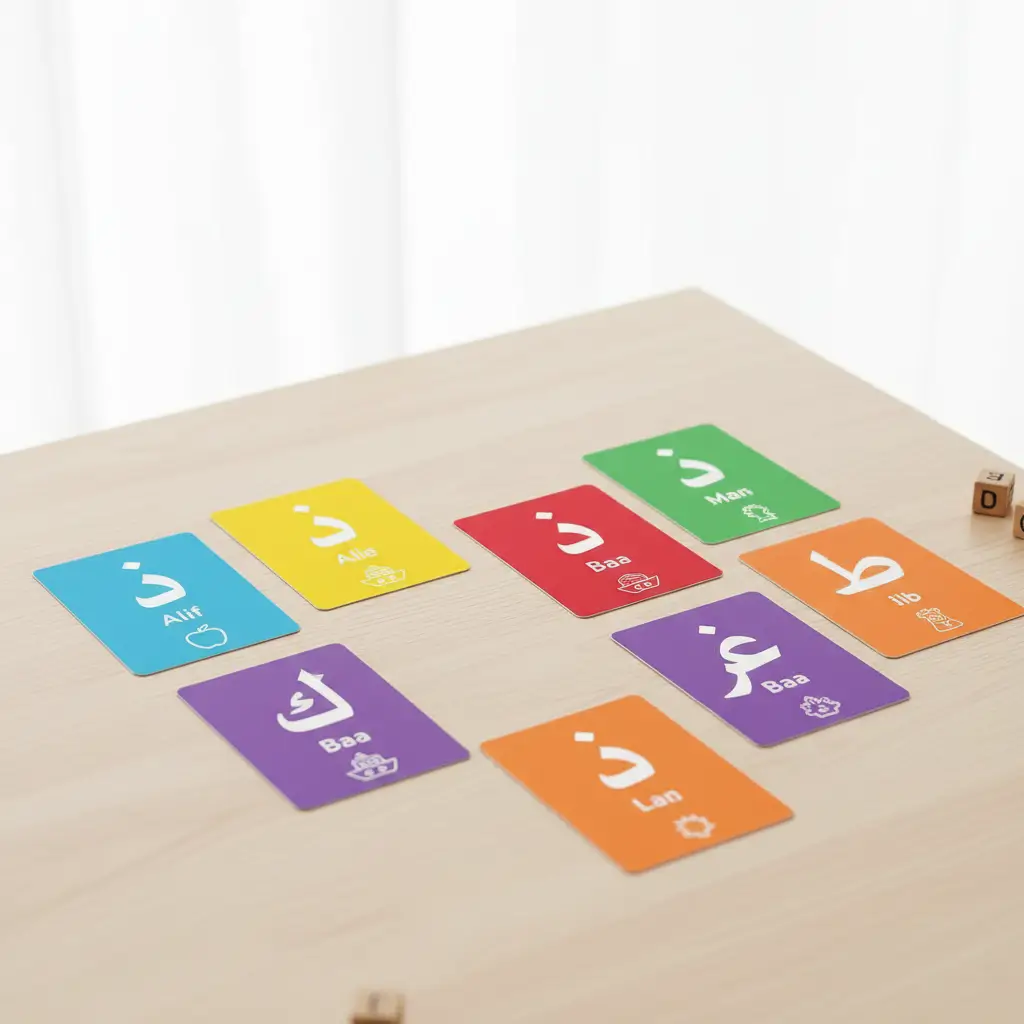
Learn the Arabic alphabet first. Spend one to two weeks on it. It’s 28 letters. You can do this before you study anything else.
Mistake #2: Ignoring the Difference Between MSA and Dialects
This is one of the most damaging beginner Arabic mistakes — and it creates confusion that follows people for years.
Why beginners do it
They hear “Arabic” and assume it’s one thing. It’s not.
Why it backfires
Modern Standard Arabic (MSA) is the formal written language — used in books, news, education, and official settings. Dialects are the spoken versions — Egyptian, Levantine, Gulf, Moroccan. They’re different enough that mixing them up randomly makes both worse.
The fix
Pick your Arabic based on your actual goal. Here’s a simple guide:
| Your Goal | Which Arabic to Study |
|---|---|
| Read the Quran | MSA |
| Follow Arabic news | MSA |
| Travel to or talk with Egyptians | Egyptian Arabic |
| Work in the Gulf region | MSA + basic Gulf dialect |
| Study Arabic literature or get certified | MSA |
| Chat casually with Arab friends | Dialect of their country |
Know your goal first. Pick the right Arabic for it. Stick to it — don’t switch halfway through.
Mistake #3: Trying to Learn Arabic by Translating English
Why beginners do it
It feels logical. Think in English, translate to Arabic.
Why it backfires
Arabic has its own structure. The default word order is verb-subject-object, not subject-verb-object like English. Common English phrases often have no direct Arabic equivalent. The results sound unnatural — sometimes completely wrong.
The fix
Learn phrases and full sentences as units. When you learn مرحبا, learn it as a complete greeting — not as a translation of “hello.” Your brain needs to store Arabic patterns, not English patterns dressed in Arabic words.
Mistake #4: Skipping Pronunciation in the Early Weeks
Why beginners do it
Pronunciation feels like something you can “fix later.” Better to focus on vocabulary and grammar first, right?
Why it backfires
Arabic has sounds that don’t exist in English — ع (ain), غ (ghain), ح (ha), خ (kha). Skip them early, and you build habits that are genuinely hard to undo. Six months in, you’re mispronouncing words consistently, and native speakers are struggling to understand you.
The fix
Work on pronunciation in your first few weeks alongside the alphabet. Record yourself. Compare to a native speaker. Get feedback from a real teacher. Fix it early, not later.
Mistake #5: Cramming Vocabulary Lists Without Context
Why beginners do it
Lists feel productive. You learn 50 new words. That’s 50 new words, right?
Why it backfires
Honestly, this is one of the most common Arabic mistakes I see — and one of the most useless study habits. You’ll forget 80% within a week. And the words you do remember? You won’t know how to actually use them in a sentence.
The fix
Learn vocabulary inside sentences and phrases. When you see كتب (he wrote), see it in a full sentence. See how it changes form. See what comes before and after it. That’s real Arabic — not just a word on a flashcard.
Mistake #6: Avoiding Grammar Because It “Seems Too Hard”
Why beginners do it
Arabic grammar is genuinely complex — root-based verb systems, dual forms, broken plurals, case endings. It’s intimidating, so people push it off.
Why it backfires
Avoiding grammar doesn’t make it easier. It means you spend years making random guessing errors instead of understanding the rules. Your Arabic stays weak at the foundation.
The fix
You don’t need to master grammar all at once. Start basic. Learn sentence structure. Learn how verbs change by subject. Add one grammar concept every week. Build from there.
Mistake #7: Not Practicing Speaking Out Loud
Why beginners do it
They’re embarrassed. They feel like they’re not ready yet. They want to know more before they speak.
Why it backfires
There’s no “ready.” Waiting until you know enough to speak means you never speak. And without speaking, your Arabic stays passive — you can recognize it but not produce it.
The fix
Start speaking from week one. Talk to yourself in Arabic. Describe what you’re doing. Repeat sentences out loud. Even ten minutes a day rewires your brain to treat Arabic as something real, not just something to study.
Mistake #8: Focusing Only on Reading, Never Listening
Why beginners do it
Reading is easier to control. You can go at your own pace. Listening feels overwhelming.
Why it backfires
Arabic sounds different from how it looks. Even MSA. If you never listen, you miss the natural rhythm, the connected speech, the way real people use the language. You’ll understand written Arabic but freeze the moment you hear a real speaker.
The fix
Listen to Arabic every day. It doesn’t matter if you don’t understand it yet. Podcasts, YouTube, news in Arabic — anything. Your ears need consistent exposure to start making sense of the sounds.
Mistake #9: Inconsistent Study Habits
Why beginners do it
Life gets busy. They study hard for a week, then disappear for ten days.
Why it backfires
This is the number one progress killer. Your brain needs consistent, repeated exposure to build real language pathways. Studying three hours on Sunday then nothing for six days? Your brain resets most of it.
The fix
Twenty minutes every day beats two hours once a week. Every single time. Set a fixed daily time — even fifteen minutes. Protect it. Consistency beats intensity, always.
Mistake #10: Quitting During the Plateau

Why beginners do it
Around month two or three, progress slows down. Nothing feels like it’s clicking. It seems like the early progress is gone. They assume they’re not good at Arabic.
Why it backfires
The plateau is normal. It happens to every single learner. Your brain is processing and organizing everything you’ve absorbed. It doesn’t feel like progress — but it is.
The fix
Push through. Lower your daily goal if you need to. Five minutes is better than nothing. But don’t stop. The people who break through the plateau are the ones who end up actually speaking Arabic.
Mistake #11: Trying to Learn Arabic Without a Teacher
Why beginners do it
Apps are cheap. YouTube is free. They think they can figure it out alone.
Why it backfires
Apps can’t tell you when your pronunciation is wrong. They can’t answer your specific questions. They can’t adjust the pace when you’re stuck. And they definitely can’t give you real conversation practice.
The fix
A good Arabic teacher accelerates everything. You don’t need daily classes — even two or three sessions a week makes a massive difference. Check out our certified native Arabic teachers at Alphabet Arabic Academy if you want someone who’s worked with beginners through all of these exact beginner Arabic mistakes.
Mistake #12: Setting the Wrong Goal
Why beginners do it
“I want to learn Arabic” feels like a goal. It’s not.
Why it backfires
Without a specific goal, you don’t know what to study. You drift between MSA and dialects. You pick random vocabulary. You follow whatever looks interesting. After six months, you have bits of everything and fluency in nothing.
The fix
Get specific. Do you want to read the Quran? Talk with Egyptian family? Work in a Gulf company? Pass an official Arabic exam? Each goal needs a different focus. Decide first. Then build your learning around that one thing.
Mistake #13: Not Testing Your Current Arabic Level

Why beginners do it
They assume they’re a beginner — so why test? Just start from zero.
Why it backfires
A lot of beginners waste months studying things they already know, or skipping foundational things they actually need. You can’t map a route if you don’t know where you’re starting.
The fix
Take the free Arabic placement test before you start. It checks your reading, writing, and basic vocabulary. It takes 7 to 10 minutes. You’ll get a result telling you exactly which course level to start with — so you’re not wasting time on the wrong material.
Mistake #14: Expecting Results Too Fast
Why beginners do it
They see “learn Arabic in 30 days” content everywhere. It sets unrealistic expectations.
Why it backfires
Here’s the thing — Arabic takes real time. The U.S. Foreign Service Institute puts it in Category IV: the hardest language category for English speakers, with roughly 2,200 hours needed for professional proficiency.
But — and this is important — that doesn’t mean you’re waiting years to be useful. Basic conversation takes around 100 to 200 hours. That’s 3 to 4 months of 20 minutes a day. You’ll start understanding real Arabic much sooner than you think. The 2,200-hour number is about professional-level mastery, not “can I hold a basic conversation.”
The fix
Set realistic timelines. Celebrate small wins. Getting through the alphabet is a win. Understanding your first full sentence is a win. Arabic is a long game — but it’s full of short wins along the way.
Mistake #15: Studying Arabic Without a Structured Plan
Why beginners do it
They pick up whatever resource looks good. A YouTube channel today. A grammar book tomorrow. An app next week.
Why it backfires
Random studying is one of the most underrated beginner Arabic mistakes. After three months of “studying,” everything feels patchy and disconnected. That’s because there’s no sequence. Arabic builds on itself — each concept prepares you for the next. Skipping around breaks that chain.
The fix
Follow a structured course. One that goes in the right order. You can supplement with videos and apps, but have one main structured resource at the center of your learning. Don’t freelance your way through Arabic.
Quick Self-Check: Which Mistakes Are You Making Right Now?
Go through this list honestly:
- Are you still using transliteration? → Fix #1
- Not sure if you need MSA or a dialect? → Fix #2
- Haven’t spoken Arabic out loud yet? → Fix #7
- Studying when you feel like it, not on a schedule? → Fix #9
- Don’t know your Arabic level yet? → Fix #13
Pick the one that hits hardest. Fix that one first. Then come back for the next.
Start Right — Avoid These Beginner Arabic Mistakes From Day One
The six things that matter most:
Learn the alphabet first. Know which Arabic matches your goal. Be consistent, not intense. Practice speaking from week one. Take a placement test to know your level. Follow a structured plan.
That’s it. Those six things put you ahead of most Arabic learners.
If you’re ready to start with structure from the beginning, our Modern Standard Arabic courses are built around exactly this — certified native teachers, a clear learning path, no wasted time.
Not sure where you stand? Take the free Arabic placement test first. Seven minutes. You’ll know exactly where to start.
Stop letting beginner Arabic mistakes slow you down. Start the right way.