
If you’re just starting out with Arabic, family words are where you should be spending your time. Not verb conjugation tables. Not obscure grammar rules. Family.
Here’s why. You already know this vocabulary in your own language without trying. Mom, dad, brother, sister — you learned these before you learned to tie your shoes. So when you learn them in Arabic, your brain isn’t fighting a new concept. It’s just attaching a new sound to something it already understands. That’s the easiest kind of learning there is.
And honestly, family words show up constantly. In conversation, in Arabic songs, in the Quran, in every single “tell me about yourself” moment you’ll ever have with a native speaker. Skip this, and you’ll be stuck nodding along in family conversations for months.
So let’s get into it.
A Quick Heads-Up Before We Start
Arabic family words work a little differently than English ones. Two things you need to know upfront:
First, Arabic nouns have gender. Every word is either masculine or feminine, and family words are no exception — actually, they’re the clearest example of this, since most of them literally refer to a man or a woman.
Second, and this trips people up more — the word for “my father” isn’t just “father” plus a separate word for “my.” Arabic attaches possession directly onto the noun as an ending. So “father” becomes “my father” by adding a sound to the end of the word, not by putting a new word in front of it. We’ll show you exactly how that works below, with real examples, not just theory.
If you haven’t gone through the Arabic alphabet yet, I’d pause here and do that first — our Arabic alphabet guide for beginners walks you through all 28 letters and how they connect. Family words are a great place to start reading real Arabic script instead of relying on transliteration.
Immediate Family: The Words You’ll Use Every Day
Let’s start with the core group. These are the words you’ll actually use in your first weeks of speaking Arabic.
| English | Arabic | Transliteration |
|---|---|---|
| Father | أَب | ab |
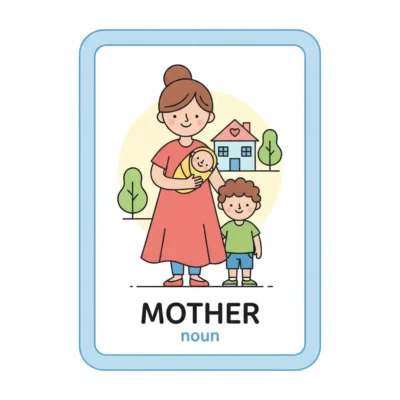
| Mother | أُم | umm |
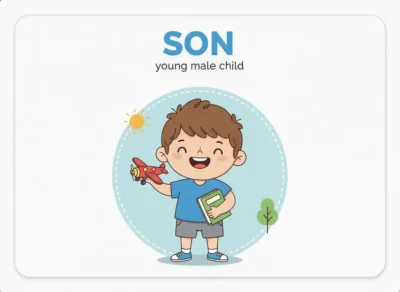
| Son | اِبْن | ibn |
| Daughter | اِبْنَة | ibna |
| Brother | أَخ | akh |
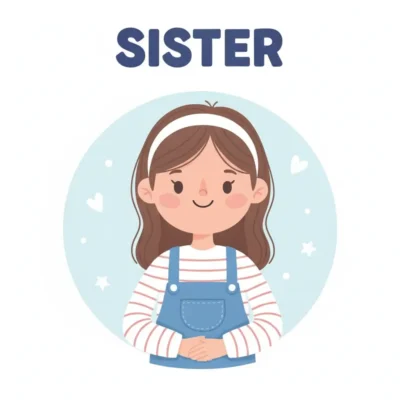
| Sister | أُخْت | ukht |
| Husband | زَوْج | zawj |
| Wife | زَوْجَة | zawja |
| Parents | وَالِدَان | waalidaan |
| Children | أَوْلاد | awlaad |
Now here’s the thing — nobody actually walks around saying “ab” and “umm” in isolation. In real speech, you almost always attach the possessive ending. So instead of “father,” you say “my father.” Let’s break that down.
How to Say “My Mom,” “My Dad,” and So On
This is the part that actually matters, because this is how these words show up in real conversation.
To say “my,” you add “-i” to the end of the word:
- أَبِي (abi) — my father
- أُمِّي (ummi) — my mother
- أَخِي (akhi) — my brother
- أُخْتِي (ukhti) — my sister
- اِبْنِي (ibni) — my son
- اِبْنَتِي (ibnati) — my daughter
- زَوْجِي (zawji) — my husband
- زَوْجَتِي (zawjati) — my wife
Notice something? “Akhi” and “ukhti” might already sound familiar if you’ve spent time around Arabic speakers online or in real life — they get used casually between friends too, kind of like how English speakers might jokingly call a close friend “bro.” That’s not a coincidence. Family language bleeds into everyday friendliness in Arabic culture, and that’s worth knowing.
For “your,” “his,” and “her,” the endings change:
| Meaning | Ending | Example |
|---|---|---|
| Your (to a male) | -ak | أَبُوك (abook) — your father |
| Your (to a female) | -ik | أَبُوكِ (abooki) — your father |
| His | -uh | أَبُوه (abooh) — his father |
| Her | -ha | أَبُوها (abooha) — her father |
I won’t pretend this isn’t a lot to absorb at once. It is. But you don’t need to memorize the whole grid today. Start with “my” — abi, ummi, akhi, ukhti — and let the rest come with time. That’s genuinely how most of our students approach it, and it works.
If the idea of attaching endings to nouns feels unfamiliar, that’s just Arabic grammar doing its thing. Our complete guide to Arabic grammar and writing covers this pattern in more depth if you want the full picture.
Extended Family: Where It Gets Interesting
Now here’s where Arabic does something English doesn’t do at all. In English, “aunt” covers your mom’s sister and your dad’s sister. Same word. In Arabic? Nope. Completely different words depending on which side of the family they’re from.
| English | Arabic | Transliteration | Notes |
|---|---|---|---|
| Grandfather | جَدّ | jadd | |
| Grandmother | جَدَّة | jadda | |
| Uncle (father’s brother) | عَمّ | ‘amm | |
| Uncle (mother’s brother) | خَال | khaal | |
| Aunt (father’s sister) | عَمَّة | ‘amma | |
| Aunt (mother’s sister) | خَالَة | khaala | |
| Nephew (brother’s son) | اِبْن الأَخ | ibn al-akh | |
| Nephew (sister’s son) | اِبْن الأُخْت | ibn al-ukht | |
| Cousin (father’s brother’s child) | اِبْن/اِبْنَة العَمّ | ibn/ibna al-‘amm | |
| Grandson | حَفِيد | hafeed | |
| Granddaughter | حَفِيدَة | hafeeda |
I’ll be straight with you — “cousin” is the one that makes learners want to give up. There’s no single word for it. Arabic breaks it down by exactly which relative connects you: your father’s brother’s kid, your mother’s sister’s kid, and so on. It sounds like overkill until you realize it’s actually more precise than English. You always know exactly who someone is talking about.
Don’t try to memorize every combination today. Learn “amm” and “khaal” first — uncle from dad’s side, uncle from mom’s side — and build outward from there.
In-Laws and Marriage-Related Family Words
Once you’re a bit more comfortable, these come up a lot in daily conversation too, especially once you’re talking with someone about their family life.
| English | Arabic | Transliteration |
|---|---|---|
| Father-in-law | حَمّ / أَبُو الزَوْج | hamm / abu al-zawj |
| Mother-in-law | حَمَاة | hamaa |
| Brother-in-law | صِهْر | sihr |
| Sister-in-law | أُخْت الزَوْج/الزَوْجَة | ukht al-zawj/al-zawja |
Fair warning — these vary more between regions and dialects than the core family words do. If you’re learning Modern Standard Arabic specifically, stick with the terms above. If you’re picking up Egyptian or Gulf dialect from friends or media, you’ll hear some variation, and that’s completely normal.
Common Phrases Using Family Words
Vocabulary lists are useful, but words sitting alone on a page don’t stick. Sentences do. Here are a few you’ll actually use.
- كَيْفَ حَالُ عَائِلَتِكَ؟ (kayfa haalu ‘aa’ilatik?) — How is your family?
- عَائِلَتِي كَبِيرَة (aa’ilati kabeera) — My family is big
- لَدَيَّ أَخَوَان وَأُخْتَان (ladayya akhawaan wa ukhtaan) — I have two brothers and two sisters
- أَنَا أَحَبُّ عَائِلَتِي (ana ahubbu aa’ilati) — I love my family
- هَذِهِ أُمِّي (haadhihi ummi) — This is my mother
- هَذَا أَبِي (haadha abi) — This is my father
Try building your own sentences using these patterns. Swap in “akhi” instead of “abi.” Swap “kabeera” (big) for “sagheera” (small). That’s honestly the fastest way to make this vocabulary stick — not flashcards, actual sentence building.
Real Questions People Ask About Family Vocabulary in Arabic
Do Egyptian Arabic and Modern Standard Arabic use the same family words? Mostly, yes — with some differences in pronunciation and a handful of swapped words. “Umm” for mother stays the same across both. But you’ll also hear “mama” and “baba” used casually in everyday Egyptian speech, especially with younger kids. MSA sticks to “umm” and “ab” in formal writing and speech.
Why does Arabic have different words for uncle depending on which side of the family? Because Arabic family structure historically put a lot of weight on lineage — knowing exactly how someone’s related to you mattered for inheritance, tribal identity, and social obligations. The vocabulary just reflects that. It’s not extra complexity for no reason. It’s built-in clarity.
Is there a single Arabic word for “cousin”? No, and this catches almost every beginner off guard. Arabic describes cousins by their exact relationship — “ibn al-‘amm” (son of my father’s brother), “ibnat al-khaala” (daughter of my mother’s sister), and so on. It feels like a lot at first. Give it a week and it clicks.
Do I need to learn all the possessive endings right away? No. Start with “my” (-i). That alone will let you talk about your own family, which is 90% of what you’ll need early on. The other endings come naturally once you’re having actual conversations.
A Small Practice Habit That Actually Works
Here’s the thing — the students who actually retain this vocabulary aren’t the ones who stare at a list for twenty minutes. They’re the ones who use it. Tonight, try describing your own family out loud in Arabic. My father is… My mother is… I have this many brothers. It’ll feel clumsy at first. That’s fine. That clumsiness is what learning looks like before it turns into fluency.
If you’re teaching this to your own kids at home, weaving family words into daily routines works even better than sitting them down for a lesson — our guide on teaching Arabic to children has practical ways to do exactly that.
Not sure where your Arabic actually stands right now? Take our free Arabic placement test — it takes about five minutes and tells you exactly where to start.
Ready to Build on This?
Family vocabulary is a great first step. But it’s still just a step. If you want to actually hold real conversations — not just recite word lists — Modern Standard Arabic gives you the foundation that everything else builds on.
Learn Modern Standard Arabic with Alphabet Arabic Academy and start turning vocabulary like this into real, everyday conversation with a native teacher who’ll actually correct you when you get it wrong. That correction, by the way, is worth more than any app.