If you’ve been learning Arabic for even a few weeks, you’ve probably hit this wall: you can say “hello” and “thank you,” but someone asks you what time your lesson is, or what today’s date is, and you just freeze. That’s normal. Numbers, dates, and time don’t get taught properly in most beginner courses. They get rushed. One lesson, a chart, move on.
I’m not going to do that here.
This is the guide I wish my own students had on day one. We’re covering how Arabic numbers actually work (and why they’re written in a way that surprises almost everyone), how to talk about days and months, and how to tell time without sounding like you’re reading off a flashcard. Everything here is Modern Standard Arabic, since that’s the form you’ll use in writing, news, and formal speech — and it’s the base every dialect builds on. If you want the full picture of why MSA matters and how it fits with spoken dialects, our Modern Standard Arabic (MSA) course page breaks that down.
Let’s start with the part that trips up almost every new learner.
The Weird Thing About Arabic Numbers Nobody Tells You
Here’s the thing — Arabic is written right to left. Everyone knows that. So most beginners assume numbers must also flow right to left. They don’t.
Numbers in Arabic are written left to right, even inside a right-to-left sentence. So if you’re reading a price tag or a phone number in an Arabic newspaper, your eyes jump direction for just that one part of the sentence. It feels strange for about a week, and then your brain just adjusts.
And there’s a second surprise. What we call “Arabic numerals” in English (1, 2, 3…) aren’t actually what most Arabic countries use day to day. Egypt, Saudi Arabia, and most of the Gulf use what are called Eastern Arabic numerals: ١ ٢ ٣ ٤ ٥ ٦ ٧ ٨ ٩ ٠. Meanwhile Morocco, Algeria, and Tunisia mostly stick with the Western digits you already know. So depending on where you’re learning Arabic for, you might need both systems. I’ll give you both below so you’re not caught off guard.
Arabic Numbers 0–10
Let’s get the basics down first. Here’s each number with its Arabic script, the Eastern Arabic digit, and how to pronounce it.
| Number | Arabic Word | Eastern Digit | Pronunciation |
|---|---|---|---|
| 0 | صفر | ٠ | sifr |
| 1 | واحد | ١ | wāhid |
| 2 | اثنان | ٢ | ithnān |
| 3 | ثلاثة | ٣ | thalātha |
| 4 | أربعة | ٤ | arba’a |
| 5 | خمسة | ٥ | khamsa |
| 6 | ستة | ٦ | sitta |
| 7 | سبعة | ٧ | sab’a |
| 8 | ثمانية | ٨ | thamāniya |
| 9 | تسعة | ٩ | tis’a |
| 10 | عشرة | ١٠ | ‘ashara |
I’ll be straight with you — MSA numbers have a grammar rule that genuinely annoys most learners at first. Numbers 3 through 10 flip gender with the noun they’re counting. If you’re counting masculine nouns, the number takes a feminine ending, and vice versa. So “three books” (كُتُب, masculine) becomes ثلاثة كتب, but “three girls” (بنات, feminine) becomes ثلاث بنات — notice the ة dropped.
Don’t stress about memorizing this rule today. Almost nobody gets it right for the first few months, and in real conversation, people will understand you even if you mix it up. Get the numbers themselves solid first. The grammar catches up with practice.
Numbers 11–20
Once you know 1 through 10, the teens are just a pattern. You take the ones digit and add عشر (ashar), which just means “-teen.”
| Number | Arabic Word | Pronunciation |
|---|---|---|
| 11 | أحد عشر | ahada ashar |
| 12 | اثنا عشر | ithna ashar |
| 13 | ثلاثة عشر | thalathata ashar |
| 14 | أربعة عشر | arba’ata ashar |
| 15 | خمسة عشر | khamsata ashar |
| 16 | ستة عشر | sittata ashar |
| 17 | سبعة عشر | sab’ata ashar |
| 18 | ثمانية عشر | thamaniyata ashar |
| 19 | تسعة عشر | tis’ata ashar |
| 20 | عشرون | ishrūn |
Honestly, don’t obsess over perfect pronunciation right now. If you say “thalathata ashar” and it comes out a little rough, an Arabic speaker will still get you. What matters more at this stage is recognizing these numbers when you hear them, especially prices and phone numbers.
Tens, Hundreds, and Beyond
The tens follow a clean pattern too — take the base number and add ون (ūn) at the end.
- 20 – عشرون (ishrūn)
- 30 – ثلاثون (thalathūn)
- 40 – أربعون (arba’ūn)
- 50 – خمسون (khamsūn)
- 60 – ستون (sittūn)
- 70 – سبعون (sab’ūn)
- 80 – ثمانون (thamanūn)
- 90 – تسعون (tis’ūn)
- 100 – مئة (mi’a)
For numbers like 21, 35, or 47, Arabic actually says the ones digit before the tens digit, connected with و (wa, meaning “and”). So 21 is واحد وعشرون (wāhid wa-ishrūn) — literally “one and twenty.” It’s the opposite order from English, and it’s the same pattern German speakers will recognize (einundzwanzig). If English is your only reference point, this order will feel backward for a while. That’s fine. It clicks with repetition, not memorization.
Days of the Week in Arabic
Here’s something that actually makes Arabic easier than English in one specific way: most day names are just numbers.
| Day | Arabic | Pronunciation |
|---|---|---|
| Sunday | الأحد | al-ahad |
| Monday | الاثنين | al-ithnayn |
| Tuesday | الثلاثاء | ath-thulatha |
| Wednesday | الأربعاء | al-arbi’a |
| Thursday | الخميس | al-khamis |
| Friday | الجمعة | al-jum’a |
| Saturday | السبت | as-sabt |
See the pattern? Monday (الاثنين) is basically “the second day,” built from اثنان (two). Tuesday, Wednesday, and Thursday follow the same logic with three, four, and five. Friday breaks the pattern because it’s named after the word for “gathering” — Friday is the day of communal prayer, so it gets its own name. Saturday comes from the word for “rest,” and Sunday is “the first.”
Once you know your numbers, half the days of the week are already sitting in your vocabulary. That’s not nothing.
Months in Arabic (and Why This Gets Confusing)
This is where I have to slow down, because month names are genuinely inconsistent across the Arabic-speaking world, and most beginner resources gloss over it.
In Egypt and most of the Gulf, Gregorian month names are basically transliterated versions of the Western names. January is يناير (Yanāyir), February is فبراير (Fibrāyir), and so on — they sound close enough to English that you’ll recognize them.
In the Levant (Syria, Lebanon, Jordan, Palestine) and Iraq, month names come from an older Arabic naming system tied to the Syriac calendar. January there is كانون الثاني (Kanūn ath-Thani), which sounds nothing like “January.”
If you’re learning Arabic to communicate with people in Egypt or the Gulf, stick with the transliterated names — they’re what you’ll actually hear. If your goal is the Levant, you’ll want the second set. Either way, don’t try to learn both sets at once early on. Pick the region you care about and go deep there first.
There’s also the Islamic (Hijri) calendar, with months like رمضان (Ramadan) and محرم (Muharram). That’s a separate system used for religious dates and holidays, running on a lunar cycle. It’s worth knowing it exists, but it’s a topic on its own — not something to tackle in your first months of Arabic.
How to Tell Time in Arabic
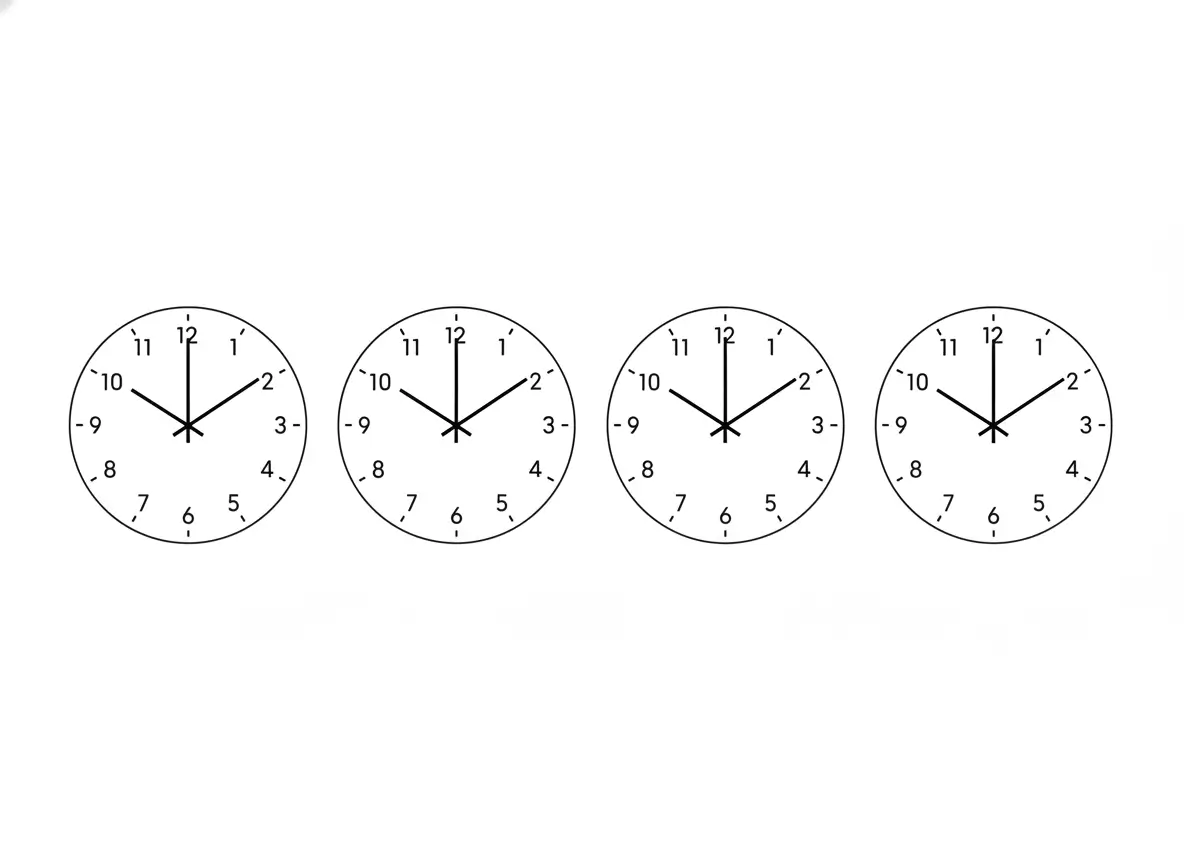
Okay, this is probably why you clicked on this article. Telling time in Arabic isn’t hard once you see the pattern, but the phrasing is different enough from English that direct translation will trip you up.
Asking the time: كم الساعة؟ (kam es-sa’a?) — “What time is it?” Literally, “how much is the hour.”
Answering the time: الساعة is your anchor word — it means “the hour” or “the clock,” and every time expression starts with it.
- الساعة الواحدة (es-sa’a al-wahida) — It’s one o’clock
- الساعة الثانية (es-sa’a ath-thaniya) — It’s two o’clock
- الساعة الثالثة (es-sa’a ath-thalitha) — It’s three o’clock
Notice something? For time, the numbers switch to their ordinal form (first, second, third) instead of the cardinal form (one, two, three) you learned earlier. That’s a real quirk of Arabic, and it’s one of those things that just has to be absorbed through practice, not memorized as a rule.
For minutes past the hour, you add و (wa, “and”) plus the number of minutes, or use fractions for common ones:
- الساعة الواحدة وخمسة (one oh-five) — “the hour one and five”
- الساعة الثانية والنصف (two thirty) — “the hour two and the half”
- الساعة الثالثة والربع (three fifteen) — “the hour three and the quarter”
For minutes before the hour, Arabic uses إلا (illa, meaning “except” or “minus”):
- الساعة الرابعة إلا ربع (three forty-five) — “the hour four minus a quarter”
I know that looks like a lot at once. Here’s what I tell my own students — don’t try to build every possible time expression today. Learn كم الساعة and how to say the hour on its own. That covers you for 80% of real conversations. Add و النصف (and a half) and إلا ربع (minus a quarter) next. The rest comes with exposure, not drilling.
Common Real Questions Beginners Ask
Why are Arabic numerals written left to right if Arabic is right to left? Nobody fully agrees on the history here, but the accepted explanation is that number systems in the region developed and spread separately from the writing system itself, and the left-to-right convention for digits just stuck. It’s inconsistent with the rest of the script, and every learner notices it. You’re not missing something — it really is just an exception.
Do I need to learn Eastern Arabic numerals (١٢٣) if I’m learning MSA? Depends on your goal. If you’re headed toward Egypt, Saudi Arabia, or the Gulf, yes — you’ll see them on menus, price tags, and street signs constantly. If your focus is North Africa, you can mostly get by with Western digits since that’s what’s printed there.
Is the gender agreement rule for numbers actually important? It matters for formal writing and reading comprehension, since news articles and books use it correctly and consistently. For speaking, especially early on, getting understood matters more than getting it grammatically perfect. Don’t let this rule stop you from talking.
How long does it take to get comfortable with numbers and time in Arabic? Most students I’ve worked with need about three to four weeks of regular, short practice — not hours of study, just consistent contact — before numbers and basic time expressions stop requiring conscious translation. If you want a sense of your overall pace, our article on how long it takes to reach A1 in Arabic walks through realistic timelines.
Where This Fits Into Your Bigger Arabic Journey
Numbers, days, and time aren’t a side quest — they show up constantly, from booking appointments to reading receipts to understanding what your teacher just told you about homework due dates. If you’ve been building your core vocabulary already, this pairs naturally with what you’re doing. Check out Your First 100 Arabic Words if you haven’t nailed down your foundational vocabulary yet, and if you’re working on verbs next, The First 20 Arabic Verbs Every Beginner Needs is a solid next stop.
And if you’re the type of learner who does better with structure and a set schedule instead of studying whenever you happen to remember, take a look at The Best Beginner Arabic Study Routine for Working Adults. It’s built for people fitting Arabic around a full life, not around a classroom schedule.
One Last Thing
Numbers and time feel small compared to grammar and vocabulary, but here’s what I’ve noticed after years of teaching — students who get comfortable with numbers early sound noticeably more natural, faster. It’s one of those unglamorous building blocks that pays off every single day you’re speaking Arabic. Don’t skip it just because it feels basic.
Not sure where you actually stand with your Arabic right now? Take a few minutes and test your Arabic level for free — it’ll tell you exactly where to focus next instead of guessing.