learn arabic as an adult You’re sitting there, 30, 40, maybe 50 years old, and you’re asking yourself: is it actually too late?
Maybe you grew up hearing Arabic at home but never learned it properly. Maybe you’re Muslim and you want to understand the Quran — like really understand it, not just recite words you don’t know. Maybe you’re just fascinated by the language and tired of telling yourself “someday.”
I get it. I hear this question every single week from adult learners.
And here’s my answer: No. It is not too late.
But I’m not going to just pat you on the head and say “you can do it!” That’s useless. What I’m going to do is tell you the truth — about what learning Arabic as an adult actually looks like, what makes it hard, what makes it easier than you think, and exactly how to start without wasting months going in circles.
Let’s get into it.
Why Adults Ask This Question (And Why It Makes Sense)
There’s this idea floating around that language learning is “for kids.” That your brain somehow locks up after age 12 and you’ll never sound fluent, never really get it.
That idea is — mostly — wrong.
Yes, children have advantages. They absorb sounds naturally. They’re not embarrassed to make mistakes. They have time. But adults have things children don’t. Adults have motivation, context, and the ability to understand patterns. When a kid learns Arabic, they don’t know why a verb changes form. You can know why in 10 minutes. That’s actually a massive advantage.
Research backs this up too. Studies consistently show that adult learners often progress faster in the early stages of language learning than children do, especially in grammar and vocabulary. The brain doesn’t stop being plastic. It just works differently.
So the fear isn’t really about your brain. The fear is about time, embarrassment, and past failures.
And those are worth talking about honestly.
The Real Reasons Adults Struggle (It’s Not Your Age)
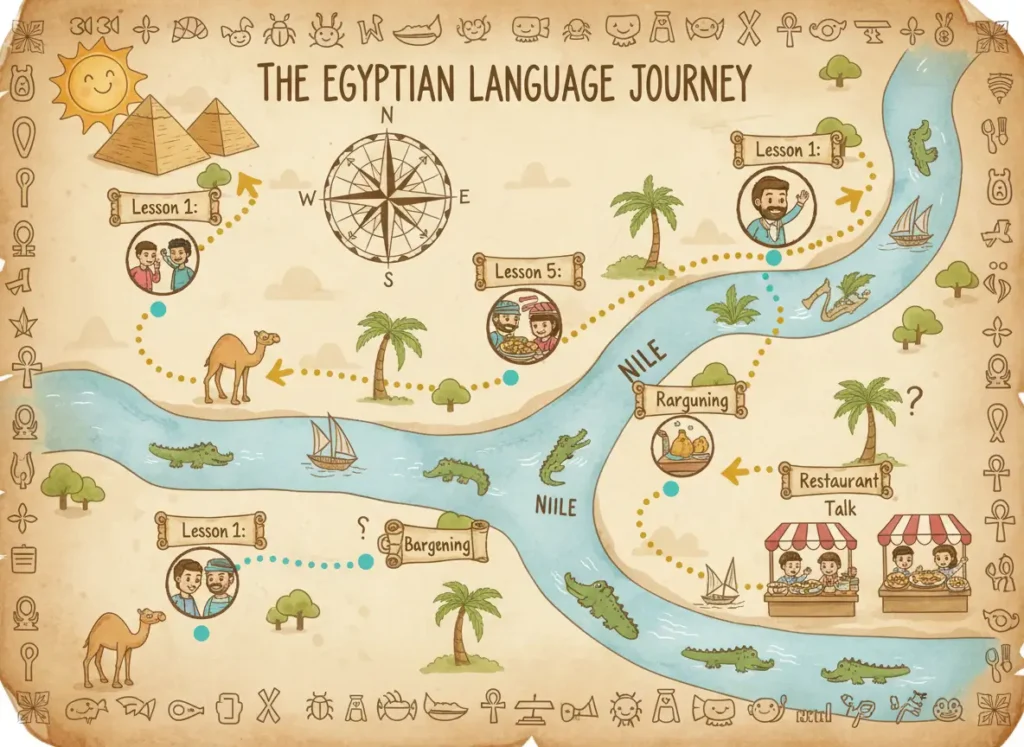
Here’s the thing — when adult learners fail at Arabic, it’s almost never because they were “too old.” It’s because of these specific, very fixable problems:
1. They pick the wrong starting point. Downloading Duolingo and expecting to speak Arabic in six weeks. Starting with a dialect when they needed MSA (Modern Standard Arabic). Or doing the opposite — studying MSA grammar for a year and never once speaking to a real person. Wrong tool for the wrong goal.
2. They try to go too fast. Adults are used to being competent. You’re good at your job. You read fast, you learn fast in your field. Then Arabic humbles you in week two and it feels unbearable. So you quit. Not because it’s hard — because the pace of progress felt insulting.
3. They practice inconsistently. Three hours on a Sunday. Nothing for two weeks. Another hour on a Thursday. That’s not learning — that’s forgetting with occasional reminders.
4. They have no structure. Random YouTube videos, a bit of an app, some flashcards, maybe an online lesson here and there. It feels productive. It isn’t. Adult learners need a clear, structured curriculum to actually move forward.
5. They never speak. This one kills me. I see learners who study Arabic for six months and have never once said a sentence out loud to another human being. Reading and listening are not enough. You have to speak.
Fix these five things and your age becomes almost irrelevant.
What Learning Arabic as an Adult Actually Looks Like
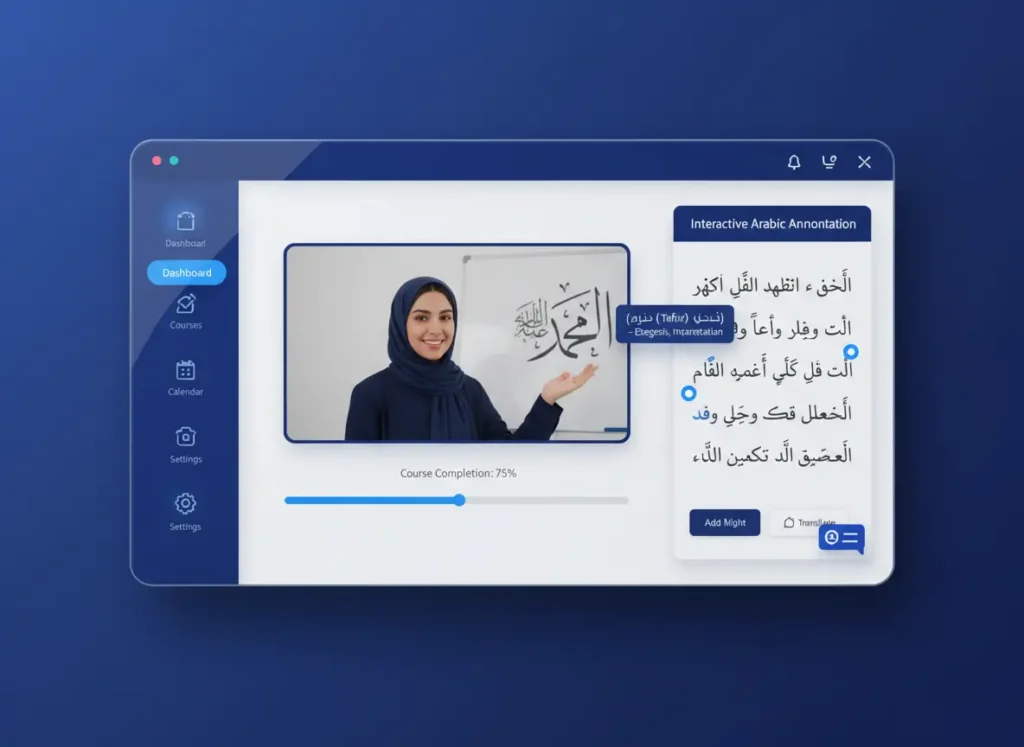
Let me give you a realistic picture. No hype. Just what to expect.
The First Month
You’re learning the alphabet. All 28 letters. You’re learning how they connect, how they change shape depending on where they sit in a word. You’re learning basic vowel marks — fatha, kasra, damma.
This feels slow. It feels like you’re in kindergarten. You kind of are. That’s fine.
By the end of the first month, you should be able to read simple Arabic words slowly, say basic greetings, and introduce yourself.
That’s it. And that’s actually good progress.
Months 2–3
You start building vocabulary. You learn maybe 200–400 high-frequency words — greetings, family, food, numbers, common verbs. You start putting simple sentences together. You take live lessons 2–3 times a week with a real teacher who hears you and corrects your pronunciation in real time.
You start having tiny conversations. Stumbling, awkward, slow conversations. But real ones.
Months 4–6
You can hold a basic conversation. You can read short texts. You understand about 30–40% of what you hear if the speaker is talking slowly. You feel the language starting to click.
This is the moment most adult learners either quit or accelerate. If you make it here, you’re in good shape.
Year One
Intermediate level. You can talk about your daily life, your work, your interests. You can read news headlines. You can watch Arabic content with subtitles and actually follow along. You feel like a real learner, not just a beginner.
Year Two and Beyond
Real fluency. Real comprehension. The ability to read books, watch Arabic films without subtitles, understand the Quran with growing confidence, hold professional conversations.
Is that fast? No. But is it achievable for an adult with a job and a family and a busy life? Absolutely yes — if you’re consistent.
MSA or Dialect? The Question Every Adult Learner Faces
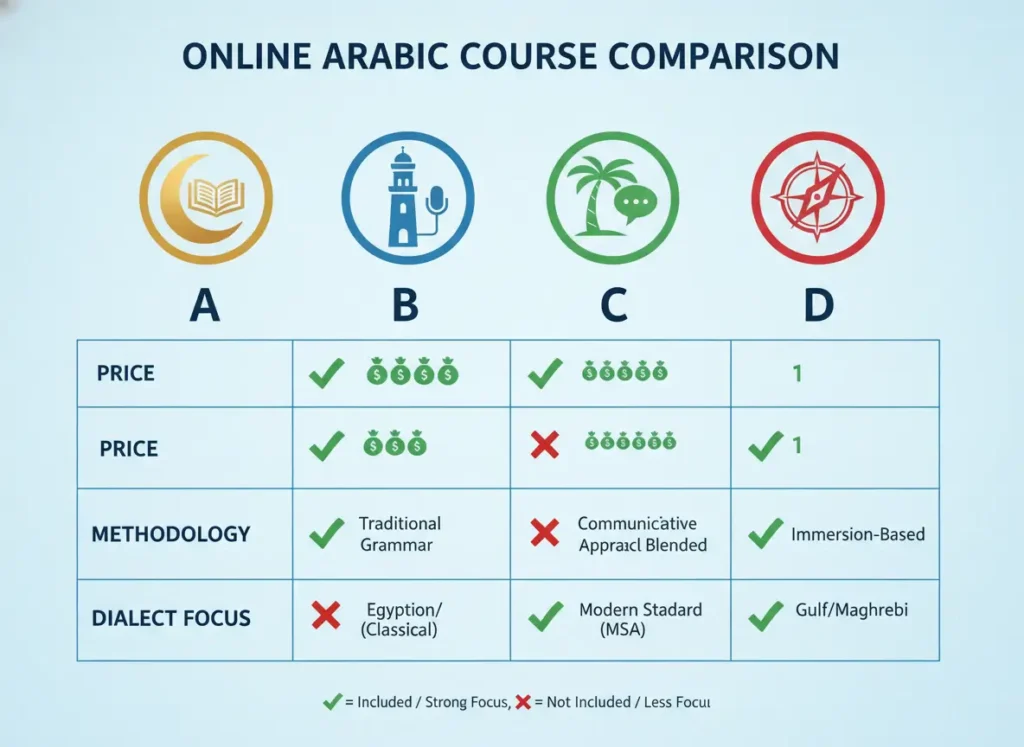
This is one of the most confusing parts of learning Arabic as an adult, so I want to address it directly.
Arabic isn’t one language. It’s a family of varieties.
Modern Standard Arabic (MSA) — also called Fusha — is the formal written language. It’s used in news, books, education, formal speeches, and the Quran. No one speaks MSA at home, but everyone who’s educated can understand it.
Colloquial dialects — Egyptian Arabic, Levantine, Gulf, Moroccan — are what people actually speak in daily life. They differ from MSA and from each other. Egyptian Arabic is the most widely understood dialect because of Egypt’s media influence.
Quranic Arabic is a specific register of Classical Arabic — slightly different from Modern Standard Arabic but close enough that MSA is your best foundation for Quranic comprehension.
So which do you learn?
I’ll be straight with you: it depends on your goal.
- Want to read the Quran and understand Islamic texts? → Start with MSA. It’s your foundation. Our Modern Standard Arabic courses are built exactly for this.
- Want to talk to Egyptian friends or watch Egyptian TV? → Learn Egyptian Arabic alongside or after you have some MSA basics.
- Want to work in the Arab world or consume Arabic media broadly? → MSA first, then add a dialect.
- Want to do all of the above? → Start with MSA. It gives you the backbone. Everything else builds on it.
One thing I strongly recommend: don’t let this decision paralyze you. Pick a goal, pick a variety, and start. You can always add more later.
How Long Will It Take? (An Honest Answer)
I hate this question. Not because it’s a bad question — it’s a great question. I hate it because so many people give dishonest answers.
“Fluent in 30 days!” No. “Years and years of struggle.” Also not helpful.
Here’s the honest breakdown for adult learners studying 5–7 hours per week:
| Timeframe | What You Can Realistically Achieve |
|---|---|
| 1 month | Read the alphabet, basic greetings, 100 words |
| 3 months | Basic conversations, simple reading |
| 6 months | A1–A2 level, confident beginner conversations |
| 1 year | B1 level, intermediate conversations, reading short texts |
| 2 years | B2 level, near-fluent in everyday topics |
The US Foreign Service Institute classifies Arabic as a Category IV language — one of the hardest for English speakers. They estimate 2,200 hours to reach professional working proficiency. That sounds scary. But think about it: 5 hours a week for 8 years, OR 15 hours a week for less than 3 years. Your pace determines your timeline.
And here’s what nobody mentions: you don’t need to wait for fluency to get value from Arabic. Understanding even 30% of a Quranic verse you’re reciting changes your relationship with it. Being able to greet someone in their language changes a relationship. Progress at every level is meaningful.
The Biggest Myth About Adult Language Learning
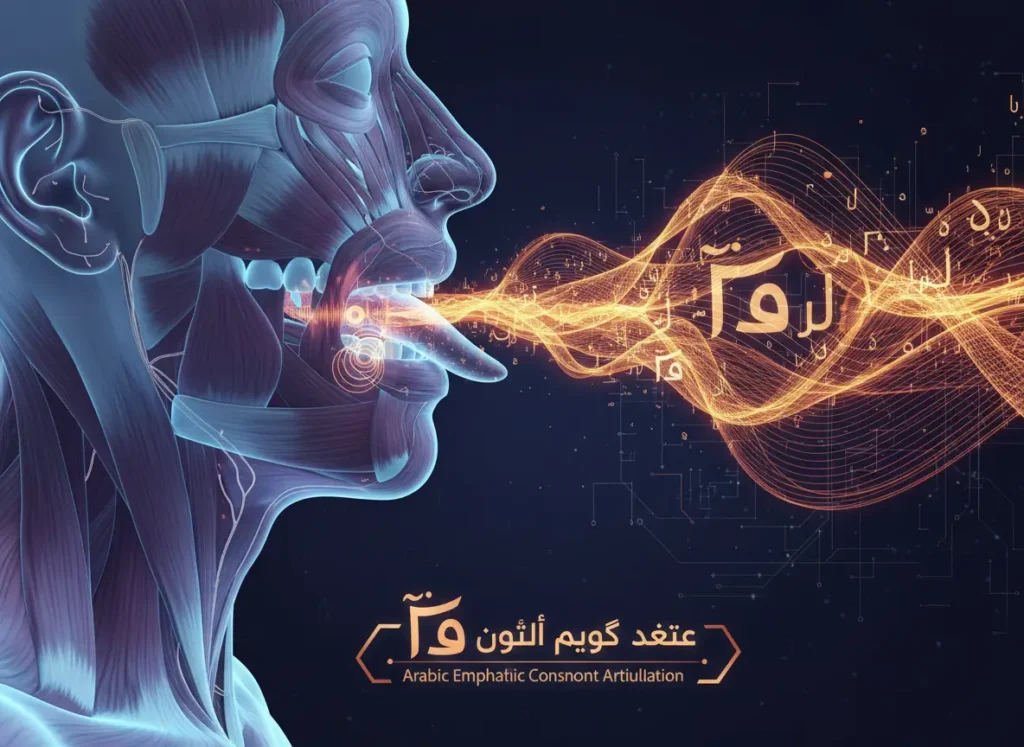
Let me tackle this head-on.
The “critical period hypothesis” — the idea that you can only acquire a language naturally before puberty — is real, but it’s been wildly misapplied. Yes, native-like accent acquisition is harder after childhood. Yes, some phonetic subtleties may be harder to pick up.
But communicative fluency? Reading comprehension? Vocabulary mastery? Adults can absolutely achieve these. The research is clear.
In fact, a 2020 study published in Cognition found that the optimal age for grammar learning might actually extend into adulthood — not end at childhood. Adult learners who study with intention can develop exceptional grammar comprehension precisely because their analytical skills are stronger.
You’re not at a disadvantage. You’re at a different advantage.
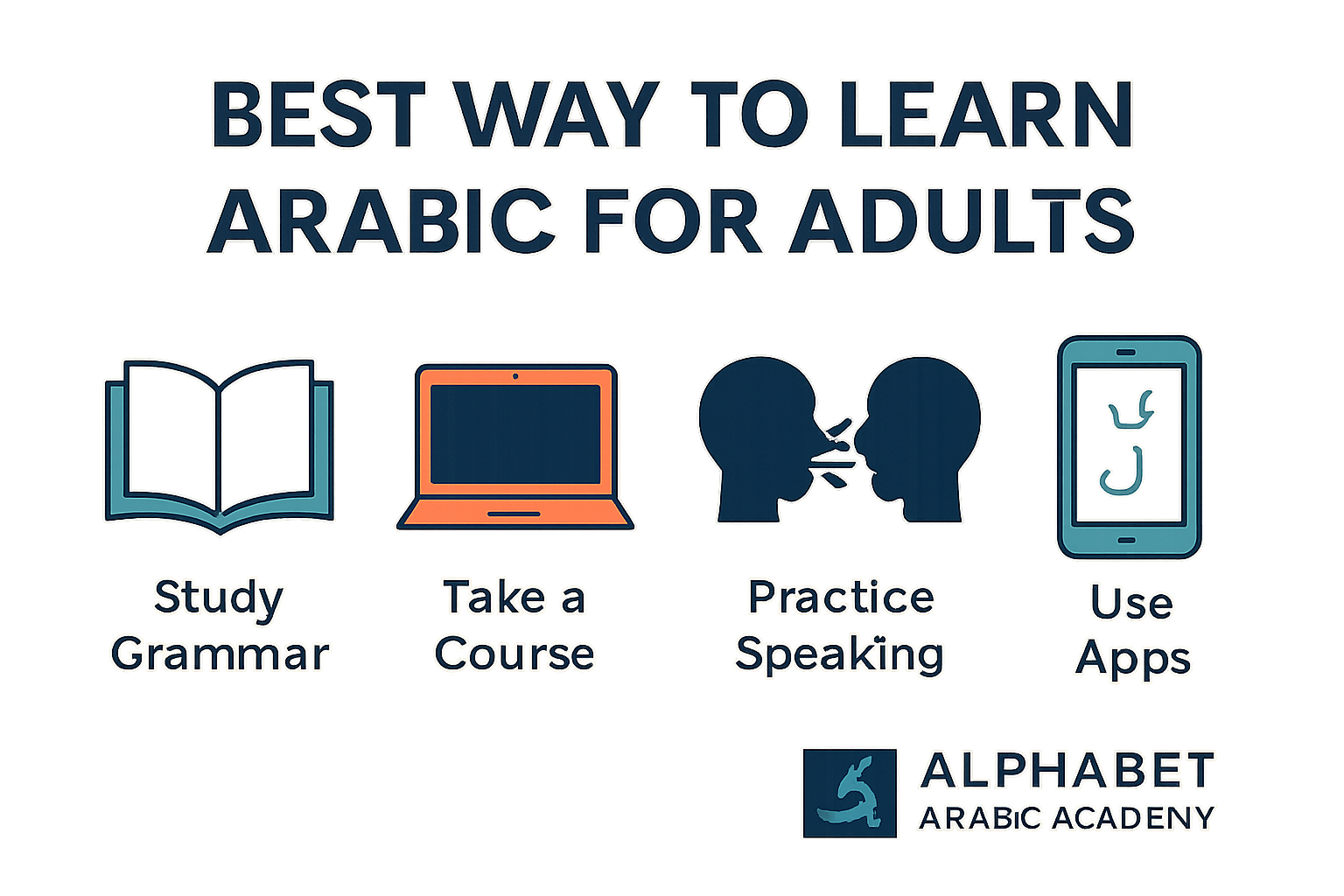
What Actually Works for Adult Arabic Learners
I’ve taught hundreds of adult learners. I’ve seen what works and what doesn’t. Here’s what actually moves the needle.
1. Structured live lessons — not apps alone
Apps are fine for vocabulary review. They’re not enough on their own. Adult learners need a teacher who hears them, corrects their pronunciation, answers their questions, and keeps them accountable. Twice a week of live instruction beats six hours of Duolingo every time.
If you’re not sure where you stand, start with a free Arabic level test to know exactly which level to start from.
2. Consistent daily practice — even just 15 minutes
Fifteen minutes every single day beats two hours on the weekend. Your brain needs regular exposure to consolidate what it learns. Don’t aim for marathon sessions. Aim for showing up every day.
Even if it’s just reviewing 10 vocabulary flashcards at breakfast. That consistency compounds.
3. Speaking from day one
This is non-negotiable. Speak. Make mistakes. Sound silly. Do it anyway. Speaking activates a completely different part of your language processing than reading or listening. You need all of it — but speaking is the part adults avoid most, and it’s the part that matters most.
4. Focus on high-frequency vocabulary
The top 1,000 most common Arabic words cover the vast majority of everyday conversation. Learn those first. Don’t try to memorize a dictionary. Learn what’s actually used.
5. Immersion at home
You don’t need to move to Cairo. Change your phone to Arabic. Follow Arabic news accounts. Listen to Arabic podcasts during your commute. Watch Egyptian TV shows. Surround yourself with the language in low-stakes ways and your ears will start to adjust.
6. Get your grammar in context
Arabic grammar is complex — there’s no getting around that. Dual forms, case endings, broken plurals, root-pattern system. But here’s the thing: you don’t learn grammar by memorizing tables. You learn it by encountering it in real sentences, over and over, until it feels natural. Good teachers and good courses teach grammar this way.
A Sample Weekly Routine for Busy Adults
If you have a full-time job and a family, this is what a realistic week looks like:
Monday / Wednesday / Friday mornings (20 min) Review flashcards, practice reading 5–10 sentences
Tuesday / Thursday evenings (45 min) Live lesson with your teacher — speaking practice, grammar, new vocabulary
Weekend (60 min) Watch an Arabic show or video with subtitles, write 5–10 sentences in Arabic, review the week’s vocabulary
Total: about 3.5–4 hours per week. Not intense. But consistent. And over 12 months, that’s 180+ hours of real practice. Enough to reach a solid beginner-intermediate level.
What About Learning Arabic for the Quran?
This deserves its own section because it’s the motivation for a huge number of adult learners.
Honestly, this is one of the most powerful reasons to learn Arabic — and one of the most rewarding outcomes. When you understand the Quran in Arabic, your relationship with it changes completely. You stop reciting sounds and start hearing meaning.
Quranic Arabic is based on Classical Arabic, which is close to Modern Standard Arabic. So MSA is your foundation. Once you have solid MSA skills, you’ll find that Quranic vocabulary and grammar become increasingly familiar.
If this is your goal, I’d recommend starting with an MSA course and pairing it with dedicated Quranic study — either through a Tajweed course or a course that specifically focuses on Quranic vocabulary and tafseer comprehension.
The Arabic of the Quran is precise and layered. You won’t “master” it in six months. But you can start understanding it — really understanding it — within a year of consistent study. And that changes everything.
Common Questions Adult Learners Ask (Answered Honestly)
“I tried before and failed. Does that mean I can’t do it?”
No. It means the method you used didn’t work for you. Failure at an app or a class isn’t failure at Arabic. Most learners fail multiple times before they find the approach that sticks. The ones who eventually succeed are the ones who kept trying and adjusted their approach.
“Is my accent going to be terrible forever?”
Probably not perfect. Probably always a bit foreign. But nobody expects you to sound like you grew up in Cairo. A clear, understandable accent is absolutely achievable for adult learners. And honestly? Arab people are genuinely delighted when foreigners speak their language, accent and all.
“I travel for work — can I still keep up a consistent practice?”
Yes, with the right setup. Online classes, audio materials on your phone, a good vocabulary app. The modern adult learner can practice Arabic on a plane, in a hotel room, during a commute. Flexibility is built into most good online programs.
“I don’t have Arabic-speaking friends. Will that hurt me?”
It makes it harder to practice conversational Arabic. But it doesn’t make learning impossible. Live online lessons fill this gap directly — your teacher is your conversation partner. You can also find language exchange partners on platforms like Tandem or HelloTalk.
“Should I learn Egyptian Arabic or MSA?”
I answered this above but I’ll say it again: for most adult learners, especially those with Quranic or educational goals, start with MSA. For those who specifically want to talk to Egyptian people or watch Egyptian media, Egyptian Arabic is the more practical choice. Many learners do both — MSA as the base, Egyptian Arabic as the conversational layer.
Why Online Arabic Classes Work Better Than You Think
A lot of adult learners are skeptical about learning a language online. They assume it’s impersonal, disconnected, or not as effective as in-person lessons.
Honestly? The opposite has been true for most of my students.
Online Arabic classes for adults offer things local classes often can’t: access to qualified native teachers regardless of where you live, one-on-one attention instead of group settings where you get lost, flexible scheduling that actually fits around your job and family, and the ability to record sessions and review them later.
The technology is there. The teachers are there. The only thing missing is you deciding to start.
If you want to see what that looks like in practice, check out our teaching team or take a look at our pricing — we’ve structured courses specifically for adult learners with real lives and limited time.
The Mindset That Separates Learners Who Succeed From Those Who Quit

I want to end on something that matters more than any technique or tool.
The adult learners who actually get good at Arabic share one thing in common: they stopped waiting to feel ready.
They started before they were confident. They showed up to lessons when they were tired. They practiced even on the days when it felt like nothing was sticking. They accepted that feeling like a beginner — at 35, at 45, at 55 — is uncomfortable but not fatal.
And they gave themselves permission to be slow.
Speed is not the point. Progress is the point. Tiny, consistent, cumulative progress over months and years. That’s what fluency is made of.
You already speak at least one language fluently. You were once a complete beginner at that too. You just don’t remember it because you were a child and no one made it feel like a big deal.
Arabic is learnable. You are capable. And no — it is not too late.
Your Core Learning Materials
A structured PDF curriculum — not random worksheets. A proper, designed Arabic course in PDF format gives you something to follow offline. On the plane, in a waiting room, anywhere. The best ones come bundled with audio, exercises, and vocabulary lists. At Alphabet Arabic Academy, our courses include exclusive PDF materials tailored specifically for adult learners — not kids, not homeschoolers, not university students. Adults with real goals and real schedules.
Video lessons — engaging, short, and focused. Not 45-minute lectures. Ten-minute videos that teach one thing clearly. Videos are especially useful for Arabic because you can see mouth movement, which matters when you’re trying to master sounds that don’t exist in English. Watch them on mobile on your commute. Watch them on your laptop in the evening. The format is flexible.
Live sessions — this is non-negotiable. Pre-recorded videos and books can take you to a point. But real comprehension, real speaking skills, real Arabic — that comes from live practice with a human being who responds to you, corrects you, and challenges you. One live lesson per week is the minimum. Two is better.
Skills You Need to Build (In the Right Order)
Adult learners often ask: should I focus on speaking first? Reading? Writing? Here’s my honest answer:
Reading comes first. You need to read Arabic script before you can do anything else properly. Don’t use transliteration as a crutch — it creates bad habits that are genuinely painful to unlearn. Spend your first 2–4 weeks building solid reading skills. Arabic letters, connection rules, vowel marks. Then move on.
Listening and speaking come together. Once you can read basic words, start listening to native speakers and start speaking yourself. These two skills build each other. Don’t separate them.
Writing and typing come later — but don’t ignore them. Arabic typing on a mobile keyboard feels impossible for the first week. Then it becomes muscle memory. Practice typing simple sentences every day. Write out vocabulary by hand. The physical act of writing Arabic by hand actually helps you remember it. There’s research on this. Your brain retains what your hand writes.
Comprehension — reading comprehension, listening comprehension — is the skill that takes longest to develop but feels the most rewarding when it arrives. The moment you read a sentence without translating it in your head. The moment you hear a phrase and just understand it. That’s the goal. Get there through consistent exposure, not cramming.
Personalized Learning: Why One-Size-Fits-All Doesn’t Work for Adults
Here’s something I want to say clearly: adult Arabic learners are not a uniform group.
A 35-year-old doctor learning Arabic for Quranic comprehension has completely different needs from a 50-year-old retiree learning Egyptian Arabic to travel. A Muslim convert learning Islamic studies Arabic needs different vocabulary from a journalist learning to cover the Arab world. A homeschooler teaching their kids alongside learning themselves needs different materials and pacing.
Good courses are designed with this in mind. They start with an assessment — sometimes called a placement questionnaire — to understand your level, your goals, your available time, and your learning style. Then they tailor the curriculum accordingly.
At Alphabet Arabic Academy, every learner goes through an initial assessment before their first lesson. We don’t put a 48-year-old professional who wants Quranic Arabic through the same exercises as a 22-year-old student who wants to chat with Egyptian friends. The curriculum is personalized. The pace is personalized. The materials are tailored to what you actually need.
That’s what makes live, expert-led instruction different from an app.
A Note on Quranic and Islamic Arabic
If your goal is Quranic Arabic specifically, I want to be straight with you about what that path looks like.
Quranic Arabic has specific vocabulary, grammar structures, and a level of linguistic precision that takes time to appreciate. Tajweed — the rules of Quran recitation — is its own discipline. And true comprehension of Quranic text, the kind where you’re reading tafseer and understanding the layers of meaning, is a years-long journey.
But here’s what makes it meaningful: every step forward is immediately useful. Understanding ten new Quranic words changes how you hear those words in prayer. Understanding the basic structure of a verse changes your relationship with it. The journey to master Quranic Arabic is long, but the rewards start immediately.
Our Quranic Arabic and Tajweed courses are designed by teachers who specialize in Islamic Arabic — not generic Arabic teachers who added “Quran” to their profile. There’s a difference, and it matters.
Building Cultural Fluency Alongside Language Skills
Language and culture aren’t separate. Arabic is one of the oldest living languages in the world, and it carries centuries of cultural, literary, and spiritual meaning in its words.
When you learn Arabic as an adult, you’re not just acquiring a communication tool. You’re getting access to stories, poetry, philosophy, and human experience that most of the world can’t read. Classical Arabic literature. Modern Arabic novels. The rich tradition of Islamic scholarship. The humor and warmth of Egyptian dialect in films and series.
This cultural layer is one of the biggest advantages adult learners have over children. You can appreciate it. A child learning Arabic learns words. An adult learning Arabic learns worlds.
Engage with that. Read Arabic stories — simple ones first, then harder ones. Watch Arabic films. Listen to Arabic music and ask what the lyrics mean. Follow Arabic cultural accounts. Let the language teach you about the people who speak it.
That’s what makes Arabic not just useful but genuinely engaging. And that engagement is what keeps adult learners going when the grammar gets frustrating.
Protecting Your Health and Wellbeing as an Adult Learner
One thing nobody talks about: language learning at an adult age can be mentally exhausting. Your brain is working hard. New sounds, new scripts, new grammar patterns — it’s a workout.
Don’t burn out. Keep sessions short. Take breaks. Sleep. Yes, sleep matters — language consolidation happens during sleep, not during extra study hours at midnight. A rested brain learns better than an exhausted one at any age.
And remember: the cognitive health benefits of learning a new language are well-documented. Arabic specifically — with its complex root system and non-Latin script — gives your brain a genuinely challenging workout. Studies link bilingualism and language learning to stronger memory, better focus, and even delayed cognitive decline. Learning Arabic isn’t just good for your Arabic. It’s good for your brain.
Your Next Step
If you’ve read this far, you’re serious. So let’s make this concrete.
Step 1: Take the free Arabic placement test to see exactly where you are right now — whether that’s absolute zero or somewhere in the middle.
Step 2: Check out our Modern Standard Arabic courses — built specifically for adult learners, taught by qualified native teachers, with a clear curriculum from beginner to advanced.
Step 3: Start. Not next month. Not when things calm down. Now.
The best time to start learning Arabic was ten years ago. The second best time is today.
“The journey of a thousand miles begins with a single step.” Your Arabic journey starts now.
- “free trial” → Contact page