

You don’t have 15 minutes every single day. I get that too.
Maybe your week is unpredictable. Maybe you’d rather sit down for one real session than scatter five-minute scraps across seven days. Maybe 3 hours is just what you can actually promise yourself — and you want to know if that’s even enough.
Here’s the thing: 3 hours a week is enough. It’s not the fastest path to fluency, and I won’t pretend it is. But it’s a real, sustainable pace that gets full beginners reading, writing, and forming basic sentences — as long as those 3 hours are spent on the right things, in the right order.
That’s what this plan gives you.
So What Does 3 Hours a Week Actually Buy You?
Let’s deal with the honest numbers first, because I’d rather you know upfront than feel disappointed in month two.
Three hours a week is about 156 hours a year. Most language research puts “basic conversational ability” in Arabic somewhere around 250–350 hours of focused study (Arabic is harder for English speakers than Spanish or French — there’s no getting around that). So at 3 hours a week, you’re looking at roughly 18 months to 2 years to get genuinely conversational.
That sounds slow until you compare it to doing nothing, which is what most people actually do after buying a course they never finish.
Here’s what 3 hours a week realistically gets you, stage by stage:
- Weeks 1–3: The full Arabic alphabet, reading slowly but accurately
- Month 2–3: 150–250 words, basic sentence structure, simple present-tense verbs
- Month 4–6: Reading short paragraphs, writing 3–5 sentences on a topic, understanding slow audio
- Month 8–12: Holding a basic conversation, reading simplified news, solid grammar foundation
None of this happens by accident. It happens because the 3 hours are structured. Let’s get into that.
First: Decide What “Arabic” Means for You
Quick detour, because skipping this step is the single most common reason beginners waste months.
Arabic isn’t one language to learn — it’s Modern Standard Arabic (MSA), the formal version used in writing, news, and books across the Arab world, plus a handful of spoken dialects like Egyptian, Gulf, or Levantine that people actually use at home. They’re related, but they’re not the same thing, and trying to study both at once is how people end up fluent in neither.
If you’re not sure which one fits your goal, our breakdown of MSA vs Egyptian vs Quranic Arabic walks through the difference in plain language.
For this plan, I’m building around MSA, because it’s the foundation. It teaches you to read, write, and understand grammar that every dialect borrows from. Once you have MSA, picking up Egyptian or Gulf Arabic later takes a fraction of the time.
Honestly, if you skip this decision and just “study Arabic” in general, you’ll end up with scattered vocabulary from five different dialects and a grammar foundation from none of them. Pick one. Start there.
How to Split Your 3 Hours
There’s no single correct way to slice 3 hours across a week. What matters is consistency — the same blocks, the same days, every week, so you stop relying on motivation to show up.
Here are three layouts that work. Pick the one that fits your actual life, not your ideal life.
| Layout | Schedule | Best for |
|---|---|---|
| 3 x 1 hour | Mon / Wed / Fri, 1 hour each | People with a fixed weekly routine (most popular option) |
| 2 x 1.5 hours | Tue / Sat, 90 minutes each | People who focus better in longer blocks, fewer interruptions |
| 6 x 30 minutes | Every other day, 30 minutes | People whose schedule is unpredictable day to day |
I’d push you toward 3 x 1 hour if you’re not sure. An hour is long enough to actually get into something — review, new material, and practice — without burning out your focus the way a 90-minute session can for a beginner. And spacing your sessions across the week (rather than two long days) lines up with how memory actually works: spaced exposure beats cramming, every time.
If your week is genuinely chaotic, 6 x 30 minutes is fine too. It just needs slightly more discipline, because shorter sessions are easier to skip “just this once.”
Inside Each Session: The 60-Minute Breakdown
Whichever layout you pick, here’s what should happen inside a 1-hour session. This structure is built so every minute has a job.
| Time | What You Do | Why |
|---|---|---|
| Min 1–10 | Review — go back over your last session’s vocabulary and grammar, from memory | Retrieval is how things actually move into long-term memory |
| Min 11–35 | New material — one grammar concept plus 8–12 new words, taught together so they connect | Learning vocabulary attached to grammar sticks better than lists of random words |
| Min 36–50 | Active output — write full sentences using the new words, say them out loud, then write them again from memory | This is the step almost everyone skips, and it’s the one that actually builds the language in your head |
| Min 51–60 | Plan + log — write down what you covered and what tomorrow’s session needs to focus on | Removes decision fatigue. Next session, you just open your notes and go |
If you’re scaling to 90-minute sessions, just stretch the “new material” and “output” blocks — don’t add more topics. One new grammar point and a dozen words is plenty for a single sitting. Cramming three grammar rules into one session feels productive and isn’t. You’ll remember the first one and lose the rest.
If you’re using 30-minute blocks, cut review to 5 minutes, new material to 15, and output to 8, with 2 minutes to log. Same structure, smaller version.
A Concrete Example of “Active Output”
Say your new word this session is مَدْرَسَة (madrasa) — school.
Don’t just memorize it. Write:
- أَنَا أَذْهَبُ إِلَى الْمَدْرَسَةِ. — I go to school.
- هَذِهِ مَدْرَسَةٌ كَبِيرَةٌ. — This is a big school.
Say them out loud. Cover the page. Write them again from memory. That’s the difference between “I learned this word” and “I actually know this word.”
Your First Month, Week by Week
Here’s exactly what your first 4 weeks look like, assuming the 3 x 1 hour layout.
| Week | Focus |
|---|---|
| Week 1 | The Arabic alphabet — letters 1 through ~14, connected forms, basic sounds |
| Week 2 | Remaining letters, full alphabet review, first 20 vocabulary words |
| Week 3 | Sentence structure basics — subject + verb + object, the verb “to be” implied in Arabic |
| Week 4 | Present-tense verbs, pronouns, simple questions — review everything from weeks 1–3 |
By the end of month one, you can read Arabic script slowly, write your name and basic words, and form simple present-tense sentences. That’s a real foundation — not a party trick.
How Long Until You Can Actually Speak and Read? The 3-Month and 6-Month Mile

This is the question people actually want answered: in how much time can you learn Arabic studying 2–3 hours a week? Here’s the realistic version, not the marketing version.
Month 1–3: Alphabet, 200+ words, present-tense verbs, basic sentences. You can read simple text slowly and write a few connected sentences about yourself.
Month 4–6: Past tense, more complex sentence structures, 400–500 words. You can read short paragraphs (with effort) and understand slow, clear spoken Arabic — think news for learners, not native conversation.
Month 7–12: Reading short articles, holding a basic back-and-forth conversation on familiar topics, recognizing most common verb patterns. This is roughly where a beginner becomes a “low intermediate.”
Past the one-year mark at 3 hours a week, you’re building real fluency — but the honest answer is that genuine comfort in Arabic, the kind where you’re not translating in your head, usually takes 2–3 years even for motivated learners. Anyone who tells you 3 months to fluency is selling you something.
What 3 hours a week does guarantee, if you stick to it, is that you’ll never be the person who “used to study Arabic” and quietly gave up. You’ll just keep getting better, year over year.
How Many Days Should You Actually Study?
People ask this a lot, so let’s settle it: should those 3 hours be spread across 3 days, or crammed into 1?
Spread them out. Always.
Your brain consolidates new information during the gaps between study sessions — not during the session itself. Three 1-hour sessions across the week beat one 3-hour Saturday marathon, even though the total time is identical. A single long session also runs into a focus problem: most learners hit a wall around 45–60 minutes where new information stops sticking and just washes over them.
If you genuinely can’t avoid one long weekly session, break it into chunks with a real pause — 10 minutes off after every 45 minutes of study. It’s not as good as spreading across multiple days, but it’s far better than 3 hours straight with no breaks.
A good middle ground, if you want a slightly faster pace, is studying 4–5 shorter days instead of 3 longer ones, while keeping total weekly time the same. More frequent, smaller exposures almost always beat fewer, bigger ones.
3 Hours a Week vs. 15 Minutes a Day — Which One Should You Pick?
We’ve also got a 15-minute daily study routine on the blog, and people often ask which approach actually wins.
Honestly? They land in almost the same place over a year — 15 minutes a day works out to roughly 90 hours annually, while 3 hours a week comes to about 156. The daily plan has a slight edge in raw consistency, since there’s no decision to make (“is today a study day?”) — every day is. The weekly plan gives you more room to actually go deep in a single sitting, which some learners prefer.
My honest take: pick whichever one you’ll actually do. A perfect 15-minute daily habit you abandon after 10 days is worse than an imperfect 3-hours-a-week habit you keep for a year. Consistency beats the “ideal” plan every time.
Mistakes That Wreck a Weekly Study Schedule
I’ve watched a lot of beginners build a solid 3-hour plan and then quietly sabotage it. Same mistakes, every time.
Skipping review when life gets busy. The first thing people cut under time pressure is the review block — and it’s the one thing keeping old material from leaking out of your memory. Cut new material before you cut review.
Treating one missed session like a catastrophe. Miss a week? It happens. Don’t try to “make it up” with a 6-hour weekend binge. Just resume your normal 3 hours next week. Cramming to catch up doesn’t actually work the way it feels like it should.
Studying passively for the whole hour. Watching videos and reading flashcards feels like progress. It mostly isn’t, if you never produce the language yourself. If more than half your session is “watching” rather than “doing,” you’re not using the time well. Our list of beginner mistakes goes deeper into this if you want the full picture.
Mixing MSA and a dialect from day one. I mentioned this earlier and it’s worth repeating, because it’s the mistake that quietly costs people the most time. Pick one path. Add the other later.
No fixed time slot. “I’ll find 3 hours somewhere this week” almost never survives contact with a real week. Put the sessions on your calendar like you would a class. Same days, same time, every week.
Running a Summer Schedule for Kids on This Same Framework
If you’re setting this up for a child rather than yourself — especially over summer break — the structure holds up well, just with shorter, more frequent sessions instead of full hour-long blocks. Kids generally do better with 20–30 minute sessions, 4–6 times a week, rather than long sittings.
A summer version might look like: 25 minutes, 5 days a week, mixing alphabet practice, vocabulary games, and a short writing task — using the same review-new-output-plan structure, just scaled down and made more playful. Our kids’ Arabic activities guide has concrete, hands-on ideas that fit this kind of summer routine, and if you want a structured course built specifically around how kids actually learn, our Arabic for Kids program is built for exactly this.
Should You Add a Tutor to a 3-Hour Plan?
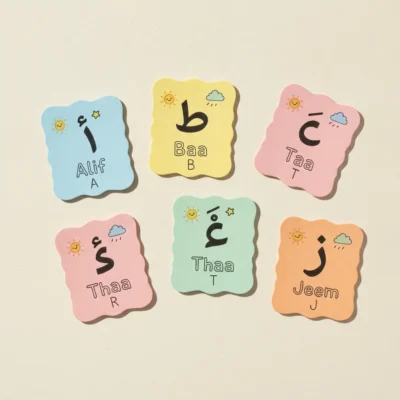
Self-study gets you genuinely far. But it has a ceiling, and that ceiling shows up fastest with pronunciation and grammar questions you can’t answer yourself.
You can’t hear your own mistakes the way a trained ear can. You can’t always tell why a sentence “feels wrong” in Arabic — you just know it does. A tutor closes both gaps fast, and even one class a week makes the rest of your self-study sessions sharper, because you walk in knowing exactly what to focus on instead of guessing.
If you want to fold a class into your 3 hours — say, one 1-hour session with a teacher, plus two self-study hours — that’s a strong setup. Our MSA course is built for exactly this kind of beginner pace, with native-speaking teachers who work one-on-one and adjust to your schedule. You can check the pricing page to see what fits your budget.
Before You Start, Know Where You Actually Stand
One last thing, and it matters more than people think. If you’ve dabbled in Arabic before — a few apps, a semester in school years ago, some YouTube videos — don’t start this plan from zero without checking first. You might already be past week one or two of this schedule, and starting from scratch would just waste your first few sessions re-learning what you already know.
Take our free Arabic placement test before you build your plan around it. It takes a few minutes and tells you exactly where to start — so your 3 hours a week go toward moving forward, not toward material you’ve already covered.
The Plan, in One Sentence
Three hours a week, split into fixed sessions, each one built around review, new material, and actual output — repeated for months, not days. That’s it. That’s the whole secret, and it’s the same secret behind every beginner who actually makes it to fluency: they didn’t study more than everyone else. They just didn’t stop.
Want to go further?
- 🧪 Test your level for free →
- 📖 Explore the MSA course →
- 📚 Read: 15-Minute Daily Arabic Study Routine →
- ⚖️ MSA vs Egyptian vs Quranic Arabic: which one to start with →
Take our free Arabic placement test — it takes 10 minutes and tells you exactly where to start.