
📌 Introduction
Let’s clear something up right now: learn arabic for adults is not a “late decision,” it’s a power move.
Adults don’t learn languages the way kids do—and that’s actually an advantage, not a weakness. You’re not here to memorize random words or sing alphabet songs. You’re here because you have a reason. Travel. Career growth. Understanding the Quran. Building real connections. Or maybe you just want to challenge your brain and prove something to yourself.
Arabic is one of the richest, most influential languages on the planet. It’s spoken across more than 20 countries, deeply tied to culture, religion, business, and global communication. And today, learning Arabic as an adult is more accessible than ever thanks to structured online programs designed specifically for grown learners with real lives, real responsibilities, and real goals.
Here’s the truth most people won’t tell you: adults often learn faster when the learning path is clear. You ask better questions. You connect ideas. You understand why you’re learning something—not just what.
The problem isn’t age. The problem is choosing the wrong method, the wrong course, or the wrong expectations.
This guide exists to fix that.
🎯 What You’ll Learn from This Guide
In this complete guide, you’ll discover:
- How Arabic classes for adults actually work
- How online classes compare to local options
- The role of conversation practice, grammar, and speaking
- Which intensive courses are worth your time
- How to choose the best path based on your goal, not someone else’s opinion
Whether you’re a total beginner or restarting after years away, this page will walk you through every major option available today—step by step—so you can stop guessing and start learning with confidence.
This isn’t theory. This is a roadmap.
Not sure where to start? Check out our ultimate guide: Arabic Conversation Classes for Adults: Speak Confidently quickly to learn our proven methodology.
1️⃣ Arabic Classes for Adults: What Really Works?
Arabic classes for adults are effective only when they’re designed for adults. That sounds obvious, but most people miss it.
I’ve seen it happen dozens of times: someone signs up for an “adult” Arabic class, only to find out it’s basically a kids’ curriculum with harder words. The result? Bored learners, slow progress, and frustration.
What Actually Works?
First, adult Arabic classes must be goal-oriented.
Adults don’t learn “just in case.” Some want conversational Arabic. Others want Quranic understanding. Some need Arabic for work, travel, or professional communication. A serious adult class identifies that goal early and builds everything around it.
Second, flexibility matters.
Look, life happens. Adults juggle jobs, families, time zones, and energy levels. Effective Arabic classes for adults offer flexible schedules, recorded support materials, and clear lesson structures that don’t punish you for missing a day.
Third—and this is critical—adults learn best through context, not memorization.
Instead of isolated vocabulary lists, strong Arabic classes use real-life examples, short dialogues, practical sentence building, and repetition that feels natural rather than forced.
Types of Arabic Classes for Adults
There are generally four formats:
- Private one-on-one classes (fastest progress, highest focus)
- Small group classes (interaction + motivation)
- Online live classes (flexibility + native teachers)
- Self-study programs (only effective for highly disciplined learners)
For most adults today, online Arabic classes designed specifically for adult learners deliver the best balance of structure, flexibility, and results.
To dive deeper, explore our full guide on Arabic Classes for Adults
🎯 Practical Steps: How to Choose Arabic Classes
Step 1: Identify Your Primary Goal
- Write down your main reason: Travel? Career? Quran? Family connections?
- Estimate realistic timeline: 6 months? 1 year? 2 years?
- Define success: Can you hold a conversation? Read news? Understand Quranic verses?
Step 2: Assess Your Available Time
- How many hours per week can you commit? (Be realistic, not idealistic)
- What time of day works best? Morning? Evening? Weekends?
- Can you maintain consistency, or do you need flexibility?
Step 3: Compare Your Options
- Research 3-5 programs that match your goal
- Check reviews, success rates, and student testimonials
- Ask for free trials or consultation calls
- Compare pricing and payment flexibility
Step 4: Start with a Program
- Choose the one that aligns with your goal and lifestyle
- Commit to at least 3 months before evaluating
- Track your progress weekly
- Adjust if needed after the first month
Step 5: Set Weekly Milestones
- Week 1-2: Learn survival phrases and greetings
- Week 3-4: Build basic sentence structure
- Week 5-8: Start simple conversations
- Month 3+: Increase complexity and fluency
💡 Want personalized guidance on choosing the right program?
2️⃣ Arabic Classes for Adults Near Me vs Online Arabic Classes
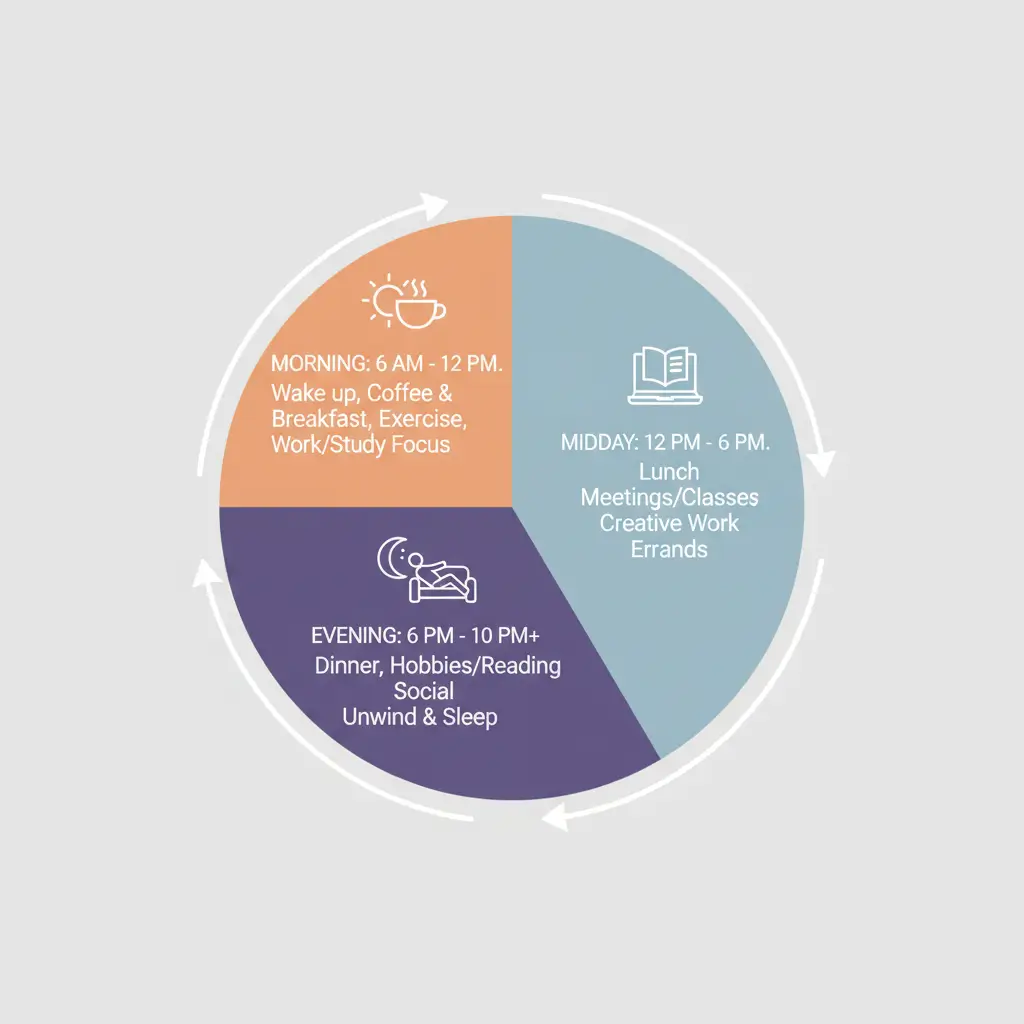
A lot of adults start with the same question: “Should I look for Arabic classes for adults near me, or just learn online?”
On paper, local classes sound comforting. A physical classroom. Face-to-face interaction. A fixed schedule. But once real life kicks in, the picture changes fast.
get more , explore Arabic Classes for Adults Near Me.
Local Arabic Classes: The Reality
I’ll be honest with you—Arabic classes for adults near you often come with limitations that don’t show up in the brochure.
Fixed schedules can clash with work or family. Teacher quality varies wildly. Many local institutes rely on outdated teaching styles—heavy grammar, little speaking, zero personalization.
Worse? If you miss a class, you usually miss the lesson. No rewind button. No flexibility.
Local classes can work only if:
- You live in a city with strong Arabic programs
- The teacher is experienced with adult learners
- Your schedule is extremely stable
That’s a narrow win condition.
Online Arabic Classes for Adults: Why They’re Winning
Online Arabic classes for adults flipped the game. You’re no longer limited by geography. You can learn from native teachers, choose time slots that fit your life, and repeat lessons without pressure.
But the biggest advantage? Customization.
Online programs can adapt to your pace. Slow down when grammar gets tricky. Speed up when speaking clicks. Adults thrive in that environment.
check out our post on Online Arabic Classes for Adults
Well-designed online Arabic classes combine:
- Live sessions with native instructors
- Structured learning paths aligned with CEFR Levels (A1 to C2)
- Real conversation practice with feedback
- Recorded support materials for review
- Progress tracking and milestone celebration
That’s why busy professionals, parents, and even retirees increasingly choose online Arabic classes over local options.
📊 Comparison Table: Local vs Online Classes

| Feature | Local Classes | Online Classes |
|---|---|---|
| Schedule Flexibility | Fixed times | Choose your slots |
| Teacher Quality | Varies widely | Access to top native speakers globally |
| Price | $30-80/hour | $15-50/hour |
| Missed Classes | Lost forever | Recorded for review |
| Commute Time | 30-60 min | 0 min |
| Progress Tracking | Manual | Automated with apps |
| Best For | Those with stable schedules | Busy professionals, parents |
🎯 Practical Steps: Choosing Between Local and Online
Step 1: Evaluate Your Lifestyle
- How stable is your weekly schedule?
- Do you prefer face-to-face or video interaction?
- How important is flexibility to you?
Step 2: Research Local Options
- Find 2-3 local institutes in your area
- Check their teaching methodology
- Read reviews from adult learners
- Visit if possible to meet instructors
Step 3: Research Online Options
- Identify 3-5 reputable online platforms
- Check their CEFR level alignment
- Review student success stories
- Compare pricing and payment plans
Step 4: Trial Period
- Take a free trial class with both options
- Assess comfort level with technology (for online)
- Evaluate teacher communication style
- Check if the pace matches your learning speed
Step 5: Make Your Decision
- Choose based on lifestyle fit, not just price
- Commit for at least 3 months
- Set weekly goals and track progress
- Adjust if needed after month 1
3️⃣ Arabic Conversation Practice for Adults: Where Fluency Is Born
Here’s a hard truth: you can study Arabic grammar for years and still freeze when someone speaks to you.

Fluency doesn’t come from textbooks. It comes from conversation.
Arabic conversation practice for adults is not about perfection. It’s about exposure, repetition, and confidence. I’ve watched students transform from silent grammar experts to confident speakers in just 8 weeks—once they started actually talking.
Adults often hesitate because they don’t want to make mistakes. But mistakes are the engine of fluency. Every strong Arabic speaker you’ve ever met once mispronounced half the language.
see Arabic Conversation Practice for Adults.
Core Principles of Effective Conversation
Effective conversation practice includes:
- Guided speaking sessions with feedback from native speakers
- Real-life role plays (travel, work, daily life scenarios)
- Gradual increase in complexity (A1 → A2 → B1 → B2)
- Native-speaker interaction with patience and encouragement
- Immediate correction of pronunciation and grammar errors
Conversation-first learners often speak naturally before they fully understand grammar—and that’s okay. Speaking unlocks listening. Listening improves pronunciation. Confidence accelerates everything.
For adults serious about fluency, conversation practice should not be optional. It should be built into the core learning plan.
🎯 Practical Steps: Building Conversation Skills
Step 1: Start with Survival Phrases
- Learn 50-100 high-frequency phrases first
- Practice pronunciation daily (5-10 minutes)
- Record yourself and compare with native speakers
- Focus on natural rhythm, not perfection
Step 2: Join Conversation Groups
- Find online conversation partners (italki, Tandem, etc.)
- Start with 15-20 minute sessions
- Use a structured conversation guide
- Request feedback on pronunciation and grammar
Step 3: Practice Role Plays
- Scenario 1: Ordering food at a restaurant
- Scenario 2: Asking for directions
- Scenario 3: Introducing yourself professionally
- Scenario 4: Discussing your interests and hobbies
- Scenario 5: Handling common travel situations
Step 4: Increase Complexity Gradually
- Month 1: Simple greetings and basic questions
- Month 2: Short conversations about daily life
- Month 3: Discuss opinions and preferences
- Month 4+: Complex discussions and debates
Step 5: Track Your Speaking Progress
- Record yourself monthly
- Compare with previous recordings
- Note improvements in fluency and confidence
- Celebrate small wins
🚀 Ready to start speaking Arabic confidently?
4️⃣ Arabic Grammar for Adults: Simplified, Not Simplistic
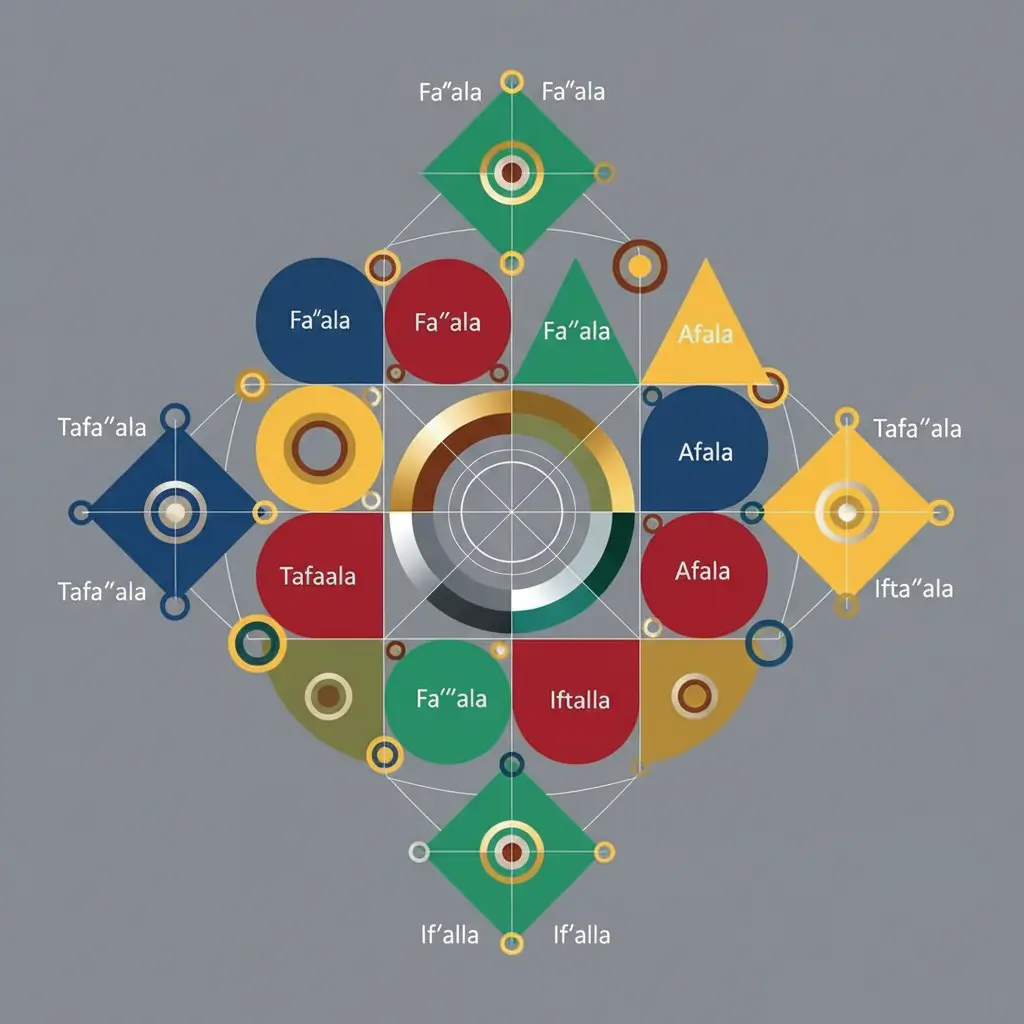
Arabic grammar scares people. Mostly because it’s taught wrong.
Look, I get it. You hear “Arabic grammar” and immediately think of complex tables, endless rules, and conjugations that make your head spin. But here’s what most people don’t realize: Arabic grammar for adults should never start with theory-heavy explanations.
Adults don’t need linguistic terminology—they need patterns, logic, and application.
read our guide on Arabic Grammar for Adults.
When taught correctly, Arabic grammar is surprisingly systematic:
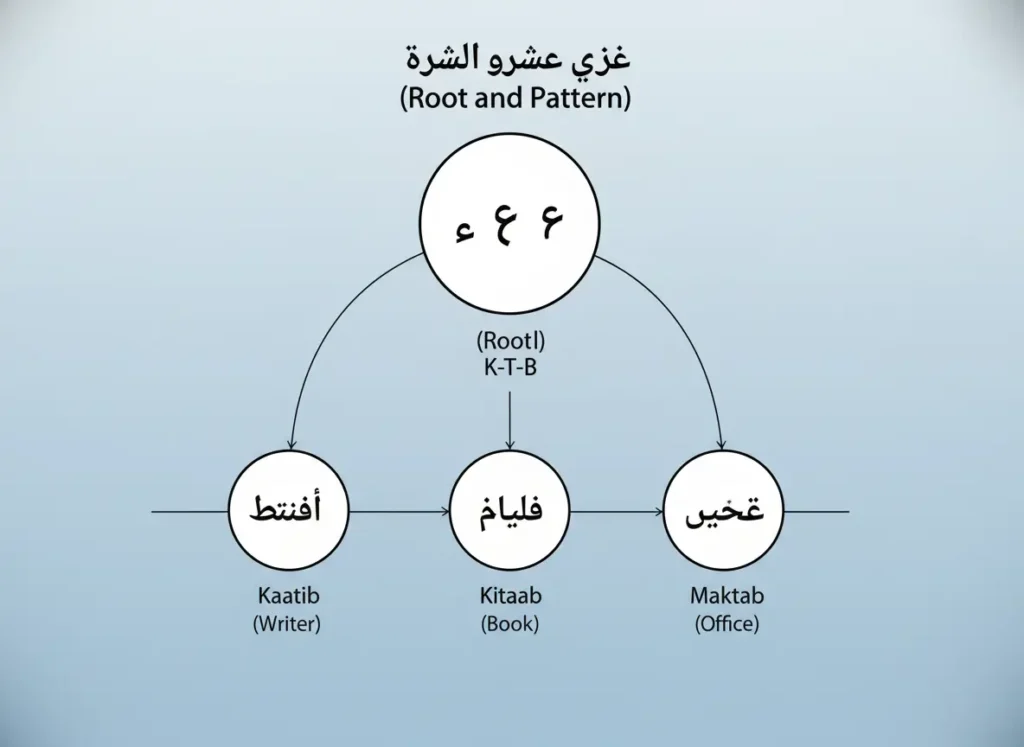
- Root-based word construction (understanding how words are built from three-letter roots)
- Predictable verb patterns (past, present, future tenses follow clear rules)
- Clear sentence structures (subject-verb-object with consistent modifications)
The key is learning grammar in context. Not rules first—examples first. See the sentence. Hear it. Use it. Then understand why it works.
Core Grammar Structure
Adult learners benefit from:
- Minimal rules, maximum examples (show 10 examples, then explain the rule)
- Grammar tied directly to speaking (practice sentences immediately)
- Step-by-step progression (A1 → A2 → B1 → B2 following CEFR framework)
- Visual diagrams showing sentence structure and word relationships
Grammar becomes empowering once it stops being abstract.
🎯 Practical Steps: Mastering Arabic Grammar
Step 1: Learn the Three-Letter Root System
- Understand how Arabic words are built from roots
- Practice identifying roots in common words
- See how changing vowels changes meaning
- Example: K-T-B (write) → kitaab (book), kaatib (writer), maktab (office)
Step 2: Master Present Tense Verbs
- Learn the 14 present tense patterns
- Practice conjugation with high-frequency verbs
- Use in simple sentences immediately
- Record yourself speaking to internalize patterns
Step 3: Build Sentence Structure
- Start with simple SVO (Subject-Verb-Object) sentences
- Add adjectives and modifiers
- Practice word order variations
- Understand when order matters and when it doesn’t
Step 4: Study One Grammar Point at a Time
- Spend 1 week on one concept (e.g., feminine nouns)
- Do 20-30 practice sentences
- Use in conversation practice
- Move to next concept only after mastery
Step 5: Review Regularly
- Use spaced repetition (review after 1 day, 3 days, 1 week, 2 weeks)
- Create flashcards for verb conjugations
- Practice in real conversations
- Revisit difficult concepts monthly
5️⃣ Arabic Lessons for Beginners Adults: Starting Without Overwhelm
Starting from zero as an adult can feel intimidating—but it shouldn’t.
I remember when my student Mark came to his first lesson. He was 47, had never studied a foreign language before, and was convinced he was “too old” to start. Six months later, he was ordering food in Arabic at a restaurant in Dubai and chatting with taxi drivers.
What changed? The approach.
Arabic lessons for beginner adults should focus on momentum, not mastery. The goal is to start using Arabic early, even in simple forms.
read more explore Arabic Lessons for Beginners Adults
What Strong Beginner Programs Focus On
- High-frequency words and phrases (the 1,000 most common words cover 80% of daily conversation)
- Pronunciation from day one (correct habits from the start prevent bad habits later)
- Listening before heavy writing (comprehension builds confidence)
- Small wins that build confidence (celebrate progress weekly)
Adults don’t need to “finish the book” to feel progress. They need to understand basic sentences, respond naturally, and recognize patterns.
The worst mistake beginners make? Trying to learn everything at once.
A clean, adult-friendly beginner path makes Arabic feel achievable instead of overwhelming.
🎯 Practical Steps: Starting as a Beginner Adult
Step 1: Learn 100 High-Frequency Words
- Focus on words used in 80% of conversations
- Common verbs: to be, to have, to go, to do, to want
- Essential nouns: family, food, time, places
- Basic adjectives: good, bad, big, small, new, old
- Practice daily for 2 weeks
Step 2: Master Basic Greetings and Phrases
- Hello, goodbye, thank you, please
- “My name is…” and “What is your name?”
- “How are you?” and appropriate responses
- “I don’t understand” and “Can you repeat?”
- Practice pronunciation with native speaker recordings
Step 3: Build Simple Sentences
- Subject + Verb + Object (I + want + water)
- Add adjectives (I want hot water)
- Ask simple questions (Do you want tea?)
- Respond to basic questions
- Practice in role plays
Step 4: Develop Listening Skills
- Listen to beginner-level podcasts (5-10 minutes daily)
- Watch Arabic children’s videos
- Listen to songs with lyrics and translations
- Gradually increase difficulty
- Don’t worry about understanding everything
Step 5: Set Beginner Milestones
- Week 1-2: Understand basic greetings
- Week 3-4: Introduce yourself
- Week 5-6: Order food and ask for directions
- Week 7-8: Have simple conversations
- Month 3: Understand basic news headlines
6️⃣ Best Way to Learn Arabic for Adults: What Actually Works
Let’s cut through the noise. There is no magic trick.
The best way to learn Arabic for adults is not about talent or age—it’s about structure + consistency + relevance.
In my experience teaching hundreds of adult students, I’ve noticed a pattern: the ones who succeed aren’t necessarily the “smartest” or most talented. They’re the ones who show up consistently and follow a clear system.
explore our detailed post on Best Way to Learn Arabic for Adults.
What Makes Adults Learn Best
Adults learn best when:
- The content matches their real-life goals
- Progress feels measurable (CEFR levels provide clear benchmarks)
- Lessons respect their time and mental load
- They see practical application immediately
The Most Effective Learning Path
The most effective learning path blends:
- Guided instruction (so you don’t wander blindly)
- Active practice (speaking, listening, responding)
- Clear milestones (so motivation doesn’t die)
- Regular feedback (from native speakers or tutors)
Self-study alone fails most adults because there’s no feedback loop. On the other hand, full immersion without structure causes burnout.
The sweet spot? A guided online system with human interaction.
That’s why the most successful adult learners choose programs designed specifically for adults—not kids, not academics, not native speakers.
🎯 Practical Steps: Designing Your Personal Learning Plan
Step 1: Define Your SMART Goal
- Specific: “I want to hold 10-minute conversations in Arabic”
- Measurable: “Reach CEFR B1 level in 12 months”
- Achievable: “With 30 minutes daily practice”
- Relevant: “For my job in Dubai”
- Time-bound: “By December 2025”
Step 2: Choose Your Learning Method
- Online classes: Structure + flexibility
- Conversation partners: Real practice + feedback
- Self-study apps: Flexibility + low cost
- Intensive courses: Fast results + high commitment
- Combination: Mix methods for best results
Step 3: Create Your Weekly Schedule
- Allocate specific days/times for each activity
- 30 minutes daily: Online lessons or app
- 20 minutes daily: Conversation practice
- 10 minutes daily: Listening exercises
- Weekend review: Consolidate the week’s learning
Step 4: Set Monthly Milestones
- Month 1: CEFR A1 (Beginner)
- Month 3: CEFR A2 (Elementary)
- Month 6: CEFR B1 (Intermediate)
- Month 12: CEFR B2 (Upper-Intermediate)
Step 5: Track Progress and Adjust
- Weekly: Review vocabulary learned
- Monthly: Take a practice test
- Quarterly: Assess against CEFR benchmarks
- Adjust method if progress stalls for 2+ weeks
7️⃣ Intensive Arabic Course for Adults: Fast-Track, Not Shortcuts
Some adults don’t want to “take it slow.” They want results—fast.
An intensive Arabic course for adults is designed for that exact mindset. It compresses learning time by increasing exposure, practice frequency, and accountability.
But let’s be clear: intensive does not mean careless.
read and explore Intensive Arabic Course for Adults.
I had a student named Jennifer who needed conversational Arabic in 3 months before relocating to Riyadh. We designed an intensive program: 2 hours daily, 6 days a week. It was tough, but she made it. Today, she’s conducting business meetings in Arabic.
What a Good Intensive Program Includes
- Daily or near-daily sessions (5-7 hours per week minimum)
- Strong speaking focus (50% of time spent on conversation)
- Continuous feedback (after every speaking session)
- Clear weekly goals (measurable progress each week)
Who Should Consider Intensive Courses?
This format works best for:
- Professionals relocating or working with Arabic speakers
- Adults preparing for travel or exams
- Highly motivated learners with limited time
- Career changers needing quick fluency
Poorly designed intensive courses overwhelm students. Well-designed ones create breakthroughs.
📅 Sample Daily Schedule for Intensive Course
Morning (60 minutes)
- 7:00-7:30 AM: Vocabulary review with flashcards
- 7:30-8:00 AM: Grammar lesson or reading practice
Afternoon (60 minutes)
- 12:00-1:00 PM: Live conversation practice with native tutor
Evening (30 minutes)
- 8:00-8:30 PM: Listening practice (podcasts, news, videos)
Total: 2.5 hours daily = 17.5 hours weekly
🎯 Practical Steps: Starting an Intensive Course
Step 1: Assess Your Readiness
- Can you commit 5-7 hours daily for 3-6 months?
- Do you have a clear, compelling goal?
- Can you handle intensive learning without burnout?
- Do you have financial resources for premium programs?
Step 2: Choose Your Intensive Program
- Research 3-5 intensive programs
- Compare curriculum and teaching methods
- Check instructor qualifications
- Verify success rates and testimonials
Step 3: Prepare Your Learning Environment
- Quiet space for daily sessions
- Good internet connection
- Headphones and microphone
- Notebook and writing materials
- Backup power supply
Step 4: Set Weekly Targets
- Week 1-2: Foundation building (A1 level)
- Week 3-4: Basic conversations (A2 level)
- Week 5-8: Intermediate skills (B1 level)
- Week 9-12: Advanced conversations (B2 level)
Step 5: Monitor for Burnout
- Track energy levels daily
- Adjust intensity if needed
- Take strategic breaks (1 day per week)
- Celebrate weekly wins
- Connect with other learners for support
🔥 Ready for an intensive transformation?
8️⃣ Learn Arabic Speaking for Adults: Confidence Over Perfection
Speaking is where adults either level up—or quit.
Learning Arabic speaking as an adult requires a mindset shift. You don’t wait until you’re “ready.” You speak to become ready.
I’ve seen this pattern countless times: students who wait 6 months to “perfect” their grammar before speaking end up frustrated and stuck. Meanwhile, students who start speaking from week one—making tons of mistakes—become fluent much faster.
Why? Because speaking from day one accelerates learning. Making mistakes in conversation provides immediate feedback for correction.
discover more Learn Arabic Speaking for Adults.
How Effective Speaking Programs Work
Effective speaking-focused programs:
- Start with survival phrases (not complex grammar)
- Normalize mistakes (reframe as learning opportunities)
- Build pronunciation gradually (focus on clarity, not perfection)
- Encourage daily verbal output (even 5 minutes helps)
- Provide immediate feedback (from native speakers)
Adults often understand more than they can say. Speaking practice bridges that gap.
The moment you start forming sentences out loud, Arabic stops being a subject and starts becoming a skill.
🎯 Practical Steps: Building Speaking Confidence
Step 1: Overcome the Fear of Speaking
- Reframe mistakes as learning opportunities
- Practice with patient, supportive teachers
- Start with low-pressure conversations
- Celebrate small speaking wins
- Remember: Every native speaker made mistakes too
Step 2: Master Pronunciation Basics
- Learn the 28 Arabic letters and sounds
- Practice difficult sounds daily (ع, غ, ح, خ, ق)
- Record yourself and compare with native speakers
- Use pronunciation apps for feedback
- Don’t aim for perfection, aim for clarity
Step 3: Build Speaking Confidence
- Week 1: Introduce yourself in Arabic
- Week 2: Describe your family and job
- Week 3: Discuss your hobbies and interests
- Week 4: Order food and ask for directions
- Week 5+: Have longer conversations on various topics
Step 4: Practice Daily Speaking
- 5-10 minutes with language exchange partner
- 10-15 minutes with native tutor
- 5 minutes recording yourself
- 5 minutes listening to native speakers
- Total: 25-40 minutes daily
Step 5: Track Speaking Progress
- Record yourself monthly
- Compare fluency and confidence
- Note improvements in speed and accuracy
- Celebrate progress (even small improvements)
- Adjust practice based on weak areas
9️⃣ Learn Modern Standard Arabic for Adults (Fusha)
Modern Standard Arabic (Fusha) is the backbone of formal Arabic. News, books, media, education—it all runs through Fusha.
Think of it this way: dialects are like regional English accents, but Fusha is like proper written English that everyone understands, from New York to London to Sydney.
visit our guide on Learn Modern Standard Arabic for Adults
Why Adults Choose Fusha
Adults who learn Fusha gain:
- Reading and writing fluency (understand newspapers, books, formal documents)
- Cross-country comprehension (understand Arabic speakers from all regions)
- Strong grammatical foundation (understand the logic behind the language)
- Professional credibility (essential for business and academic contexts)
When Fusha Makes Sense
Fusha is ideal if your goals include:
- Academic or professional Arabic
- Media consumption (news, podcasts, documentaries)
- Long-term mastery and cultural understanding
- Writing in Arabic
- Understanding classical Arabic texts
The key is learning it practically, not academically. Adults don’t need university-style lectures. They need applied Fusha tied to real usage.
🎯 Practical Steps: Learning Modern Standard Arabic
Step 1: Understand Fusha vs Dialects
- Fusha: Formal, written, understood everywhere
- Dialects: Informal, spoken, region-specific
- Decision: Learn Fusha first, then add dialect if needed
- Timeline: 6-12 months to intermediate Fusha level
Step 2: Start with Fusha Fundamentals
- Learn formal greetings and expressions
- Study formal grammar (verb conjugations, noun declensions)
- Practice reading simple Fusha texts
- Listen to formal Arabic news and podcasts
- Focus on written forms and formal speech
Step 3: Read Fusha Content
- Start with simplified news articles
- Progress to newspaper articles
- Read short stories and poetry
- Understand formal writing conventions
- Build vocabulary for professional contexts
Step 4: Practice Formal Speaking
- Use formal expressions in conversations
- Practice formal greetings and closings
- Learn professional vocabulary
- Practice formal presentations
- Understand when to use Fusha vs dialect
Step 5: Integrate Fusha into Daily Practice
- 50% of your study time: Fusha
- 30% of your study time: Dialect (if interested)
- 20% of your study time: Listening and culture
- Read Fusha news daily
- Listen to formal Arabic podcasts weekly
🔟 Learn Quranic Arabic for Adults: Meaning, Not Memorization

Many adults learn Arabic to connect deeply with the Quran. Not just to recite—but to understand.
I have a student named Ahmed who spent 20 years reading the Quran in English translation. When he finally learned Quranic Arabic, he told me: “It’s like I’ve been reading someone’s interpretation of a poem my whole life. Now I’m reading the poem itself.”
That’s the power of understanding Arabic in its original form.
you can visit Learn Quranic Arabic for Adults.
What Quranic Arabic Focuses On
Quranic Arabic for adults focuses on:
- Core vocabulary repeated throughout the Quran (understanding 1,000 key words gives 80% comprehension)
- Grammar patterns specific to Quranic structure (different from Modern Standard Arabic)
- Contextual understanding of verses (understanding meaning, not just recitation)
- Spiritual connection (deepening faith through direct understanding)
This path is spiritual, intellectual, and deeply personal. Adults often report that understanding the Quran in Arabic changes their relationship with the text entirely.
Structured learning is essential here to avoid confusion between Modern Standard Arabic and Quranic usage.
🎯 Practical Steps: Learning Quranic Arabic
Step 1: Learn Quranic Vocabulary
- Start with 500 most-repeated Quranic words
- Understand word meanings in Quranic context
- Learn root words and their variations
- Study word frequency in the Quran
- Practice with Quranic verses containing these words
Step 2: Understand Quranic Grammar
- Learn grammar patterns specific to the Quran
- Understand differences from Modern Standard Arabic
- Study verb conjugations in Quranic context
- Learn particle usage in the Quran
- Practice identifying grammatical structures
Step 3: Study Quranic Chapters
- Start with shorter chapters (Juz 30)
- Read with translation and explanation
- Understand historical and linguistic context
- Learn about revelation circumstances (Asbab al-Nuzul)
- Reflect on meanings and implications
Step 4: Develop Quranic Reading Skills
- Learn proper Tajweed (Quranic recitation rules)
- Practice reading with correct pronunciation
- Understand punctuation and pauses
- Listen to professional reciters
- Record yourself and compare
Step 5: Deepen Quranic Understanding
- Study Tafsir (Quranic interpretation)
- Connect verses to their context
- Understand themes and messages
- Apply Quranic teachings to daily life
- Join study circles for deeper learning
1️⃣1️⃣ Online Arabic Course for Adults: One System, All Goals
An online Arabic course for adults isn’t just a collection of lessons. It’s a learning ecosystem.
The strongest programs combine:
- Beginner to advanced pathways (A1 to C2 following CEFR framework)
- Speaking, grammar, listening, and reading (all four skills integrated)
- Flexible schedules (learn when it suits your life)
- Native instructors (authentic pronunciation and cultural context)
- Progress tracking (see measurable advancement)
- Community support (connect with other learners)
check out our upcoming article on Online Arabic Course for Adults.
Adults don’t want chaos. They want clarity.
A unified online system allows learners to switch goals—conversation, Fusha, Quranic Arabic—without starting over.
🎯 Practical Steps: Choosing an Online Arabic Course
Step 1: Define Your Course Requirements
- Goal: Conversation? Fusha? Quranic? Business?
- Level: Beginner? Intermediate? Advanced?
- Schedule: How many hours per week?
- Budget: What’s your price range?
- Learning style: Video? Live? Interactive?
Step 2: Research Online Platforms
- Check curriculum and course structure
- Verify instructor qualifications
- Read student reviews and testimonials
- Compare pricing and payment options
- Check for free trial or money-back guarantee
Step 3: Evaluate Platform Features
- Progress tracking and CEFR level alignment
- Interactive exercises and quizzes
- Speaking practice opportunities
- Community and peer interaction
- Mobile app availability
- Customer support quality
Step 4: Start Your Trial
- Take a free trial lesson if available
- Assess instructor communication style
- Check technical quality (audio, video)
- Evaluate lesson pacing
- Determine if it matches your learning style
Step 5: Commit and Track Progress
- Choose your course and enroll
- Set clear goals for the first month
- Attend sessions consistently
- Track progress weekly
- Adjust if needed after month 1
1️⃣2️⃣ Learn Arabic Online for Women & Men: Same Language, Different Needs
The Arabic language is the same—but learning preferences can differ.
Learn Arabic Online for Women
Many women prefer:
- Flexible scheduling (balancing family and work commitments)
- Supportive learning environments (encouraging and patient instructors)
- Confidence-focused speaking sessions (building comfort with speaking)
- Female instructors (when culturally preferred)
- Community of female learners (shared experiences and support)
Online learning removes barriers and creates safe, focused spaces for progress.
Learn Arabic Online for Men
Men often look for:
- Goal-driven structure (clear progression and milestones)
- Business or travel relevance (practical application)
- Intensive progress tracking (measurable advancement)
- Competitive elements (leaderboards, achievement badges)
- Flexible scheduling (fitting around work)
Modern online programs adapt to both styles without separating quality.
🎯 Practical Steps: Choosing a Program That Fits Your Needs
Step 1: Identify Your Preferences
- Do you prefer male or female instructors?
- Do you want a community or individual learning?
- Do you prefer structured or flexible learning?
- What’s your primary goal?
- How much time can you commit?
Step 2: Find Programs Matching Your Style
- Search for programs with your preferences
- Check instructor profiles and backgrounds
- Read reviews from similar learners
- Ask for recommendations from friends
- Take trial lessons with different programs
Step 3: Consider Cultural Factors
- Some programs offer gender-specific classes
- Some offer mixed-gender communities
- Some offer one-on-one tutoring
- Choose what makes you most comfortable
- Remember: Quality instruction matters most
Step 4: Start Your Learning Journey
- Enroll in the program that fits best
- Introduce yourself to the community (if available)
- Set personal goals and milestones
- Connect with other learners
- Celebrate progress regularly
Step 5: Adjust as Needed
- After 1 month, assess your comfort level
- Make adjustments if needed
- Connect with other learners for support
- Share your progress and celebrate wins
- Stay committed to your goals
1️⃣3️⃣ Arabic Classes for Adults: Bringing It All Together
Arabic classes for adults succeed when they respect one truth: adults are not beginners in life—only in language.
They bring discipline, motivation, and purpose. What they need is the right structure, the right teacher, and the right pace.
Whether you choose conversation-focused learning, grammar-based mastery, Quranic understanding, or an intensive track, the path is open.
📊 Comparison Table: Which Method Fits You Best?
| Learning Method | Time Commitment | Cost | Best For | Results Timeline |
|---|---|---|---|---|
| Self-Study Apps | 20-30 min/day | $10-20/month | Highly disciplined learners | 12-18 months to B1 |
| Group Classes | 2-3 hours/week | $200-400/month | Social learners, motivation needed | 9-12 months to B1 |
| Private Tutoring | 1-2 hours/week | $400-800/month | Personalized learning, specific goals | 6-9 months to B1 |
| Intensive Courses | 10+ hours/week | $1000-2000/month | Fast-track learners, urgent goals | 3-6 months to B1 |
| Hybrid (Recommended) | 5-7 hours/week | $300-600/month | Balanced approach, flexibility | 6-9 months to B1 |
Note: B1 = Intermediate conversational fluency (CEFR framework)
🎯 Practical Steps: Choosing Your Best Method
Step 1: Assess Your Situation
- How much time can you realistically commit?
- What’s your budget?
- What’s your primary goal?
- Do you prefer structure or flexibility?
- Do you learn better alone or in groups?
Step 2: Compare Your Options
- Research each learning method
- Read reviews from adult learners
- Calculate total cost (tuition + materials + time)
- Consider long-term commitment
- Identify potential challenges
Step 3: Try Before Committing
- Take free trials where available
- Attend sample classes
- Speak with current students
- Ask instructors questions
- Assess your comfort level
Step 4: Make Your Decision
- Choose the method that best fits your life
- Commit for at least 3 months
- Set clear goals and milestones
- Create accountability (tell friends, join groups)
- Track progress weekly
Step 5: Optimize Your Learning
- Adjust your approach after 1 month if needed
- Connect with other learners
- Celebrate progress regularly
- Stay motivated with clear goals
- Revisit and adjust your plan quarterly
💡 Success Stories: Real Adult Learners Who Nailed Arabic

1️⃣ John, 35 – Conversational Arabic in 6 Months
Challenge: Working full-time in tech, limited time, zero Arabic background
Goal: Communicate with Arabic-speaking colleagues in Dubai and travel confidently
Method: 30 minutes daily with online program focused on business Arabic + weekly conversation practice with native speakers

Results:
- Month 3: Could handle basic greetings and business introductions
- Month 6: Negotiating contracts and conducting meetings in Arabic
- Outcome: Promoted to Regional Manager due to language skills
Key Insight: “Consistency beats intensity. Daily small steps changed everything. I didn’t need to study 3 hours on weekends—30 minutes every morning was more effective.”
2️⃣ Sarah, 42 – Using Arabic for Business Success
Challenge: Running an international import-export business, needed Arabic for professional relationships
Goal: Negotiate confidently with Arabic-speaking clients and read contracts
Method: Combination of intensive courses (2 weeks) + conversation practice (3x weekly) + business Arabic vocabulary
Results:
- Month 6: Could read and understand basic contracts
- Month 12: Negotiating deals and building relationships with Arabic-speaking partners
- Outcome: Business relationships strengthened, revenue increased 30%
Key Insight: “Arabic gave me access and respect in ways I never imagined. My clients appreciated the effort, and it opened doors I didn’t expect.”
3️⃣ Michael, 50 – Learning Quranic Arabic for Spiritual Growth
Challenge: Always wanted to understand the Quran in its original language, felt intimidated by age
Goal: Read passages and understand meanings directly
Method: Structured online Quranic Arabic courses + weekly study circles + daily practice
Results:
- Month 3: Could read simple Quranic verses
- Month 10: Understanding meanings of most verses read
- Outcome: Transformed spiritual practice, deeper connection to faith
Key Insight: “Start small, focus on meaning, not memorization. Understanding even one verse deeply is more valuable than memorizing without understanding.”
❓ Frequently Asked Questions
Q1: How long does it take to learn Arabic as an adult?
With consistent daily practice (30 minutes) and structured courses, most adults achieve conversational fluency (CEFR B1 level) in 6-12 months. Advanced proficiency (B2-C1) typically requires 18-24 months of dedicated study.
Q2: Is Arabic harder for adults than for kids?
Not really. Adults have stronger focus, motivation, and learning strategies, which often makes them progress faster in structured programs. While children may have advantages in pronunciation, adults typically learn grammar and vocabulary more efficiently.
Q3: Can I learn Arabic if I’m over 50?
Absolutely. Age is not a barrier. Many successful learners started in their 50s, 60s, and even 70s. The right online courses and daily practice make fluency achievable at any adult age.
Q4: Should I start with Modern Standard Arabic or a dialect?
It depends on your goals. MSA (Fusha) is best for reading, writing, and formal communication. Dialects are ideal for daily conversation and travel. Most learners start with MSA for a strong foundation, then add dialect if needed.
Q5: Do I need to attend live classes or can I self-study?
Live classes with native teachers accelerate speaking and comprehension, but self-study works for disciplined learners with the right resources. The best approach combines both: structured self-study with periodic live sessions.
Q6: How important is grammar for adult learners?
Grammar is essential for clarity and writing, but adults benefit more from context-based grammar—learning rules while using the language actively. Avoid starting with grammar theory; learn through examples and application instead.
Q7: Can I learn Arabic online for business purposes?
Yes. Online courses can be tailored for business communication, professional vocabulary, and negotiation skills. Many platforms offer specialized business Arabic programs.
Q8: How much daily practice is enough?
20-30 minutes of focused practice daily creates more results than occasional long sessions. Consistency matters more than duration.
Q9: Should I focus on speaking first or reading and writing?
Speaking first builds confidence and practical skills. Reading and writing can be layered on gradually without slowing progress. This approach aligns with how adults naturally acquire language.
Q10: Are intensive courses worth it?
Yes, if you’re highly motivated and can dedicate regular time. They compress learning but require discipline. Intensive courses work best for adults with clear goals and flexible schedules.
Q11: Can I learn Arabic for Quranic understanding as an adult?
Definitely. Structured Quranic Arabic courses simplify vocabulary, grammar, and verse comprehension for adult learners. Many adults successfully learn Quranic Arabic and report profound spiritual benefits.
Q12: Do online courses provide interaction with native speakers?
The best programs include live sessions, conversation practice, and feedback from native instructors. Look for platforms offering at least 1-2 hours of native speaker interaction per week.
Q13: Can I combine multiple courses?
Absolutely. Adults often benefit from mixing methods to match goals and learning pace. A hybrid approach combining online classes, conversation practice, and self-study often produces the best results.
Q14: Are there programs specifically for women or men?
Yes. Some online programs offer tailored schedules and support for women or men. However, quality instruction and effective methodology matter more than gender-specific programs.
Q15: How do I track my progress effectively?
Use journals, flashcards, apps, and weekly goals. Many online programs provide built-in tracking for vocabulary, grammar, and speaking improvement. Regular self-assessment and monthly milestone reviews help maintain motivation.
🎓 Final Call: Your Arabic Journey Starts Now
Learning Arabic as an adult is not about age. It’s about decision.
With structured online Arabic classes, native instructors, and flexible programs, you can move from zero to confident communication faster than you think.
The door is open.
The tools exist.
The only step left—is starting.
🚀 Your Next Steps
- Define Your Goal: Why do you want to learn Arabic? Write it down.
- Choose Your Method: Online classes? Conversation practice? Intensive course? Combination?
- Select Your Program: Research 3-5 options, take free trials, choose the best fit.
- Start Small: Commit to 30 days with consistent daily practice.
- Track Progress: Monitor your advancement using CEFR levels or app metrics.
- Celebrate Wins: Acknowledge progress weekly, stay motivated.
👉 Book your free Arabic trial class today and begin your journey with confidence.

This comprehensive guide was created to help adults like you navigate the world of Arabic learning with clarity and confidence. Whether you’re starting from zero or restarting after years away, the path to fluency is clearer than you think.