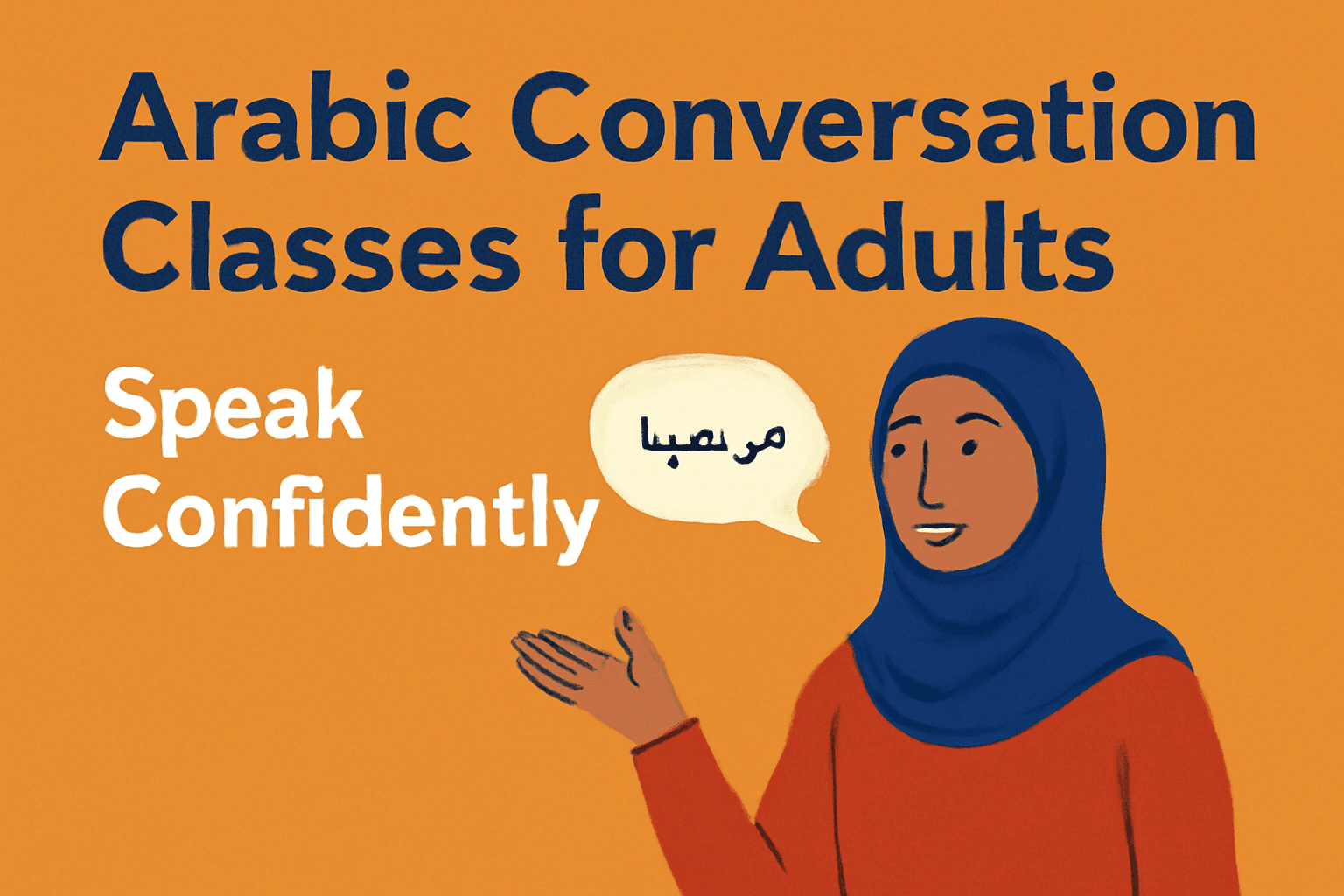

Arabic conversation classes for adults work — but only when they’re built around speaking, not studying. If you’ve been learning Arabic for months and still freeze when a native speaker opens their mouth, that’s not a language problem. That’s a methodology problem. This guide gives you the full picture: why adults actually have an advantage, how to choose the right class format, and what daily practice actually looks like when it moves you toward real fluency.
Why Arabic Conversation Practice for Adults Is Different

Here’s something most courses won’t tell you: being an adult learner isn’t a disadvantage. It’s a power move.
Sure, children absorb sounds without thinking about it. But adults bring something children don’t have: logic, life experience, and purpose. When you learn the Arabic word for “agreement” (اتفاق — Ittifaq), you immediately connect it to real meetings, real negotiations, real life. A child can’t do that.
Adults learn Arabic conversation differently because:
Analytical skills work in your favor. You understand why a sentence is structured the way it is — not just memorize it blindly. Arabic grammar stops being a wall and becomes a map.
Purpose drives consistency. You’re not learning Arabic “just because.” You have a real reason. That fuels the daily habit that fluency actually requires.
Context sticks. You have decades of experiences to connect new language to. That’s not a burden — that’s a superpower.
The problem isn’t your age. The problem is the wrong method.
The One Thing That Kills Adult Fluency
The adult ego. That inner critic that says: “Don’t speak until it’s perfect.”
I’ve watched students spend six months reading Arabic newspapers, understanding complex grammar, and freezing completely when asked a simple question. Why? Because they were waiting to be “ready.”
Here’s the honest truth: if you wait until you’re ready to speak, you will never speak.
Fluency comes from making messy mistakes in conversation — not from eliminating them in theory first. The discomfort of speaking imperfectly is not a sign you’re failing. It’s the actual mechanism of learning.
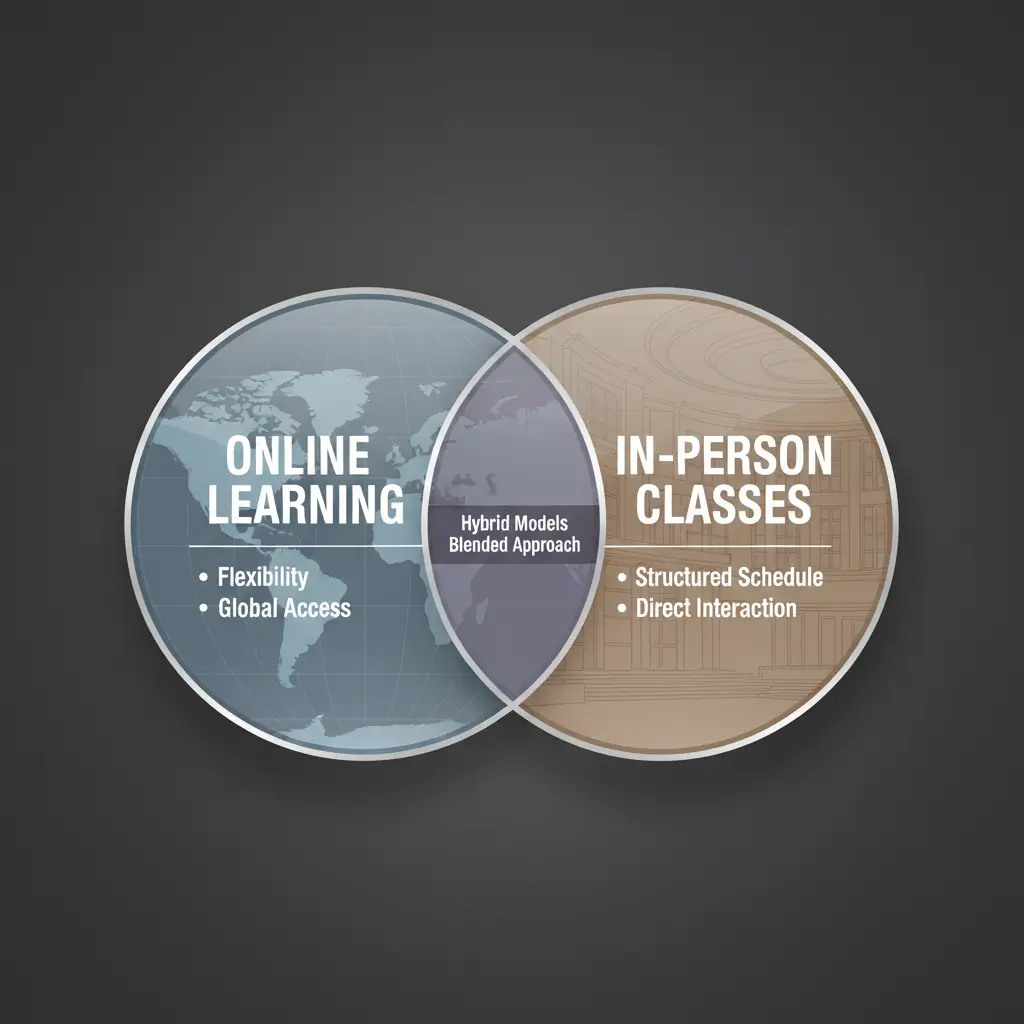
Online vs. In-Person Arabic Conversation Classes: What Actually Works
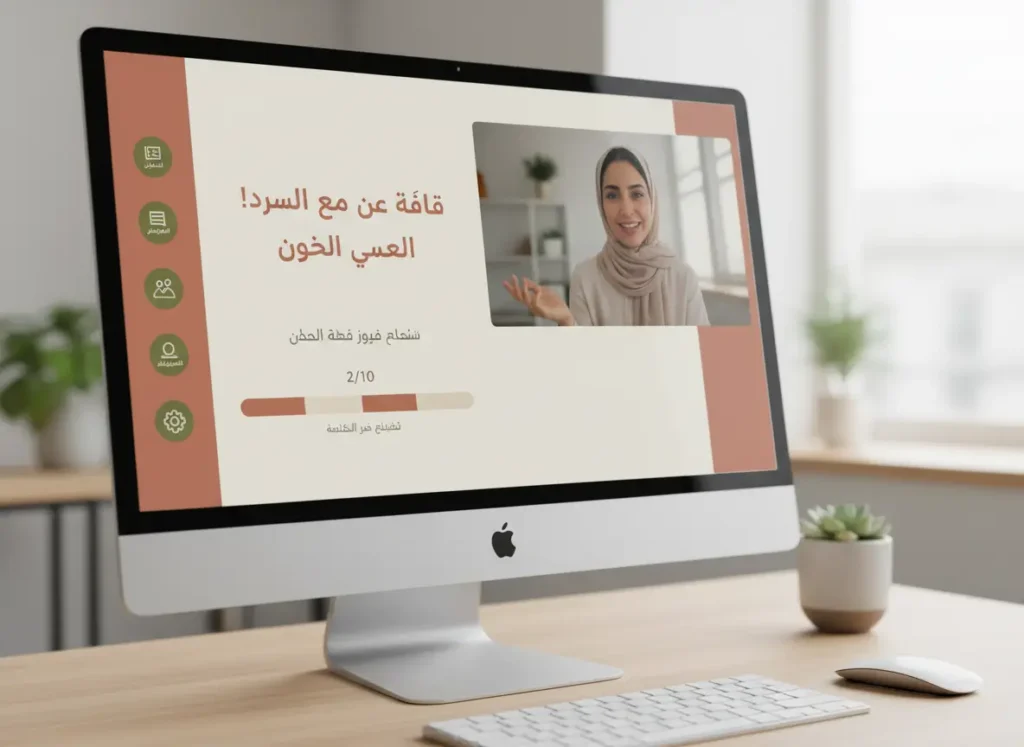
One of the most-searched phrases among Arabic learners is “Arabic speaking classes near me.” It’s understandable. There’s something reassuring about a physical room and a teacher you can see in person.
But geography is no longer the right filter for finding quality Arabic instruction.
The real question isn’t “how close is the teacher?” It’s “how good is the teacher, and how well does the format fit my life?”
Why “Near Me” Often Means Settling for Less
In most cities outside the Arab world, locally available Arabic teachers are limited in number and often generalist rather than specialist. Finding someone who holds an Al-Azhar certification, specializes in conversational Egyptian Arabic, or genuinely has experience preparing adult professionals for business communication — that’s a very different search.
Online learning removes that constraint entirely. You choose from vetted native speakers, dialect specialists, and certified instructors — not whoever happens to live within commuting distance.
Quick Comparison
| Feature | Online Classes | In-Person Classes |
|---|---|---|
| Flexibility | ⭐⭐⭐⭐⭐ | ⭐⭐ |
| Native Teacher Access | ⭐⭐⭐⭐⭐ | ⭐⭐⭐ |
| Cost | $40–80/month | $30–80/hour |
| Missed Classes | Reschedulable | Often lost |
| Commute | 0 minutes | 30–60 minutes |
When Local Is Worth Adding
There are genuine cases where in-person learning adds value:
- Immersive group environments where social accountability keeps you motivated
- Language exchange meetups in cities with large Arabic-speaking communities (London, New York, Toronto, Dubai)
- Supplementary conversation groups you attend alongside — not instead of — online classes
The practical recommendation: Use online classes as your primary instruction. Supplement with local Arabic conversation groups if available. That combination gives you specialist instruction online and informal conversational exposure locally.
Not sure what level to start at? Take the free Arabic placement test and get matched to the right program from day one.
The Conversation-First Approach: Why It Works for Adults
Traditional Arabic education is built bottom-up: months on the alphabet, months on grammar rules, vocabulary lists, and eventually — maybe after a year — you’re “allowed” to speak.
That’s the fastest way to kill motivation.
At Alphabet Arabic Academy, we flip the script. Speaking drives learning — not the other way around.
When you start with conversation:
Grammar becomes a solution, not a problem. You learn a rule because you need it to say something, not because it’s the next chapter in a textbook.
You remember what you use. You’ll remember the word for “coffee” (قهوة — Qahwa) because you ordered your morning drink with it. Not because you saw it on a flashcard at 11pm.
You get immediate wins. Nothing beats successfully introducing yourself or negotiating a price in a market. These small moments build the confidence that keeps you going.
Real Example: What This Looks Like in Practice
John was 35, working in tech, zero Arabic background. He needed conversational Arabic for colleagues in Dubai. Instead of six months on grammar, we started with survival phrases and daily conversation — just 30 minutes a day.
Within two months: basic introductions and business greetings. By month six: negotiating contracts and running meetings in Arabic.
What changed? He stopped studying Arabic and started using it.
Learn Conversational Arabic Online: The Smart Way

Learning Arabic conversation online works — but the platform and structure matter enormously. Here’s what separates programs that produce fluent speakers from those that produce confident quiz-takers.
What Actually Works Online
Live instruction with a native teacher. No app, pre-recorded video, or AI tool can give you what a native speaker does in real time: immediate pronunciation correction, natural speech patterns, cultural context, and the psychological safety to make mistakes without embarrassment.
When you mispronounce a word in Arabic in a way that changes its meaning — and this happens more often than learners expect — a native tutor catches it in the moment. That’s irreplaceable.
Conversation-focused methodology. If your tutor spends most of the session explaining grammar rules, you’re in a grammar class — not a conversation class. The session should be predominantly you speaking Arabic, with the tutor responding naturally and coaching in real time.
Progressive structure. Random lessons create knowledge gaps that undermine everything later. The best online programs move from simple to complex in a logical sequence — not topic-by-topic disconnected from each other.
Feedback loops. Passive recognition isn’t the same as active production. You need a teacher who corrects you, challenges you, and tracks your gaps — not just someone who approves of your effort.
What to Look for in an Arabic Conversation Tutor
Not every native speaker is the right tutor. Here’s what matters:
A native speaker of your target variety — if you’re learning Egyptian Arabic, your tutor should be Egyptian. Authenticity of input is especially important at beginner and intermediate levels.
Teaching experience, not just fluency. Knowing how to speak Arabic and knowing how to teach it are genuinely different skills. Look for tutors who can explain why something is correct, not just correct you and move on.
A conversation-focused session structure. Most of your class time should be you speaking — not listening to explanations.
Explore our Arabic courses and see what real conversation-focused instruction looks like.
Become Fluent in Weeks: The 20-Minute Daily System

Here’s something most language programs won’t tell you: consistency beats intensity every single time.
Many students fall into the “weekend warrior” trap. They attend a 3-hour class on Saturday, then don’t touch Arabic until the next Saturday. Scientifically, this is the least effective way to learn a language.
Your brain treats language acquisition like physical exercise. It needs consistent, low-intensity repetition to move information from short-term memory into automatic, usable fluency.
Twenty minutes of focused daily conversation practice is more effective than a single 5-hour session once a week. That’s not motivational talk — it’s how memory consolidation actually works.
Your Daily 20-Minute Fluency Checklist
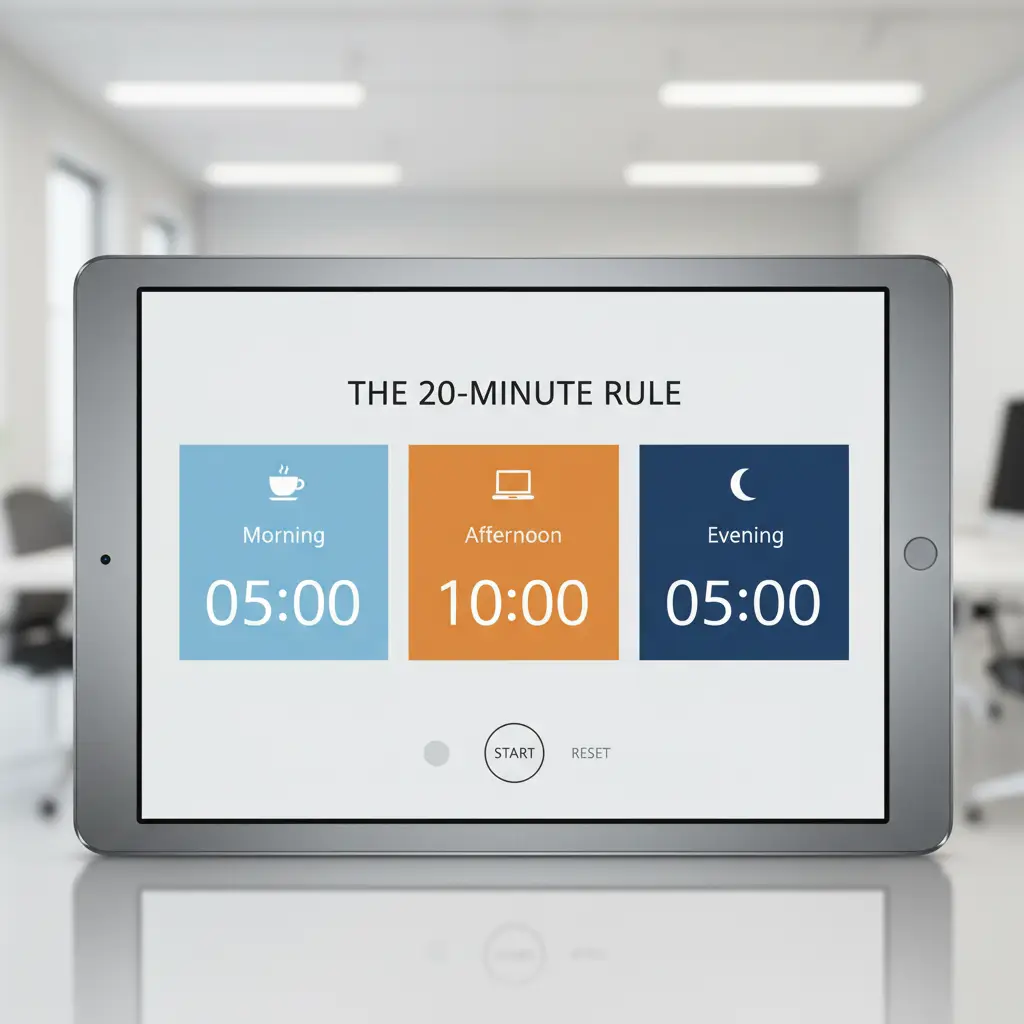
Morning (5 minutes): Review 10 vocabulary “chunks” from your last session. Not isolated words — full phrases you can actually use.
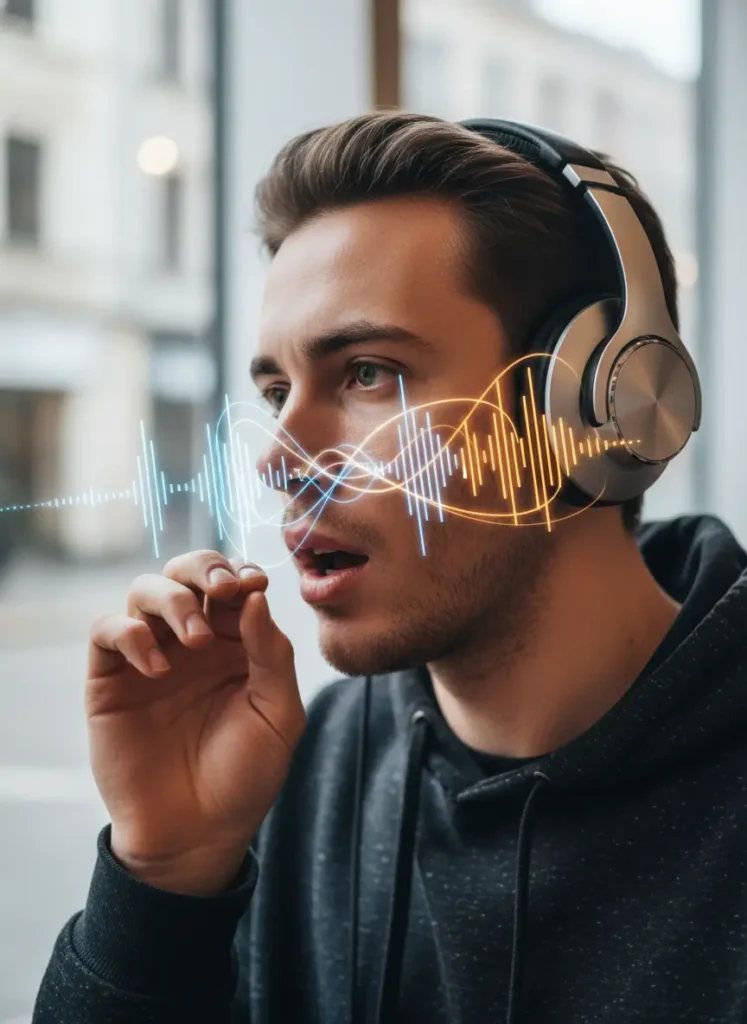
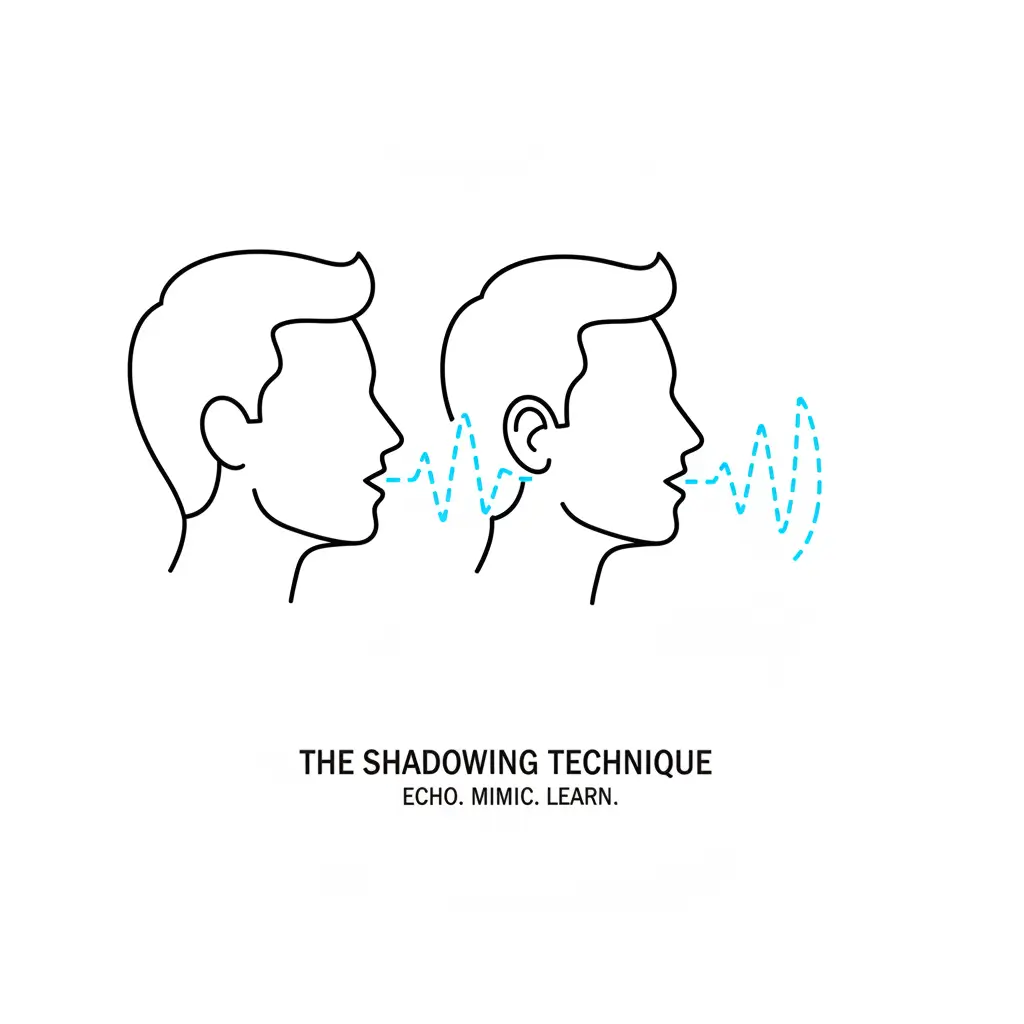
Afternoon (10 minutes): Practice the shadowing technique. Take a 30-second audio clip of a native Arabic speaker. Listen once. Then play it again and speak simultaneously. Don’t just mimic words — mimic the rhythm, the pauses, the emotion.
Evening (5 minutes): Record yourself describing your day in 3–5 Arabic sentences. Yes, it’ll feel awkward. Do it anyway. Listening back is where you catch your actual errors — the ones a tutor might not hear in a single session.
This simple system — spread across your day — will transform your fluency faster than any intensive weekend course.
The Three Core Techniques That Actually Work
1. The Shadowing Technique
This is the secret weapon of polyglots. Take a short audio clip of a native speaker. Listen once. Then replay and speak at the same time as the speaker.
Don’t just mimic words. Mimic the music of their voice. After a few weeks of daily shadowing, your pronunciation improves dramatically — because you’re training your mouth muscles to move at native speed.
2. The Inner Monologue Habit
You’re already talking to yourself in English all day. Start swapping small parts of that monologue into Arabic.
Instead of thinking “I need to go to the kitchen,” think: “أريد أن أذهب إلى المطبخ”
This builds the mental bridge between your thoughts and Arabic — reducing the translation lag that creates hesitation in real conversations.
3. Use Fillers Like a Native
Native Arabic speakers use filler words constantly. Learn them early:
- يعني (Ya’ni) — “I mean” / “you know”
- طيب (Tayyeb) — “Okay” / “fine”
- والله (Wallah) — “Honestly” / “truly”
These give your brain processing time without creating awkward silences. Once you start using them, you sound immediately more natural.
Your First 90 Days: A Realistic Path to Conversational Arabic
If you’re starting from zero, the volume of advice about learning Arabic can feel overwhelming. This cuts through all of it.
Ninety days of consistent, conversation-focused practice is enough to take most adult beginners from complete silence to functional spoken Arabic. Not fluency — but genuine, useful communication that works in real situations. That’s a meaningful milestone.
Days 1–30: Your Speaking Foundation
Goal: Introduce yourself, handle greetings, survive simple exchanges.
Focus on:
- Arabic sound system — particularly sounds that don’t exist in English (ع، خ، غ، ح)
- 50–75 high-frequency words embedded in actual phrases, not isolated vocabulary
- 10 core sentence structures that carry most beginner conversations
- The shadowing technique applied to short, natural audio clips
By Day 30 you’ll: Introduce yourself fully, exchange basic pleasantries, express simple needs, and understand the gist of slow, clear Arabic speech.
The single most important habit of this phase: recording yourself speaking Arabic for 60–90 seconds every evening, then listening back. This builds pronunciation self-awareness faster than any other method.
Days 31–60: Expanding Into Real Situations
Goal: Handle real conversational scenarios with increasing confidence.
Focus on:
- Role-playing specific scenarios: ordering food, asking for directions, shopping, making plans
- The root system — the moment this clicks, vocabulary acquisition accelerates dramatically
- First sessions with a native tutor focused on spontaneous conversation rather than exercises
By Day 60 you’ll: Navigate most common daily situations, maintain simple conversations for 5–10 minutes, and start thinking in Arabic for basic thoughts rather than translating from English.
The key shift of this phase: moving from practiced phrases to spontaneous responses. This is uncomfortable. Embrace it. The discomfort is where the real learning happens.
Days 61–90: Building Confidence Under Pressure
Goal: Speak naturally and recover quickly when you don’t know a word.
Focus on:
- Filler words and bridging phrases (يعني، طيب، والله، يلا)
- Strategies for communicating around vocabulary gaps — describe what you mean rather than stopping
- Increasing speed and reducing translation lag
- Weekly live conversation sessions focused on free discussion, not scripted practice
By Day 90 you’ll: Hold a 15–20 minute conversation on familiar topics, recover smoothly from mistakes, and feel the difference between Arabic as a study subject and Arabic as a communication tool.
The Root System: Your Vocabulary Superpower
Here’s where Arabic actually becomes easier than English.
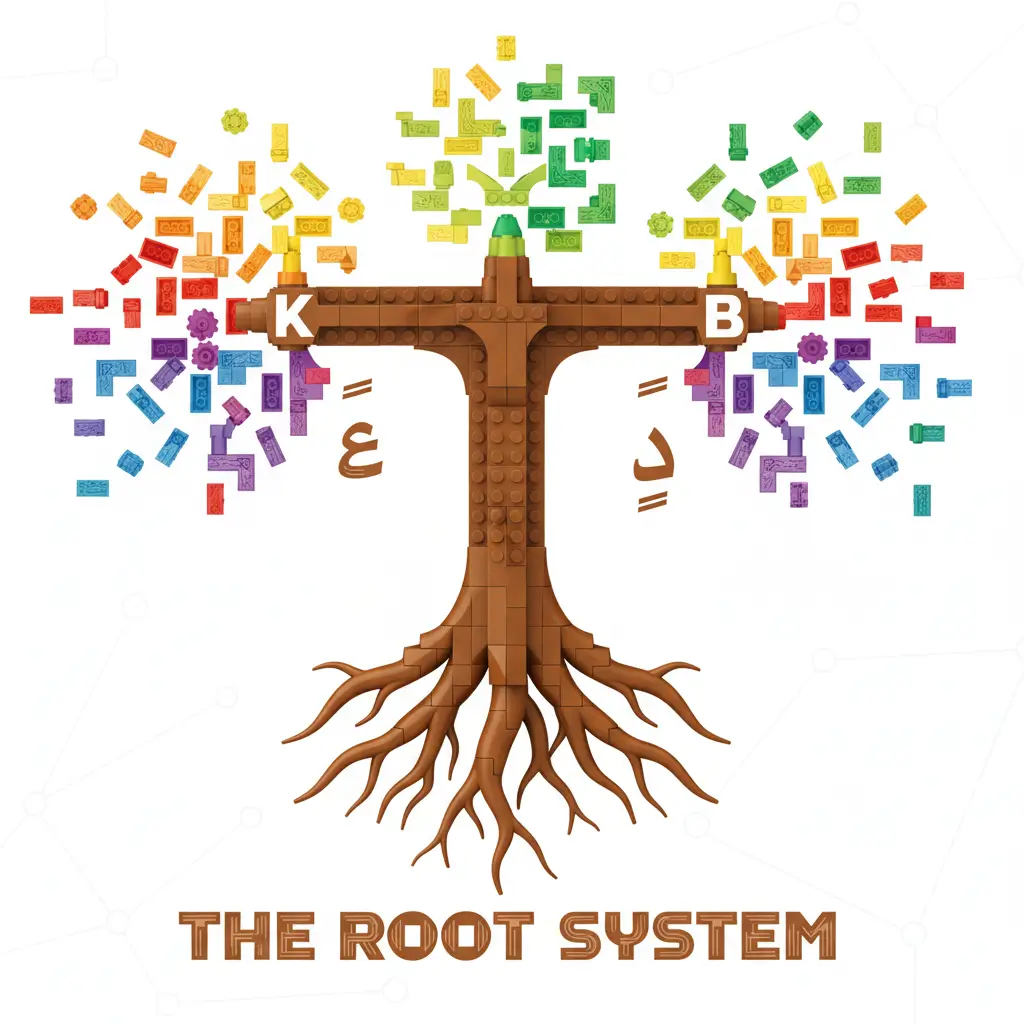
Instead of memorizing dozens of isolated verbs with no connection to each other, Arabic has a root system. Almost every word is built from a 3-letter root.
Take the root ك-ت-ب (K-T-B) — always related to writing:
- كَتَبَ (Kataba) → He wrote
- كِتاب (Kitab) → Book
- مَكْتَب (Maktab) → Office / Desk
- كاتِب (Katib) → Writer
- مَكْتَبة (Maktaba) → Library
That’s not five separate words to memorize. That’s one root you understand — and five words you can now recognize, predict, and use.
Once this system clicks for learners — and it usually clicks in weeks, not months — vocabulary retention typically doubles. It turns acquisition into logic instead of brute memorization.
For a deeper look at how vocabulary connects to grammar patterns, see how adults build Arabic fluency step by step.
MSA or Dialect? What Adults Learning Conversation Actually Need
This is probably the second-most common question we get. Here’s the direct answer.
Start with Modern Standard Arabic (MSA). Then add a dialect based on your specific needs.
Why MSA first? It’s understood across all 22 Arab countries. It gives you the grammatical structure that makes learning any dialect significantly easier later. All formal communication — news, books, business documents — runs through MSA. And if you need Arabic for professional or academic purposes, MSA is non-negotiable.
When to Add a Dialect
After 3–4 months of MSA, consider adding a dialect if you’re traveling to a specific region, working with people from a particular country, or consuming a lot of Arabic media from one area.
Egyptian Arabic is the most recommended starting point for general conversation. Egypt’s century-long dominance in Arabic cinema, television, and music means Egyptian Arabic is understood far beyond Egypt’s borders — from Morocco to the Gulf. A learner who chooses Egyptian can use it as a conversational tool across the entire Arab world.
It’s also more accessible than it first appears. The ق becomes a simple glottal stop (the sound in “uh-oh”). The ج is pronounced like the English “g” in “go.” And there’s an enormous library of Egyptian films, TV series, and YouTube content to practice with.
Levantine Arabic covers Syria, Lebanon, Jordan, and Palestine — relatively close to MSA in structure.
Gulf Arabic is essential for professional or personal travel in Saudi Arabia, the UAE, Qatar, Kuwait, and Oman.
My typical recommendation: learn MSA for reading, writing, and formal communication. Practice Egyptian dialect for daily conversation.
Explore the full guide to learning Arabic dialects to find the right fit for your goal.
Who Is This For?
Arabic conversation classes are for you if:
- You’ve studied Arabic before but freeze when speaking with a native
- You want to use Arabic professionally — in business, diplomacy, or media
- You’re traveling to an Arabic-speaking country and want more than a phrasebook
- You want to connect with the Quran, your heritage, or your family in a deeper way
- You’re starting from zero but want to speak from day one, not year two
This is NOT for you if:
- You want to learn passively without speaking during class
- You’re looking for a grammar-only course with no conversation component
- You expect fluency in two weeks without daily practice
Common Mistakes That Slow Adult Learners Down
I’ve taught hundreds of adult students. The same mistakes appear again and again.
Waiting to be perfect. Start speaking from day one, even if it’s just “Ana ismi…” (My name is…). Don’t wait until you know “enough.”
Ignoring pronunciation early. Fix pronunciation in the first month. Bad habits fossilize quickly and take months to correct later. This is where a native tutor is absolutely irreplaceable — an app cannot hear the difference.
Studying without speaking. Grammar books won’t make you fluent. Speaking must be part of daily practice, not the reward at the end of months of study.
Learning in isolation. Solo learning is the slowest path. Find a conversation partner, tutor, or online community. The fastest-improving learners all have a real human giving them real-time feedback.
Inconsistent practice. Daily 30 minutes beats a weekly 5-hour marathon, every time. Language learning is like physical fitness — you can’t “make up” for missed days with one long session.
Translating in your head. This slows everything down. The goal isn’t to convert English thoughts into Arabic words — it’s to start generating Arabic thoughts directly. This comes from conversation practice, not grammar study.
Let me tell you about Hassan.
He was 45. A civil engineer from Canada. He’d been studying Arabic on and off for three years — apps, books, YouTube. He knew hundreds of words. He understood grammar rules. But when he had to speak? He froze. Every time.
He told me: “I feel like I know Arabic but I can’t speak it.”
So we changed his method.
We stopped grammar drills. Stopped vocabulary lists. We just talked. For 20 minutes a day. About his work. About his family. About what he ate for lunch.
The first week was rough. He stumbled over every sentence. He switched to English constantly.
But by week three? Something clicked.
By week eight, he was telling me stories — full sentences, natural rhythm, mistakes and all.
Last month, he traveled to Cairo for a project. He called me from a coffee shop. He’d just spent 45 minutes talking to the waiter — in Arabic. About football. About Egyptian food. About nothing and everything.
“Twenty-year-old Hassan wouldn’t believe this,” he said.
That’s what conversation-focused learning does. It doesn’t just teach you Arabic. It shows you that you can.
Practical Arabic Conversation Phrases That Work Everywhere
You don’t need fluency to transform your first Arabic conversations. You need functional phrases in predictable situations — and those situations are remarkably consistent.
Greetings:
- السلام عليكم (Assalamu alaikum) — Hello
- كيف حالك؟ (Kayf halak?) — How are you?
- شكراً (Shukran) — Thank you
- عفواً (Afwan) — You’re welcome
Navigation and shopping:
- أين…؟ (Ayna…?) — Where is…?
- كم الثمن؟ (Kam al-thaman?) — How much?
- أريد… (Arid…) — I want…
- لا أفهم (La afham) — I don’t understand
Egyptian dialect essentials:
- إيه الأخبار؟ (Eh el-akhbar?) — How are things?
- معرفش (Ma’rafsh) — I don’t know
- مش فاهم (Mish fahim) — I don’t understand
- ممكن تعيد؟ (Mumkin ti’id?) — Can you repeat that?
- أنا بتعلم عربي (Ana bata’allam ‘arabi) — I’m learning Arabic [This single phrase, delivered with a smile, opens doors that English never can]
Bargaining in markets:
- هذا غالي كتير (Hatha ghali ktir) — This is very expensive
- ممكن تخفض السعر؟ (Mumkin tkhaffid al-si’r?) — Can you lower the price?
Practice these until they’re automatic. That’s the foundation for everything more complex.
Maintaining Long-Term Fluency
Getting to conversational fluency is one thing. Maintaining it is another.
Daily exposure (15–30 minutes):
- Arabic podcasts during your commute
- One episode of an Arabic show per week
- Arabic news headlines to start your morning
Weekly practice (1–2 hours):
- Scheduled conversation sessions with your tutor
- Online Arabic discussion groups or language exchange partners
The golden rule: Never let more than 3 days pass without Arabic exposure. Once you break the streak, momentum is harder to rebuild than most learners expect.
The learners who maintain fluency aren’t the ones who studied the hardest in one period. They’re the ones who made Arabic a small, consistent part of every day — for months and then years.
Frequently Asked Questions

How long does it take to learn Arabic conversation as an adult?
Most adults reach basic conversational fluency in 3–6 months with consistent daily practice of 20–30 minutes and weekly live sessions. Business-level fluency typically takes 12–18 months. The timeline depends heavily on consistency — daily practice is the single biggest variable.
Is Arabic conversation harder for adults than children?
Not really. Adults have stronger focus, higher motivation, and better analytical skills. Children pick up pronunciation more naturally, but adults excel at grammar, vocabulary retention, and purposeful practice. The right method makes more difference than age.
Can I learn Arabic conversation if I’m over 50?
Absolutely. Age isn’t a barrier. Many of our students started in their 50s, 60s, and even 70s. Consistency and the right teacher matter far more than when you started.
Should I learn MSA or a dialect for conversation?
Start with MSA for a grammar foundation — typically 3–4 months. Then add Egyptian Arabic for daily conversation (it’s the most widely understood spoken dialect globally). Many adults successfully learn both simultaneously with the right teacher.
How much daily practice is enough to see real progress?
20–30 minutes daily is the sweet spot. Consistency beats duration. Daily 20-minute sessions outperform weekly 2-hour sessions significantly — because language retention requires regular, spaced exposure, not occasional intensity.
Do I need to take live classes or can I use apps?
Apps like Duolingo are useful supplements for vocabulary. But they cannot replace live conversation with a native teacher. You need a real human to correct your pronunciation in context, respond to you naturally, and adapt to what you specifically struggle with. Apps don’t do that.
What’s the fastest way to start speaking Arabic?
Start speaking on day one. Seriously. Even if it’s just “Marhaba” and “Shukran.” The fastest path to conversation is conversation — not months of preparation before your first word.
Conclusion: Your Next Step Starts Here
Learning Arabic conversation as an adult isn’t about reaching some distant perfection. It’s about the quiet thrill of being understood — and understanding others — in a language that most people never attempt.
Whether you’re learning for business, travel, religion, or family, the key is simple: start speaking today. Not next month. Not when you know enough grammar. Today.
The silence barrier is only as strong as your hesitation.
At Alphabet Arabic Academy, our teachers are graduates of Al-Azhar University, based in Cairo, with students from 80 countries and a 4.9/5 rating on Trustpilot. We offer the structured path, native expertise, and conversation-first methodology to take you from silence to confidence.
Here’s your action plan:
- Define your specific goal — be honest about exactly why you want this
- Take the free Arabic placement test to find your starting level
- See our Arabic course pricing and choose your plan
- Commit to 20 minutes daily for 30 days
- Track your wins — even small ones matter
Your future Arabic-speaking self is closer than you think. The door is open.