Arabic Course for English Speakers: What to Expect and How to Choose


A good Arabic course for English speakers starts with the alphabet and sounds, explains grammar in English, and has you speaking early. Expect to learn a new script, long vowels and new throat sounds first. Then you build vocabulary, simple sentences and reading. Pick a course with live feedback, because pronunciation is the hardest thing to fix alone.
| Stage | Focus | What you can do at the end |
|---|---|---|
| Month 1 | Alphabet, sounds, short vowels | Read and sound out simple words |
| Months 2 to 3 | Basic grammar, everyday vocabulary | Introduce yourself, ask simple questions |
| Months 4 to 6 | Sentences, verbs, reading short texts | Hold a basic conversation, read short passages |
| Beyond | Fluency work, dialect or specialist Arabic | Depends on your goal |
These are typical paths, not promises. Your pace depends on how often you practise and how you learn.
What’s actually different for English speakers
Arabic isn’t impossible. But it’s different in ways that catch English speakers out.
The script runs right to left. Letters change shape depending on where they sit in a word. That sounds scary. In practice, most people read simple words within a few weeks of steady practice.
Some sounds don’t exist in English. The throat sounds ع (ayn) and ح (haa), the deep ق (qaf), and the heavy letters like ص and ض take training. Your ear has to learn them before your mouth can copy them.
Short vowels usually aren’t written. Adult texts leave them out. You learn to read from context. Beginner materials add them back, which is why a good course teaches vowel marks first and then slowly removes the support.
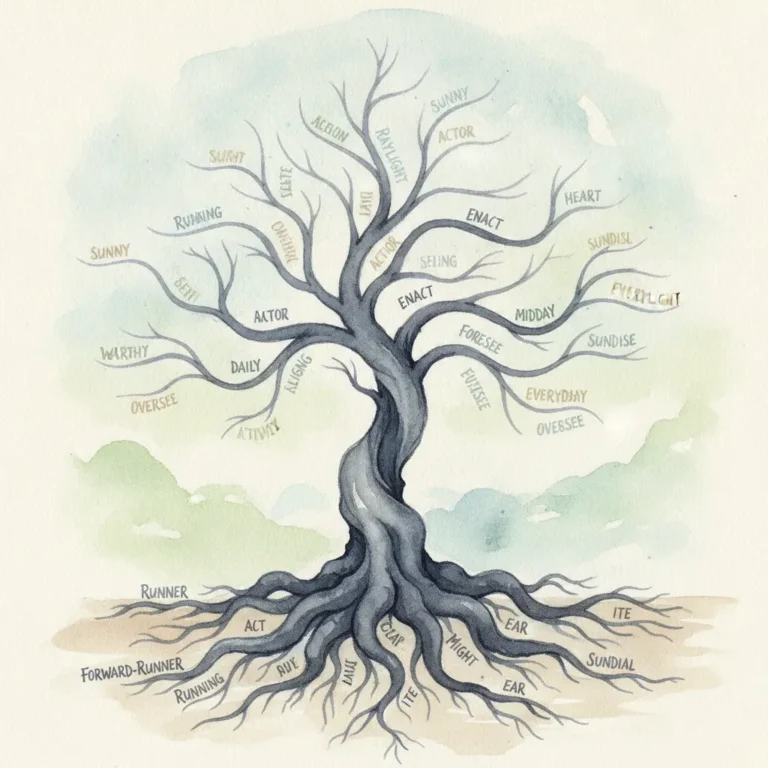
Words are built from roots. Three-letter roots generate whole families of words. It’s strange at first, then it becomes your best memory tool. See our guide to Arabic word roots for how it works.
You have to choose a type of Arabic. Modern Standard Arabic (MSA) is what you read and hear in news and books. Dialects, like Egyptian, are what people speak at home. Here’s the thing: no course can teach everything at once, so picking early saves you months. Our comparison of MSA, Egyptian and Quranic Arabic can help you decide.
What a good course covers
Look for these, in roughly this order:
- Letters and sounds. Not just names. The actual pronunciation, with a teacher listening.
- Short vowels and long vowels. Reading with marks, then without.
- Core vocabulary. The first few hundred everyday words, learned in phrases, not lists.
- Basic sentence structure. Nominal and verbal sentences, gender, plurals.
- Reading practice every week. Even short texts.
- Speaking from the first lessons. Not saved for “later”.
If a course teaches grammar tables for six weeks before you say a single sentence, be careful. If it teaches only phrases with no alphabet, you’ll hit a wall around week eight.
How to choose a course: seven questions
- Is there a live teacher? Apps are great for review. They can’t hear your ع.
- Are lessons one-to-one or in a group? One-to-one lets the teacher focus on your mistakes. Groups are cheaper but slower for you.
- Does the teacher explain in English? For the first months, this matters a lot. Our teachers explain in English, and we start from the alphabet.
- Which Arabic does it teach? MSA, a dialect, or both in a clear order.
- Can you test your level first? A short placement test avoids paying for lessons you don’t need. You can take ours at the free Arabic placement test.
- Is there a trial lesson? If not, ask why.
- Is the schedule realistic? Three short sessions a week often beats one long one.
I’ll be straight with you: the cheapest option is rarely the cheapest in the end. If you quit after two months, you’ve paid for nothing.
Common mistakes English speakers make
- Relying on transliteration for too long. Writing Arabic in English letters feels easy and slows you down. Move to the script quickly.
- Skipping pronunciation work. Bad habits set fast.
- Mixing MSA and dialect too early. It’s fine to enjoy both. Just don’t expect to master both in the first months.
- Studying only on weekends. Short daily practice works better. Try our daily Arabic study routine.
- Waiting to speak until you feel ready. You won’t feel ready. Speak anyway.
Which Arabic should you start with?
| Your goal | Start with |
|---|---|
| Reading, news, formal study | Modern Standard Arabic |
| Talking with people in Egypt or watching Egyptian media | Colloquial Egyptian Arabic |
| Reading the Quran | Quranic reading and Tajweed |
| Not sure yet | Take the placement test, then talk to a teacher |
Try before you commit
The easiest way to know if a course fits is to take a lesson. You’ll see how the teacher explains things in English, how fast it moves, and whether you feel comfortable. You can book a free trial lesson with us and ask any of the seven questions above.
What your first week might look like
If you’re wondering what you’d actually do, here’s a typical first week in a beginner-friendly course:
- Day 1: meet your teacher, talk about your goal, and learn the first letters and their sounds.
- Days 2 to 3: more letters, with practice saying and writing them.
- Days 4 to 5: first short vowels and simple syllables.
- Weekend: short review, listening to the sounds again.
By the end of the week, most learners can sound out simple syllables. It’s slow, and that’s normal. The foundation you build here makes everything else easier.
How much time should you plan?
You don’t need hours every day. A realistic starting plan is:
- 2 or 3 lessons a week, plus
- 15 to 20 minutes of practice on most other days.
If you can do more, great. If you can only do less, keep it steady. Missing weeks costs more than going slowly.
Signs you’ve chosen the right course
- You understand the explanations and can ask questions freely.
- You speak in every lesson.
- You receive clear homework, and you get feedback on it.
- You can see your own progress after a few weeks.
- You feel comfortable asking the teacher to repeat or slow down.
If these are missing after a few lessons, talk to your teacher. If nothing changes, look elsewhere.
FAQ
Can I learn Arabic if I only speak English? Yes. Most Arabic learners start as English speakers. A course that explains in English and begins with the alphabet gives you a clear path.
How long does it take to learn Arabic as an English speaker? It depends on your goal and how often you practise. Reading simple words can take weeks. Comfortable conversation usually takes many months of regular study.
Is Arabic harder than other languages for English speakers? It’s usually described as one of the harder languages because of the script, the sounds and the gap between written and spoken forms. It’s learnable with steady practice.
Should I learn MSA or a dialect first? Choose by goal. MSA for reading and formal use, a dialect for everyday speech with people. If unsure, take a placement test and ask a teacher.
Do I need to learn the alphabet first? Yes. Even if you want to speak, reading the script helps you pronounce correctly and remember words.
Can I take a free lesson before paying? Yes. Request a free trial lesson and a teacher will check your level.