
apps vs teachers for arabic You downloaded Duolingo. You did it every day for three weeks. You got your streak. You felt good.
Then someone spoke Arabic to you in real life — and you froze.
Sound familiar? You’re not alone. This is one of the most common things I hear from new students. And it’s not your fault. It’s the app’s fault.
But before I throw apps under the bus entirely, I want to be fair here. Because it’s not a simple “apps are bad, teachers are good” story. The real answer is more useful than that.
Let’s break it down.
What Apps Actually Do Well
I’m not here to trash apps. Some of them are genuinely useful — when you use them for the right thing.
Apps are great for:
Vocabulary exposure. Duolingo, Drops, Ling — they throw words at you constantly. You’ll pick some of them up. That’s real. It counts.
Building a daily habit. This is actually huge. A lot of people who struggle with Arabic just never study consistently. If an app gets you opening something Arabic-related every day, that habit has value. We actually wrote about how to build a daily Arabic study routine — and consistency is everything.
Low-pressure review. When you’re tired and you just want to review five words before bed, a flashcard app is perfect. No judgment. No pressure.
Alphabet recognition. Some apps do a decent job getting you familiar with Arabic letters. Not great at pronunciation, but decent at shapes.
So yes — apps work. For certain things. In certain situations.
Where Apps Fall Apart (And They Fall Apart Hard)
Here’s the thing. Arabic isn’t Spanish. It’s not French. It’s not even Japanese.
Arabic has sounds that don’t exist in any European language. Letters like ع and ح come from the throat — and if you’ve never heard them produced correctly by a real human in front of you, you will pronounce them wrong. Every time. For years.
Apps can’t hear you. That’s the core problem.
Duolingo has a speaking feature, sure. But it’s running you through a speech recognition algorithm that was not trained on Arabic learners making beginner mistakes. It’ll either pass you when you’re wrong, or fail you when you’re right. Neither outcome teaches you anything.
The real damage happens silently. You practice for 60 days. You feel confident. Then a native speaker says something and you understand nothing — because you’ve been training your ear on slow, robotic, app-generated audio. Not on how people actually talk.
I’ve seen this pattern so many times. Students come to me after six months on Duolingo and their pronunciation is already locked in wrong. Not a little wrong. Structurally wrong. And fixing it takes twice as long as learning it right the first time.
That’s the real cost of apps-only learning. Not the wasted subscription fee. The wasted months.
What a Real Teacher Does That No App Ever Will
Let me be straight with you — this is where I’ll sound biased because I am a teacher. But stay with me, because this is just true.
A teacher hears your mistakes in real time.
When you say ح and it sounds like “h,” a teacher stops you. Right then. Not after you’ve repeated it 500 times and baked it into muscle memory. Right now. “Open your throat. Breathe out harder. Again.” That correction takes 30 seconds and saves you three months.
A teacher knows what you don’t know yet.
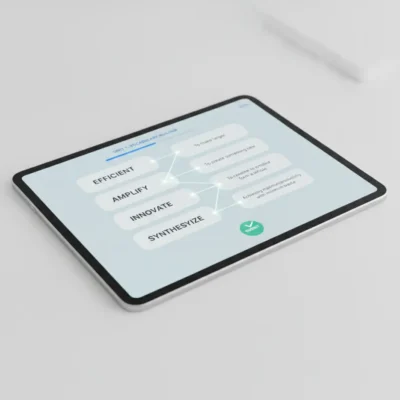
An app gives everyone the same path. You get lesson 1, then lesson 2, regardless of your brain. A teacher watches how you respond to new material and adjusts on the fly. If you’re struggling with a specific sound, they slow down. If you’re flying through vocabulary, they push you faster. Apps can’t do that.
A teacher speaks the actual language.
This sounds obvious. It’s not. Most apps use audio recorded in a studio by one person, reading slowly and clearly. That’s not Arabic. That’s Arabic for robots. A real Egyptian teacher will say things at natural speed, with natural rhythm, with natural filler words — and your brain starts mapping to reality instead of to a recording.
A teacher keeps you accountable.
When you have a lesson scheduled at 6pm with someone who is waiting for you, you study. When you have an app on your phone, you can just… not open it. You can postpone. You can quit and restart a streak and nobody knows. A teacher knows.
The “Apps vs Teachers” Question Is the Wrong Question

Honestly, the best students I’ve seen don’t use apps OR teachers. They use both — but they know which one does what job.
Apps = maintenance and supplementary exposure
Teachers = actual skill-building and error correction
Think of it this way. If you’re training for a marathon, you run every day on your own. But you also have a coach who checks your form, adjusts your pace, and catches the injury before it becomes an injury. The daily runs are the app. The coach is the teacher.
Apps should never be your primary learning method for Arabic. But they can be a useful tool in the background — for vocabulary review between lessons, for listening exposure, for keeping Arabic in your daily routine.
If you’re trying to figure out where you actually stand, take our free Arabic placement test before you do anything else. You might be further along than you think — or you might discover you’ve been doing the wrong things for a while. Either way, it’s good to know.
Why Arabic Specifically Needs a Human Teacher
A lot of the “apps vs teachers” debate applies to language learning in general. But for Arabic, the case for a teacher is even stronger. Here’s why.
The script. You need to not just read Arabic — you need to read it without vowels. Because most real Arabic text (newspapers, books, signs, WhatsApp messages) has no vowels written. Apps teach you to read with full vowel markings and then… stop there. A teacher prepares you for the actual Arabic you’ll see in the world.
The diglossa problem. Arabic has two registers that are genuinely quite different. Modern Standard Arabic (MSA) is what you read in news and formal writing. Colloquial Arabic — like Egyptian Arabic — is what people actually speak in daily life. Apps typically blur this line or ignore it entirely. A teacher makes it clear, from day one, which you’re learning and why it matters. For a deeper look at this, check our guide on how to start learning Arabic from zero.
The sounds. I already mentioned this but it’s worth repeating. Arabic pharyngeal and emphatic consonants are genuinely unlike anything in English. You cannot learn them from a recording. You need someone to demonstrate, listen to you attempt it, and give you targeted feedback.
The grammar is complex but logical. Arabic grammar has patterns that, once explained by a real teacher, click fast. But if you’re trying to infer grammar rules from an app’s exercises, you’ll be confused for months. Root-based morphology, verb-subject-object order, dual forms, broken plurals — a good teacher walks you through this in a way that actually makes sense.
“But Teachers Are Expensive”

Fair point. Let me address it directly.
Yes, private tutoring costs more than a Duolingo subscription. But here’s the math nobody does.
If you spend 12 months on an app and learn very little — and then need 12 more months with a teacher to fix your foundation and actually progress — you spent two years. And you paid for both.
If you start with a teacher, build real skills in six months, and then use apps to maintain — you spent six months and paid for one thing.
The cheaper option, long-term, is usually the teacher.
And online Arabic instruction has made this much more accessible than it used to be. You don’t need to fly anywhere. You don’t need to find someone local. One-on-one live sessions with a native teacher from Egypt, scheduled around your life, starting from wherever your level actually is.
You can see exactly what that looks like at our pricing page — and if you want to know who you’d actually be learning from, meet our teachers here.
The Pattern I See Over and Over
I’ve taught a lot of beginners. And when I ask new students how they’ve been learning before they found us, the pattern is almost always the same.
They did Duolingo for a few months. Then they tried YouTube. Then maybe another app. Then they felt like they weren’t making real progress. Then they finally booked a lesson.
In that first lesson, I hear the same things every time. Their pronunciation has picked up some bad habits. They know some vocabulary but don’t know how to use it in a sentence. They’ve never actually spoken Arabic to a human before.
And when I ask them why they didn’t try a teacher sooner, the answer is usually: “I thought I needed to learn some basics first.”
This is one of the most persistent myths in language learning — the idea that you need to prepare before you’re “ready” for a teacher. You’re not. Nobody is. If you’re a complete beginner with zero Arabic, that’s exactly who a teacher is designed for.
You don’t prepare to work with a teacher. The teacher is the preparation. For a more honest look at what self-study can and can’t do, read our article on the best way to learn Arabic at home — including where it runs out of steam.
So What Should You Actually Do?

Here’s my honest recommendation, not as a sales pitch, but as someone who’s watched a lot of people try to learn Arabic:
- Don’t start with an app as your main method. Use it for vocabulary review or listening exposure on the side.
- Get a real teacher early. The earlier, the better. Even 2 sessions a week makes an enormous difference compared to solo app-based study.
- Take a placement test first. If you’ve already done some studying, you might be at a level you don’t realize — or you might have gaps you don’t know about. Either way, find out where you really are.
- Use apps between lessons. Not as the main event. As the warm-up. Anki for vocabulary, YouTube for listening exposure, maybe Duolingo for quick daily review. But the real learning happens in live sessions.
- Be consistent. 15 minutes a day with a structured plan beats 3-hour weekend sessions with no structure.
The Bottom Line
Apps aren’t evil. But they’re not enough.
For Arabic specifically — with its unique sounds, its script, its grammar complexity — you need real feedback from a real human who knows what they’re doing.
The question isn’t really “apps vs teachers.” The question is: do you want to actually learn Arabic, or do you want to feel like you’re learning Arabic?
Because those two things are very different. And only one of them shows up when someone actually speaks to you.
If you’re ready to make real progress — not streaks, not XP points, actual progress — see what our courses look like and what they cost.