

You open an Arabic newspaper. You can read it — slowly, but you get the gist.
Then you listen to a conversation between two Egyptians. You understand maybe every fifth word.
And you’re confused.
The letters are the same. Most of the vocabulary looks familiar. Why does spoken Arabic sound like a completely different language when you’ve been studying MSA for months?
That’s not a “you” problem. That’s just how Arabic works, and nobody explains it clearly enough at the beginning.
Here’s the thing — written Arabic and spoken Arabic are not the same language wearing different hats. They’re genuinely different systems, built for different purposes, with different grammar, different vocabulary, and different rules. Understanding what changes and why is the first step to actually navigating both.
First: What’s Actually Going On Here?
In linguistics, this situation is called diglossia — where two distinct varieties of a language are used side by side, each with a specific function.
Think of it like this: you wouldn’t speak to your grandmother the same way you write a university essay. But in Arabic, the gap between those two ways of speaking is much wider than in English. It’s not just “formal” vs “informal.” It’s two separate systems that share a root.
| The Written/Formal Variety | The Spoken/Colloquial Variety |
|---|---|
| Modern Standard Arabic (MSA) | Egyptian, Levantine, Gulf, Moroccan dialects |
| Used in: newspapers, books, official speeches, news broadcasts | Used in: everyday conversation, TV shows, songs, texting |
| Learned in school | Learned at home |
| Consistent across all 22 Arab countries | Changes from country to country (and sometimes city to city) |
| Complex grammar (case endings, full verb conjugations) | Simplified grammar (fewer endings, dropped case markers) |
This two-variety system has existed for centuries — it’s not a modern invention, and it’s not going anywhere.
What Actually Changes When You Go from Written to Spoken?
1. Pronunciation and Sound Structure
One of the most noticeable changes is how vowels are pronounced.
Written Arabic has three short vowels (fatha, kasra, damma) that are often marked in textbooks and the Quran.
Spoken Arabic simplifies these. Vowels shift, get dropped, or change entirely. For example, the word for “book” is written as كِتَاب (kitāb) in MSA, but in Egyptian Arabic it’s often pronounced ketāb — the short ‘i’ becomes ‘e’, and the long ‘ā’ shifts.
Many final short vowels disappear entirely. In MSA, the sentence “He went to the school” would be:
ذَهَبَ إِلَى المَدْرَسَةِ (dhahaba ilā al-madrasati) — with the final -i case ending on madrasa.
In Egyptian Arabic, that same sentence becomes:
رَاحْ لِلْمَدْرَسَة (rāḥ lel-madrasa) — different verb, simplified pronunciation, no case ending.
2. Grammar: The Big Simplification
This is where the biggest differences show up.
Case Endings (الإعراب):
- MSA has three case endings (nominative, accusative, genitive) that change the final vowel of nouns and adjectives.
- Spoken Arabic drops almost all case endings entirely. Nobody says “أَخُوكَ” (akhūka) in conversation — they say “أَخُوك” (akhūk) or just use the simpler form.
Verb Conjugation:
- MSA has a full system of verb forms, including the dual (for two people) and distinct feminine plural forms.
- Spoken Arabic simplifies this. The dual is almost completely gone in most dialects. The feminine plural verb forms merge with masculine plural.
Word Order:
- MSA prefers Verb-Subject-Object order.
- Spoken dialects, like Egyptian, usually use Subject-Verb-Object order — the same as English.
3. Vocabulary: Different Words for the Same Thing
This is often the first thing learners notice. Even common words change.
| MSA | Egyptian Arabic | Meaning |
|---|---|---|
| مَاء (mā’) | مَيَّة (mayya) | water |
| كَيْفَ حَالُكَ؟ (kayfa ḥāluka?) | إزَّيَّكْ؟ (izzayyak?) | How are you? |
| أَيْنَ (ayna) | فِينْ (fēn) | where |
| هُنَاكَ (hunāka) | هِنَاكْ (hināk) | there |
| تُفَّاح (tuffāḥ) | تُفَّاح (tuffāḥ) | apple |
Some vocabulary comes from different origins entirely — Egyptian Arabic has Turkish, Italian, French, and Coptic borrowings that don’t exist in MSA at all.
4. Pronouns and Verb Endings
Object pronouns change in subtle but consistent ways.
| MSA | Egyptian Arabic |
|---|---|
| أَنَا (anā) — I | أَنَا (anā) |
| أَنْتَ (anta) — you (masc.) | إِنْتَ (inta) |
| أَنْتِ (anti) — you (fem.) | إِنْتِي (inti) |
| نَحْنُ (naḥnu) — we | إِحْنَا (iḥna) |
| هُمْ (hum) — they | هُمَّ (humma) |
Notice how the second-person pronouns shift: “anta” becomes “inta,” and the feminine is distinguished by an -i ending.
Why Does This Gap Exist?

It’s not random. The two varieties serve completely different functions in society.
MSA is the language of:
- Formal education and schooling
- Government, law, and administration
- Newspapers and literature
- News broadcasts and formal speeches
- Religious texts
It’s the “High” variety — the language of prestige, knowledge, and officialdom.
Spoken dialects are the languages of:
- Home and family
- Street, market, and café
- Songs, TV shows, and films
- Social media and texting
- Everyday, informal communication
It’s the “Low” variety — the language of intimacy, authenticity, and daily life.
This division is so deep that many linguists argue the dialects didn’t actually “descend” from Classical Arabic — they developed alongside it, as two parallel streams.
What This Means for You as a Learner
If You’re Learning MSA First (Which Most Learners Do)
You’re building a foundation that gives you access to:
- Reading Arabic literature and newspapers
- Understanding formal speeches and news broadcasts
- Writing and communicating in formal contexts
- Access to the Quran and classical texts
But MSA alone won’t help you navigate casual conversation in Cairo or Beirut, and it will make you sound stiff and unnatural if you try to speak it in informal settings.
If You’re Learning a Dialect First (Like Egyptian Arabic)
You’ll be able to:
- Have real conversations with native speakers much faster
- Understand TV shows, movies, and music
- Navigate daily life in an Arab country
But you’ll struggle to read formal texts or understand news broadcasts, and you won’t be able to communicate across dialect regions as easily.
The Reality: No One Actually Speaks “Pure” MSA in Real Life

Even in formal settings, native speakers code-switch — moving between MSA and dialect mid-conversation depending on the topic, audience, and formality level. They might start a speech in MSA and drop into dialect for a joke or an aside.
And even MSA itself has regional variations. Lexical borrowing and local preferences mean that an educated MSA user from Cairo and one from Rabat might have different words for the same formal concept.
The gap is also not a single “one or the other” situation. Linguist El-Said Badawi identified a continuum of five different levels of Arabic that educated speakers move between, from the purest classical Fusha down to the most casual, everyday dialect. That continuum is real, and speakers navigate it constantly without even thinking about it.
When to Use Which: A Quick Reference
| Situation | What to Use |
|---|---|
| Talking to friends or family | Dialect |
| Watching a TV show or movie | Dialect |
| Listening to news or formal speech | MSA |
| Reading a book or newspaper | MSA |
| Writing a formal email or letter | MSA |
| Texting on social media or WhatsApp | Dialect (often mixed with MSA) |
| Attending a university lecture | MSA |
| Speaking to a shopkeeper or taxi driver | Dialect |
Real-world example of code-switching:
A politician might start a speech in MSA: نحن نقف اليوم أمام تحدٍ كبير (We stand today before a great challenge). Then drop into dialect for a personal anecdote: والإحنا كنا صغيرين، كنا بنحلم بيوم زي ده (And when we were kids, we used to dream of a day like this).
Which Path Should You Pick?
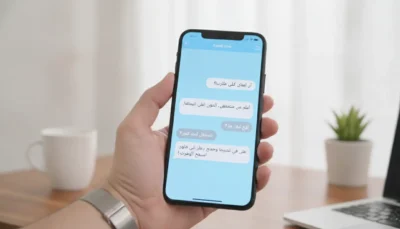
If your goal is to read Arabic literature, understand the news, study classical or religious texts, or work in a formal environment — MSA is your starting point. It’s the language of writing, education, and official speech.
Our Modern Standard Arabic course is built entirely around this foundation — grammar, vocabulary, and structure that let you read, write, and speak in formal contexts. If you’re learning for professional, academic, or religious reasons, that’s where you should start.
If your goal is to have conversations with Arab friends, family, or people in a specific country — you’ll want to add a dialect on top of that MSA foundation. Egyptian Arabic is the most widely understood dialect across the Arab world because of its dominance in TV, film, and music. It’s also the dialect that most learners find accessible as a second step.
If your goal is spiritual — understanding the Quran — then you’ll want to layer Classical/Quranic Arabic on top of your MSA knowledge. We have a dedicated path for Quran classes that builds on the MSA foundation.
Not sure what you need? We break this down in more depth in our guide on MSA vs. Egyptian vs. Quranic Arabic — it’ll help you choose the right path from the start.
Putting It Together
Written and spoken Arabic are different — but they’re not enemies. They’re two ends of a spectrum, and the most confident Arabic speakers know how to move between them.
The trick isn’t picking one and ignoring the other. It’s knowing what each does for your goals and building your skills accordingly.
Want to know where you currently stand? Take our free Arabic placement test — it takes a few minutes and tells you exactly what level you’re at and whether MSA or a dialect is your next logical step.
Ready to build a real MSA foundation? Our Modern Standard Arabic course is taught by certified native Egyptian teachers, one-on-one, at your pace. You can also browse pricing options or meet our teachers before you decide.
Stop guessing which Arabic you’re learning. Understand what changes and why — and choose the path that actually fits your goal.
Choose your path → MSA Course