transliteration for learning arabic Let’s settle this once and for all. If you’ve ever searched for Arabic words online and seen things like marhaba, shukran, or Allahu akbar written in English letters — that’s transliteration. It’s everywhere. You might’ve even searched for an “Arabic transliteration keyboard” so you could type Arabic sounds without learning the actual script. I get it. It feels like a shortcut. And beginners love shortcuts.
But here’s the thing… that shortcut might be costing you more than you think.
I’ve been teaching Arabic for years. I’ve seen students use transliteration as a crutch. I’ve seen others avoid it completely and struggle. And I’ve seen a small group use it correctly and actually make faster progress.
So is transliteration good or bad for learning Arabic? The honest answer is: it depends on how you use it.
Let me break it down for you.
First — What Even Is Transliteration?
Transliteration means writing Arabic sounds using English (or Latin) letters.
So instead of writing مرحبا, you write marhaba. Instead of شكراً, you write shukran.
It’s not translation. It doesn’t change the meaning. It just changes the script.
And look — I get why people use it. Arabic has 28 letters. Some of those letters don’t exist in English at all. Sounds like ع (ain) and خ (kha) and غ (ghain) have no English equivalent. So when someone’s just starting out, transliteration feels like a lifeline.
But there’s a problem.
Why Most Learners Fail Because of Transliteration
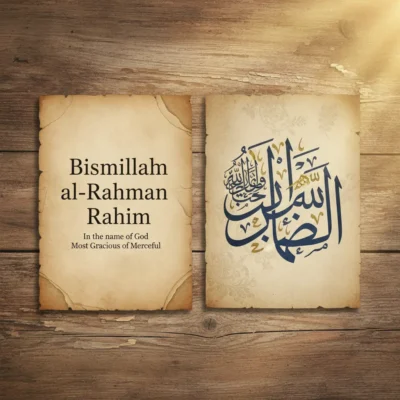
Transliteration isn’t standardized. At all.
The letter ح (a deep, breathy H) — some people write it as h, some write it as ħ, some write it as H with a capital. There’s no one system everyone agrees on.
The letter خ (kha) — you’ll see it written as kh, x, 5, or 7 depending on who’s writing.
I’ll be straight with you: when you learn Arabic through transliteration, you’re not actually learning Arabic. You’re learning someone else’s interpretation of Arabic sounds. And that interpretation is different every time, on every website, in every textbook.
So you spend three months reading marhaba and shukran and habibi… and then you open an actual Arabic text and you can’t read a single word.
That’s the trap.
But Wait — Is Transliteration Ever Useful?
Yes. In specific situations. For a limited time.
Here’s when transliteration actually helps:
1. Your very first week. You don’t know the alphabet yet. You want to say hello in Arabic. Writing مرحبا means nothing to you yet. Writing marhaba gives you something to work with. That’s fine. For now.
2. Pronunciation guides. Some Arabic letters are genuinely hard to describe without a reference. If a teacher says “pronounce ع from the back of your throat,” that might not help. But if they write it as a rough phonetic guide alongside audio, that can work.
3. Dialect learning (informally). A lot of Egyptian Arabic content online uses transliteration — especially on social media. You’ll see stuff like izzayak (ازيك — how are you) written in English letters. If you’re trying to pick up phrases fast for travel, this is okay. Temporarily.
The keyword there is temporarily.
Why You Need to Drop It (And When)
Honestly, most learners hold onto transliteration way too long.
The moment you can recognize the Arabic alphabet — even slowly, even imperfectly — you need to start reading actual Arabic script. Not transliteration. Real Arabic.
Why? Because:
- Arabic is written right to left. Your brain needs to get used to that direction.
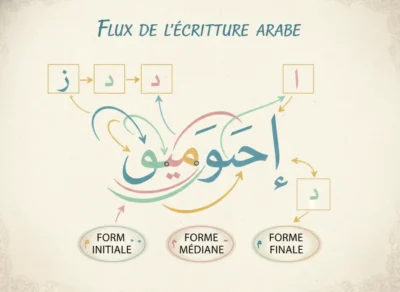
- Many Arabic letters look different depending on where they appear in a word (beginning, middle, or end). You can’t learn that from transliteration.
- Short vowels (the little marks above and below letters — called harakat) are often not written in everyday Arabic text. If you’ve been relying on transliteration, you’ll have no idea how to guess pronunciation without them.
- Transliteration makes you dependent. And dependency slows you down.
I had a student — smart person, motivated — who spent six months learning Arabic through transliteration. When she finally started learning the alphabet, she had to unlearn so many pronunciation habits. The ح vs ه distinction (two different H sounds) — she’d been blurring them the whole time because transliteration didn’t show her the difference.
Six months gone. And she had to go backwards before she could go forward.
The Right Way to Use Transliteration (If You Use It at All)

If you’re going to use transliteration, use it as a bridge — not a destination.
Here’s a simple rule: Use transliteration alongside Arabic script, never instead of it.
So if you’re learning the word for “thank you,” write it like this:
شكراً — shukran — thank you
Both. At the same time. Together.
Your eyes see the Arabic. Your brain connects it to the sound. And after a few weeks, you don’t need the shukran part anymore.
That’s the right approach.
A lot of good Arabic courses do exactly this at the beginning stages — they show Arabic script with some phonetic support — and then they phase the support out. If your course is still using mostly transliteration after week three or four, that’s a red flag.
What About the “Arabic Numbers in Chat” System?
You’ve probably seen this online. Arabs texting in English letters and using numbers to represent letters:
- 3 = ع (ain)
- 7 = ح (ha)
- 5 or kh = خ (kha)
- 2 = ء (hamza)
So instead of writing كيف حالك, someone writes Kif 7alek.
This is called “Arabizi” (عربيزي) — a mix of Arabic and English. It was popular in early internet days, especially in Egyptian Arabic texting culture.
Should you learn this? Honestly, no. Not as a beginner. It’s even less standardized than regular transliteration, and it’s dying out. Younger Arabs are moving back to actual Arabic script on phones (Arabic keyboards are now built into every smartphone).
Learn it if you come across it and can’t understand what someone’s saying. But don’t make it part of your study plan.
So What Should You Do Instead?

Learn the Arabic alphabet first. Full stop.
I know it feels intimidating. 28 letters. Written right to left. Some letters you’ve never seen in your life.
But here’s what people don’t tell you: the Arabic alphabet is actually not that hard to learn. Most students who put in 30 minutes a day learn to recognize all 28 letters within 2–3 weeks. Some faster.
Once you know the alphabet, everything changes. You can start sounding out words. You start recognizing patterns. You stop feeling like Arabic is this foreign, uncrackable code.
Transliteration keeps Arabic foreign. The alphabet makes it yours.
If you want to know where you stand right now — whether you’re a complete beginner or someone with some foundation — take our free Arabic placement test. It takes about 10 minutes and gives you a clear picture of where to start.
FAQs
Does transliteration help with Arabic pronunciation? A little — but not enough. Transliteration can give you a rough idea of how a word sounds, but it misses important distinctions. Arabic has sounds that don’t exist in English, and no transliteration system captures them accurately. For real pronunciation work, you need audio and a good teacher.
Is there a standard Arabic transliteration system? There are several academic systems (like the ALA-LC romanization or DIN 31635), but none of them are used consistently outside academic publishing. What you see in Arabic learning apps, YouTube videos, and textbooks is mostly informal and inconsistent.
Should kids learn Arabic through transliteration? No. Children actually pick up the Arabic script faster than adults in many cases. Starting kids on real Arabic script from day one is always better. Transliteration adds an unnecessary layer they’ll just have to undo later.
What if I just want to learn spoken Arabic, not written Arabic? Even if your goal is only to speak Arabic — like Egyptian colloquial Arabic for travel or daily conversation — you still benefit from learning the alphabet. Most learning materials, even for spoken dialects, use Arabic script. And knowing the script helps you understand how sounds are structured.
The Bottom Line
Transliteration isn’t evil. But it’s not a learning tool — it’s a temporary support. Like training wheels on a bike. Useful for the first week. After that, it’s just slowing you down.
Learn the alphabet. Use real Arabic script. Let transliteration help you for a moment, then let it go.
So now you know the truth. Don’t let transliteration trap you. Choose the right method for your journey. Take our free Arabic placement test to find out exactly where you are — or meet our teachers and start learning properly today.
The alphabet is where it all starts. And it’s not as scary as you think.