

If you’ve been staring at Arabic sentences wondering why some words lose their “al” for no obvious reason, you’ve probably run into idafa without knowing its name. I get asked about this constantly by students who are two or three months into Modern Standard Arabic and suddenly hit a wall. They can read words fine. They know vocabulary. And then they see something like بيت الطالب and freeze, because it doesn’t look like anything their textbook explained clearly.
So let’s fix that. No linguistics jargon dump, no fifteen exceptions before you even get the main rule. Just idafa, explained the way I’d explain it sitting next to you.
What Idafa Actually Is
Idafa (الإضافة) is how Arabic shows possession or a close relationship between two nouns, without using a separate word for “of.” English needs “of” or an apostrophe-s. Arabic just puts two nouns next to each other in a specific order, and the relationship is understood.
Take “the student’s house.” In English you either say “the house of the student” or “the student’s house.” Arabic does it in two words:
بيت الطالب (bayt al-ṭālib) — literally “house the-student,” meaning “the student’s house.”
No “of.” No apostrophe. Just two nouns stacked together in the right order with the right endings. That stacking is idafa. It’s one of the most common structures in the entire language, and once it clicks, a huge chunk of “why does this sentence look weird” confusion disappears.
Honestly, this is one of those grammar points where the concept is simple but the details trip people up. So let’s go through it piece by piece.
The Two Parts of an Idafa
Every idafa has exactly two roles, no matter how long the phrase gets:
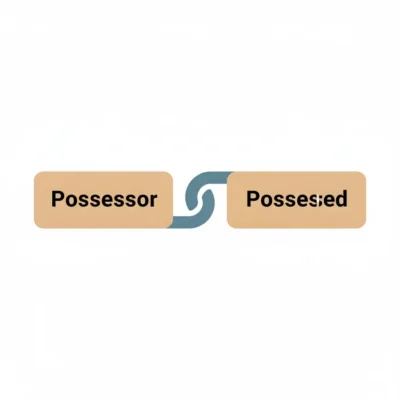
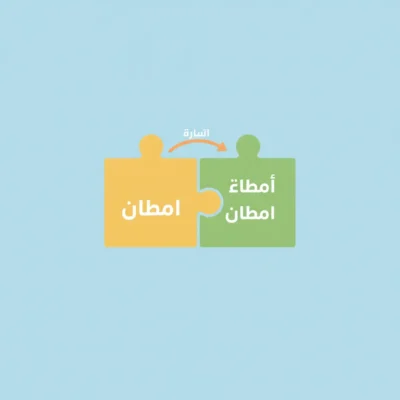
- Mudaf (المضاف) — the first noun. This is the “thing possessed” or the main noun.
- Mudaf ilayh (المضاف إليه) — the second noun. This is the “possessor” or the noun that defines the first one.
In بيت الطالب:
- بيت (bayt, “house”) is the mudaf
- الطالب (al-ṭālib, “the student”) is the mudaf ilayh
The mudaf comes first. Always. This trips up a lot of English speakers because in English the possessor usually comes first (“the student’s house” — student comes before house). In Arabic it’s flipped. The thing owned comes first, then the owner.
Three Rules You Need to Actually Memorize
Here’s the thing — most students learn the “of” translation and think that’s the whole lesson. It’s not. There are three structural rules that make idafa work, and if you skip them, your Arabic will sound off even when your vocabulary is solid.
Rule 1: The Mudaf Never Gets “ال” (al-)
The first noun never takes the definite article, even when the whole phrase is definite in meaning. Look again at بيت الطالب. بيت has no “ال” on it. Only الطالب does. But the whole phrase, “the student’s house,” is definite — we’re talking about a specific house.
This is the rule that confuses beginners the most, because it looks like the first word is indefinite when it’s actually not. The definiteness of the mudaf gets borrowed from the mudaf ilayh. If the second word is definite (has ال or is a proper name or pronoun), the whole phrase is treated as definite — even though the first word never shows it directly.
Rule 2: The Mudaf Never Gets Tanween
Tanween is that extra “n” sound at the end of indefinite nouns (bayt-un, bayt-an, bayt-in). In an idafa, the mudaf drops it completely. Compare:
- بيتٌ (baytun) — “a house” (indefinite, standalone)
- بيتُ الطالب (baytu al-ṭālib) — “the student’s house” (as mudaf in idafa, no tanween)
Same word, different job. Once it becomes the first part of an idafa, the tanween is gone, and the word instead takes the case ending appropriate to its role in the sentence (more on that below).
Rule 3: The Mudaf Ilayh Is Always in the Genitive Case
The second noun, the mudaf ilayh, always takes the genitive case ending — a kasra (or its equivalent) at the end. In الطالب, when it’s functioning as mudaf ilayh, it’s technically الطالبِ with a kasra, even though in casual writing and speech that short vowel usually isn’t written out.
This is consistent no matter what role the whole idafa phrase plays in the sentence. Whether the mudaf is the subject, object, or anything else, the mudaf ilayh stays genitive. That part never changes.
How to Know Which Word Gets the “Al”
This is probably the single most common question I get, so let’s be direct about it. In an idafa:
- The mudaf (first word) never gets “ال,” no matter what.
- The mudaf ilayh (second word) gets “ال” if the phrase needs to be definite, or it stays without “ال” if the phrase is indefinite.
Compare these two:
- بيتُ طالبٍ (baytu ṭālibin) — “a student’s house” (indefinite — no “al” anywhere)
- بيتُ الطالبِ (baytu al-ṭālib) — “the student’s house” (definite — “al” only on the second word)
Neither version puts “ال” on بيت. That word structurally can’t take it inside an idafa. The definiteness of the whole phrase is controlled entirely by whether the second noun is definite or not.
If the mudaf ilayh is a proper noun (a name) or a pronoun attached to the end, the phrase is automatically definite too, even without “ال”:
- بيتُ أحمد (baytu Aḥmad) — “Ahmad’s house” (definite, because Ahmad is a proper name)
- بيتُهُ (baytuhu) — “his house” (definite, because “-hu” is a possessive pronoun)
That second example is worth pausing on. Attached pronouns (-ي, -ك, -ه, -ها, -نا, -كم, -هم) actually function as the mudaf ilayh themselves. “His house,” “my book,” “their car” — all of these are technically idafa constructions in Arabic, just with a pronoun instead of a full noun as the second part. This is why الطالب loses its “ال” but بيتُهُ has no visible “ال” at all — the pronoun is doing the job of the second noun.
Idafa Chains: When You Have More Than Two Nouns
Here’s where it gets genuinely useful, because real sentences aren’t always two words. You can chain idafa constructions together — three, four, even five nouns in a row, each one becoming the mudaf ilayh of the word before it.
باب بيت الطالب (bābu bayti al-ṭālib) — “the door of the student’s house”
Break it down:
- باب (door) — mudaf of the whole phrase, no “ال,” no tanween
- بيت (house) — mudaf ilayh of باب, but also mudaf of الطالب, so it’s genitive AND has no “ال”
- الطالب (the student) — final mudaf ilayh, gets the “ال,” genitive case
Only the very last word in the chain can carry “ال.” Every word before it is stuck in the middle, doing double duty as both a mudaf ilayh (to the word before it) and a mudaf (to the word after it). None of the middle words get “ال” or tanween. Only the definiteness of the final word ripples backward through the whole chain.
This is honestly the part that separates students who “kind of get it” from students who really understand idafa. Once you can build and read a three-word chain without hesitating, you’ve got it.
Adjectives With Idafa (This Is Where People Mess Up)

I’ll be straight with you — this is where even intermediate students slip. If you want to describe the mudaf with an adjective, the adjective doesn’t go right after it. It goes after the entire idafa phrase.
Wrong instinct: بيت الجميل الطالب (trying to squeeze “beautiful” in the middle)
Correct: بيتُ الطالبِ الجميلُ (baytu al-ṭālibi al-jamīl) — “the beautiful house of the student”
The adjective الجميل comes after both nouns, and it agrees with whichever noun it’s describing — you have to use context (and the case ending, when written with full vowels) to know if “beautiful” describes the house or the student. If you wanted to describe the student instead, you’d still place the adjective at the end, but it would agree with the mudaf ilayh’s case (genitive) rather than the mudaf’s case.
This is genuinely confusing at first because English lets you just drop an adjective right next to the noun it modifies. Arabic idafa doesn’t give you that shortcut. The two nouns have to stay glued together with nothing in between — no adjectives, no other words, nothing. Everything descriptive gets pushed to the end.
Idafa vs. Just Using “Of” — Is It the Only Option?
Short answer: idafa is the default and most common way, but it’s not the only structural tool Arabic has for showing possession or relationship. There’s also the preposition لِ (li-, meaning “belonging to” or “for”), which works differently and is used in different contexts, especially in spoken dialects. But for standard, natural Modern Standard Arabic, idafa is what you’ll see constantly — in news headlines, in books, in formal writing, everywhere.
If you’re coming from a language where possession always needs a separate word, it can feel like Arabic is “skipping a step.” It’s not skipping anything. The relationship is built into the word order and the endings themselves. That’s actually one of the more elegant things about Arabic grammar once it clicks — you say more with less.
Common Idafa Mistakes I See Constantly

A few patterns show up again and again with my students, so let me just list them straight:
- Putting “ال” on the mudaf. This is mistake number one, by far. If your first noun has “ال” on it, it’s not an idafa anymore — it’s two separate descriptive words, and the meaning changes completely.
- Leaving tanween on the mudaf. Same idea. Tanween signals “this word is standing alone, indefinite.” That contradicts what idafa is doing.
- Sticking an adjective between the two nouns. Covered above, but it’s worth repeating because it’s such a natural instinct if your first language works that way.
- Forgetting that pronouns count as mudaf ilayh. Students sometimes think “my book” needs a separate word for “my.” It doesn’t — the ي suffix on كتابي is the idafa relationship.
- Not adjusting definiteness correctly in longer chains. In multi-word idafa chains, only the final word controls definiteness for the whole phrase, and that’s easy to lose track of past two words.
None of these are complicated once you’ve seen them named out loud. They’re just easy to fall into if nobody points them out directly.
A Quick Practice Set
Try reading these without translating word by word first — just get a feel for the mudaf / mudaf ilayh pattern:
- مفتاح السيارة (miftāḥ al-sayyāra) — the car’s key
- أستاذ اللغة (ustādh al-lugha) — the language teacher
- كتابُ الطالبةِ الجديد (kitābu al-ṭālibati al-jadīd) — the student’s new book
- باب غرفة البيت (bāb ghurfat al-bayt) — the door of the house’s room
Notice how in every single one, only the last noun in the phrase carries “ال,” and every noun before it stays clean.
Why This Matters Beyond Grammar Drills
I’ll be honest with you: idafa isn’t a side topic you can skip and come back to later. It’s everywhere. News headlines run on it (وزارة الخارجية, “the ministry of foreign affairs” — literally “ministry the-foreign-affairs”). Book titles use it. Everyday speech uses it constantly, even in dialects that have simplified some of the formal case endings. If your goal is real reading comprehension or real conversation, idafa isn’t optional grammar trivia. It’s load-bearing.
That’s part of why we build it early and reinforce it repeatedly in our Modern Standard Arabic courses rather than treating it as one lesson you cover once and move past. Grammar like this needs repetition in context, not just a rule you memorize and forget.
If you’re not sure where idafa and structures like it fit into your current level, it’s worth taking our free Arabic placement test first. It takes a few minutes and tells you honestly where you stand instead of guessing.
And if grammar points like this have been quietly piling up as gaps in your understanding, building a daily Arabic study routine that actually reinforces structure — not just vocabulary — makes a real difference. It’s also worth reviewing how Arabic sentence structure works more broadly, since idafa is one piece of a bigger picture.
Learn the Practical Rules With Real Feedback
Reading about idafa gets you halfway there. The other half is building and reading real phrases until it stops feeling like a rule you’re translating in your head and starts feeling automatic. That’s the part a page can’t do for you — it needs a teacher correcting you in real time. Our instructors work through exactly this kind of structural grammar with students inside the Modern Standard Arabic program, using real sentences instead of isolated drills. Check our pricing or meet the teachers who’ll walk you through it.