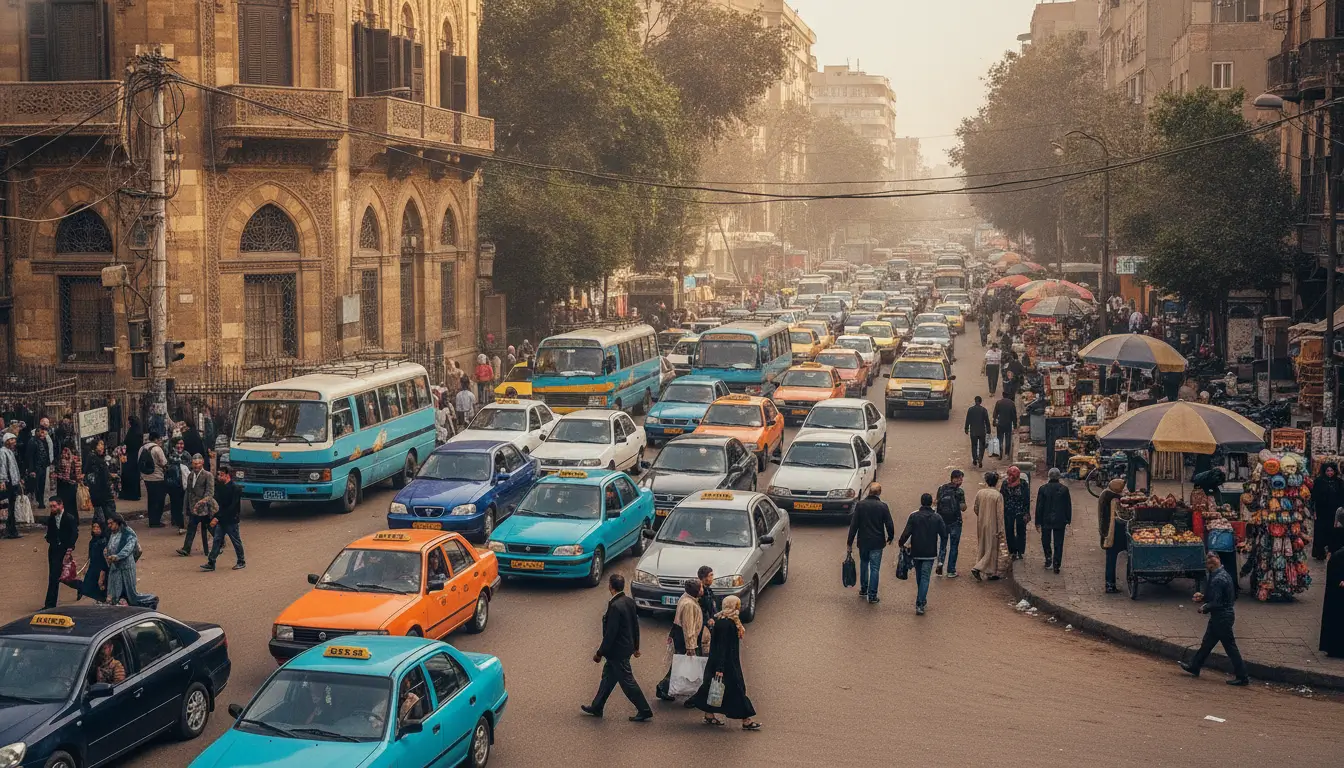
Landing in Cairo for the first time messes with your head a little. The noise. The traffic. Everyone talking fast, half in Arabic, half in whatever English they’ve picked up from tourists. You’re standing there with your suitcase thinking: okay, how do I actually get from here to my hotel without getting completely ripped off or completely lost.
Here’s the thing — you don’t need fluent Arabic to survive Cairo. You need about thirty words and phrases, used at the right moment, with a little confidence behind them. That’s it. I’ve watched complete beginners walk into a taxi and handle the whole ride using four sentences they memorized the night before. It works.
This article gives you exactly that. Airport phrases, taxi phrases, direction phrases. Real ones. The kind people actually say to each other on the street, not the stiff textbook version nobody uses.
Do people in Cairo speak English?
Short answer: enough, but not everywhere, and not always well.
In tourist zones — Zamalek, Downtown, near the pyramids, big hotels — you’ll find plenty of English. Airport staff, most hotel receptionists, a good chunk of restaurant workers. You’ll get by fine there without a word of Arabic.
But the second you step outside that bubble — a random street taxi, a small kiosk, a bus driver, someone’s grandmother giving you directions because you look lost — English drops off fast. And even inside the tourist zones, knowing a little Arabic changes how people treat you. Egyptians warm up instantly when a foreigner tries. Prices get fairer. People get friendlier. It’s not subtle.
So no, you don’t need Arabic in Cairo. But it makes the whole trip smoother, cheaper, and honestly more fun.
At the airport: your first five minutes in Egypt
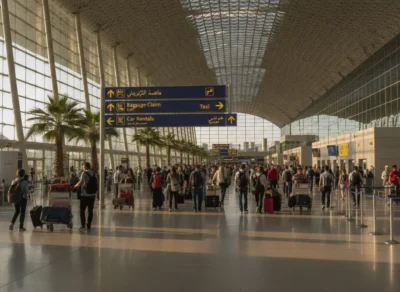
Cairo International Airport is big, a little chaotic, and full of people trying to “help” you — some genuinely, some hoping for a tip. Here’s what actually gets used.
Basic arrival phrases:
- Ahlan (أهلاً) — Hi / welcome. You’ll hear this a hundred times before you even leave the terminal.
- Feen el-taxi? (فين التاكسي؟) — Where’s the taxi?
- Feen el-hammam? (فين الحمام؟) — Where’s the bathroom? You’ll need this one, trust me.
- Ana masri, msh saye7 — don’t say this unless it’s true, obviously. But ana da’ef fel-3arabi (أنا ضعيف في العربي) — “my Arabic is weak” — is a genuinely useful line. Say it early and people slow down for you.
- Momken tsa3edny? (ممكن تساعدني؟) — Can you help me?
One thing nobody tells you about Cairo airport: the “helpful” guys grabbing your bags before you’ve asked are usually working for a tip, not out of kindness. A polite la, shukran (لأ، شكراً — “no, thank you”) with a firm tone and you moving forward at the same time works better than any long explanation.
If you’re heading straight into Egyptian Arabic study before your trip and want the full alphabet of everyday expressions — not just the airport ones — our guide to the most common Egyptian Arabic phrases covers the greetings and daily-life vocabulary you’ll lean on constantly, not just in the terminal but for the whole trip.
Grabbing food and water on the go
Between the airport and your hotel, you’ll pass a dozen kiosks, food carts, and little shops selling water and snacks. Here’s the thing — you’re going to get thirsty before you get anywhere, so this is worth knowing before you even land.
- Ayez akl (عايز أكل) — I want food (said by a man). A woman would say ayza akl (عايزة أكل).
- Ayez mayya (عايز مية) — I want water. Ayza mayya (عايزة مية) for a woman.
- Kam da? (كام ده؟) — How much is this? Point at whatever you want while you say it, and you’ve basically completed the transaction.
- Wa7da bes (واحدة بس) — Just one.
- Baraka feek (بارك الله فيك) — A warm, genuine way to say thanks after someone hands you something. Hits differently than a plain “shukran.”
Small shops rarely have exact change ready, so if you can, break a large bill at the airport or hotel before you’re standing at a street kiosk trying to buy a bottle of water. Saves an awkward few minutes of waiting while someone runs to find change.
Getting a taxi (and not getting overcharged)
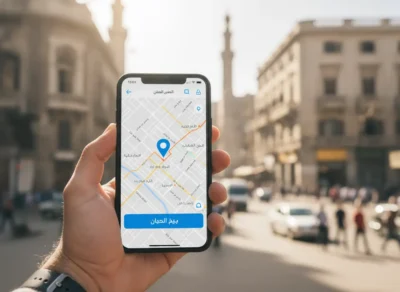
I’ll be straight with you — Cairo taxis are where most tourists get their first real “wait, did I just get scammed” moment. It’s not always malicious. Meters are often “broken” (they’re not), and negotiating the fare upfront is just how it works here. Knowing a few phrases flips the whole dynamic.
Key taxi phrases:
- Kam? (كام؟) — How much?
- Da ghaly (ده غالي) — That’s expensive. Say this, and watch the price drop. It almost always does.
- Momken bel 3adad? (ممكن بالعداد؟) — Can we use the meter? Doesn’t always work, but worth trying.
- Ana raye7… (أنا رايح…) — I’m going to… (add your destination)
- Wa2af hena, low sama7t (وقف هنا، لو سمحت) — Stop here, please.
- Yemeen (يمين) — Right
- Shemal (شمال) — Left
- Dughry (دوغري) — Straight ahead
A negotiation actually goes something like this: driver says a number, you say “da ghaly, momken ashra ginay?” (“that’s expensive, how about ten pounds?”) — and you meet somewhere in the middle. Nobody’s offended by this. It’s the normal rhythm of the interaction, and honestly, a lot of drivers respect you more for playing along than for silently paying whatever they first quote.
Reddit and Quora questions people actually ask about this:
“Is Uber or Careem better than a regular taxi in Cairo?” — For most first-timers, yes. Uber and Careem both operate in Cairo, prices are fixed upfront in the app, no haggling, no language needed at all. A lot of expats and returning tourists use street taxis only for short, familiar routes once they know rough local prices, and stick to app rides everywhere else.
“Do Cairo taxi drivers speak English?” — Some do, especially around hotels and tourist areas. Many don’t, or speak just enough for numbers and basic directions. This is exactly where those five or six phrases above earn their keep.
“How do I avoid getting overcharged in a Cairo taxi?” — Ask a local (hotel staff, a friend, anyone) what a fair price is for your route before you get in. Then negotiate from there. Having even a rough number in your head changes the whole conversation.
A few safety habits worth building in, too:
- For longer trips, or at night, lean on Uber or Careem instead of a street taxi. Fixed price, tracked route, driver details in the app before you even get in.
- Share your location with someone — a friend, a family member, your hotel’s front desk — before you head out, especially on a longer ride across the city. Takes ten seconds in any ride app, and it’s just good sense in an unfamiliar city.
- Agree on the price with “kam?” before you get in the car, not after. Once you’re moving, you’ve lost your leverage. Settle it standing on the curb.
- If a driver refuses to state a price up front and won’t use the meter either, it’s fine to just walk to the next taxi. There’s never a shortage of them in Cairo.
None of this is about being paranoid — Cairo is a genuinely welcoming city and the overwhelming majority of drivers are decent people doing a hard job. It’s just the same common sense you’d use getting a cab in any big city you don’t know yet.
Asking for and understanding directions
This is where things get interesting, because Egyptians give directions differently than you might expect. Street names get ignored half the time. Landmarks rule. “Turn left after the big mosque” beats any street name you’ll find on Google Maps.
Core direction vocabulary:
- Feen…? (فين…؟) — Where is…? The single most useful word in this entire article.
- Ana daye3 (أنا ضايع) — I’m lost.
- Ba3eed? (بعيد؟) — Is it far?
- Reyeb? (قريب؟) — Is it close?
- Ala tool (على طول) — Straight ahead / keep going
- Wara (ورا) — Behind
- Odam (قدام) — In front
- Ganb (جنب) — Next to
- Sharea3 (شارع) — Street
- Meydan (ميدان) — Square (like Tahrir Square — Meydan el-Tahrir)
- Kobry (كوبري) — Bridge
Numbers matter too, especially when someone tells you it’s “khamas da2ay2” — five minutes — or gives you a building number, or you’re negotiating a taxi fare and need to actually understand the number being said back to you. Here’s one through ten, the way people actually say them:
- Wahed (واحد) — 1
- Etnein (اتنين) — 2
- Talata (تلاتة) — 3
- Arba3a (أربعة) — 4
- Khamsa (خمسة) — 5
- Setta (ستة) — 6
- Sab3a (سبعة) — 7
- Tamanya (تمانية) — 8
- Tes3a (تسعة) — 9
- Ashara (عشرة) — 10
These ten alone cover most street-level situations — prices, minutes, floor numbers, how many of something you want. Learn them out loud, not just on paper. Numbers are one of those things that trip people up in real conversation because recognizing “خمسة” on a page is completely different from understanding it spoken fast by a taxi driver.
How a real direction exchange sounds:
You: “Feen Meydan el-Tahrir, low sama7t?” (Where’s Tahrir Square, please?) Them: “Ala tool, ba3d el-kobry, 3ala el-yemeen” (Straight ahead, after the bridge, on the right)
That’s it. That’s a complete, real, everyday conversation. You don’t need grammar rules to have it — you need the vocabulary and the nerve to try.
A Quora question worth answering directly: “Is it rude to ask for directions in Arabic if I mess up the grammar?” — No. Genuinely, no. Egyptians are famously patient with learners, and a foreigner attempting Arabic — even badly — tends to get a warmer reaction than one speaking only English. Mistakes aren’t the problem. Not trying is closer to the problem.
Why this matters more than a phrasebook
Here’s what a lot of phrasebooks get wrong — they teach you formal Arabic, Modern Standard Arabic, the kind used on the news. Nobody in a Cairo taxi talks like a news anchor. Egyptian Colloquial Arabic (Masri) is its own thing, with its own rhythm, its own shortcuts, its own personality. That’s exactly what this article has been teaching you — not textbook Arabic, but what people actually say.
If this kind of practical, spoken Egyptian Arabic is what you’re after — not grammar drills, but real conversation skills for real situations — that’s the whole focus of our Colloquial Egyptian Arabic course. It’s built around exactly this: everyday scenarios, native teachers, learning to actually speak rather than just recognize words on a page.
And if you’re not sure where you currently stand — total beginner, or you already know a handful of phrases from a trip — it’s worth taking the free Arabic placement test first. Five minutes, and it tells you exactly where to start instead of guessing.
Not everyone learning Egyptian Arabic is heading to Cairo next month, though. Some people are building this up slowly, a little every day, for a trip that’s still months out, or just because they want the skill in their back pocket. If that’s you, our 15-minute daily Arabic study routine is a solid way to make the phrases in this article actually stick, instead of forgetting them the week before you fly.
A few more phrases that quietly make everything easier
Beyond airport, taxi, and directions, a handful of extra words smooth out basically every interaction in Cairo:
- Momken? (ممكن؟) — May I? / Is it possible? Use this before almost anything and it softens the request instantly.
- Low sama7t / low sama7ti (لو سمحت / لو سمحتي) — Please (to a man / to a woman)
- Shukran (شكراً) — Thank you
- Afwan (عفواً) — You’re welcome / excuse me
- Aywa (أيوه) — Yes (the casual, everyday version, more common than the formal “na3am”)
- La2 (لأ) — No
Small words. But they’re the difference between an interaction that feels transactional and one that feels human. Egyptians notice the effort, every time.
The real point here
Honestly, none of this requires memorizing a textbook. It requires using maybe thirty phrases enough times that they stop feeling foreign in your mouth. Say “kam?” in a taxi three times and you’ll never forget it. Get lost once and ask “feen Meydan el-Tahrir?” and that phrase is yours for life.
Cairo rewards people who try, even clumsily. So try. Mess it up. Get corrected by a taxi driver who’s now grinning because you attempted his language. That’s not a failure — that’s basically how everyone learns to speak Egyptian Arabic in the first place.
Start talking today — check our pricing or take the placement test above to find your level and get matched with a native Egyptian teacher who’ll have you handling real Cairo conversations, not just memorized lines, within weeks.