
If you’re in grad school, or headed there, and someone told you to “just learn Arabic” for your research — I get why you’re stressed. Nobody explains what that actually means. Which Arabic? For how long? Enough to read a 200-page dissertation source, or enough to order coffee?
Here’s the thing: if your work touches the Arab world — political science, Islamic studies, history, journalism, linguistics, international relations, whatever — the Arabic you need is almost always Modern Standard Arabic. Not Egyptian. Not Levantine. MSA. And it’s a very specific kind of learning, different from what a tourist or a hobbyist needs.
I’ve taught MSA to a lot of university students over the years. Same questions come up every single time. So let’s go through them properly.
What MSA Actually Is (and why your university wants it)
Modern Standard Arabic is the formal, standardized form of Arabic used across all 22 Arab countries. It’s the language of news broadcasts, academic writing, government documents, contracts, most published books, and — this is the part students care about — nearly everything in academic and archival sources.
It’s not anyone’s native spoken language. No one grows up speaking MSA at home. Every Arab child learns their local dialect first, then learns MSA in school, the same way you learned formal written English separately from how you actually talk to your friends.
For you as a researcher, that’s actually good news. MSA has one grammar, one set of rules, across the whole region. Learn it once, and you can read a newspaper from Cairo, a legal document from Riyadh, and a novel from Beirut. Compare that to dialects, which change so much from country to country that an Egyptian and a Moroccan sometimes struggle to understand each other’s spoken Arabic.
If your program is Middle East Studies, Islamic Studies, Arabic Linguistics, Political Science with a regional focus, or International Relations — MSA is almost certainly what your department means when they say “Arabic proficiency requirement.” Check your specific program’s language requirement page to confirm, but this is the standard across most Western universities. If you want the full breakdown of what MSA covers and how it compares to the dialects, here’s our complete guide to Modern Standard Arabic.
The Real Questions Students Are Asking

I went through what people actually ask about this online — Reddit threads, Quora, grad student forums. Same handful of questions keep coming up. Let’s deal with them one at a time.
“Is MSA enough to do research in Arabic sources, or do I need a dialect too?”
For reading — books, articles, archives, official documents, most primary sources — MSA is enough. That’s what those materials are written in. You don’t need a dialect to read a 19th-century Ottoman-era Arabic text or a modern academic journal article.
Where it gets more complicated is fieldwork. If your research involves interviews, oral history, or living in an Arab country for extended periods, you’ll want at least conversational ability in the relevant dialect too. MSA alone in a live conversation in Cairo will mark you as an outsider — people will understand you, but it sounds the way overly formal, textbook language sounds to a native English speaker. Not wrong. Just stiff.
Honestly, most grad students in this position learn MSA first, build a strong reading foundation, and pick up dialect exposure later once they’re in the country or closer to fieldwork. That order works. Going the other way — dialect first, MSA later — tends to be harder, because MSA’s grammar is more complex and you’re better off learning the “full” system before the simplified spoken version.
“How long does it actually take to get to research-level reading in MSA?”
I won’t sugarcoat this one. Reading dense academic or historical Arabic — the kind with long sentences, formal vocabulary, and complex grammar — is a real skill. Most students get there in 18 months to 3 years of consistent study, depending on how many hours a week they put in and whether they had any prior exposure to a Semitic language.
That sounds like a long timeline, but it’s not linear. Here’s roughly how it breaks down for someone doing structured lessons plus daily self-study:
- Months 1–4: Alphabet, basic grammar, core vocabulary, simple sentence structure. You can read short, simple texts with a dictionary nearby.
- Months 5–10: Verb conjugation system, case endings (i’rab), more complex sentence structures. You start recognizing patterns instead of translating word by word.
- Year 1–1.5: You can read a newspaper article or a straightforward academic passage, slowly, with occasional dictionary use.
- Year 2–3: You’re reading primary sources, dense academic prose, and older texts with real comprehension, at a pace that’s actually usable for research.
If your timeline is tight — say, you need reading proficiency for comps in a year — you need to front-load hours, not stretch out the same total across a longer calendar. Two hours a day for 8 months beats 30 minutes a day for 3 years, every time.
“Can I get there with self-study, or do I need a teacher?”
You can build vocabulary and basic grammar on your own — apps, flashcards, textbooks all help. But here’s what self-study can’t do: catch your mistakes before they become habits, explain why a sentence means something different from what you think it means, or push you past the plateau every self-taught learner hits around month 4 or 5.
Academic MSA specifically has traps that self-study tends to miss. Case endings that change meaning subtly. Broken plurals that don’t follow any pattern you can guess. Passive voice constructions that look nothing like the active sentence. A textbook can show you the rule. A teacher catches you applying it wrong in real time, which is a completely different kind of learning.
Most successful grad students I’ve worked with do both — self-study for vocabulary and reading practice, live sessions with a teacher for grammar correction, translation practice, and working through actual source material together. If you want a sense of what that combination looks like day to day, check out this daily Arabic study routine — it’s built around MSA and a lot of our students use it as their starting structure.
“Do I need MSA or Classical Arabic for my research?”
Depends on your sources. If you’re working with the Quran, classical poetry, or texts from before roughly the 9th–10th century, you’re dealing with Classical Arabic, which is grammatically close to MSA but has its own vocabulary quirks and stylistic differences. If you’re working with anything from the modern era — 19th century onward, especially 20th and 21st century sources — MSA is your language.
Good news: MSA and Classical Arabic share the same grammatical backbone. If you build a strong MSA foundation, moving into Classical texts later is a matter of adjusting to vocabulary and style, not learning a new grammar system from scratch.
“What’s the difference between MSA reading skills and MSA speaking skills, and do I need both?”
This trips people up. A lot of academic programs only require reading proficiency, because that’s what research actually demands. But if you’re planning to present at Arabic-language conferences, do interviews, or eventually teach, speaking matters too — and it’s a genuinely separate skill from reading comprehension. Plenty of people can read dense academic Arabic and still freeze up trying to introduce themselves out loud.
If your goal is purely research and reading sources, you can weight your study time heavily toward reading and grammar. If speaking is part of your requirement or your career plan, that needs dedicated practice — output, not just input. Reading a thousand pages of Arabic will not, by itself, make you able to speak it.
What Academic MSA Actually Demands That General Courses Don’t Cover

This is where a lot of students get frustrated with generic “learn Arabic” courses. University-level MSA work has specific demands:
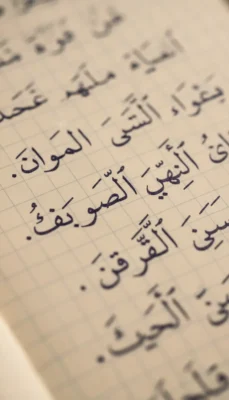
Case endings (i’rab). Most conversational MSA courses skip these or treat them lightly, because in casual speech, people often drop them. But in formal writing — which is what you’ll be reading — they carry real grammatical information. Skipping this topic means you’ll misread sentences later.
Root and pattern system. Arabic vocabulary is built from three-letter roots that carry a core meaning, expanded into different words through patterns. Once this clicks, your vocabulary growth speeds up dramatically, because you start recognizing new words from roots you already know instead of memorizing each word cold. This is the single biggest lever for reading speed, and it’s worth understanding early rather than picking it up by accident two years in.
Formal register and long sentence structures. Academic and journalistic Arabic uses sentence structures — nested clauses, formal connectors, passive constructions — that don’t show up much in beginner conversational material. If your course only teaches you to order food and ask directions, you’ll hit a wall the first time you open an actual academic source.
Translation practice, not just comprehension. For research work, you often need to translate a passage accurately, not just get the gist. That’s a different skill — slower, more precise, and it needs deliberate practice with feedback, ideally from someone who can tell you where your translation drifted from the actual meaning.
A Realistic Study Structure for Busy Students
You’re juggling coursework, maybe teaching assistant duties, maybe a part-time job. Nobody has unlimited hours. Here’s a structure that actually works for grad students specifically, rather than a generic beginner plan:
Daily (20–30 minutes): Vocabulary review using spaced repetition, ideally built around roots relevant to your field — political vocabulary if you’re in poli sci, religious and legal vocabulary if you’re in Islamic studies, and so on. Generic beginner vocabulary lists waste your time if your actual reading material is specialized.
2–3 times a week (45–60 minutes): Live grammar and translation sessions with a teacher. This is where case endings, sentence structure, and translation accuracy actually get corrected — not through an app, through a person watching what you write and telling you exactly where it went wrong.
Weekly: Read one real source in your field, slowly, with a dictionary and grammar reference. Start with something short. A newspaper op-ed, a short journal article, a few pages of a book. This is the step people skip the longest and regret skipping. Textbook Arabic and real academic Arabic are not the same reading experience, and the gap only closes by reading real material.
Monthly: Track what you can read now that you couldn’t a month ago. Not vocabulary counts — actual comprehension. Can you read faster? Do you need the dictionary less? That’s the metric that matters for research readiness.
If you’re not sure where you currently stand, it’s worth taking our free Arabic placement test before building a plan — a lot of students overestimate or underestimate their starting point, and that throws off the whole timeline.
The Mistake Most Grad Students Make

I’ll be straight with you about this one, because I see it constantly: students treat Arabic like a box to check for their program requirement instead of a tool they’ll actually need for years of research. They cram for a proficiency exam, pass it, and then discover eighteen months later — deep into their thesis — that their actual reading speed and comprehension aren’t good enough for the volume of material they need to get through.
Passing a requirement and being research-functional are two different bars. If Arabic is going to be part of your academic life for the next several years, it’s worth building real proficiency early, not the minimum to clear a checkpoint. It’s a much better use of your time in year one than scrambling in year three when your source material is piling up faster than you can read it.
There’s also a dialect question that sneaks up on people later — if fieldwork ends up part of your research down the line, it helps to know early which regional Arabic actually matters for your topic, since that shapes how you allocate study time between MSA and dialect practice as you go. This guide to Arabic dialects is a good place to start figuring that out.
Where to Start
If you’re at the very beginning, don’t overthink the entry point. Start with the alphabet, basic grammar, and a consistent daily habit — that foundation is the same whether you end up specializing in classical texts, modern political writing, or media Arabic. What changes later is the vocabulary and the type of material you read, not the core grammar you’re building now.
What matters most in the first six months is consistency and correction — showing up daily, and having someone catch your mistakes before they turn into habits you’ll have to unlearn later. That combination is what actually gets students to research-ready reading in a reasonable timeline, instead of stalling out at “conversational beginner” for years.
Our MSA teachers work with grad students and researchers regularly, so they know how to build a plan around a thesis deadline or a comps timeline instead of a generic beginner schedule — you can see more about who you’d be working with on our teachers page, and check plans on the pricing page.
If you want to see exactly where you stand right now and get a study plan built around your actual timeline — comps, fieldwork, thesis deadline, whatever you’re working toward — book a free trial class. A real teacher can tell you in one session what would take you months to figure out through trial and error on your own.