
So you want to learn Arabic from zero.
Maybe you’ve already tried. You opened an app, looked at the alphabet, and thought — what is this? Twenty minutes later you closed it and told yourself you’d try again tomorrow.
That was three months ago.
I get it. Arabic looks overwhelming before you understand it. But here’s the thing — it’s not nearly as scary as it looks. The alphabet takes most people less than two weeks to read. The grammar, once it clicks, is actually more logical than English. And the sounds? Yeah, some of them are weird at first. But you’ll get them.
The real problem isn’t Arabic. It’s how most people start.
They either jump in with no plan and quit in week two. Or they spend forever “getting ready to learn” — buying books, researching apps, watching YouTube videos about Arabic — without actually learning any Arabic.
This guide fixes that. I’ll walk you through exactly how to start, what to focus on, what to ignore, and how to keep going when it gets hard. Which it will. But you’ll be ready.
Why Learn Arabic from Zero?
Before I show you how, let me ask you something. Why do you want to learn Arabic?
Because this matters more than you think.
If your answer is “I don’t know, it seems useful” — that’s not going to carry you through month three when conjugation tables are making your brain hurt.
But if your answer is something real — you want to understand Quran, you have family in Egypt, you’re moving to the Gulf for work, you’ve always been fascinated by the Arab world — that’s fuel. And you’ll need it.
Here’s what Arabic actually opens up for you once you start making progress:
Access to 400+ million native speakers. Arabic is the fifth most spoken language in the world. It’s spoken across 22 countries. That’s not a small community — that’s a continent-spanning conversation you’re currently locked out of.
Real career advantages. Arabic speakers are genuinely rare in the Western workforce. If you work in diplomacy, international business, journalism, translation, education, healthcare, or humanitarian work — being able to speak Arabic is not just a nice-to-have. It makes you stand out in ways other language skills simply don’t.
Understanding the Quran directly. For many learners, this is the whole point. And it’s a powerful one. Classical Arabic (Fusha) is the language of the Quran, and learning it gives you direct access to the text in a way no translation fully captures.
A completely different way of thinking. Arabic has a root-based structure that doesn’t exist in English. Once you get it, you start to see patterns everywhere. Words branch from three-letter roots like a family tree. It’s actually kind of beautiful.
What Real Learners Say About Starting Arabic
People who’ve gone from zero to conversational in Arabic share a few things in common. They didn’t wait until they “felt ready.” They picked one goal and one dialect and just started. And almost everyone says the same thing: the first two months are the hardest, and then something clicks.
One student I worked with started Arabic at 45. No background in any Middle Eastern language. She wanted to understand Quran. In six months, she could read Surah Al-Fatiha from memory and understand most of the words without translation. Not fluent — but not zero either. Completely changed how she connected to her faith.
Another learner was preparing to relocate to Dubai for work. He had four months. He focused exclusively on Gulf Arabic, basic work vocabulary, and small talk. By the time he landed, he could greet colleagues, navigate basic conversations, and understand enough to not feel completely lost. His Arab colleagues noticed. It mattered.
That’s the thing about Arabic. You don’t need to be fluent for it to change things.
Setting Realistic Expectations
Okay. Honest talk time.
Arabic is hard. It’s officially classified as a Category IV language by the U.S. Foreign Service Institute — that’s the hardest category. Estimated time to professional proficiency for a native English speaker? Around 2,200 class hours.
Before you close this tab — that’s for professional proficiency. As in, writing diplomatic reports and translating legal documents. That’s not your goal right now.
Your goal is to start. And then build momentum.
Here’s what realistic progress looks like:
Timeframes for Real People with Real Lives
After 1 month (daily 20-30 min): You can read the Arabic alphabet. You recognize letters in different positions. You know maybe 50-100 words. You feel weird but curious.
After 3 months: You can introduce yourself, ask basic questions, and understand simple sentences. You’ve started to feel the structure of the language. The alphabet feels natural now. You’re not looking things up every two seconds.
After 6 months: You can hold short conversations on familiar topics. You understand about 30-40% of what you hear in your target dialect. Your listening is still rough but improving.
After 1-2 years (consistent study): You’re genuinely conversational. You can handle most everyday situations. You still make mistakes, but people understand you and respond in Arabic instead of switching to English.
After 3-5 years: You’re fluent or close to it, depending on how much practice you’ve gotten with native speakers.
These numbers assume you’re consistent. Not perfect. Consistent. Twenty minutes a day will beat two hours once a week every single time.
5 Common Mistakes That Kill Arabic Progress
I’ll be straight with you. Most people who quit Arabic don’t quit because it’s too hard. They quit because of specific, avoidable mistakes. Here they are — so you don’t make them.
Mistake 1: Trying to learn MSA and a dialect at the same time.
This is probably the most common trap. You read that MSA is “proper Arabic” so you feel guilty not studying it. But then someone tells you Egyptian Arabic is more useful for speaking. So you try both. And now you’re confusing yourself with two slightly different grammar systems, two different vocabularies, and zero confidence in either.
Pick one. Start with it. Add the other later — after you have a foundation. MSA and dialects are related but not the same. Treat them as two separate languages at the start.
Mistake 2: Using transliteration instead of learning the alphabet.
Some apps let you “learn Arabic” by writing “marhaba” instead of مرحبا. It feels easier. It’s a trap. You’ll never be able to read real Arabic text, use a dictionary, understand written signs, or progress past beginner level. The alphabet takes two weeks. Just learn it. It’s worth every minute.
Mistake 3: Memorizing grammar rules instead of learning sentences.
Arabic grammar books are dense. Some learners spend months drilling declensions and verb patterns without ever learning to say a complete sentence that sounds natural. Grammar rules exist to explain patterns — not to be memorized in isolation. Learn sentences first. Then the rules start to make sense.
Mistake 4: Not speaking until you feel “ready.”
Nobody feels ready. Seriously. The learners who improve fastest are the ones who start speaking badly as early as possible and let corrections teach them. Waiting until your Arabic is “good enough” is like waiting until you can swim before getting in the water.
Mistake 5: Inconsistency. (7 hours on Saturday, zero the rest of the week.)
This one kills more Arabic learners than any other. Your brain doesn’t learn a language through occasional big sessions. It learns through regular small exposures. Seven hours on Saturday and nothing the rest of the week is significantly less effective than 30 minutes every day. Habit beats intensity. Every time.
Choosing the Right Dialect — This is the Most Important Decision You’ll Make
This is where most beginner guides skip a crucial step. And it costs people months of confusion.
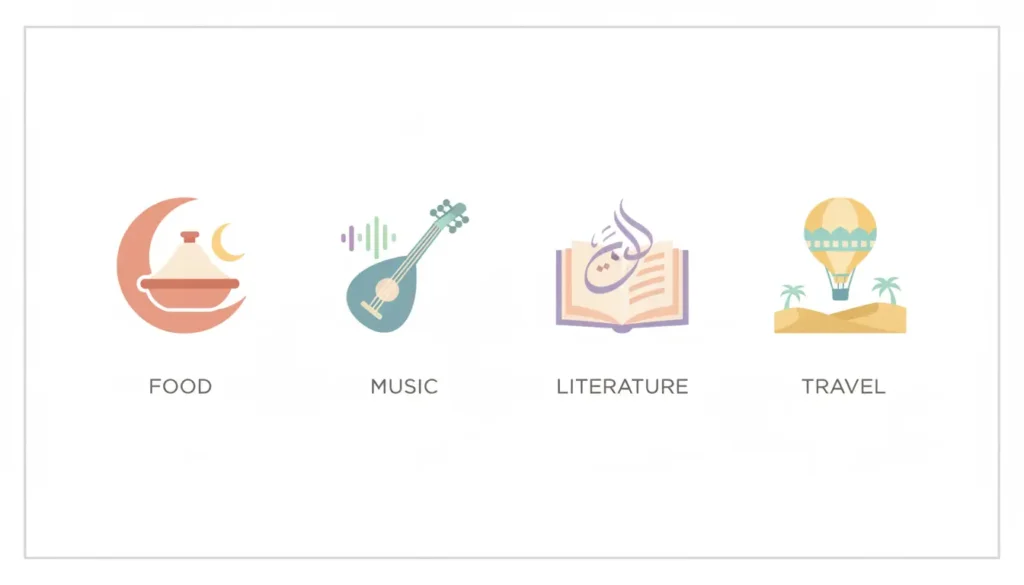
Arabic isn’t one language. It’s a family of languages that share a common root.
There’s Modern Standard Arabic (MSA, also called Fusha) — the formal written Arabic used in newspapers, books, official speeches, and the Quran. Nobody grows up speaking this at home. It’s like the Latin of the Arabic world: important, formal, and not what anyone uses to order coffee.
Then there are the dialects — Egyptian, Levantine (Syrian/Lebanese/Jordanian/Palestinian), Gulf, Moroccan (Darija), Iraqi, and more. These are what people actually speak every day. They differ from each other significantly, sometimes like Spanish and Portuguese, sometimes more like Spanish and Italian.
MSA vs. Dialects: What You Actually Need to Know
| Modern Standard Arabic (Fusha) | Egyptian Arabic | Levantine Arabic | Gulf Arabic | |
|---|---|---|---|---|
| Used for | Quran, books, news, formal writing | Everyday conversation in Egypt | Syria, Lebanon, Jordan, Palestine | UAE, Saudi, Kuwait, Qatar |
| Understood by | All educated Arabs (reading/writing) | Most Arabs (huge media presence) | Most Arabs in the Levant region | Gulf residents and workers |
| Difficulty for beginners | High (complex grammar) | Medium (most learners’ top choice) | Medium | Medium |
| Good if you want to | Read Quran, work in journalism/translation | Travel to Egypt, understand Arab media | Connect with Levant culture | Work in Gulf countries |
My actual recommendation for most beginners:
Pick one dialect based on your real goal. If you want to connect with people, travel, or live in the Arab world — start with Egyptian or Levantine. They’re the most widely understood. Egyptian Arabic in particular is understood across the Arab world because of Egyptian TV, music, and film.
If your goal is Quran or formal writing — start with MSA basics (just the fundamentals), then decide if you want a dialect later. If you’ve decided MSA is your path, check out our complete guide to Modern Standard Arabic for a deeper breakdown of how to approach it as a beginner.
If you’re going to the Gulf for work — learn Gulf Arabic specifically.
And if you’re leaning toward Egyptian Arabic because you want to actually speak with people — this guide to essential Egyptian Arabic phrases will get you saying real things in your first week.
Don’t try to learn two at once in the beginning. It’ll split your focus and slow you down.
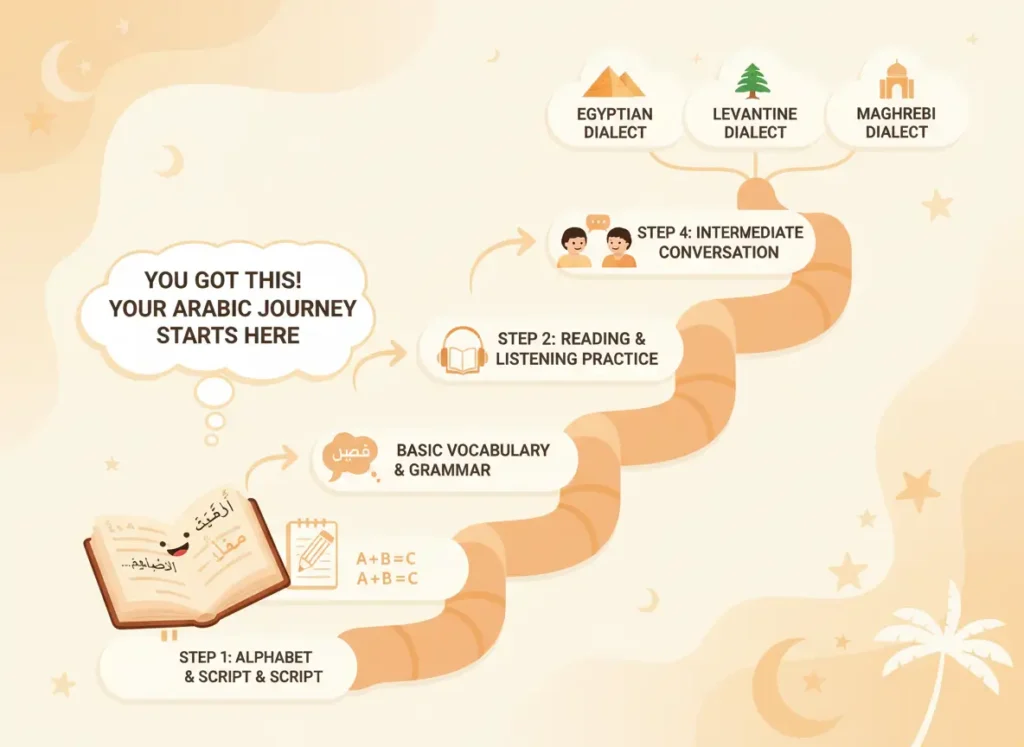
Your Roadmap: How to Actually Learn Arabic from Zero
Okay. Here’s the practical part.
This is what I’d do if I had to start Arabic from scratch tomorrow, knowing everything I know now.
Phase 1: The Alphabet (Weeks 1-2)
Don’t skip this. I know some apps try to teach you Arabic using transliteration (writing Arabic sounds in Latin letters like “marhaba” for مرحبا). That feels easier at first. It holds you back for years.
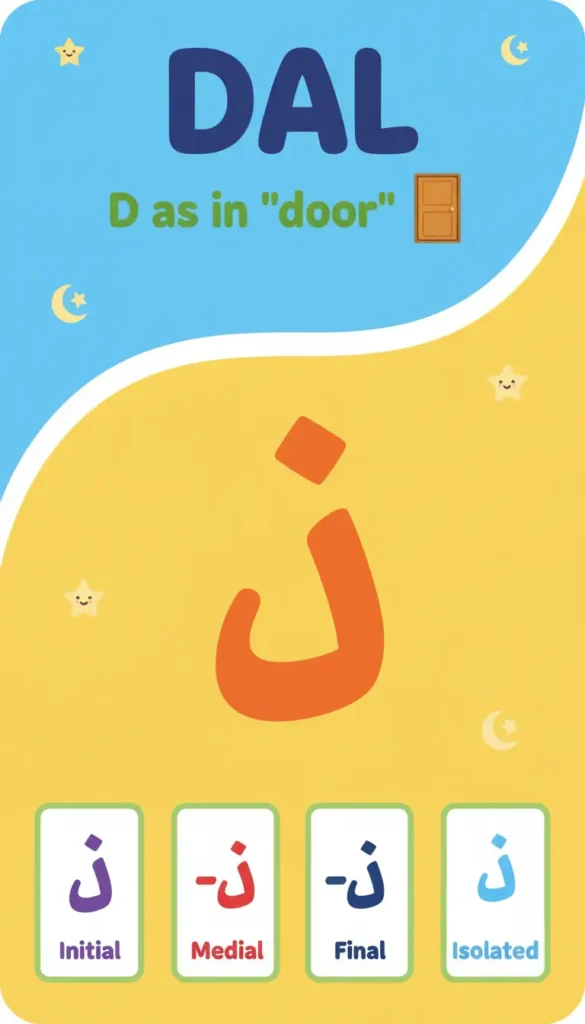
Learn the alphabet from day one. It has 28 letters. Most of them connect to each other in a word. Each letter has up to 4 forms depending on where it falls in the word — beginning, middle, end, or alone.
This sounds harder than it is. You’ll be reading slowly in about 10 days. Confidently in 2-3 weeks.
How to learn it:
- Use a visual resource that shows each letter in all its forms
- Write each letter by hand (this is not optional — writing helps you remember)
- Practice reading simple words out loud, even if you don’t know what they mean
- Don’t memorize the names of the letters — focus on the sounds
One small thing most beginners miss: Arabic short vowels (the tiny marks above and below letters) are often not written in modern Arabic text. Beginners’ materials will include them. But real-world text mostly doesn’t. Keep that in mind — it’s not a mistake, it’s just how it works.
Phase 2: Core Vocabulary (Months 1-3)
Once you can read the alphabet — even slowly — start building vocabulary.
Your first 500 words are the most important words you’ll ever learn. Research consistently shows that in most languages, the top 500 most common words make up about 80% of everyday conversation.
Focus on:
- Numbers, days, months
- Common greetings and phrases
- Family words, colors, food, directions
- Basic verbs: go, come, eat, drink, want, know, understand, see, hear, speak
Use a spaced repetition app (Anki is the best — it’s free and powerful) to drill these. Set it up with your target dialect. Do 15-20 new cards a day, maximum. Review your old cards daily. This takes about 15 minutes.
Phase 3: Basic Grammar Backbone (Months 1-4, alongside vocabulary)
You don’t need to master Arabic grammar. You need enough grammar to build sentences.
Here’s what to learn first:
Sentence structure. Arabic typically goes Verb-Subject-Object (VSO) in formal Arabic, but many dialects go Subject-Verb-Object (SVO) like English. Know which your dialect uses.
Pronouns. I, you (m/f), he, she, we, you all, they. Arabic distinguishes gender throughout. Annoying at first, natural after a while.
Present tense verbs. Start with the most common 20-30 verbs and learn how to conjugate them for “I,” “you,” and “he/she.” Don’t try to memorize every conjugation pattern at once.
Negation. How to say no, not, and didn’t. Essential.
Simple questions. Who, what, where, when, how, why in your dialect.
That’s it for the first few months. Seriously. Don’t buy a 500-page grammar book and try to work through it front to back. It’ll kill your motivation.
Phase 4: Listening and Speaking (Start in Month 1, Build from Month 2)
This is where most self-studiers fall short.
They read. They write. They drill vocabulary. But they never speak.
Start speaking in week two. Even if it’s just practicing phrases out loud by yourself. Here’s why: Arabic sounds include letters that don’t exist in English. The ع (ain), the غ (ghain), the خ (kha), the ح (ha). If you don’t practice making these sounds early, you develop lazy habits that are hard to fix later.
What to do:
- Find a language exchange partner (italki, Tandem, HelloTalk — all free options)
- Book a tutor for one session a week even as a beginner — 30 minutes with a native speaker is worth 3 hours of app time
- Watch Arabic content with Arabic subtitles (not English subtitles — that trains your eyes, not your ears)
- Listen to Arabic music, even if you understand nothing. Your ear needs to get comfortable with the sounds.
Best Tools and Resources for Beginners
There’s no shortage of Arabic learning tools. Most of them are fine. None of them alone will make you fluent. Here’s what actually works:
For the Alphabet
- Arabic handwriting worksheets (printable, free online) — write it, don’t just look at it
- Madinah Arabic Book 1 — old school but solid for MSA foundations
- Any beginner Arabic textbook that uses the Arabic script from lesson one
For Vocabulary
- Anki — free spaced repetition software, best in class
- Quizlet — simpler than Anki, works fine for beginners
- Pimsleur Arabic — good for audio learners, pure listening/speaking practice
For Structure and Grammar
- ArabicPod101 — audio lessons, good for beginners especially with dialects
- Rocket Arabic — structured course with grammar explanations
- Alphabet Arabic Academy — structured courses for all levels with qualified teachers who specialize in helping complete beginners
For Speaking Practice
- iTalki — find affordable native tutors or language exchange partners
- Tandem — language exchange app, free
- HelloTalk — similar to Tandem, good community
For Listening
- Arabic podcasts made for learners (search “Arabic podcast for beginners” on Spotify)
- YouTube channels that teach Arabic in Arabic with subtitles
- Egyptian or Levantine TV shows with Arabic subtitles once you hit intermediate level
Proven Methods That Actually Boost Retention
Let me give you the methods that matter, without the theory.
Start Speaking and Listening Early — Earlier Than You Think You Should
There’s a myth in language learning that you need a “foundation” before you speak. That you need to study for months before opening your mouth.
It’s not true.
Speaking early does three things:
- It forces your brain to retrieve information, which is the single most effective learning activity
- It shows you exactly what you don’t know (which is more useful than studying randomly)
- It makes the language feel real and alive, not like homework
Do you need to be good? No. You just need to try.
Spaced Repetition for Vocabulary
Here’s the honest truth about vocabulary: you have to see a word multiple times across multiple days for it to stick. You can’t read a list of 50 words once and expect to remember them.
Spaced repetition software does this automatically. It shows you words you’re about to forget, right before you forget them. Anki, for example. Free. Works. It shows you a card, you rate how well you remembered it, and the app decides when to show it to you again. Hard cards come back sooner. Easy ones come back later. Your brain builds the memory without you having to think about the system.
The key is doing it daily. Even if it’s only 10 minutes. Even when you don’t feel like it. Especially when you don’t feel like it.
The 80/20 Rule for Arabic
20% of the effort produces 80% of the results. In Arabic, that means:
- The 500 most common words are worth more than 5,000 rare ones
- Learning to conjugate 30 common verbs is more useful than understanding the full grammar of rare forms
- Practicing the 5 most common conversation structures beats memorizing every possible sentence pattern
Don’t learn everything equally. Learn the useful stuff first, and learn it well.
Staying Motivated Through Every Stage
Okay. Real talk.
There will be a day — probably around week 6 or month 2 — where you feel like you’re not improving. Like you’re putting in work and getting nothing back. Like you should just quit.
That feeling is normal. It’s actually a sign that your brain is reorganizing what it’s learned. Breakthroughs in language learning almost always come after these plateaus.
Here’s what helps:
Track Your Progress, Not Your Distance from the Goal
Don’t look at how far you are from fluency. That’s demoralizing. Look at how far you’ve come.
Keep a simple log. “Week 1: Learned the alphabet.” “Month 1: Can read simple words.” “Month 3: Had my first 5-minute conversation.” Read it when you want to quit.
Small wins matter
The first time you understand a sentence without looking it up — that’s a win. Write it down. The first time a native speaker compliments your pronunciation — that’s a win. The first time you dream in Arabic, even just a word or two — that’s a win.
These feel small. They’re not.
Find Your People
Learning a language alone is hard. Learning it with a community is much easier.
- Reddit communities like r/learnArabic are genuinely supportive
- Facebook groups for Arabic learners
- Discord servers for language learners
- Local Arabic learning meetups (check Meetup.com)
- Taking a class where you meet other beginners
There’s something powerful about being around other people at your level. You realize everyone is confused. You realize it’s okay to be confused. You keep going.
Take Breaks Without Guilt
Not every day has to be a full study session. Some days, all you have time for is 5 minutes of Anki on the subway. That’s fine. Do the 5 minutes.
The goal isn’t to study perfectly. The goal is to not stop.
Who Is This Guide For?
Before you keep reading, let’s make sure we’re on the same page.
This is for you if:
- You’ve never studied Arabic before. Like, at all.
- You tried before but quit because it felt too hard or confusing.
- You’re busy and need a realistic plan, not a fantasy schedule.
- You want to speak Arabic, not just memorize vocabulary.
This is NOT for you if:
- You already know the basics — alphabet, basic phrases, some grammar. You need intermediate material, not this.
- You only want to learn Quranic Arabic. This guide covers MSA and dialects, not classical Quranic specifically. That’s a different path with different priorities.
- You’re looking for a magic method that requires zero effort. That method doesn’t exist. Anyone telling you it does is lying.
Still here? Good. Let’s keep going.
Frequently Asked Questions
How long does it take to learn Arabic from zero?
Honestly, it depends on how you define “learn.” Basic conversational Arabic for everyday life? With consistent 30-minute daily sessions, most people hit that within 1-2 years. Professional fluency takes longer — around 2,000+ hours of study and practice for English speakers. The shortest path is consistent daily practice plus real conversation with native speakers from early on. There’s no shortcut, but there is a faster way: actually speaking the language, not just studying it.
What are the easiest Arabic dialects for beginners?
Egyptian Arabic is considered the most accessible because it’s widely understood across the Arab world thanks to Egyptian media, and there are more learning resources available for it than any other dialect. Levantine Arabic (Syrian/Lebanese) comes close second. Gulf Arabic is also learnable but has fewer beginner resources. If you have no specific regional connection, start with Egyptian. If you have family, friends, or a destination in mind — learn that dialect. Personal connection makes everything easier.
Is it possible to self-study Arabic effectively?
Yes. But with a caveat. Self-study works for building vocabulary, learning grammar rules, practicing reading, and drilling fundamentals. What self-study cannot replace is actual conversation with native speakers. If you’re self-studying, you need to build in regular speaking practice — at minimum once a week with a tutor or language partner. Without that, you’ll build a passive knowledge of Arabic that doesn’t translate to actual use. Apps and textbooks teach you Arabic. Conversations make it real.
Where Do You Go From Here?
You’ve got the roadmap. You know what phase to start in, what to focus on, and what traps to avoid.
Now the only question is: are you going to start?
Not tomorrow. Not after you find the perfect app or the perfect course or the perfect moment.
Now.
Pick your dialect. Download Anki. Learn the alphabet this week. And if you want to know where you actually stand — especially if you’ve tried learning Arabic before and you’re not sure what level you’re at — take our free Arabic placement test. It takes about 5 minutes and tells you exactly where to start.
And if you want structured lessons with actual teachers who’ve helped hundreds of beginners go from zero to conversational — check out our Arabic courses or meet the teachers who make it happen.
The alphabet is waiting. So is the rest of the language.
Let’s go.