

A qualified Quran teacher is the single most important factor in your Quranic journey—more than any app, more than any course, more than any book. The right teacher doesn’t just correct your pronunciation. They transform your relationship with Allah’s words.
This guide covers everything: why self-learning hits a wall, how to choose between online and in-person, what makes an Egyptian teacher different, how to spot red flags, and what your first 100 days actually look like with a real teacher.
Why Self-Learning Hits a Spiritual Wall

Here’s the thing about apps. They give you access. But they can’t give you transmission.
Sarah, a mother of three in London, admitted something a lot of parents recognize: “My children can recite the letters, but they have no love for the Quran. It’s become another homework assignment.”
Mariam’s story is even more telling. After two years of app-based learning, a single session with a qualified teacher revealed that she’d been mispronouncing nearly every Arabic letter. Two years of practicing mistakes.
The Digital Illusion: False Confidence Is Real
The numbers are stark. Research from the International Islamic Educational Council shows:
- 72% of self-taught learners develop persistent pronunciation errors
- 89% report declining motivation after 6 months of solo learning
- 94% of parents notice better retention with human teachers versus apps
The problem isn’t technology. It’s what technology can’t do.
What No Algorithm Can Replicate
Spiritual diagnosis. A qualified teacher notices when you’re reciting without presence. When your heart isn’t synchronized with your tongue. When you’re mechanically repeating versus spiritually connecting. No app does that.
Adaptive correction. Apps give standardized feedback. Teachers understand whether your mistake comes from physical articulation issues, lack of understanding, fatigue, or emotional barriers. The correction changes depending on the cause.
The chain of blessing (Isnad). Every authentic Quran teacher carries an unbroken chain of transmission back to the Prophet Muhammad ﷺ. When you learn through this chain, you’re not just acquiring information. You’re inheriting a legacy that no AI can replicate.
The Neurological Case for Human Teachers
Recent studies in educational neuroscience explain why human teachers outperform technology for Quran learning:
- Mirror neuron activation: Seeing a teacher pronounce letters activates the same neural pathways as doing it yourself
- Emotional contagion: A teacher’s love for the Quran transfers to students through emotional resonance
- Multisensory integration: Human learning engages visual, auditory, and kinesthetic learning simultaneously
Recognizing the Need
Most learners reach a critical point where they know something is missing. It usually looks like this:
- Prayer becomes mechanical—you recite but don’t feel the words
- Progress plateaus—months pass without noticeable improvement
- Children resist learning—they treat Quran as obligation, not privilege
- Confidence wavers—you hesitate to recite publicly
That discomfort is the first step. Not a failure. A signal.
Online vs. In-Person: The Real Comparison

The question has changed. “Quran teacher near me” used to mean a 10-minute drive. Now it means finding the most qualified teacher accessible to you—wherever they are.
In-Person Learning: Still Powerful for the Right Student
In-person teaching has real advantages that aren’t easy to replace:
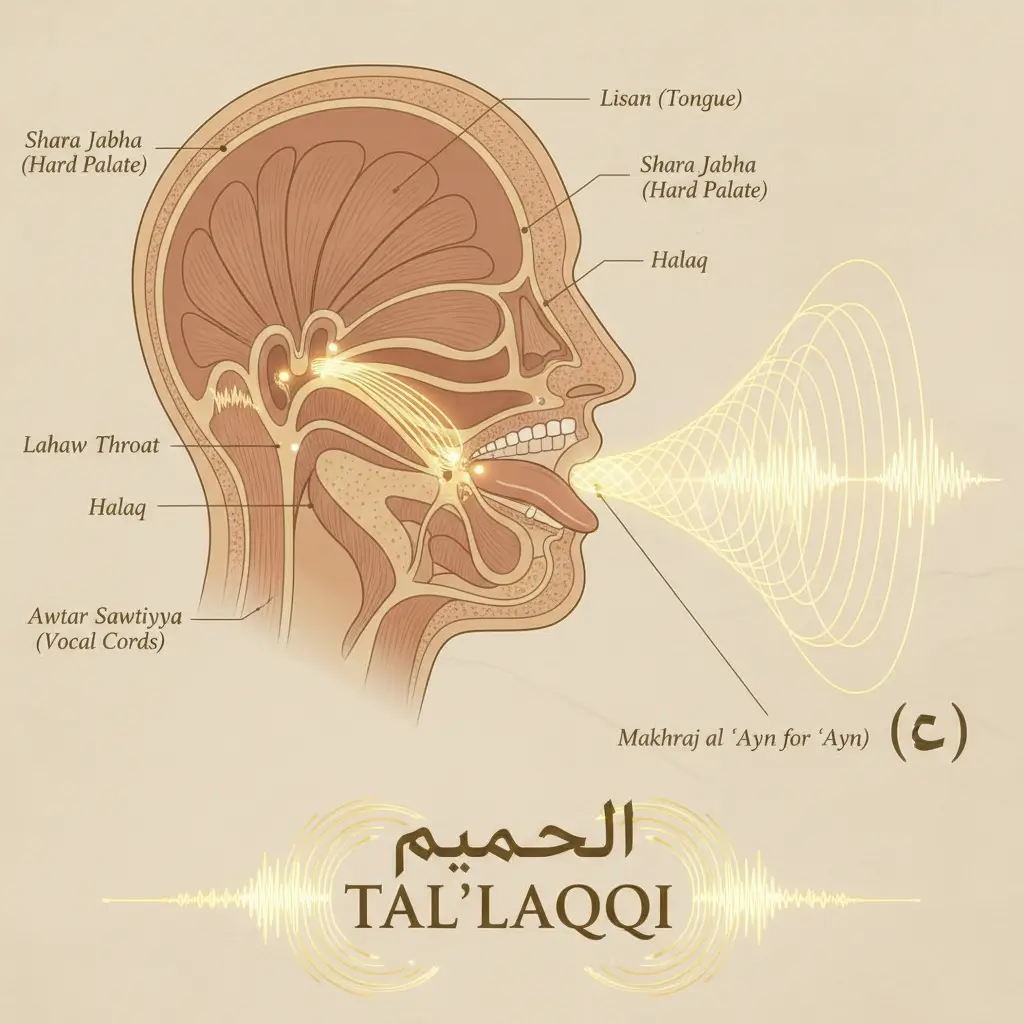
Physical presence for foundational learning. Teachers can physically demonstrate mouth and tongue positions, observe your breathing patterns, and provide immediate guidance on posture and positioning. For young children learning Makharij from scratch, this matters.
Environmental control. Purpose-designed learning spaces, distraction-free zones, and community integration give local learning a different feel.
Community and accountability. Learning within a local Muslim community creates positive social pressure and shared motivation.
According to 2025 Islamic Education Network data, 65% of children under 10 learn better in person, and 78% of new converts prefer initial in-person guidance.
Online Learning: The Revolution Is Real
But geography no longer dictates quality. That’s a fact.
The pandemic accelerated something already happening: the best Egyptian Tajweed specialist is now as accessible as a local tutor—often more so.
| Advantage | Who Benefits Most |
|---|---|
| Global expertise access | Adults, advanced learners |
| 24/7 flexible scheduling | Professionals, students |
| Specialized teachers | All groups |
| Safety & privacy | Women, teenagers |
Interactive technologies now include real-time articulation analysis software, synchronized Quran highlighting, interactive Tajweed rule explanations, and parental dashboard systems for progress monitoring. For a complete overview of what Quran online classes look like today, see our full course guide.
How to Choose
Choose in-person if:
- Your child is under 8
- Cultural community context matters a lot to you
- You need minimal technology involvement
- Local accountability is important for your consistency
Choose online if:
- You need specialized expertise unavailable locally
- Your schedule is irregular or demanding
- You live in an area with limited qualified options
- You want access to cutting-edge tools and Egyptian-certified teachers
The hybrid approach (the 2026 trend): More families now combine both—local for foundational basics, online for advanced Tajweed or memorization. Local for children, online for adults.
Why Egyptian Teachers Are Different

You’ll notice that the best Quran learning programs consistently feature Egyptian teachers. That’s not coincidence.
Historical pedigree. Egypt has maintained unbroken Quranic teaching chains for centuries. Al-Azhar University’s certification system is the gold standard in Quranic education globally. It’s not a marketing claim—it’s a 1,000-year track record.
Pedagogical philosophy. The Egyptian teaching tradition balances three things that are harder to find together than you’d think:
- Rifq (Gentleness): Creating safe environments where students aren’t afraid to make mistakes
- Itqan (Precision): Insisting on technical accuracy without compromise
- Hikmah (Wisdom): Knowing when to correct and when to encourage
Cultural transmission. Egyptian teachers don’t just teach Quran rules. They transmit a living relationship with the text—one that comes from growing up in a culture where Quran permeates daily life. That’s different from someone who learned it academically.
At Alphabet Arabic Academy, all teachers are Al-Azhar graduates or graduates of Egypt’s top classical Arabic programs. This isn’t a preference. It’s a requirement.
The Teacher Selection Framework: From Search to Success
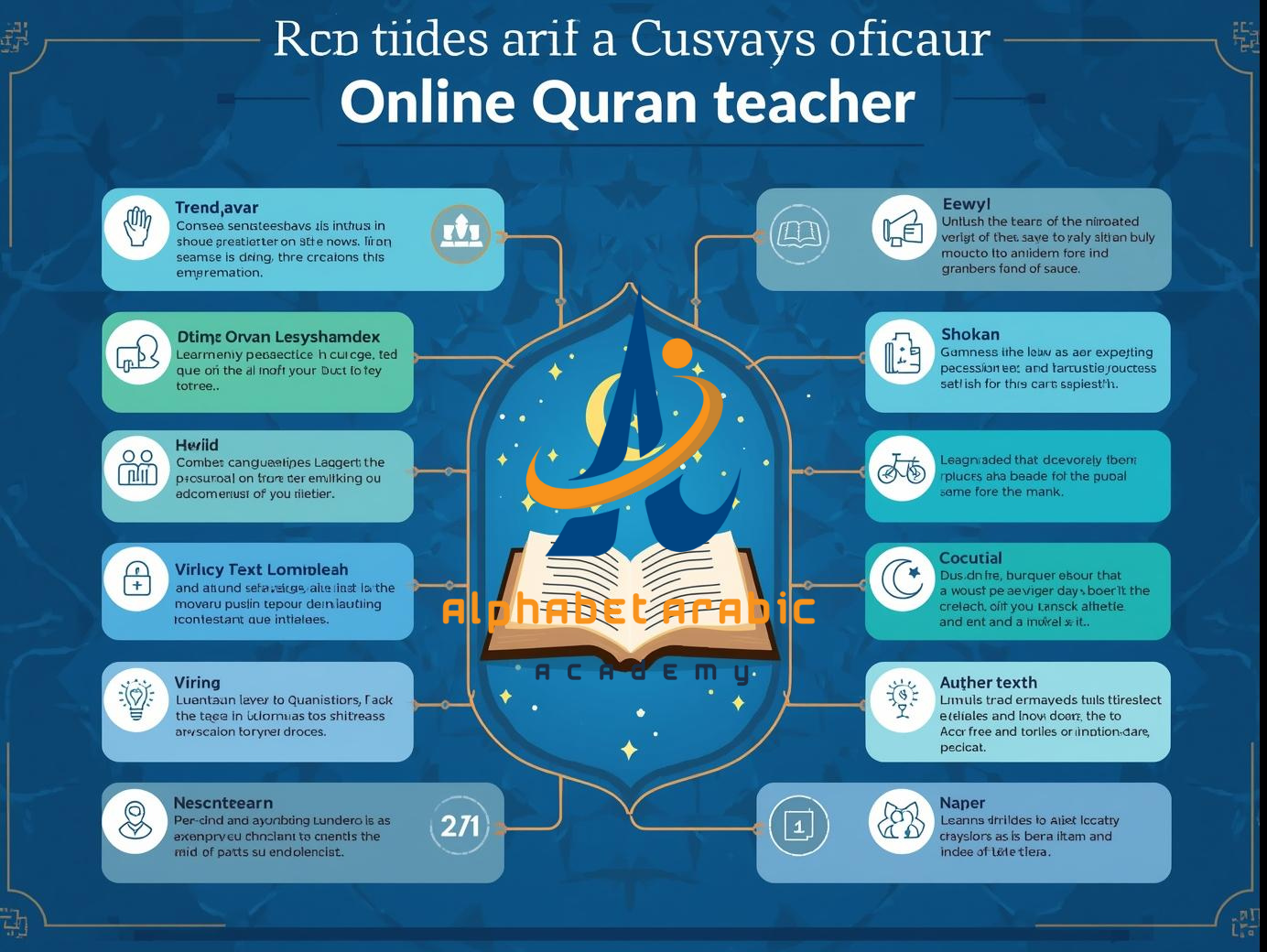
Most people choose a teacher based on price or availability. That’s how you end up in Mariam’s situation—two years of practiced mistakes.
Here’s how to actually do this right.
Phase 1: Know Yourself Before You Search
Before evaluating any teacher, get clear on your own situation.
Your learning profile:
- Age: Children (4–12), teenagers (13–19), and adults (20+) have different neurological needs
- Experience: Complete beginner (0–6 months), intermediate (6 months–2 years), advanced (2+ years)
- Learning style: Auditory, visual, kinesthetic, or combined
- Time availability: Regular schedule vs. flexible
Not sure where you fall? Take our free Arabic placement test to get an honest baseline before committing to anything.
Your goal:
| Goal | Realistic Timeline | Key Indicator |
|---|---|---|
| Basic reading | 3–9 months | Fluent letter recognition |
| Tajweed mastery | 6–18 months | Correct articulation, rule application |
| Hifz (memorization) | 1–3 years | Consistent retention, accurate recall |
| Understanding (Tafsir) | 6 months+ | Contextual comprehension |
Phase 2: The Non-Negotiable Qualifications
This is the checklist. Don’t skip items.
Ijazah verification:
- See the actual certificate—don’t take their word for it
- Trace the teaching lineage
- Cross-reference with certifying institutions
- Have them recite for you during the trial
Teaching methodology—ask them directly:
- How do students progress through your program?
- How do you assess and measure student progress?
- How do you adapt for individual needs?
- How do you balance accuracy with encouragement?
Professional indicators:
- Technical proficiency for online delivery
- Clear communication in your language
- Professional boundaries
- Evidence of ongoing learning
Phase 3: The Red Flag System
Credential concerns:
- “I’ve been teaching for years” without documentation
- Refusal to provide references
- Certificates from unknown or unverifiable institutions
Methodological problems:
- “We’ll just read Quran together”—no curriculum
- One approach for all students regardless of level
- No defined milestones or assessments
Professional conduct issues:
- Frequent cancellations or last-minute changes
- Unclear pricing or hidden fees
- Unprofessional communication
Pedagogical shortcomings:
- Impatience with basic questions
- Harsh correction style
- Focusing only on mistakes, never on progress
For families looking for home-based options, our guide on home Quran teachers near you walks through additional location-specific considerations.
The Trial Session: What to Actually Evaluate
Pre-session: prepare specific verses you want to recite, note your current challenges, set evaluation criteria before you start.
During the session, observe:
Technical competence:
- Pronunciation accuracy when the teacher recites
- Clarity of explanations
- Effective use of teaching tools
Pedagogical skills:
- How do they ask questions?
- How do they correct errors?
- Can they adjust pace in real time?
Interpersonal dynamics:
- Did you feel respected?
- Was the balance of challenge and support right?
- Can you imagine long-term learning with this person?
After the session, ask yourself:
- Were corrections clear and constructive—not just “wrong, do it again”?
- Did the teacher demonstrate passion for Quran teaching?
- Can I envision working with this person for 12–18 months?
Never commit to a course without a trial. A good academy always offers one.
10 Benefits of Having an Online Quran Teacher
Here’s the thing most people don’t realize: online isn’t second-best. For many learners, it’s actually better.
1. Access to genuinely qualified teachers. Geography used to determine quality. If your city didn’t have a great teacher, you made do. Online learning removes that ceiling entirely.
2. Real-time correction that actually sticks. Live online sessions provide the same immediate correction as in-person. You say a word wrong, your teacher corrects it. Right there. Not next week.
3. Consistent scheduling. No commuting means fewer cancellations. Your 7 AM lesson actually happens at 7 AM, every week.
4. Recorded review capability. Many online sessions can be recorded. You can review exactly what your teacher said about a specific Makharij point. That doesn’t happen with in-person lessons.
5. Female teachers available on request. For sisters who prefer learning with a female teacher, online access to qualified female educators is genuinely easier than finding one locally.
6. Comfort reduces anxiety. Learning in your own space lowers the self-consciousness that blocks many adult learners. No one’s watching you struggle except your teacher.
7. Children learn in their environment. For kids, learning Quran in their home environment—with parental proximity—can actually increase engagement rather than reduce it.
8. Access to specialized programs. Want a teacher who specializes specifically in Tajweed for adult converts? Or Hifz with comprehension? Online makes this findable. Locally it might not exist. Explore our Quran Tajweed classes for a structured example.
9. Global community. Learning with students and teachers from 80+ countries creates a broader sense of the Muslim ummah that purely local learning doesn’t.
10. Cost efficiency. No travel costs, no facility costs. Better teachers at accessible prices.
Your 100-Day Transformation: What Actually Happens

Most people don’t know what to expect in the first few months. Here’s what actually happens, phase by phase.
Days 1–30: Foundation Building
Week 1–2: Establishing rhythm
This phase isn’t about learning Quran. It’s about building the teacher-student relationship. Your teacher is learning your learning style. You’re learning theirs.
Don’t rush this. The relationship is the foundation.
Week 3–4: Technical foundations
Focus: basic articulation (Makharij). Key activities: letter pronunciation drills, breath control exercises.
Educational psychology insight: the first month establishes learning identity. A skilled teacher creates early, achievable successes to build “I can do this” rather than “this is too hard.” The difference in trajectory is enormous.
Success indicators at day 30: comfortable with correction, consistent attendance, reduced anxiety about mistakes.
Days 31–60: Skill Development
Week 5–8: Tajweed integration
You start applying actual rules to actual recitation. Not just knowing what Ghunnah is—doing it correctly in a real verse.
Week 9–12: Fluency building
Focus: smooth word connection, reduced pausing.
Neurological milestone: around day 45, most learners experience what neuroscientists call myelin sheath development—neural pathways become more efficient, making previously difficult articulations feel almost natural.
Success indicators at day 60: self-correction ability, recognizing your own mistakes before your teacher points them out.
Days 61–90: Mastery Emergence
Week 13–16: Comprehension integration
Focus: meaningful recitation. You’re not just saying the sounds correctly—you’re starting to understand what you’re saying.
This is often when emotional breakthroughs happen. Students who’ve recited Al-Fatiha thousands of times realize—for the first time—what they’ve been saying.
Let me tell you about Yusuf.He was 52 years old. A grandfather. He’d never learned to read the Quran properly. Growing up, there were no teachers where he lived. He learned some surahs by ear, but he knew his pronunciation was full of mistakes.For years, he told himself: “I’m too old. It’s too late.”Then his grandchildren started learning online. He watched them recite — and felt something shift.He enrolled in our Quran program. His teacher, Ustadh Hany, started with the alphabet. Week one, week two, week three. Yusuf practiced 20 minutes every day — during his lunch break, after Isha, before bed.Six months later, he was reading the Quran fluently with Tajweed rules he never knew existed.At a family gathering, he led the Maghrib prayer. His grandchildren listened. His son whispered afterward: “Baba, I’ve never heard you recite like that.”Yusuf smiled. “I wasn’t too old,” he said. “I just hadn’t started.”That’s the thing about learning Quran. It’s never too late. The only wasted time is the time you spend not starting.
Week 17–20: Confidence building
Focus: public recitation readiness. Recording yourself, reviewing, simulated recitation.
Success indicators: willingness to recite at Jumu’ah, reduced anxiety, genuine improvement in prayer concentration.
The Student’s Responsibility: What You Owe the Process
A great teacher is half the equation. You’re the other half.
Non-Negotiable Commitments
Consistency protocol:
- Daily minimum: 15 minutes of practice
- Weekly structure: 3–5 sessions with your teacher
- Monthly review: honest assessment of progress and adjustment
Preparation standards:
- Before every session: review previous lesson, note questions
- During session: full attention, genuine willingness to be corrected
- After session: immediately practice corrections while they’re fresh
Excellence Practices
Advanced preparation:
- Research the background of verses you’re studying
- Listen to multiple reciters for the same passage
- Practice at different speeds and tones
Self-monitoring:
- Record yourself and critically compare to expert reciters
- Practice with others when possible
- Teach what you know—it reinforces your own learning more than anything else
Spiritual Integration
- Understand the context of revelation for verses you’re learning
- Reflect on personal application of meanings
- Connect recitation practice directly to prayer improvement
Success Pattern: Ahmed, 35, business executive with previous self-learning experience. His wins: same practice time daily without negotiation, linking Quran practice with existing habits, detailed progress journal, accountability partner.
Result: basic reading in 4 months, fluent Tajweed in 9 months, now leads office prayers.
Common Mistakes That Slow Students Down
Mistake 1: App Dependency Without a Teacher
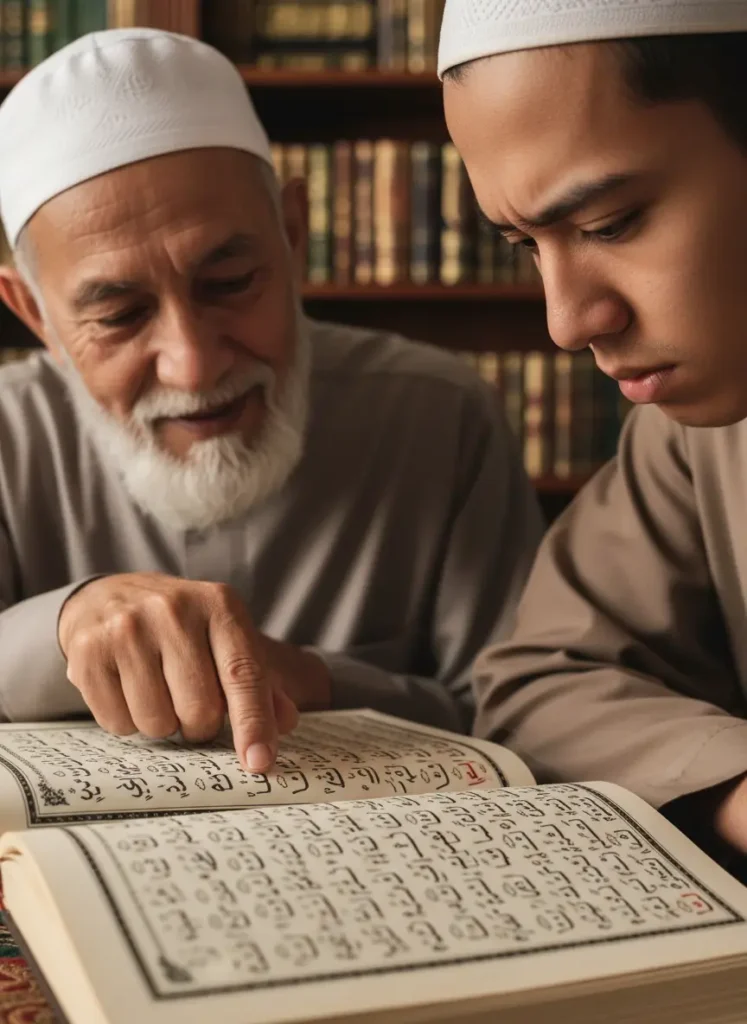
Using apps between sessions is smart. Using apps instead of a teacher is expensive—in time, in embedded errors, in spiritual connection. The path to learning Quran from the beginning always involves a human teacher at the core.
Mistake 2: Inconsistency Between Sessions
Three sessions a week with your teacher means nothing if you don’t practice in between. 15 minutes daily between sessions beats 45 minutes once a week every time. Consistency is the variable that separates fast learners from slow ones.
Mistake 3: Not Verifying Credentials
“They seem nice and know Arabic” is not a qualification. Nice people with uncertified Arabic can give you two years of Mariam’s mistakes. Verify Ijazah. Always.
Mistake 4: Starting With the Wrong Goal
“I want to learn Quran” is too vague to optimize for. “I want to recite Al-Baqarah with correct Tajweed in 12 months” gives your teacher something to build toward. Be specific from day one.
Mistake 5: Quitting at the 3-Month Slump
This is real and almost universal. Around week 10–12, motivation drops. Progress feels invisible. Many students quit here.
But here’s what’s actually happening: the foundation is being laid. The visible acceleration comes at month 4–6. Students who push through the slump are the ones describing their experience as life-changing at month 12.
Mistake 6: Choosing Based on Price Alone
Very cheap almost always means undertrained. And correcting a six-month-old mistake takes far longer than learning correctly from day one. Invest in quality from the start.
Who Is This For?
This is for you if:
- You recite Quran but have no idea what you’re saying
- You’ve tried apps and self-study but plateaued
- You’re a new Muslim wanting correct foundations from the start
- You’re an adult who believes it’s “too late”—it’s not
- You want your prayer to mean something, not just sound right
- You’re a parent who wants to understand Quran before teaching your children
This is NOT for you if:
- You want conversational Arabic for travel or work (that’s a different course)
- You’re not willing to practice 15–20 minutes daily between sessions
- You’re looking for the cheapest option regardless of quality
One honest note: adult learners are often better at this than they expect. Stronger motivation, better discipline, the intellectual ability to understand why rules work. Age is not your obstacle.
Overcoming Plateaus: Every Learner Hits Them
The 3-month slump. Declining motivation, feeling stuck. Solution: new challenge introduction, honest goal re-evaluation. Your teacher should introduce a new recitation style or shift focus areas.
The comprehension barrier. Reciting fluently but without understanding. Solution: shift focus to translation and basic Tajweed meaning. Bilingual sessions. Word-by-word work.
The application challenge. You know the rules but can’t apply them consistently. Solution: intensive slow-motion recitation analysis. This is different from standard correction.
Becoming a Link in the Chain: The Long Game

The ultimate success isn’t personal mastery. It’s transmission.
As you progress, consider:
Step 1: Assistant teaching. Help newer students under teacher supervision. Teaching reinforces your own learning more than any drill.
Step 2: Specialized development. Deepen in specific areas—Tajweed, Hifz methodology, child education.
Step 3: Certification pursuit. Formal Ijazah attainment. Continuing the chain that connects you, through your teacher, back to the Prophet ﷺ.
The Prophet Muhammad ﷺ taught us: “The best of you are those who learn the Quran and teach it.” This isn’t just a virtue—it’s a blueprint for the entire arc of your learning.
Frequently Asked Questions
How do I know if an online Quran teacher is actually qualified?
Ask to see their Ijazah certificate—not a description of it, the actual document. Ask them to recite a portion while you listen. A qualified teacher should be able to explain not just what the rule is, but why it exists and where it applies in the Quran. Vague answers or defensive responses to credential questions are serious red flags.
How often should I have sessions with my Quran teacher?
Minimum: 2 sessions per week for meaningful progress. Optimal: 3–4 sessions per week. One session per week works but extends your timeline significantly. What matters more than session frequency is consistent daily practice between sessions.
Is online Quran learning as effective as in-person?
For most adult learners, yes—and often more effective because of better access to qualified teachers. For children under 8, in-person tends to be stronger. The research shows no significant outcome difference when online instruction is high-quality (live sessions, qualified teacher, real-time correction).
How long does it take to see real improvement?
Most students notice significant improvement in pronunciation by week 4–6. Fluent reading with correct Tajweed typically takes 6–12 months of consistent study. The students who see the fastest results practice daily, not just during sessions.
What’s the realistic cost of a qualified Quran teacher?
Qualified one-on-one sessions: $15–35 per session depending on credentials and format. Group classes: $10–20 per session. Monthly packages through an academy typically offer better value. See our course pricing for transparent package options with no hidden fees.
What should I prepare before my first session?
Know your honest starting level: Can you read Arabic script? How fast? Do you understand any words? Come with one specific verse you want to work on. And come ready to be corrected—that’s why you’re there.
Why Alphabet Arabic Academy
We’re based in Cairo. All teachers are Al-Azhar University graduates or from Egypt’s top classical Arabic programs. 5,000+ students from 80 countries. 4.9/5 on Trustpilot.
But here’s what actually matters for your Quran learning:
Teacher quality without compromise. Not just native speakers—scholars with Ijazah, trained in classical Arabic and Quranic sciences at the highest level available.
True one-on-one sessions. Your teacher’s attention is 100% yours for the full session. No group classes competing for correction time.
Female teachers available on request. For sisters who prefer this—no waiting list, no compromise on qualification.
Flexible global scheduling. 7 days a week, across every time zone. Morning, evening, weekends.
Transparent pricing. No hidden fees. Monthly packages from $60, with a free trial lesson before any commitment. View all course options and pricing.
Not ready to commit? Start with the free Arabic placement test to understand exactly where you are and what the right first step looks like.
Conclusion
For 1,400 years, the Quran has been transmitted through a chain of teachers. Not books. Not apps. Not algorithms. Teachers.
Every Muslim who recites correctly today learned from someone who learned from someone—all the way back to the Companions who learned from the Prophet ﷺ himself.
That chain is available to you. It doesn’t require a special background, a certain age, or perfect Arabic. It requires one decision: to find a qualified teacher and begin.
The Quran has been waiting for you. Your teacher is ready.
👉 Book your free trial lesson with Alphabet Arabic Academy and take the first step toward authentic Quranic connection.
خُذِ الْكِتَابَ بِقُوَّةٍ
“Take the Book with determination.” [Quran 19:12]
بسم الله.