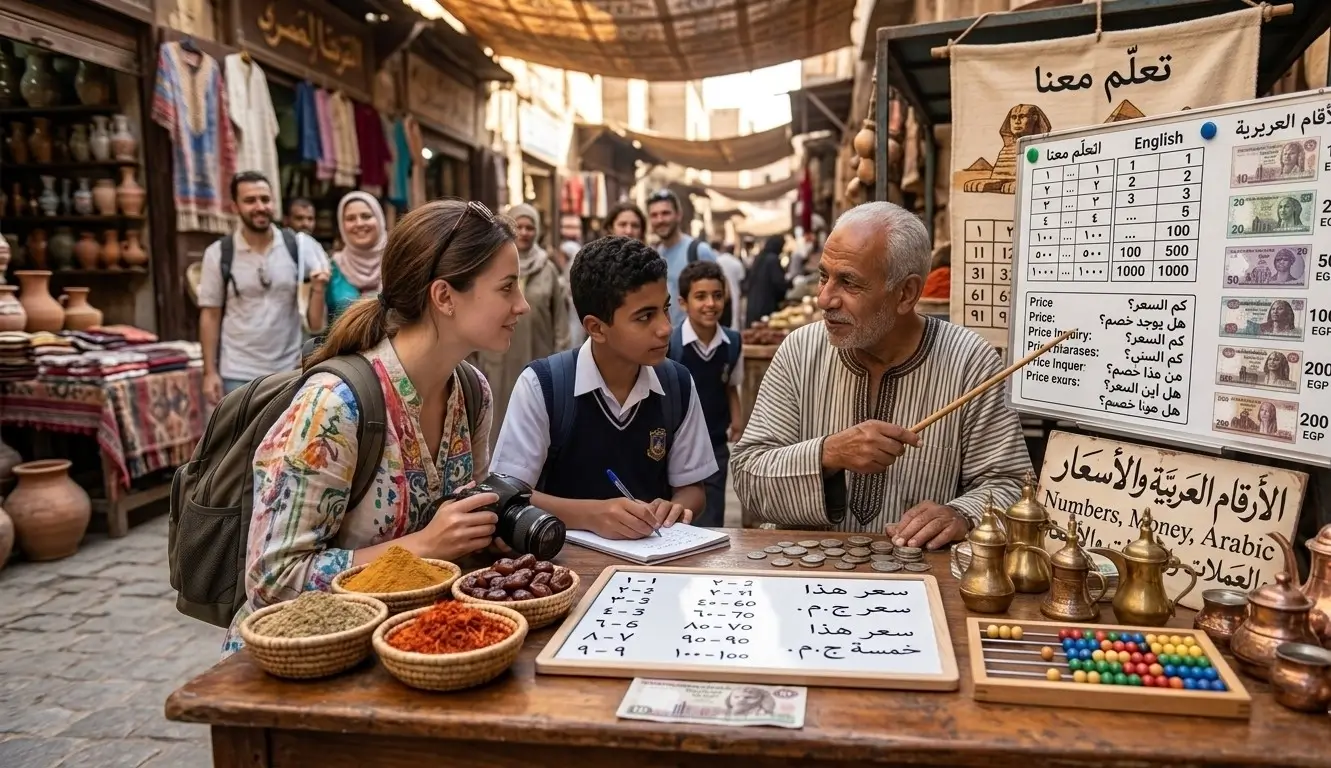
Your kid wants to buy something in Egypt one day. Maybe koshary. Maybe a toy from a stall in Khan el-Khalili. And they freeze, because they know “hello” and “thank you” but they don’t know how to ask “how much is this?”
That’s the gap this article fixes.
Numbers and money are the most used Arabic in the entire language. Every single day, in every single interaction. Not “how are you” — that’s said once. Prices come up ten times an hour.
Honestly, this is one of my favorite things to teach kids, because it’s instant. You teach a number, they say it back, and thirty seconds later they’re already using it. No waiting around for it to “click.” It just works.
Let’s get into it.
Why Egyptian Arabic numbers are actually easier than you think
Here’s the thing people don’t tell you: Modern Standard Arabic numbers are a grammar nightmare. The number has to match the gender of whatever you’re counting, and it flips depending on how many you have. It’s genuinely one of the hardest parts of MSA.
Egyptian Arabic? Way simpler. You don’t have to worry about gender agreement for numbers the way you do in MSA. There’s still a small rule for counting things (we’ll touch on it near the end, briefly, because kids don’t need the deep grammar — they need to be understood), but for basic use, you can learn the numbers once and use them everywhere.
That’s good news for a kid. Less to memorize, more room to actually talk.
Learn Numbers 0 to 10
These are the foundation. Get these solid before anything else.
| Number | Egyptian Arabic | Sounds like |
|---|---|---|
| 0 | صفر | sifr |
| 1 | واحد | waahid |
| 2 | اتنين | itnein |
| 3 | تلاتة | talaata |
| 4 | أربعة | arba’a |
| 5 | خمسة | khamsa |
| 6 | ستة | sitta |
| 7 | سبعة | sab’a |
| 8 | تمانية | tamanya |
| 9 | تسعة | tis’a |
| 10 | عشرة | ashara |
For kids, I always say: don’t drill the spelling first. Drill the sound. Count fingers. Count stairs. Count snacks on the table. Say the number every single time you hand them something. “Here’s 1 cookie… waahid.” Kids learn numbers the same way they learned them in their first language — by hearing them attached to real things, over and over.
Learn Numbers 11 to 20
This is where a lot of learners trip up, so slow down here.
| Number | Egyptian Arabic | Sounds like |
|---|---|---|
| 11 | حداشر | hidaashar |
| 12 | اتناشر | itnaashar |
| 13 | تلاتاشر | talattaashar |
| 14 | أربعتاشر | arba’taashar |
| 15 | خمستاشر | khamastaashar |
| 16 | ستاشر | sittaashar |
| 17 | سبعتاشر | saba’taashar |
| 18 | تمنتاشر | tamantaashar |
| 19 | تسعتاشر | tisa’taashar |
| 20 | عشرين | ishreen |
I’ll be straight with you — 11 and 12 don’t follow a clean pattern, so just memorize those two on their own. But 13 through 19? Easy trick. Take the number from the first list (3 to 9) and stick “taashar” on the end. Talaata becomes talattaashar. Arba’a becomes arba’taashar. That’s it. Teach kids that one trick and half the work is done for them.
Counting by tens: 20 to 100
| Number | Egyptian Arabic | Sounds like |
|---|---|---|
| 20 | عشرين | ishreen |
| 30 | تلاتين | talaateen |
| 40 | أربعين | arbe’een |
| 50 | خمسين | khamseen |
| 60 | ستين | sitteen |
| 70 | سبعين | sab’een |
| 80 | تمانين | tamaneen |
| 90 | تسعين | tis’een |
| 100 | مية | miyya |
And between the tens, you just say the smaller number, then “و” (wi/we, meaning “and”), then the ten. So 25 is خمسة وعشرين — khamsa w-ishreen. Literally “five and twenty.” Same pattern all the way to 99. Once a kid gets this pattern, they can build any number from 21 to 99 on their own, without memorizing each one separately.
Bigger numbers: hundreds and thousands
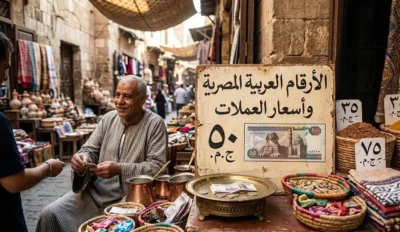
Kids don’t need to master these right away, but they’ll hear them fast once money enters the picture, because prices in Egypt jump into the hundreds quickly.
- 100 = مية (miyya)
- 200 = ميتين (miteen)
- 300 = تلتمية (tultumiyya)
- 1,000 = ألف (alf)
- 2,000 = ألفين (alfein)
Notice the pattern with 200 and 2,000 — both use the “-een” dual ending, same as itnein (2). Once you point that out, kids stop seeing these as random new words and start seeing the logic.
Egyptian money: what a kid actually needs to know
Egypt’s currency is the Egyptian pound, and in Egyptian Arabic, it’s called جنيه — geneh (or gineh). The small unit is قرش — irsh (piastre), 100 of which make one pound, though in daily life you’ll mostly hear whole pounds and half-pounds.
- 1 pound = جنيه واحد (geneh waahid), or just جنيه
- 5 pounds = خمسة جنيه (khamsa geneh)
- 20 pounds = عشرين جنيه (ishreen geneh)
- Half a pound = نص جنيه (nos geneh)
Here’s a fun fact that actually helps kids remember it: when Egyptians say a price, the “pound” word almost always comes right after the number, and the number often stays in a simple form no matter how big it gets. So “55 pounds” is خمسة وخمسين جنيه — khamsa w khamseen geneh. Same “number + and + ten-word” pattern from before, just with جنيه tacked on the end.
The one phrase that unlocks everything: “How much?”
If your kid learns only one sentence from this whole article, make it this one:
بكام ده؟ (Bikaam da?) — “How much is this?”
That’s it. That’s the magic phrase. Say it while pointing at literally anything — a toy, a juice, a sticker — and you’ll get a price back. Then your kid just needs to recognize the number.
A few variations worth knowing:
- بكام الكيلو؟ (Bikaam el kilo?) — “How much per kilo?” (used for fruit, vegetables, meat)
- ده بكام؟ (Da bikaam?) — same meaning, word order flipped, both are used
- غالي (ghaali) — expensive
- رخيص (rikhees) — cheap
Want your kid actually speaking this, not just reading it? A short, guided lesson does more in 20 minutes than a week of flashcards on their own. Take the free placement test and see exactly where to start.
Real questions people actually ask about this
I looked through what learners keep asking on forums and Q&A threads, and the same handful of questions come up again and again. So let’s answer them straight.
“Do Egyptians use Arabic-Indic numerals (٠١٢٣) or regular numbers on price tags?”
Both, honestly. You’ll see Western numerals (1, 2, 3) on receipts and in most shops, especially in cities. But Arabic-Indic numerals (٠ ١ ٢ ٣ ٤ ٥ ٦ ٧ ٨ ٩) show up on some signs, older price tags, and official documents. Kids should recognize both, but for spoken use — which is what matters for buying something — the spoken number is what counts, not the written symbol.
“Why do numbers sound different when counting objects versus just counting?”
This is the one grammar wrinkle I mentioned earlier. When you’re counting objects from 3 to 10 (like “three apples”), Egyptian Arabic sometimes drops the vowel at the end — تلات تفاحات (talat tuffahaat) instead of تلاتة. For a kid, I wouldn’t stress this. Teach the counting numbers first, let them get comfortable, and the object-counting version will click naturally once they hear it enough in context. Overloading a kid with two versions of every number at once just slows them down.
“Is haggling actually normal, or is that a stereotype?”
It’s real, especially in markets, small shops, and with street vendors. Less so in big supermarkets or malls where prices are fixed. For kids, I don’t push haggling — it’s a more advanced social skill. But even just watching a parent do it, and hearing the numbers go back and forth, is great passive listening practice.
“What’s the difference between geneh and gineh — am I saying it wrong?”
Neither is wrong. It’s regional and personal pronunciation variation, same as how English speakers say “tomato” differently depending on where they’re from. Don’t let a kid get anxious about which one is “correct.” Both are understood everywhere in Egypt.
Turning this into a daily habit for kids
Learning numbers in one sitting doesn’t stick. Repetition across small daily moments does. A few ways I’ve seen actually work with kids:
- Price a snack every day. “This costs how much? Bikaam da?” Then answer it together.
- Play “pretend shop” at home. One kid is the seller, one is the buyer. Use real numbers and geneh.
- Count anything, out loud, in Arabic, during normal routines — stairs, toys being put away, minutes until dinner.
- Keep sessions short. Five minutes of numbers every day beats one hour once a week.
If you want a more structured way to build this into your week, we’ve laid out a simple system in our daily Arabic study routine — it’s built for exactly this kind of steady, short-burst practice.
Where numbers and money fit into the bigger picture
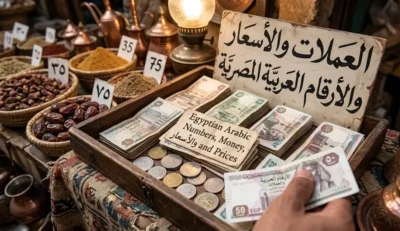
Numbers and prices are colloquial, day-to-day Egyptian Arabic — the kind of Arabic used in markets, homes, and streets, not textbooks. If your child is also working through Modern Standard Arabic for reading and school subjects, that’s a completely separate track, and worth understanding the difference between the two paths early on.
If you’re not sure where your child currently stands, or which path makes sense for them, our free Arabic placement test gives you a clear answer in a few minutes — no guessing required.
And if Quran reading is part of your goals alongside spoken Arabic, our Quran online classes run separately from the colloquial track, so kids can build both skills without mixing them up.
Want to know what a course actually costs and how the pricing works? Check our Arabic courses pricing page. And if you’re curious who’d actually be teaching your child, our teachers page shows the real people behind the lessons.
The bottom line
Numbers and money aren’t the exciting part of learning Arabic. No one gets emotional over “khamsa geneh.” But here’s what nobody tells you — this is the stuff that gets used. Every day, every transaction, every trip to a shop. Master this small chunk, and your kid walks into Egypt able to actually function, not just recite greetings.
Start with 1 to 10. Add the “bikaam da?” phrase this week. Apply it daily, even for two minutes, and it sticks faster than any flashcard deck ever will.
Ready to make this stick with real practice, not just a table on a screen? Start with our free placement test, then check our course pricing to find the right fit for your child. Apply it daily — that’s the whole secret.