best age to learn arabic for kids Parents ask me this more than almost anything else. Usually it comes with a little guilt attached — like their kid is already behind, or like starting a toddler on Arabic is weird. Let’s clear this up properly.
What’s the Best Age for Learning Arabic?
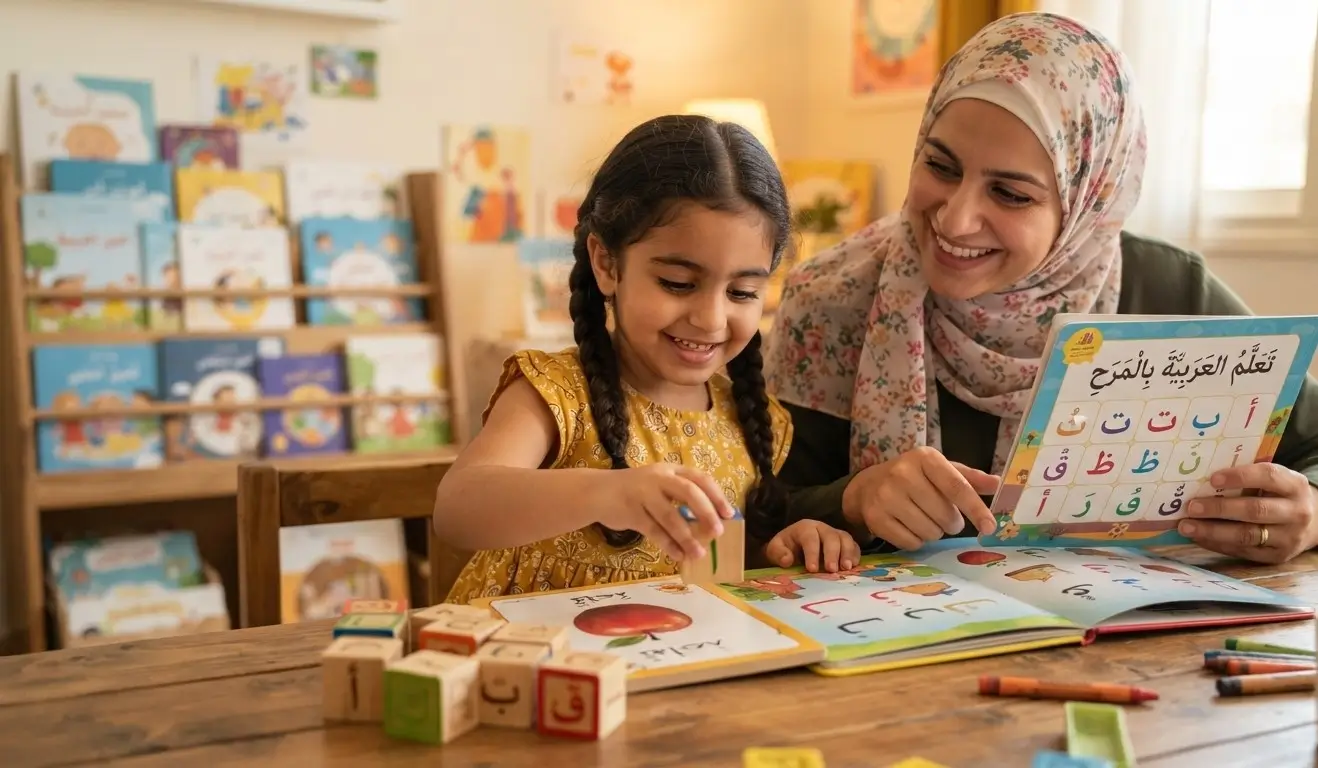
If you want a number: somewhere between 3 and 7 is the easiest window to begin. Sounds go in without a fight, kids don’t feel self-conscious, and their brains are still wiring themselves for new pronunciation in a way that just fades later on.
But a kid who begins at 9 isn’t behind. A teenager who picks it up at 14 isn’t too late. They just need different methods than a toddler does — more on that further down.
Why Some Stages Make It Easier Than Others
Here’s the thing people get wrong: they think starting early means grammar drills for a 3-year-old. It doesn’t. What the early years actually give you is sound. Arabic has letters that don’t exist in English — ع، ح، ق، غ. A little one hears these early and just absorbs them, no accent problem, no embarrassment.
An older learner hearing that same sound for the first time has to consciously train a new mouth movement. Not impossible — just more work. That window for effortless pronunciation really does start narrowing around 7 or 8, so earlier exposure to sound (not grammar) is the actual advantage, and it’s worth focusing on listening and repeating long before you focus on writing.
Real Questions Parents Are Wondering About
Let me answer what actually comes up, instead of generic filler.
Will two languages confuse my toddler?
No. Kids raised bilingual might mix words for a while — totally normal, it’s called code-switching — but they sort it out. Research points the other way: sharper focus, better memory, stronger problem-solving.
Should my kid read English first?
Not necessarily. If your goal is spoken Arabic — greetings, basic chat, songs — English literacy isn’t a prerequisite. If your goal is Arabic script specifically, some literacy concept helps but isn’t required.
Is 8 too late to begin from zero?
Not at all. Eight-year-olds can focus, read, and understand why they’re doing this — you trade a little pronunciation ease for a kid who can actually study.
How many hours a day?
Less than you’d guess. Fifteen to twenty focused minutes daily beats an hour once a week.
My kid gets bored after ten minutes — is Arabic not for them?
No. That’s a format problem, not a kid problem. A good program flexes around attention span.
Signs Your Kid Is Actually Ready
Forget the calendar for a second. Look for:
- Can sit through one activity for 10-15 minutes without a meltdown
- Shows curiosity about sounds or songs, even in English
- Follows a two-step instruction
- Has some reason to care — family, Quran, an upcoming trip
Most of those true? They’re ready, whatever number is on their birthday cake.
Learn Arabic for Kids & Free Lessons
You don’t need to spend a dime to test the waters. Arabic nursery rhyme channels on YouTube, free printable tracing sheets, and library picture books with Arabic text are a genuinely solid way to see if your kid takes to the sounds before you commit to paid lessons. Free lessons and short story-based clips work well here because they’re engaging without asking a 4-year-old to sit still for thirty minutes.
Once your kid shows real interest, that’s usually the signal to move from free dabbling into a structured series of lessons that actually builds a skill, step by step, instead of random exposure.
Best Free Arabic Learning Apps for Kids
Apps are a genuinely useful supplement — not a replacement for a real teacher, but a good way to keep practice fun between lessons. Duolingo’s Arabic track works fine for older kids who already read English and want gamified repetition. For younger kids, look specifically for apps built around letter-tracing and animal characters rather than generic flashcard apps, since interactive, story-driven design holds a small kid’s attention far longer than plain drills.
First: Apps To Learn Arabic Reading For Kids
Apps like Arabic for Kids – Alphabet pair each letter with a native speaker’s pronunciation and a matching animal character, which helps young learners connect sound to shape before they’re asked to read whole words. Apps built this way — sound first, recognition second — tend to outperform ones that jump straight to reading drills.
Second: Apps To Learn Arabic Writing For Kids
Writing apps that use guided dot-tracing (following a path with your finger) are far better for kids than apps that just show a letter and expect copying. Play and Learn Arabic Alphabet is one example built around tracing and puzzle-style reinforcement rather than plain repetition. Whatever app you pick, writing practice should come after your kid already recognizes the letter — not before.
Mistakes Parents Make at Every Stage
Starting too young with the wrong method. Handing a workbook to a 3-year-old ends in tears, theirs and yours.
Waiting for the “perfect” moment and never beginning. There isn’t one. There’s today, or another year gone.
Treating an older beginner like a toddler. A 10-year-old starting from zero doesn’t want nursery songs. They want material matched to their actual maturity, even if their Arabic level is beginner.
Ignoring which Arabic you actually want. Egyptian dialect for family chat, Modern Standard Arabic for school, or Quran recitation — these are different goals. If your priority is the spoken, everyday Egyptian your relatives use, it’s worth learning that dialect specifically instead of assuming classroom Arabic will get your kid chatting naturally with cousins.
What Teaching Looks Like at Each Stage
3-5: Songs, colors, animals, short repeated phrases, heavy on visuals. Pure listening and speaking practice — no pressure to write yet.
6-8: Reading starts here, introduced as a game rather than homework. Short daily sessions beat long weekly ones — we break that down in our piece on building a daily Arabic study routine.
9-12: Grammar concepts, real conversation, and concrete goals — like reading Quran verses or talking with grandparents. If faith-based learning is the goal, a dedicated track for Quran online classes fits better than a general course.
Teens: Treat them like adult beginners with a clear target. Fast-paced, milestone-driven lessons work; anything that feels “kiddie” gets tuned out immediately.
Find Your Kid’s Starting Level
Don’t guess. Kids with some prior exposure — grandparents, a weekend class, an app — often get placed wrong, either bored or lost. Our quick Arabic placement test takes about five minutes and tells you exactly where to start.
What Online Arabic Classes for Kids Actually Cost
Our pricing for Arabic courses is laid out plainly by how many sessions a week your kid does — no hidden tiers, no surprise add-ons.
Why the Teacher Matters More Than the Number
The biggest factor in whether a kid sticks with this isn’t the number on their birthday — it’s whether the teacher actually knows how to hold a child’s attention. A brilliant teacher who’s only ever taught adults will lose a 6-year-old in one session flat. See how our teachers are matched by personality and age group, because that match outweighs almost everything else on this list.
Frequently Asked Questions
What’s the right time for kids to learn Arabic?
Between 3 and 7 is easiest for pronunciation, but there’s no cutoff — older kids and teens learn well too, just with different methods.
Can my child start online Arabic classes for kids with zero background?
Yes. Most programs, including ours, are built for absolute beginners at any age.
Is it better to start with reading or speaking?
Speaking and listening first, almost always — especially for younger learners. Reading and writing layer on top once the sounds feel familiar.
How do I know if my kid is bilingual-ready?
If they can already juggle two languages at home informally, they’re already halfway there.
FAQs about Arabic Learning Apps for Kids
Can apps replace real Arabic classes?
No. Apps are good for short bursts of fun practice between lessons, not for building actual conversation skills on their own.
What age can kids start using Arabic learning apps?
Most tracing and alphabet apps work well from around 4, once a child can hold a finger steady on a screen.
Are free apps good enough, or do I need to pay?
Free tiers are fine for testing interest. If your kid sticks with it, a paid app or a real teacher will move them much further, much faster.
Ready to figure out exactly where your kid stands and get them started the right way? Start our kids program and we’ll place them at the right level from day one.