
Introduction: The Power of Family Arabic Time
Kids Arabic Lessons & Activities real story Sarah: watched her three children—ages 4, 7, and 10—gather around the kitchen table every evening at 6 PM. Not for homework. Not for screen time. For what they called “Arabic Family Hour.”
Twenty minutes of Arabic activities Sarah led herself. No apps. No teachers. Just a mother and her children, a few simple materials, and creative activities making Arabic part of their daily family life.
Monday: Arabic storytelling (Sarah reading Arabic children’s books) Tuesday: Cooking while naming ingredients in Arabic Wednesday: Arabic treasure hunt around the house Thursday: Family Arabic conversations about the day Friday: Arabic arts and crafts projects Saturday: Outdoor Arabic nature walk (naming plants, animals) Sunday: Review week’s vocabulary through charades
Cost of this program? Zero dollars. Screen time? Zero minutes. Results after 6 months? Her 4-year-old speaking simple Arabic phrases. Her 7-year-old reading basic sentences. Her 10-year-old conversing about daily topics.
Most remarkably, her children asking: “Is it Arabic Hour yet?”
Sarah didn’t have teaching credentials. She wasn’t fluent in Arabic herself. But she understood something crucial: parents are children’s first and most influential teachers. Twenty minutes of engaged family activities often accomplish more than hours of solitary screen time or passive learning.
This comprehensive guide provides parents with practical, screen-free Arabic lessons and activities to do at home with children ages 2-16. From toddlers to teenagers, from complete beginners to heritage speakers—specific activities parents can implement today, creating rich Arabic learning environment within their family.
For comprehensive foundation in children’s Arabic education, visit Arabic for Kids: Complete Guide.
Why Parent-Led Home Activities Are Irreplaceable
Professional teachers provide systematic instruction. Apps offer convenient practice. But parent-led home activities deliver unique benefits nothing else can:
Benefit 1: Daily Consistent Exposure
Professional classes: 1-3 hours weekly Parent activities: 15-30 minutes daily = 105-210 minutes weekly
Result: Double or triple the practice time through simple family routines.
Benefit 2: Natural Context Learning
Children learn “تفاحة” (apple) better while eating apples together than seeing the word on flashcard.
Home context provides:
- Real objects to touch and use
- Authentic situations requiring language
- Natural conversation flow
- Emotional connection to words
Benefit 3: Cultural Transmission
Parents share not just vocabulary but values, traditions, stories, and family heritage. This cultural depth transforms language learning from academic exercise to identity formation.
Benefit 4: Bonding Through Shared Experience
Family Arabic time creates positive memories associating Arabic with love, laughter, and togetherness—far more powerful than any curriculum.
Benefit 5: Cost-Effective
Professional classes: $100-300 monthly Home activities: $0-20 monthly for materials
Savings: $1,200-3,600 annually while potentially achieving better outcomes through consistency.
20 Arabic Activities Parents Can Do at Home
Category 1: Daily Life Activities (Ages 2-16)
Activity 1: Morning Arabic Routine
What to Do: Create consistent morning Arabic phrases:
- “صباح الخير” (Good morning)
- “كيف نمت؟” (How did you sleep?)
- “ماذا تريد للفطور؟” (What do you want for breakfast?)
How to Implement: Start with 2-3 phrases. Use them EVERY morning for 2 weeks until automatic. Add new phrases monthly.
Age Adaptation:
- Ages 2-4: Just greetings
- Ages 5-8: Greetings + simple questions
- Ages 9-12: Full conversations
- Ages 13-16: Complex discussions
Time Required: 2-3 minutes daily
Activity 2: Cooking Together in Arabic
What to Do: Prepare meals while naming ingredients and actions in Arabic:
- “سأقطع البصل” (I will cut onion)
- “أضف الملح” (Add salt)
- “اخلط جيداً” (Mix well)
Recipes to Start:
- Hummus (easy + cultural)
- Arabic salad
- Fattoush
- Simple sandwiches
Why It Works: Multi-sensory: seeing, touching, smelling, tasting + hearing Arabic vocabulary.
Time Required: 20-30 minutes weekly
For comprehensive home learning strategies, see Learning Arabic for Kids at Home.
Activity 3: Bedtime Arabic Stories
What to Do: Read Arabic children’s books together before sleep.
Where to Find Books:
- Local library (Arabic children’s section)
- Amazon: “Arabic children’s books”
- Digital: Epic Arabic app (bilingual stories)
- DIY: Translate familiar English stories to Arabic
Reading Approach for Non-Fluent Parents: You don’t need perfect Arabic! Read slowly, sound out words together, use pictures for meaning.
Age-Appropriate Titles:
- Ages 2-4: “الحروف العربية” (Arabic Alphabet)
- Ages 5-8: “قصص الأنبياء للأطفال” (Prophets’ Stories for Kids)
- Ages 9-12: “حكايات جدتي” (Grandmother’s Tales)
- Ages 13-16: Simplified Arabic novels
Time Required: 10-15 minutes daily
Category 2: Creative & Hands-On Activities (Ages 3-12)
Activity 4: Arabic Arts & Crafts
Project Ideas:
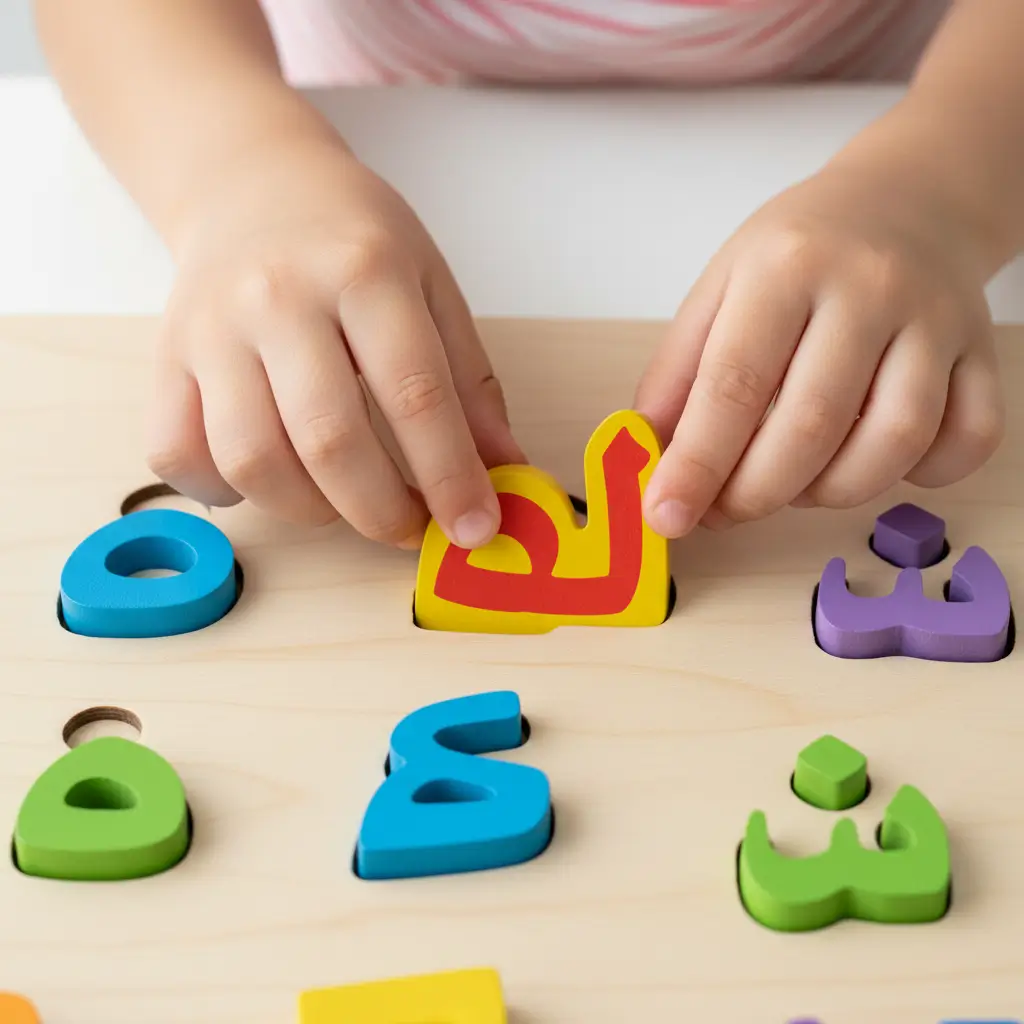
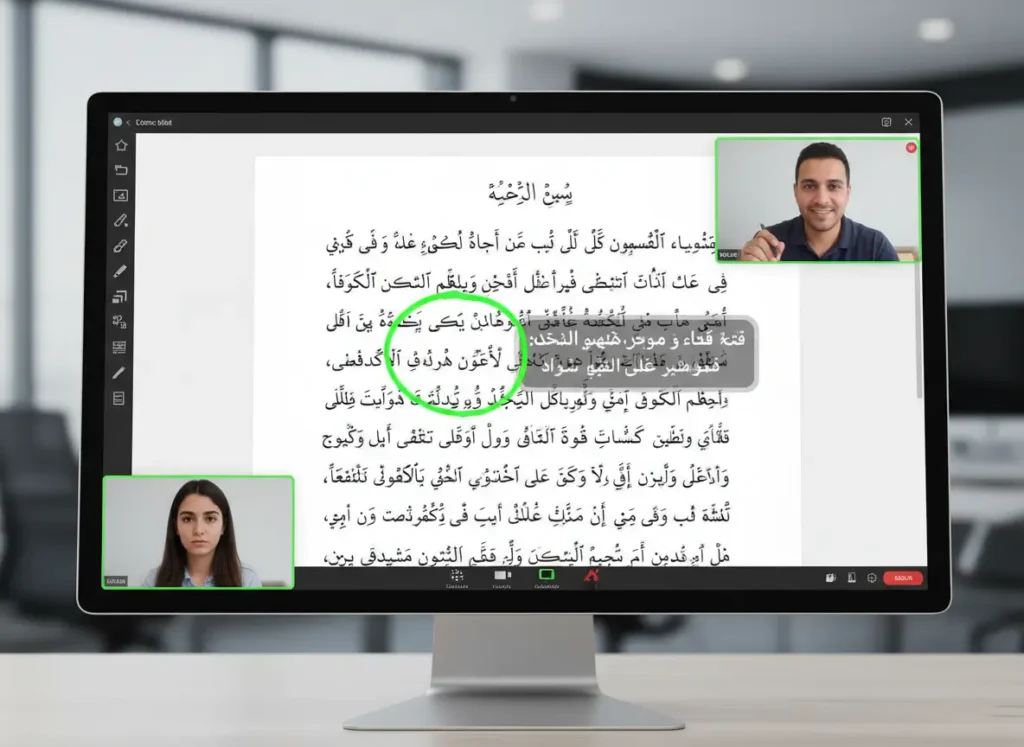
- Letter collage (cut pictures starting with chosen letter)
- Calligraphy practice with thick markers
- Arabic name art (decorate and frame)
Materials: Paper, markers, glue, magazines ($10-15) Time: 30-45 minutes weekly
Activity 5: Nature Walk Arabic Vocabulary
What to Do: Walk outside naming everything in Arabic (trees: شجرة, flowers: زهرة, birds: طائر)
Extension: Collect leaves and label, take photos for Arabic album
Time: 20-30 minutes weekly
For toddler approaches, see Learn Arabic for Toddlers: Best 10 Tips.
Activity 6: Arabic Treasure Hunt
How: Hide objects, give Arabic clues (“ابحث تحت السرير” – Look under the bed)
Age Levels:
- 4-6: Simple one-word clues with pictures
- 7-10: Full sentences
- 11+: Riddles
Time: 15-20 minutes weekly
Category 3: Family Conversation Activities (Ages 5-16)
Activity 7: Arabic Dinner Table Conversations
What to Do: Dedicate 10 minutes of dinner to Arabic-only conversation.
Conversation Starters:
- “ماذا فعلت اليوم؟” (What did you do today?)
- “ما هو شيئك المفضل؟” (What’s your favorite thing?)
- “أخبرني عن صديقك” (Tell me about your friend)
Rule: No English during “Arabic 10 minutes.” Use gestures, drawings if needed—but no English translations.
Why It Works: Forces active language production in authentic context.
Time Required: 10 minutes daily
Activity 8: Family Arabic Day
What to Do: Once monthly, dedicate entire Saturday/Sunday to Arabic immersion.
Schedule Example:
- Morning: Arabic cartoons/movies
- Lunch: Cook Arabic food together
- Afternoon: Visit Arab cultural center, restaurant, or market
- Evening: Arabic family game night
Goal: Create Arabic-rich environment for full day, making language natural and fun.
Time Required: 4-6 hours monthly
For family learning approaches, see Learn Arabic with Kids: The Easiest Ways.
Category 4: Movement & Physical Activities (Ages 2-10)
Activity 9: Arabic Action Simon Says
What to Do: Play Simon Says with Arabic action commands:
- “اقفز” (Jump)
- “اركض” (Run)
- “اجلس” (Sit)
- “المس أنفك” (Touch your nose)
- “رقص” (Dance)
Learning Benefit: Children internalize verbs through physical movement (TPR – Total Physical Response method).
Time Required: 10-15 minutes, 2-3x weekly
Activity 10: Arabic Freeze Dance
What to Do: Play Arabic music. Children dance. When music stops, everyone freezes and shouts Arabic word (color, animal, number).
Music Sources: YouTube: “Arabic children’s songs” Spotify: Kids Arabic music playlists
Time Required: 15 minutes weekly
Category 5: Screen-Free Learning Games (Ages 4-14)
Game Options:
- Arabic Charades: Act out words, family guesses (animals, actions, emotions)
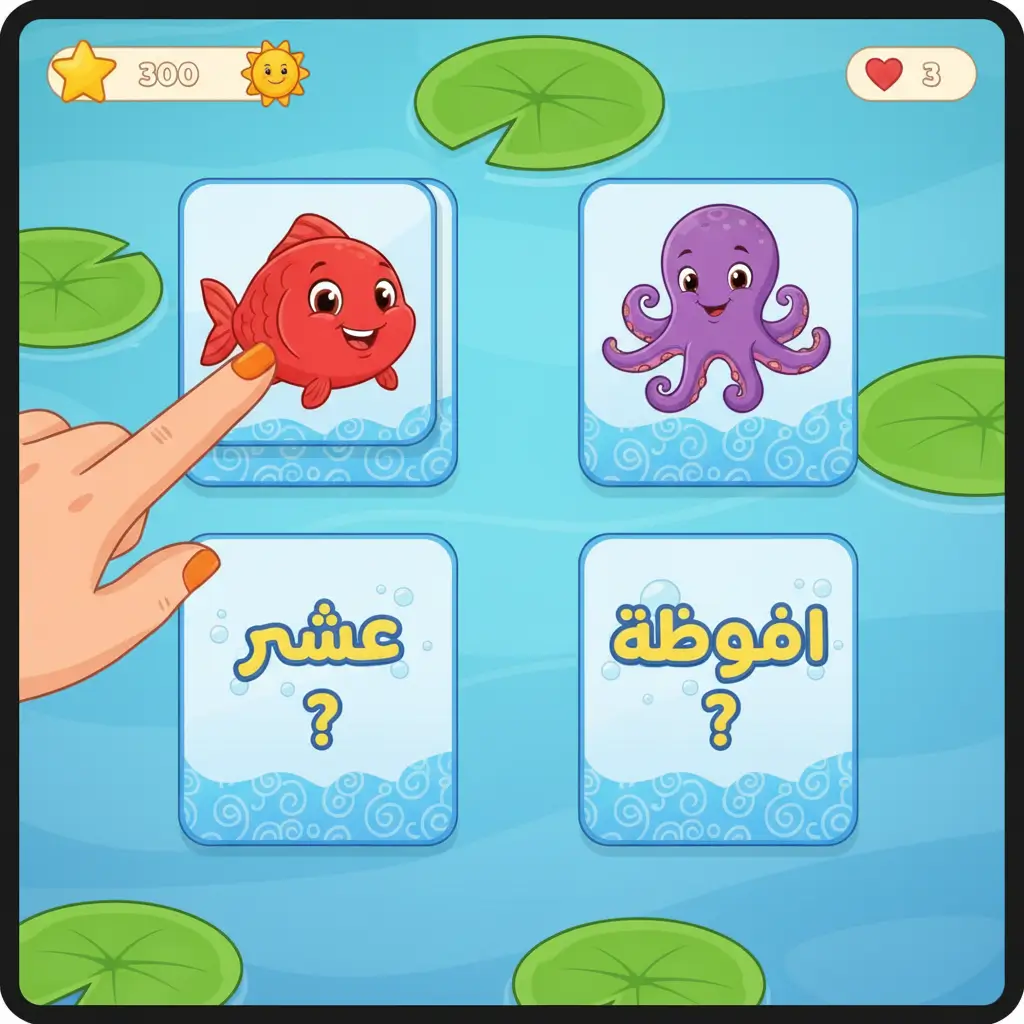
- Memory Match: Create with index cards, 10 Arabic words twice
- Freeze Dance: Arabic music, freeze and shout Arabic word when music stops
Time: 15-20 minutes weekly
Category 6: Cultural Connection (All Ages)
Activities:
- Arabic Songs: Learn children’s songs together (YouTube search)
- Cultural Celebrations: Ramadan/Eid with Arabic vocabulary, cards, traditions
- Arabic Music: Play during dinner or car rides
Time: 10 minutes daily (songs), seasonal (celebrations)
Category 7: Reading & Writing Practice (Ages 5-16)
Activities:
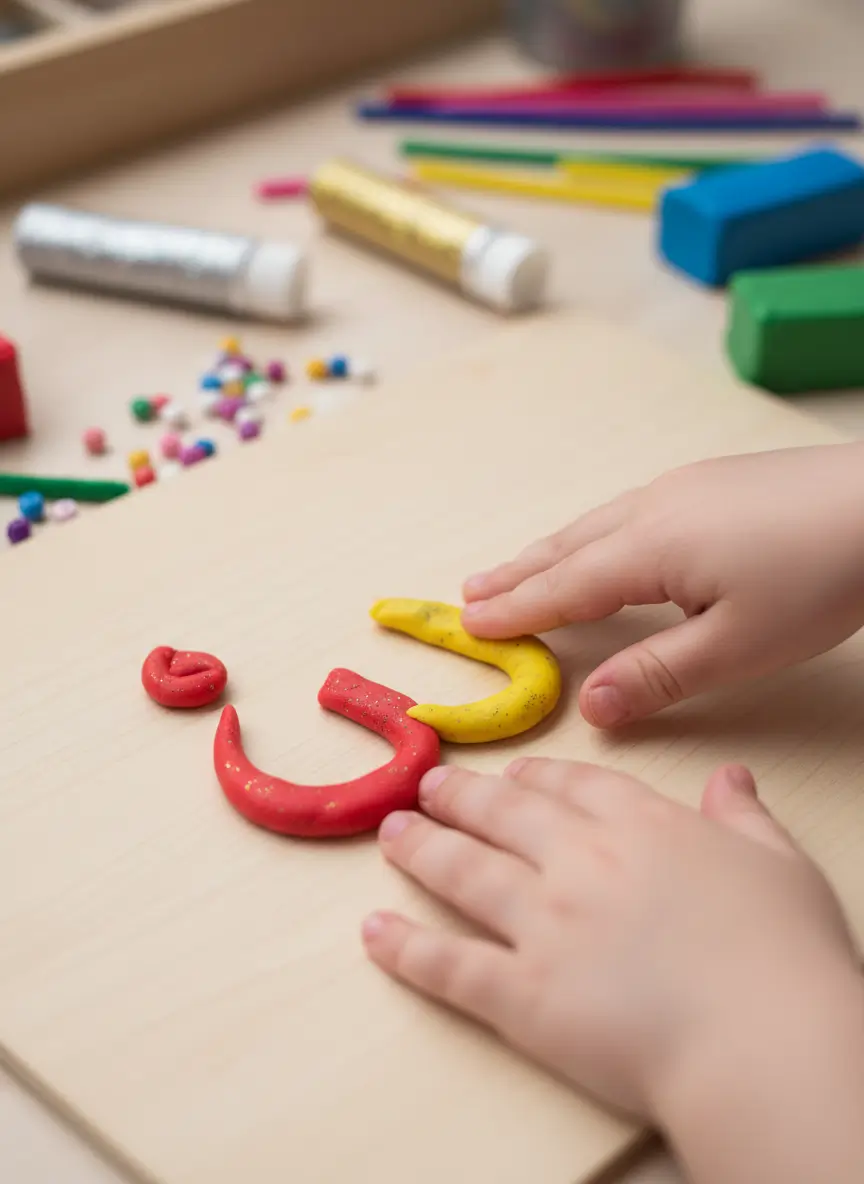
- Multi-Sensory Writing: Finger paint letters, write in shaving cream, Play-Doh letters, sand/salt tracing
- Family Dictionary: Homemade picture dictionary, child draws, adds word weekly
Time: 10-15 minutes, 3-4x weekly
For reading strategies, see Best Ways to Teach Reading for Kids.
Category 8: Practical Life Integration (Ages 3-16)
Quick Wins:
- Label Everything: Stick Arabic labels on household objects (باب door, نافذة window, طاولة table)
- Shopping Lists: Write grocery lists in Arabic, children help find items
Setup: 30 minutes initial, permanent benefit
Category 9: Family Bonding Activities (All Ages)
Options:
- Storytelling Circle: Family creates collaborative Arabic story, each adding sentence
- Family Journal: Shared journal, everyone writes about day/week in Arabic
Time: 10-15 minutes weekly
For step-by-step parent guidance, explore Learning Arabic for Kids: The 10 Simple Steps.
Daily Arabic Routine Suggestions
Create sustainable habits with these age-appropriate daily schedules:
For Toddlers (Ages 2-4):
| Time | Activity | Duration |
|---|---|---|
| Morning | Arabic greetings + breakfast words | 3 min |
| Mid-morning | Arabic song or story | 5 min |
| Afternoon | Arabic playtime (naming toys) | 5 min |
| Bedtime | Arabic storybook | 10 min |
| Daily Total | 23 minutes | Manageable |
For Elementary (Ages 5-10):
| Time | Activity | Duration |
|---|---|---|
| Morning | Arabic conversation questions | 5 min |
| After school | One activity from list above | 15 min |
| Dinner | Arabic table conversation | 10 min |
| Bedtime | Arabic reading | 10 min |
| Daily Total | 40 minutes | Effective |
For Tweens/Teens (Ages 11-16):
| Time | Activity | Duration |
|---|---|---|
| Morning | Arabic news headline discussion | 5 min |
| Afternoon | Independent reading/writing | 20 min |
| Evening | Family Arabic conversation | 15 min |
| Daily Total | 40 minutes | Sustainable |
Age-Specific Activity Quick Reference
Match activities to your child’s developmental stage:
| Age Range | Best Activity Types | Examples from Above |
|---|---|---|
| 2-4 years | Songs, physical movement, simple naming | Morning routine, freeze dance, labeling objects |
| 5-7 years | Crafts, treasure hunts, simple games | Arts & crafts, Arabic hunt, memory match |
| 8-10 years | Reading, conversations, complex games | Cooking together, storytelling, charades |
| 11-13 years | Cultural activities, writing, discussions | Family journal, cultural celebrations, dinner debates |
| 14-16 years | Independent projects, deep discussions | Creating resources for younger siblings, cultural research |
Screen-Free Activities Benefits
Why emphasize non-digital activities in this guide?
Benefit 1: Deep Engagement
Physical activities require active participation—no passive watching.
Benefit 2: Family Bonding
Shared activities create connection impossible through individual screen time.
Benefit 3: Multi-Sensory Learning
Touch, movement, taste, smell strengthen memory more than visual alone.
Benefit 4: No Eye Strain
Especially important for young children’s developing vision.
Benefit 5: Creativity Development
Open-ended activities (arts, storytelling) foster imagination.
Recommended Balance:
- 70% screen-free activities (this guide’s focus)
- 30% quality apps/videos (supplement)
For fast-learning practical tips, see Learn Arabic for Child Fast: 10 Simple Suggestions.
The Parent’s Role: You Don’t Need to Be Fluent
Biggest parent concern: “But my Arabic isn’t good enough to teach!”
Truth: You don’t need fluency to create Arabic-rich home environment.
What Parents Actually Need:
✅ Willingness to learn alongside children You look up word together = valuable lesson in itself.
✅ Consistency over perfection Using same 10 phrases daily beats knowing 1,000 words used once.
✅ Enthusiasm and positivity Your excitement about Arabic matters more than your pronunciation accuracy.
✅ Resourcefulness Google Translate, Arabic-speaking friends, community resources supplement your knowledge.
What Parents DON’T Need:
❌ Perfect Arabic grammar knowledge ❌ University degree in Arabic ❌ Native-level pronunciation ❌ Ability to teach complete curriculum
Your Role: Environment Creator, Not Expert Instructor
Think of yourself as creating Arabic-speaking environment rather than teaching Arabic formally. Big difference.
Professional teachers = systematic instruction Parents = daily immersion and practice
Both essential. Neither replaces the other.
Success Story: The Rodriguez Family
Background: Maria and Carlos Rodriguez, Mexican-American family. Neither parent spoke Arabic. Three children (ages 5, 8, 12). Wanted children to learn Arabic for Quranic understanding and cultural connection.
Challenge: No Arabic speakers in extended family. Limited budget for classes. Both parents working full-time.
Solution: Committed to 20-minute daily home activities using ideas from this guide.
Their Routine:
- Monday: Cooking dinner with Arabic vocabulary
- Tuesday: Arabic storytelling (books from library)
- Wednesday: Nature walk naming things in Arabic
- Thursday: Family Arabic charades
- Friday: Arabic arts & crafts project
- Weekend: One longer cultural activity (visiting Arab market, watching Arabic film, etc.)
Maria’s Approach: “I learned Arabic phrases the night before so I could teach kids next day. We were all learning together. I’d say, ‘Today I learned the word for butterfly—فراشة. Let’s all say it!’ My imperfect Arabic actually made kids more comfortable trying.”
Results After 8 Months:
- 5-year-old: Speaking simple sentences, recognizing 20+ written words
- 8-year-old: Reading Arabic children’s books, 200+ word vocabulary
- 12-year-old: Conversing in Arabic about daily life, helping teach younger siblings
Cost: $30 total (books, craft supplies)
Time Investment: 20 minutes daily = 2.3 hours weekly
Maria’s Reflection: “Professional classes taught systematic grammar and reading. Our home activities made Arabic alive—part of our family identity. Both were essential. The home piece was equally important and completely free.”
Frequently Asked Questions
Do I need to speak Arabic fluently to do these activities?
No! Most activities work even if parent knows only 10-20 Arabic words. Learn alongside your children. Use resources (Google, Arabic-speaking friends, online dictionaries). Your willingness to learn models positive attitude for kids.
How much time daily is realistic?
Start with 10-15 minutes daily. Build to 20-30 minutes as routine solidifies. Quality and consistency matter more than quantity. Brief daily practice beats long infrequent sessions.
My child resists these activities. What do I do?
Start with activities matching their interests. Loves cooking? Start there. Loves art? Begin with Arabic crafts. Make activities feel like special family time, not chores. Let child choose which activity each day from 3-4 options.
Can these activities replace formal Arabic classes?
No. Home activities provide practice, immersion, and cultural connection. Professional instruction provides systematic grammar, proper pronunciation modeling, and structured progression. Ideal approach: formal classes + home activities.
What if I make pronunciation mistakes teaching my children?
Your imperfect Arabic is better than no Arabic. For crucial pronunciation (Quran recitation), rely on qualified teachers. For daily vocabulary and conversation, your efforts create valuable exposure even if pronunciation isn’t perfect.
How do I know if activities are working?
Track simple metrics: New words child uses spontaneously. Willingness to participate in Arabic activities. Ability to understand more each month. Success isn’t perfection—it’s consistent engagement and gradual progress.
Related Resources for Comprehensive Learning
While home activities provide crucial practice and cultural immersion, structured instruction ensures systematic skill development:
Creative Lessons for Preschool
Discover age-appropriate creative approaches specifically designed for very young learners, combining play with foundational Arabic skills. Explore preschool lessons
Learning Arabic for Kids at Home
Comprehensive strategies for creating effective home Arabic learning environment, including daily routines, resource recommendations, and troubleshooting common challenges. Read complete home learning guide
Learn Arabic for Toddlers: Best 10 Tips
Specialized guidance for parents working with very young children (ages 2-4), addressing short attention spans and developmental appropriateness. Get toddler-specific tips
Learn Arabic with Kids: The Easiest Ways
Family-focused approaches where parents and children learn together, creating shared Arabic learning journey. Discover family learning methods
Learning Arabic for Kids: The 10 Simple Steps
Step-by-step parent roadmap from complete beginner through conversational competence, with clear milestones and realistic timelines. Follow the 10 steps
Learn Arabic for Child Fast: 10 Simple Suggestions
Practical accelerated learning techniques for time-sensitive situations or highly motivated families. Get fast-learning suggestions
Best Ways to Teach Reading for Kids
Specific strategies for parent-led Arabic literacy instruction, from letter recognition through fluent reading. Master reading instruction
Arabic for Kids: Complete Educational Foundation
For comprehensive understanding of children’s Arabic education across all ages and skill levels, including when home activities should be supplemented with professional instruction. Explore complete guide
Why Combine Home Activities with Professional Instruction
Home activities provide: ✅ Daily consistent practice ✅ Natural context learning ✅ Cultural transmission ✅ Family bonding ✅ Cost-effective immersion
Professional instruction provides: ✅ Systematic curriculum progression ✅ Proper pronunciation models ✅ Grammar explanation ✅ Structured assessment ✅ Expert error correction
Optimal Combination:
- 2-3x weekly live instruction with qualified native-speaking teacher
- Daily 20-30 minute home activities from this guide
- Weekly cultural experiences (Arab markets, restaurants, community events)
This balanced approach creates comprehensive Arabic education: systematic skill-building (instruction) + consistent practice (home activities) + cultural grounding (family experiences).
At Alphabet Arabic Academy, we partner with parents, providing them with guidance on effective home activities complementing our instruction—because we know family involvement dramatically improves outcomes.
Your Action Plan: Start This Week
Don’t wait for perfection. Start small today.
This Week’s Plan:
Day 1-2: Choose 3 activities from this guide that match your child’s age and interests.
Day 3: Gather any needed materials (most activities need nothing or minimal supplies).
Day 4: Introduce first activity. Keep it short and fun (10 minutes maximum).
Day 5-6: Repeat first activity daily. Consistency builds habits.
Day 7: Add second activity. Now you’re rotating 2 different activities.
This Month:
- Establish consistent 15-20 minute daily Arabic time
- Build to 4-5 different activities you rotate
- Create family Arabic routine (same time daily)
- Notice vocabulary your child starts using spontaneously
This Year:
- Home activities become natural family rhythm
- Arabic integrated into daily life (not separate “lesson time”)
- Children associate Arabic with family, culture, identity
- Measurable progress in vocabulary, comprehension, confidence
Conclusion: The Family That Learns Together
Remember the Rodriguez family? Maria started with imperfect Arabic and a library card. No teaching credentials. No fluency. Just commitment to 20 daily minutes.
Eight months later, her children spoke Arabic naturally, not because she was an expert teacher, but because she created Arabic-speaking home.
This is the power of parent-led home activities. Not replacing professional instruction, but providing something equally essential: daily immersion, cultural context, and family identity formation.
You have everything you need:
- These 20 practical activities (no special materials required)
- 15-30 minutes daily
- Willingness to learn alongside your children
- Love for your family and desire to connect them to heritage/faith
The activities are simple. The commitment is manageable. The impact is profound.
Your children will learn Arabic grammar from teachers. They’ll build systematic skills through structured curriculum. But they’ll internalize Arabic as part of their family identity—as natural as breathing—through daily home activities with you.
Start tonight. Choose one activity. Spend 10 minutes. Watch your child’s eyes light up as family time becomes Arabic learning time becomes cherished tradition.
The journey begins at home. The foundation is built through consistency. The results emerge through patience.
👉 For professional instruction complementing your home activities, explore Alphabet Arabic Academy’s family-partnership programs.
Home activities create the environment. Professional teaching builds the skills. Together, they create Arabic-speaking, culturally-grounded children.
Your home is already a classroom. Your love is already the best teaching tool. These activities just give structure to what comes naturally: spending time together while honoring heritage.
Begin today. Your family’s Arabic journey awaits.
بسم الله – In the name of Allah.
Quick Start Resources:
20 Activities at a Glance: Morning routine, cooking, bedtime stories, arts/crafts, nature walks, treasure hunts, dinner conversations, Arabic day, Simon Says, freeze dance, charades, memory match, songs, cultural celebrations, letter practice, family dictionary, labeling, shopping lists, storytelling circle, family journal
Cost to Start: $0-20 (most activities free) Time Daily: 15-30 minutes Materials: Household items + library books Professional Support: Arabic for Kids Program
This guide empowers parents to create Arabic-rich home environments through practical, screen-free activities requiring minimal cost and time. While home activities provide essential daily practice and cultural immersion, they work best alongside structured professional instruction. Every family can begin today—creating Arabic learning traditions that last a lifetime.