
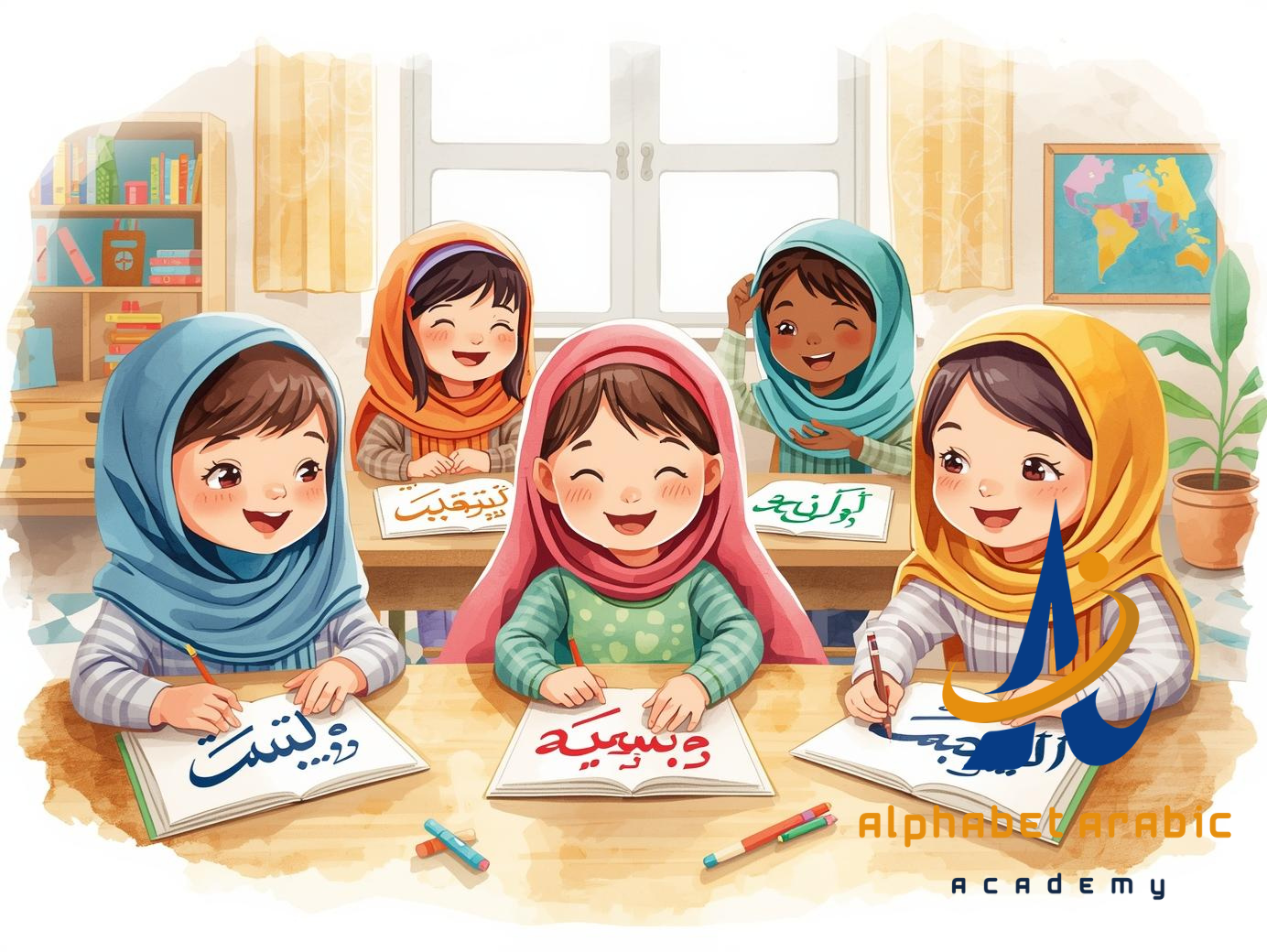

Discovering Arabic for Preschool Children
Preschool is the perfect age to introduce your child to the beauty of the Arabic language. At this stage, children absorb words like sponges — they listen, repeat, and learn faster than you expect. Teaching Arabic for preschool children is not just about letters; it’s about nurturing curiosity through colors, movement, and sound. If you are looking for more than just a textbook approach, check out our interactive Arabic activities for children today.
Simple Alphabet Introduction
Start with the Arabic alphabet in a playful way. Use bright flashcards, alphabet songs, and tracing worksheets that allow children to draw each letter. This builds fine motor skills and helps them recognize shapes effortlessly.
Everyday Word Recognition
Children love words they hear daily — “ماء” (water), “باب” (door), or “قطة” (cat). Labeling items at home in Arabic is an effective way to encourage natural learning. Parents can make it a mini game: “Where’s the word for chair?”
Engaging Stories in Arabic
Stories are a magical way to make kids fall in love with language learning. Through characters, adventures, and imagination, your child connects emotions with words.
Classic Tales with Arabic Twist
You can explore timeless fables and short Arabic stories designed for preschoolers. Each tale introduces new words and teaches morals through rhythm and repetition. You can even find interactive storytelling activities at Start your Arabic learning journey to bring stories to life!
Interactive Games for Arabic Learning
Games make learning feel like playtime — and that’s exactly what preschoolers need.
Memory Matching Arabic Words
Print or download Arabic word cards and create a fun matching game. When your child finds two matching cards, they say the word out loud. This improves pronunciation and memory.
Role-Playing Arabic Scenarios
Let children act out scenes — like buying fruit at a market or greeting friends — using simple Arabic phrases. They’ll start to use Arabic naturally without even realizing it’s “learning.”
Arabic for Preschool Children: Alphabet Basics
Alphabet lessons can be exciting when you combine visual aids, songs, and movement.
Letter Tracing Activities
Tracing helps children learn to write the alphabet beautifully. Printable worksheets or PDF tracing books make this step interactive and easy to repeat.
Fun Songs and Rhymes in Arabic
Music makes words memorable. Songs and rhymes teach rhythm, pronunciation, and confidence.
Rhythmic Counting Songs
Count together in Arabic through catchy tunes. “واحد، اثنان، ثلاثة…” — watch how fast they remember!
Animal Rhymes Exploration
Animal-themed songs are a hit with preschoolers. Mix movement with music — jump like a “أسد” (lion) or fly like a “عصفور” (bird).
Cultural Activities with Arabic Themes
Culture gives meaning to language. Introduce simple Arabic traditions that children can see, touch, or create.
Traditional Dress Exploration
Let kids dress in traditional Arab clothing or learn a few words related to cultural festivals. It connects Arabic learning to real-world experiences.
Effective Teaching Strategies for Young Learners
Preschoolers thrive on creativity and routine.
Hands-On Object Lessons
Use toys, clay letters, or story cubes to represent words. When children can touch what they learn, they remember it more deeply.
Arabic for Preschool Children: Vocabulary Building
Building vocabulary doesn’t need to be boring.
Thematic Word Groups
Teach Arabic words in fun categories — animals, colors, family, and food. This gives children a mental map to organize what they learn.
Creative Arts and Crafts in Arabic
Combine art and Arabic to make each activity memorable.
Drawing Themed Artworks
Ask children to draw their favorite Arabic letters or paint words like “حب” (love). Art activates memory and imagination — two powerful learning tools.
FAQs
What age suits Arabic for preschool children?
Usually between 3–5 years old is ideal to start Arabic for preschool children because their minds absorb languages quickly.
How to engage kids in Arabic learning?
Use games, songs, crafts, and stories instead of strict lessons — preschoolers learn best through play.
Are online resources available for Arabic?
Yes! There are free and paid interactive Arabic lessons for kids, including video guides and printable worksheets at Start your Arabic learning journey.
Do you need activities to make back to school exciting?
Arabic crafts, songs, and short stories can make learning a daily adventure.
🎉 Ready to make Arabic part of your home?
Visit our Contact Page to enroll your child in fun, family-friendly Arabic programs.