

Arabic for professionals isn’t just about adding a language to your resume. It’s about gaining access to opportunities that simply don’t exist for monolingual professionals in global markets—Gulf contracts, patient trust in Arab hospitals, legal precision in MENA transactions, academic credibility across 22 countries.
This guide covers who needs professional Arabic, what separates it from general Arabic, how each industry uses it differently, which learning path fits your situation, and the mistakes that cost professionals months of wasted effort.
Who Actually Needs Professional Arabic?
Professional Arabic isn’t for everyone. It’s for people whose careers depend on credibility, precision, and cultural fluency in Arabic-speaking environments.
Here’s the thing: the demand is bigger than most people realize.
Business Executives and Consultants
If you’re in international business with Gulf countries, North Africa, or the Levant, Arabic fluency is a competitive weapon. You’re not learning to say hello. You’re learning to negotiate contracts, read financial documents, understand legal terminology, and navigate the cultural protocols that make or break deals.
A business consultant lost a $2 million contract because he couldn’t understand the nuances in a partnership proposal written in formal Arabic. His competitor, who had invested in professional Arabic training, spotted the concerns immediately and adjusted the terms. That’s the real-world difference.
Healthcare Professionals
Doctors, nurses, and healthcare administrators working in Arab countries face a unique challenge: medical accuracy requires linguistic precision. A misunderstood symptom, a mistranslated prescription, or cultural insensitivity can have serious consequences.
Professional medical Arabic covers anatomy, pharmaceuticals, diagnostic procedures, patient communication protocols, and healthcare ethics within Islamic cultural contexts. It’s not just vocabulary—it’s clear communication that directly affects patient outcomes.
Legal and Government Professionals
Diplomats, lawyers, policy analysts, and government officials need Arabic that goes beyond conversation. You’re reading treaties, drafting legislation, conducting negotiations, and interpreting legal precedent. One mistranslated clause creates international incidents.
Professional legal Arabic requires understanding classical legal terminology, modern legislative language, and the cultural frameworks shaping legal thinking in Arab countries.
Academic Researchers
If you’re conducting research in Arab countries, analyzing Arabic sources, or collaborating with Arabic-speaking scholars, you need university-level Arabic proficiency. Reading academic journals, writing research papers, presenting at conferences, engaging in scholarly debate—all in formal Arabic.
Engineers and Technical Professionals
Technical Arabic is its own world. You’re working with specifications, safety protocols, project documentation, and quality standards. Misunderstanding technical terminology isn’t just embarrassing—it’s dangerous. Engineers working on infrastructure projects in the Gulf need proficiency covering materials science, structural engineering, project management, and occupational safety—all within Arab regulatory frameworks.
Professional Arabic vs. General Arabic: What’s Actually Different

Most Arabic courses teach you to order coffee and ask for directions. Professional Arabic teaches you to negotiate a multi-million dollar contract and present quarterly earnings to a board of directors in Riyadh.
Here’s what actually separates them.
Vocabulary Depth
General Arabic covers 2,000–3,000 common words for daily life, travel, and casual conversation.
Professional Arabic requires 5,000–10,000+ words including industry-specific terminology, formal registers, and technical jargon. A business professional needs terms like “liquidity,” “amortization,” and “fiduciary responsibility”—in Arabic. A doctor needs “bilateral pneumonia,” “contraindications,” and “informed consent.”
Completely different vocabulary sets. And they don’t overlap much.
Formality and Register
General Arabic students mix Modern Standard Arabic (Fusha) with colloquial dialects. Works fine for making friends or shopping.
Professional contexts demand mastery of formal Arabic. Business contracts, medical records, legal briefs, and academic papers are written in formal Fusha. Speaking informally in a boardroom is like showing up to a corporate meeting in shorts and flip-flops.
Precision and Communication Style
Casual Arabic allows for vagueness and repetition. Professional Arabic requires precision and adherence to formal communication protocols.
When you’re drafting a partnership agreement or explaining a surgical procedure, every word matters. Ambiguity isn’t charming—it’s liability.
Cultural Intelligence
General Arabic learners pick up basic cultural awareness. Professional Arabic demands deep cultural competence.
You need to understand how hierarchy affects communication in Arab business culture. Why negotiation tactics that work in New York fail in Dubai. How gender dynamics influence professional interactions. What Islamic principles shape business ethics and legal frameworks.
This isn’t just “being polite.” It’s understanding the unwritten rules that determine whether you’re trusted or dismissed.
| Aspect | General Arabic | Professional Arabic |
|---|---|---|
| Vocabulary | 2,000–3,000 words | 5,000–10,000+ words |
| Formality | Mixed (Fusha + dialect) | Formal Fusha |
| Focus | Conversation | Writing + Speaking + Reading |
| Goal | Social fluency | Career credibility |
| Timeline | 6–12 months to conversational | 12–24 months to professional |
Industry-Specific Arabic: What You Actually Need by Field

Professional Arabic varies dramatically by industry. Here’s what matters most in each.
Business Arabic
Core skills: Contract negotiation, financial terminology, formal correspondence, meeting management, presentation skills for Arab business culture.
Cultural key: Arab business culture prioritizes relationships over transactions. Trust comes before deals. Showing up fluent in Arabic isn’t just about communication—it’s about respect, and respect opens doors that English can’t.
A sales director spent three months on business Arabic before launching in the Gulf. The result: partnerships her English-only competitors couldn’t access. Not because she was smarter. Because she showed up able to communicate directly.
What good Business Arabic training covers:
- Contract language and negotiation vocabulary
- Financial reporting terminology
- Formal email and correspondence protocols
- Meeting structures and presentation conventions
- Cultural protocols for Gulf vs. Levant vs. North Africa contexts
Medical Arabic
Core skills: Anatomical terminology, diagnosis vocabulary, pharmaceutical terms, patient communication protocols, healthcare ethics.
Cultural key: Family involvement in medical decisions is standard. Gender considerations affect patient-physician interaction. Religious protocols around prayer schedules, fasting, and halal medications aren’t edge cases—they’re daily realities in Arab healthcare settings.
A Dubai nurse saw patient compliance skyrocket once she could explain procedures in Arabic. Patients weren’t doubting her medical skills—they needed to feel understood.
What good Medical Arabic training covers:
- Clinical terminology across specialties
- Patient history and symptom vocabulary
- Diagnostic and treatment explanation language
- Islamic bioethics and cultural sensitivity
- Documentation and reporting standards
Legal Arabic
Core skills: Contract law terminology, court proceedings language, legislative drafting, international diplomacy.
Cultural key: Understanding Sharia principles, hierarchical communication structures, and extreme formality requirements isn’t optional in Arab legal contexts. It’s the baseline.
Legal translation is never perfect. A corporate lawyer who spent 18 months on legal Arabic and an internship in a Dubai law firm described it this way: “Tiny nuances in contract language can mean millions of dollars. Being able to read Arabic legal documents directly gave me an edge no one else had.”
Technical Arabic
Core skills: Engineering specifications, safety protocol language, project management terminology, quality standards documentation.
Cultural key: Regulatory differences between countries, documentation requirements, and professional licensing standards vary significantly across the Gulf. Technical Arabic without that context creates real operational risk.
Correspondence and Written Professional Arabic
Here’s something most professionals overlook: written Arabic for professionals is a specialized skill in itself.
Professional Arabic correspondence follows strict conventions that go far beyond grammar. The opening formulas, the closing formulas, the level of formality expected in different documents—getting these wrong signals to Arab partners that you don’t understand their professional culture, even if your vocabulary is technically correct.
What formal Arabic correspondence covers:
- Email and letter opening and closing conventions
- Formal report and memo structure
- Contract clause language
- Executive summary writing
- Academic and research writing protocols
Whether you’re communicating with Gulf clients, submitting documents to Arab regulatory bodies, or collaborating with Arabic-speaking academic institutions, written correspondence competence is often what creates—or destroys—professional credibility.
Common Mistakes Professionals Make

Mistake 1: Treating It Like a Hobby
Professional Arabic demands professional commitment. Casual app practice produces casual results. You need structured curriculum with serious time investment—and you need industry-specific instruction, not general Arabic.
The professionals who see real career impact study with the same discipline they bring to other professional development. 30–60 minutes daily, consistently, for 12–18 months.
Mistake 2: Skipping Cultural Training
Perfect Arabic with poor cultural understanding still fails. Business protocols, social hierarchies, communication norms, and Islamic ethical frameworks shape how Arabic is actually used in professional settings.
Language is the vehicle. Culture is the road. Without knowing the road, you’ll crash even with a perfect vehicle.
Mistake 3: Learning the Wrong Register
Many professionals waste time on colloquial dialects when they need formal Fusha for boardrooms, legal documents, and academic papers. Egyptian Arabic is excellent for conversation. It won’t help you read a Saudi contract.
Match your register to your professional context. For most professional settings: start with MSA. Dialect can come later if your role requires it. For a clear comparison of MSA and dialect options, see our Modern Standard Arabic online guide.
Mistake 4: Using Translation Tools as a Crutch
Machine translation produces technically correct but often culturally wrong Arabic. In professional contexts—particularly legal and diplomatic—subtle errors from machine translation can be expensive or embarrassing.
Learn Arabic well enough to catch what the machine gets wrong. That’s the real skill.
Mistake 5: Avoiding Certification
Without recognized credentials (CEFR, ACTFL, ALPT), your fluency is difficult to validate professionally. Certifications matter for government roles, academic positions, and international organizations.
Don’t invest 18 months in professional Arabic and then skip the 2-month certification step. That certificate is part of the return on your investment.
Mistake 6: No Industry Specialization
Generic professional Arabic training produces generic professional Arabic. A doctor learning contract negotiation vocabulary, or a lawyer learning medical terminology—that’s wasted time.
Your professional Arabic should be 70% your industry, 30% general professional contexts. Find a teacher who understands your field or who will build a customized curriculum around it.
Who Is This For?
This is for you if:
- You work in or are moving into Gulf markets, MENA, or Arab-speaking professional environments
- You’re losing opportunities to colleagues who can communicate in Arabic
- You need to read, write, or negotiate in Arabic as part of your actual job
- You’re in healthcare, law, engineering, diplomacy, or academia with Arab-world relevance
- You want to advance faster in your field by offering what most competitors can’t
This is NOT for you if:
- You want conversational Arabic for travel or casual use (a different program entirely)
- You’re not willing to commit 30–60 minutes daily for 12–18 months
- You expect professional fluency in 60 days
One honest note: professional Arabic is genuinely harder than conversational Arabic—more vocabulary, stricter grammar, cultural complexity on top of language complexity. But the career return is proportionally higher. Professionals with Arabic fluency consistently see 20–40% salary increases, faster advancement, and access to roles that simply aren’t available to monolingual colleagues.
Let me tell you about David.
He’s a lawyer from London. His firm does a lot of work with clients in the Gulf — Saudi Arabia, UAE, Qatar. But David always sat in the background. He reviewed documents in English. He waited for translators. He never spoke directly with clients.
He knew he was losing opportunities. But he didn’t know how to change it.
Then he enrolled in our professional Arabic program. Legal Arabic. Not general conversation. Not travel phrases. Contract language, legal terminology, formal correspondence.
Twelve months. Two sessions a week. Daily practice. His teacher, a Cairo-trained legal Arabic specialist, walked him through actual contracts his firm had handled. They broke down clauses David had seen hundreds of times — but never understood in Arabic.
Eighteen months after starting, David led a client meeting in Dubai. In Arabic. No interpreter. He answered questions. He clarified terms. He closed the deal.
His managing partner called me afterward: “David’s career trajectory completely changed. He’s now our Gulf practice lead.”
The cost of his training? Less than one month’s salary increase. The return? A promotion, a salary bump, and a seat at the table he never had before.
That’s what professional Arabic does. It doesn’t just teach you a language. It changes your career.
Three Learning Paths to Professional Fluency
There’s no single best path. It depends on your timeline, budget, and how urgently your career needs Arabic.
Path 1: Fast-Track Professional (3–6 Months)
Who it’s for: Professionals with urgent career needs—relocating for a job, closing a specific deal, preparing for a major project with a fixed deadline.
Method:
- Intensive daily study (2–3 hours minimum)
- One-on-one tutoring with industry-specialized instructors
- Focused exclusively on your specific professional vocabulary and contexts
- Immersion components if possible (travel to Arab country, Arab media immersion)
Investment: $3,000–8,000
Results: Functional professional competence in your specific field. You won’t have perfect fluency, but you’ll handle your job responsibilities in Arabic. You’ll read the documents, hold the meetings, and build the relationships.
Best for: Business executives, consultants, short-term contractors, pre-deployment preparation.
Path 2: Balanced Professional Development (12–18 Months)
Who it’s for: Professionals building long-term careers in Arab markets or industries. The majority of professional Arabic learners.
Method:
- Structured online courses (3–5 hours per week)
- Weekly conversation practice with native professional-context instructors
- Industry-specific reading and writing practice
- Gradual progression from intermediate to advanced
Investment: $2,000–5,000
Results: Solid professional fluency with deep cultural understanding. You handle complex situations, read professional documents independently, and build lasting business relationships.
Best for: Healthcare professionals, engineers, academics, mid-career professionals expanding into Arab markets.
For structured adult programs built around professional goals, see our Arabic classes for adults guide.
Path 3: Academic Credentials (2–4 Years)
Who it’s for: Diplomats, international lawyers, academic researchers, career changers seeking maximum professional credibility.
Method:
- Formal degree program (BA, MA, or certificate in Arabic language or Middle Eastern studies)
- Comprehensive study of language, literature, culture, and history
- Thesis or capstone project
- Professional certifications upon completion (CEFR C1-C2, ACTFL)
Investment: $10,000–50,000+
Results: Near-native fluency, academic credentials, deep cultural expertise, professional certification recognized by international organizations and governments.
Best for: Diplomats, policy analysts, researchers, career academics, international lawyers.
What Professional-Level Arabic Training Actually Covers
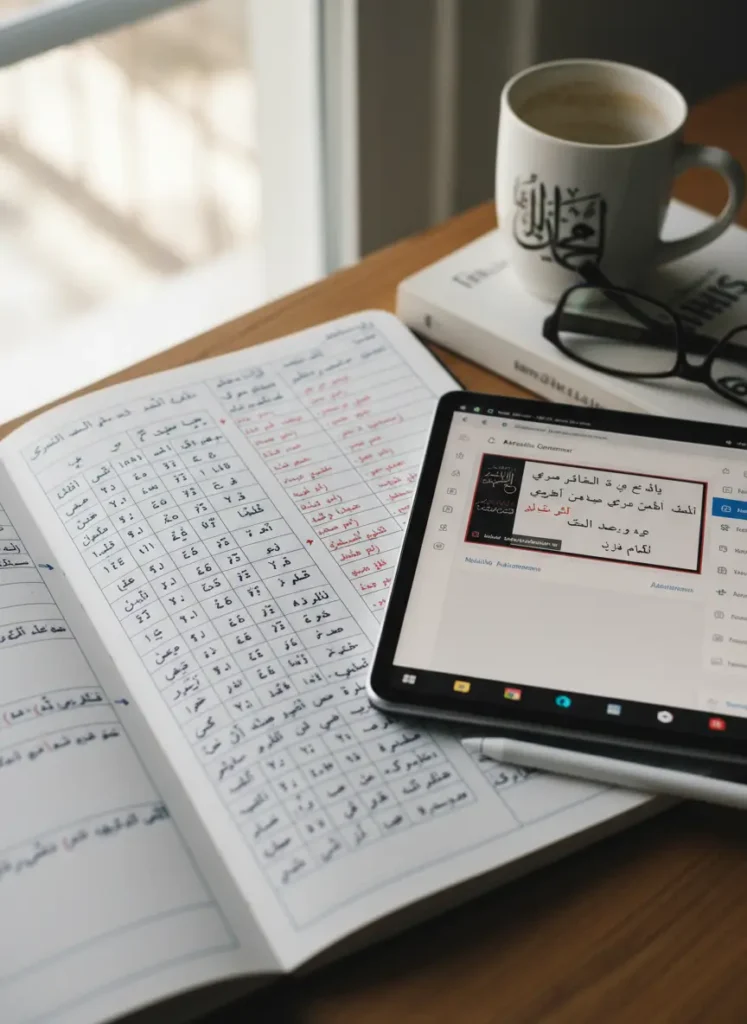
Genuine professional-level training requires more than “advanced” labeling. Here’s what actually matters in a serious program.
Advanced Grammar Mastery
Professional contexts demand grammar structures rarely used in casual Arabic:
- Conditional clauses in legal language
- Passive constructions in technical writing
- Subjunctive mood in correspondence
- Complex noun-adjective agreements in formal documents
- Extended relative clauses in academic writing
If your training doesn’t push into these structures, it’s not professional-level.
Industry Vocabulary Depth
Surface-level vocabulary isn’t enough. You need collocations—how words combine in your professional field. Not just “contract” (عقد), but “breach of contract,” “contractual obligations,” “contract amendment,” “void contract.” Each as a unit, not just translated word by word.
For a structured advanced curriculum that builds this depth, explore our advanced Arabic course.
Business Writing Excellence
Professional Arabic writing follows specific conventions:
- Formal email opening and closing formulas
- Business proposal structure
- Executive summary conventions
- Contract clause drafting
- Regulatory submission formats
Every document you produce in Arabic reflects your professional credibility. A grammatically correct but culturally wrong letter signals inexperience. A properly formatted, culturally appropriate letter signals mastery.
Presentation and Meeting Skills
Arab business culture has different expectations for structure, tone, and persuasion. Presentations that work in London or New York can feel abrupt or aggressive in Riyadh or Cairo.
Professional Arabic training covers proper meeting openings, relationship-building language, direct vs. indirect communication styles across different Arab markets, and culturally appropriate ways to close a negotiation.
Cultural Intelligence in Practice
This is the component most language courses skip and most professionals undervalue—until they fail because of it.
Real cultural competence for Arab professional environments includes:
- Understanding hierarchy and how it affects every communication
- Knowing when to be direct and when indirectness is more effective
- Reading the room in negotiation—when silence is positive, when it’s negative
- Islamic business ethics and how they shape decisions
- Regional differences between Gulf, Levant, North Africa, and Egypt professional cultures
Culture isn’t a supplement to language training. It’s half of it.
Success Stories: The Career Impact Is Real

The Business Executive
A VP of Business Development at a tech company expanding into Saudi Arabia spent six months on intensive business Arabic—two hours daily plus monthly trips to Riyadh.
By month 3, she was conducting basic business meetings in Arabic without interpretation. By month 6, she was negotiating complex partnership terms directly. Year one: a $5 million deal that English-only competitors couldn’t access. Promotion to Regional Director. 40% salary increase.
Her insight: “Learning Arabic wasn’t just about words—it was about showing respect. My Saudi partners opened up completely once I could communicate directly. Deals that seemed impossible suddenly became easy.”
The Healthcare Professional
An Egyptian-American physician working in a UAE hospital found that patients were hesitant to trust him despite excellent medical credentials. Eight months of medical Arabic plus cultural competency training changed that.
By month 4, patient satisfaction scores had increased 35%. By month 8, he was the most-requested physician in his cardiology department. By year 2, he was appointed department head.
His insight: “Patients weren’t doubting my medical skills—they needed to feel understood. Once I could explain procedures in Arabic and show cultural sensitivity, everything changed.”
The International Lawyer
A corporate lawyer handling Middle East transactions spent 18 months on legal Arabic certification plus an internship in a Dubai law firm. By month 12, he was reading contracts independently. By month 18, he was drafting legal briefs in Arabic. Year 2: hired by a major international firm specifically for his Arabic expertise. Doubled salary. Became indispensable in the firm’s Gulf practice.
His insight: “Legal translation is never perfect. Tiny nuances in contract language can mean millions of dollars. Being able to read Arabic legal documents directly gave me an edge no one else had.”
These aren’t outliers. They’re the typical career trajectory for professionals who invest seriously in Arabic.
How to Choose the Right Program and Teacher

What to Look for in a Professional Arabic Teacher
Not every Arabic teacher is equipped to teach professional Arabic. Most are trained for general language instruction. Here’s what separates professional-level teachers:
- Industry experience or training: A teacher for medical Arabic should have exposure to medical terminology and contexts. A business Arabic teacher should understand financial and corporate language.
- Formal Arabic credentials: Degree in Arabic language, linguistics, or a related field from a recognized institution.
- Ability to teach writing as well as speaking: Many language teachers are strong on conversation. Professional Arabic requires equal strength in formal writing.
- Curriculum customization: They should build lessons around your actual documents, your actual industry, your actual professional contexts.
At Alphabet Arabic Academy, we have teachers who specialize specifically in Business Arabic and Media Arabic for professionals and diplomats. All are certified graduates of Egypt’s top universities. Browse verified profiles and specializations on our teachers page.
The Trial Session Test
Before committing to any professional Arabic program, run a trial session. Evaluate:
- Does the teacher understand your industry vocabulary?
- Do they correct your formal writing as well as your speaking?
- Can they explain why a particular phrase is used in professional contexts, not just that it’s used?
- Do they teach cultural context alongside language?
One session answers these questions. Don’t commit without it.
Realistic Pricing in 2026
- Online one-on-one professional Arabic: $30–60 per session (industry-specialized teachers)
- Monthly packages (8–12 sessions): $200–500 depending on specialization level
- Intensive programs (fast-track): $3,000–8,000 for a complete structured program
Professional Arabic is more expensive than general Arabic. Industry-specialized teachers command higher rates because they offer genuinely different instruction. It’s worth it. The career ROI on professional Arabic typically pays back the investment within 12–24 months.
For full pricing options, see our Arabic courses pricing page.
Frequently Asked Questions

How long does it take to reach professional fluency in Arabic?
With intensive daily study and quality instruction: 12–18 months to functional professional fluency (CEFR B2–C1). True expert-level fluency (C2) typically requires 2–4 years. Speed depends primarily on your daily practice consistency and the quality of your instruction. For detailed timelines by goal, see our complete Arabic learning FAQ.
Which is more important for professionals: MSA or dialects?
Modern Standard Arabic (Fusha) is essential for professional contexts. Business contracts, medical records, legal briefs, academic papers—all formal Fusha. Dialects help with social integration and relationship-building but won’t help you read contracts or write reports. Master MSA first. Add a relevant dialect later if your role requires it.
Can I learn professional Arabic entirely online?
Yes. Quality online programs with native instructors, industry-specific curriculum, and regular live speaking and writing practice produce excellent results. Many professionals complete full professional Arabic training without traveling to an Arab country. The critical factor is live instruction with a qualified teacher—not physical location.
What’s the realistic ROI on professional Arabic training?
Professionals with Arabic fluency consistently see 20–40% salary increases, faster promotions, and access to roles unavailable to monolingual colleagues. The investment typically pays back within 12–24 months. In high-value fields like law, medicine, and finance in Gulf markets, a single deal or position enabled by Arabic fluency can exceed the entire training cost in one transaction.
Do I need a university degree in Arabic for professional work?
Not always. Business professionals, healthcare workers, and engineers regularly succeed with intensive professional training and recognized certifications (CEFR, ACTFL). Academics, diplomats, and international lawyers typically benefit from formal degrees. Assess what your specific professional context requires and build your credentials accordingly.
Should I start professional Arabic from scratch or build on general Arabic first?
Both routes work. Starting from scratch with a professional focus from day one is often faster for professionals because you’re not wasting time on vocabulary you’ll never use. Building on general Arabic first creates a stronger grammatical foundation. Discuss this with a qualified teacher based on your timeline and goals.
How do I know if I’m ready to start professional Arabic?
If you can hold a basic conversation in Arabic and read simple texts, you’re ready for professional-level training. If you’re starting from zero, you’ll need 6–8 months of foundational Arabic before professional content is accessible. Take our free Arabic placement test to get an honest assessment of where you are.
Why Alphabet Arabic Academy for Professional Arabic
We’re based in Cairo. 47 certified teachers, all graduates of Egypt’s top universities—Al-Azhar, Dar El-Ulum, Al-Alsun, Cairo University. 5,000+ students from 80 countries. 4.9/5 on Trustpilot.
What matters specifically for professional Arabic:
Industry-specialized teachers. We have teachers who specialize in Business Arabic and Media Arabic for professionals and diplomats. They don’t just know formal Arabic—they understand professional contexts, corporate communication, and the cultural intelligence required for Arab business environments.
Curriculum built around your job. Not a generic professional Arabic course. Your actual documents, your actual industry terminology, your actual professional situations. One-on-one instruction means the curriculum is yours.
MSA mastery as the foundation. Every professional Arabic student builds on correct, formal Modern Standard Arabic. No shortcuts that create problems later.
Cultural competence integrated from day one. Language and cultural intelligence taught together, because professional Arabic without cultural context produces professionals who speak correctly but communicate ineffectively.
Free trial lesson before any commitment. One session with a real teacher. Evaluate the quality, the fit, the approach. No charge if it’s not right.
One-on-one professional Arabic from $200/month for a structured package. Free trial lesson, no long-term commitment required.
Conclusion
The global business landscape is shifting. Gulf economies are diversifying. North Africa is emerging as a tech hub. Arab countries are competing for international investment and talent.
Arabic fluency isn’t a nice-to-have anymore. For professionals working in or with Arab markets, it’s the differentiator.
The executives who close Gulf deals. The doctors Arab patients trust. The lawyers who read contracts without waiting for a translator. The engineers who lead projects instead of sitting on the sidelines of meetings they can’t follow.
That’s what professional Arabic actually delivers. Not a language achievement. A career advantage.
The question isn’t whether you need it. The question is whether you start now or six months from now.
👉 Book your free trial lesson with Alphabet Arabic Academy and find the exact professional Arabic path for your career.
The door is open. The programs exist. The success stories are real.
What’s stopping you?