

Introduction: The Distance That Disappeared
Aisha lived in rural Montana, USA. The nearest masjid was 90 miles away. The local Islamic center had no Learn Quran Online classes. She was a new Muslim, desperately wanting to learn Quran, but geography seemed to make it impossible.
“How can I learn Quran properly when there’s no teacher within hundreds of miles?” she asked herself, heartbroken.
Then her friend in New York told her about online Quran classes. Skeptical but hopeful, Aisha enrolled. Within one week, she was learning from a certified Egyptian teacher—not 90 miles away, not even in America, but teaching from Cairo via video call.
For the first time, Aisha had a qualified Quran teacher with proper ijazah, teaching her one-on-one, correcting every pronunciation mistake, explaining every Tajweed rule. The 90-mile distance that once seemed insurmountable had disappeared. The teacher in Cairo was more accessible than any local option had ever been.
Eighteen months later, Aisha was reciting Quran with proper Tajweed, understanding Quranic Arabic, and leading her family in prayer. Geography hadn’t stopped her. Online learning had connected her to the best teaching available.
This is the revolution of online Quran education—a paradigm shift in the transmission of sacred knowledge. In an era where geographical boundaries are dissolving and digital connectivity has become ubiquitous, the ancient tradition of Quranic transmission meets modern pedagogical innovation.
Distance no longer matters. Location no longer limits. Time zones no longer restrict. Whether you live in Montana or Malaysia, Alaska or Australia, Dubai or Dublin—qualified Quran teachers are accessible, affordable, and effective through digital platforms.
This digital transformation represents more than mere convenience; it is the democratization of access to the Quran’s timeless wisdom. The same ijazah-certified scholars who once taught only within the walls of Al-Azhar or Madinah University now reach global audiences, preserving the unbroken chain (isnad) of Quranic transmission that traces back 1,400 years to the Prophet Muhammad ﷺ.
This comprehensive guide reveals everything you need to know about learning Quran online in 2026: why it works, who it’s for, what you’ll learn (from foundational recitation to advanced Tafseer and Qira’at), how to choose the right program, strategies for success, solutions to common challenges, and resources that accelerate your progress.
Whether you’re a complete beginner, a parent seeking classes for children, a busy professional, or someone returning to Quran after years away—online learning makes Quranic literacy achievable for everyone, everywhere.
Let’s explore how the digital age has democratized access to Allah’s words.
read more about Quran Courses the Complete Guide : Learning Quran, Arabic, Tajweed
Why Learning Quran Online Has Become the Pedagogically Preferred Choice
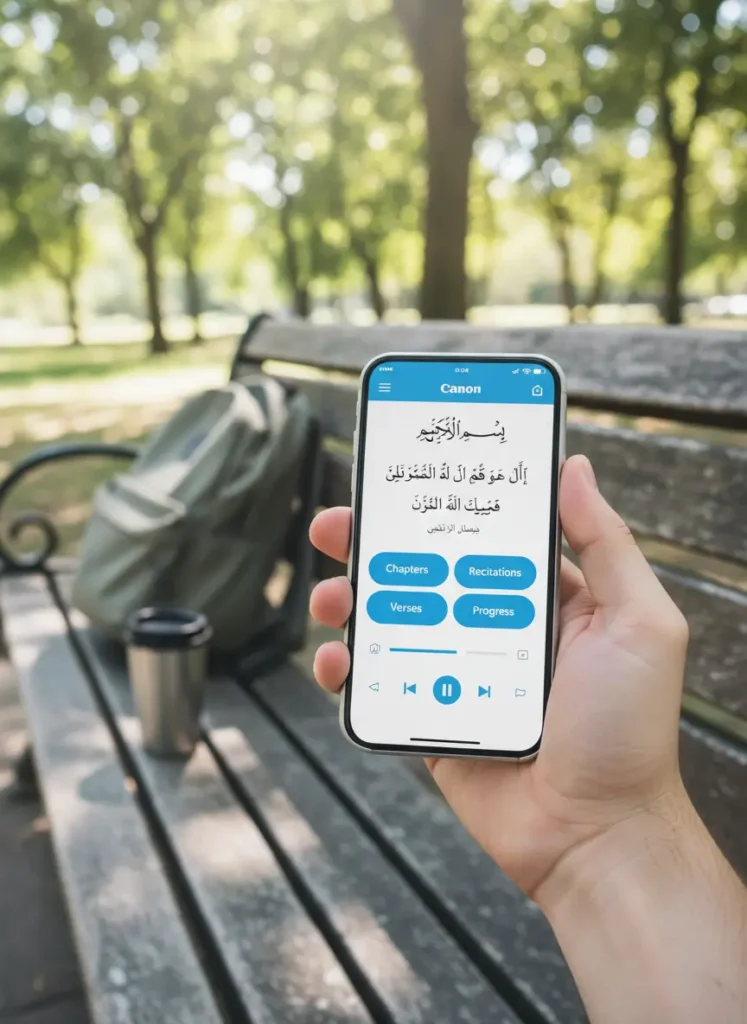
The digital revolution in Quranic education represents more than a mere transfer of traditional pedagogy to virtual platforms. It constitutes a fundamental reconceptualization of knowledge transmission, wherein centuries-old methodologies harmonize with contemporary technological affordances. For many students globally, online Quran education transcends being “better than nothing”—it demonstrates demonstrable superiority over conventional in-person modalities in multiple dimensions.
Advantage 1: Access to World-Class Teachers Regardless of Location
The Old Problem: You’re limited to whatever teacher happens to live in your area. Maybe your local masjid has an overwhelmed volunteer teaching 20 students at once. Maybe there’s no qualified teacher nearby at all.
The Online Solution: Geography becomes irrelevant. You can learn from Al-Azhar trained scholars in Egypt, certified Qaris in Saudi Arabia, experienced teachers in Pakistan—all from your living room. The best teachers globally are now accessible to everyone.
Real Impact: A student in rural Canada gets the same quality teaching as someone living next to Al-Azhar University in Cairo. Location no longer determines learning quality.
Advantage 2: Flexible Scheduling for Modern Life
The Old Problem: Masjid classes are Saturday 9 AM. You work Saturdays. Or classes are 6 PM weekdays—exactly when you’re commuting or making dinner. Fixed schedules don’t fit modern life.
The Online Solution: Schedule classes when it works for YOU. Early morning before work. Late evening after kids sleep. Weekend afternoons. Different days each week if needed. Teachers accommodate your schedule, not vice versa.
Real Impact: Working professionals, busy parents, students with unpredictable schedules—everyone can find time that works.
For comprehensive guidance on learning from anywhere, see Learn Arabic and Quran Online Anywhere.
Advantage 3: Personalized One-on-One Attention
The Old Problem: Crowded group classes where individual students get minimal attention. Your pronunciation mistakes go uncorrected because the teacher is managing 15 other students.
The Online Solution: One-on-one or small group classes (3-5 students maximum) are affordable online. You get personalized attention—every mistake corrected, every question answered, pacing adjusted to your exact needs.
Real Impact: Students progress 2-3x faster with individual attention compared to large group settings.
Advantage 4: Comfortable Home Learning Environment
The Old Problem: Rushing to masjid after work, tired and stressed. Uncomfortable seating. Distractions from other students. Anxiety about new environments.
The Online Solution: Learn from your comfortable home. Your own chair. Your preferred lighting. Bathroom breaks without embarrassment. Snacks and water readily available. Reduced anxiety, increased focus.
Real Impact: Especially beneficial for children, women preferring privacy, elderly students, and those with anxiety or disabilities.
Advantage 5: Easier Parental Monitoring
The Old Problem: You drop your child at masjid class. You have no idea what’s being taught or how they’re progressing. You can’t help with homework because you don’t know the curriculum.
The Online Solution: You sit nearby during your child’s class (especially for younger kids). You hear exactly what’s taught. You know which surahs they’re practicing. You can support learning between sessions.
Real Impact: Parents become partners in their children’s Quranic education, dramatically improving outcomes.
Advantage 6: Cost-Effectiveness
The Old Problem: Private in-person Quran tutors charge $40-80/hour. Masjid programs are cheaper but often overcrowded and lower quality.
The Online Solution: One-on-one online classes typically cost $20-35/hour—high-quality individual attention at group class prices.
Real Impact: Quality Quran education becomes accessible to families who couldn’t afford private tutors.
Advantage 7: Consistency Despite Life Circumstances
The Old Problem: You travel for work—miss three weeks of classes, fall behind. You’re sick—skip class, lose momentum. Schedule changes—can’t attend anymore.
The Online Solution: Traveling? Take your laptop and continue classes from hotel. Sick but functional? Class continues from bed. Schedule changed? Easily reschedule with teacher.
Real Impact: Consistent learning despite life’s unpredictability—the key to actual progress.
Who Benefits Most from Online Quran Learning
Complete Beginners
Starting from zero? One-on-one online attention builds correct foundation without embarrassment. Progress at your own pace.
Women Seeking Female Teachers
Much easier to find qualified female instructors online than locally. Learn comfortably from home with privacy.
For women-focused guidance, see Learn Quran Online for Women: 2026 Guide.
Busy Professionals
Schedule classes early morning, late evening, or weekends. No commute wasted. Continue learning during business travel.
For men’s strategies, visit Best Ways to Learn Quran Online for Men.
Adults Learning Later in Life
Never too old. One-on-one classes accommodate your pace. No judgment, just patient guidance.
For complete adult guidance, see Learn Quran Online for Adults: Complete Guide.
Parents Teaching Children
Convenient home learning. Monitor your child’s progress. Teachers specializing in kids use engaging methods.
Students Perfecting Tajweed
Access Tajweed specialists globally. Intensive pronunciation correction with expert teachers.
For Tajweed mastery, visit Learn Tajweed Online: Master It Now.
What You Can Actually Learn Through Online Quran Classes

Contemporary online Quran programs transcend rudimentary recitation instruction, offering comprehensive curricula encompassing the full spectrum of Quranic sciences (‘ulum al-Quran). These programs integrate classical Islamic pedagogical frameworks with modern instructional design principles, delivering holistic Quranic education that addresses cognitive, linguistic, and spiritual dimensions of learning.
Quran Reading (Qira’ah)
From: Cannot read Arabic script at all
To: Reading any surah from the Quran fluently
Process:
- Arabic alphabet (28 letters, all forms)
- Letter joining and word formation
- Short vowels (harakat)
- Reading Quranic text correctly
- Building speed and fluency
Timeline: 6-12 months for basic fluency
Tajweed Mastery
From: Reading without proper pronunciation
To: Reciting with all Tajweed rules correctly applied
What’s Covered:
- 17 articulation points (makhaarij)
- Letter characteristics (sifaat)
- Noon and meem rules
- Elongation (madd) rules
- Qalqalah, stopping rules, heavy vs. light
- Complete Tajweed application
Timeline: 12-18 months for complete mastery
Quran Memorization (Hifz)
From: No memorization or limited surahs
To: Memorizing selected surahs or entire Quran
Methods:
- Systematic memorization techniques
- Daily memorization targets
- Revision schedules
- Retention strategies
- Teacher verification and correction
Timeline: Varies widely (2-5 years for complete Quran)
Quranic Arabic Understanding
From: Dependent on translations
To: Understanding Quranic text directly in Arabic
Curriculum:
- Classical Arabic grammar
- Quranic vocabulary (high-frequency words)
- Sentence analysis
- Direct comprehension of ayaat
Timeline: 18-36 months for functional understanding
Tafseer (Quranic Exegesis)
From: Surface-level reading without deeper comprehension
To: Understanding historical context, linguistic nuances, and scholarly interpretations
What’s Covered:
- Classical Tafseer Methodology: Introduction to tafseer bil-ma’thur (exegesis based on authentic narrations) and tafseer bil-ra’y (exegesis based on scholarly reasoning)
- Asbab al-Nuzul: Circumstances and contexts of revelation—understanding why specific verses were revealed
- Linguistic Analysis: Exploring the Quran’s rhetorical devices, metaphors, and linguistic miracles (i’jaz)
- Comparative Tafseer: Studying interpretations from renowned scholars (Ibn Kathir, Al-Tabari, Al-Qurtubi, contemporary scholars)
- Thematic Studies: Understanding Quranic themes—justice, mercy, prophethood, afterlife, social ethics
- Application: How Quranic guidance applies to contemporary life challenges
Why It Matters: Tafseer transforms your relationship with the Quran from mere recitation to profound comprehension. You understand not just what Allah said, but why, in what context, and how scholars across centuries have understood these divine messages.
Timeline: Ongoing study—Tafseer is a lifetime journey of deepening understanding
Qira’at (Variant Recitation Styles)
From: Knowing only one recitation method (usually Hafs ‘an ‘Asim)
To: Mastering multiple authentic Qira’at transmitted from the Prophet ﷺ
What Are Qira’at: The Quran was revealed in seven ahruf (modes) as authentically narrated, and ten Qira’at (recitation methods) have been preserved through unbroken chains (isnad) back to the Prophet ﷺ. Each Qira’ah represents slight variations in pronunciation, elongation, or word choice—all authentically transmitted, all part of the Quran’s miraculous preservation.
The Ten Mutawatir Qira’at:
- Qira’at Nafi’ (Madinah) – Transmitted through Warsh and Qalun
- Qira’at Ibn Kathir (Makkah) – Transmitted through Al-Bazzi and Qunbul
- Qira’at Abu ‘Amr (Basra) – Transmitted through Al-Duri and Al-Susi
- Qira’at Ibn ‘Amir (Damascus) – Transmitted through Hisham and Ibn Dhakwan
- Qira’at ‘Asim (Kufa) – Transmitted through Hafs and Shu’bah
- Qira’at Hamzah (Kufa) – Transmitted through Khalaf and Khallad
- Qira’at Al-Kisa’i (Kufa) – Transmitted through Al-Duri and Abul-Harith
- Qira’at Abu Ja’far (Madinah)
- Qira’at Ya’qub (Basra)
- Qira’at Khalaf (Kufa)
What Advanced Students Learn:
- Mastery of multiple Qira’at (typically starting with Hafs, then Warsh or Qalun)
- Understanding how different Qira’at enrich Quranic meanings
- The science of Qira’at transmission (‘ilm al-qira’at)
- Tajweed rules specific to each Qira’ah
- Obtaining ijazah in multiple Qira’at
Who Pursues This:
- Advanced students who have mastered basic Quran and Tajweed
- Those seeking to become Quran teachers or scholars
- Students pursuing ijazah certification
- Individuals passionate about deepening their Quranic knowledge
Timeline: 3-7 years to master multiple Qira’at with proper ijazah
Significance: Learning Qira’at connects you to the living tradition of Quranic preservation. You’re not just reading Allah’s words—you’re part of the chain that has kept these words exactly as revealed for 1,400 years.
Islamic Studies Integration
Bonus Content Many Programs Offer:
- Hadith related to Quranic verses
- Stories of the Prophets from Quran
- Islamic values and character building
- Practical application of Quranic guidance
Timeline: 18-36 months for functional understanding
How to Choose the Right Online Quran Learning Platform
Not all online programs are equal. Here’s how to evaluate and choose wisely.
Step 1: Verify Teacher Qualifications
Non-Negotiable Requirements:
- ✅ Ijazah (formal authorization) with traceable chain
- ✅ Native or near-native Arabic pronunciation
- ✅ 3+ years teaching experience
- ✅ Tajweed mastery (perfect recitation)
- ✅ Islamic knowledge and character
How to Verify:
- Request to see teacher’s ijazah certificate
- Ask about their sheikh and chain of transmission
- Listen to their recitation (should be flawless)
- Read reviews from other students
- Take trial class to assess personally
For guidance on choosing quality programs, see Best Online Quran Classes.
Step 2: Assess Teaching Methodology
Quality Programs Have:
- ✅ Clear, structured curriculum
- ✅ Defined progression from beginner to advanced
- ✅ Regular assessments and feedback
- ✅ Homework and practice assignments
- ✅ Progress tracking and reporting
Red Flags:
- ❌ No clear structure (“we’ll teach whatever you want”)
- ❌ No systematic progression
- ❌ No assessments or milestones
- ❌ Vague about teaching methods
Step 3: Evaluate Class Format Options
One-on-One Classes:
- Best For: Maximum progress, personalized attention
- Pros: 100% teacher focus, flexible pacing
- Cost: $20-35/hour typically
- Recommended: For most serious students
Small Group (3-5 students):
- Best For: Budget-conscious, peer motivation
- Pros: Lower cost, learn from others’ questions
- Cost: $10-20/hour typically
- Recommended: If teacher gives individual correction time
Large Group (10+ students):
- Best For: Theory learning, supplementary education
- Pros: Lowest cost
- Cons: Minimal individual feedback
- Not Recommended: For learning proper pronunciation
Step 4: Check Technology and Platform
Essential Features:
- ✅ Stable video/audio quality
- ✅ Screen sharing (to display Quran text)
- ✅ Digital whiteboard (for demonstrations)
- ✅ Recording capability (for review)
- ✅ Easy scheduling system
- ✅ Progress tracking dashboard
Technical Requirements:
- Reliable internet (minimum 5 Mbps)
- Laptop, tablet, or desktop (phone screens too small)
- Headphones with microphone (for clear audio)
- Quiet space for learning
Step 5: Understand Pricing and Commitment
Fair Market Rates (2026):
- One-on-one: $20-35/session (45-60 minutes)
- Small group: $10-20/session
- Monthly packages: Often discounted (8-12 sessions)
Warning Signs:
- Extremely cheap (<$10/hour) often means unqualified teachers
- Overly expensive (>$50/hour) unless teacher has exceptional credentials
- Pressure to commit to long-term contracts without trial
Smart Approach:
- Start with trial class (usually free)
- Try 1-2 month package before long commitment
- Evaluate progress before extending
Step 6: Review Cancellation and Flexibility Policies
Important Questions:
- Can I reschedule classes if needed?
- What’s the cancellation notice required?
- Are missed classes refunded or rescheduled?
- Can I change teachers if needed?
- Can I pause temporarily (illness, travel)?
Quality Programs: Offer reasonable flexibility recognizing life happens.
Red Flags: Rigid no-refund policies, no rescheduling options, punitive cancellation terms.
Proven Strategies for Success in Online Quran Learning
Taking classes isn’t enough. These strategies ensure actual mastery.
Strategy 1: Consistent Daily Practice
The Reality: 2-3 classes weekly + zero practice between = slow progress and frustration
2-3 classes weekly + 20 minutes daily practice = measurable, exciting progress
What to Practice:
- Review what teacher taught last session
- Recite assigned verses repeatedly
- Practice difficult articulation points
- Review vocabulary or rules
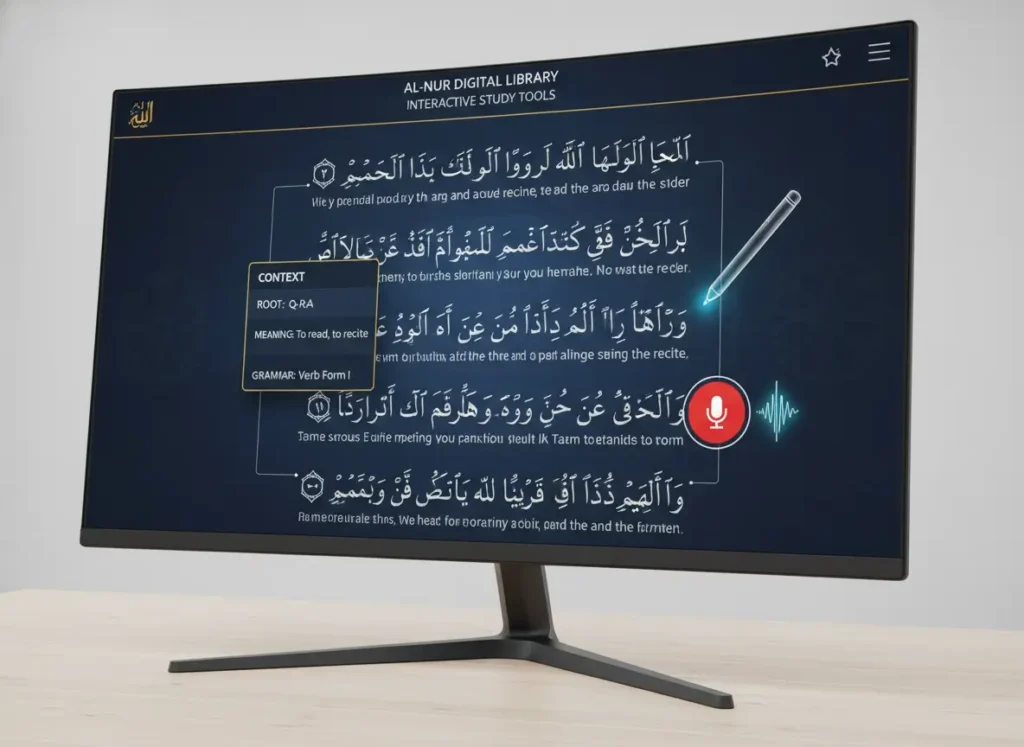
- Listen to expert recitations
Minimum Effective Dose: 15-20 minutes daily, every single day
Strategy 2: Record and Review Your Recitation
The Method:
- Record yourself reciting after each practice session
- Listen back immediately
- Compare to expert recitation (Sheikh Mishary, Al-Sudais)
- Identify your mistakes
- Practice corrections
Why It Works: You can’t hear your mistakes while you’re reciting. Recording reveals what needs fixing. This self-awareness accelerates improvement dramatically.
Strategy 3: Set Clear, Measurable Goals
Vague Goal: “I want to learn Quran”
Clear Goal: “I will read Juz Amma fluently with basic Tajweed within 8 months”
How to Set Effective Goals:
- Define specific outcome (read fluently, memorize 10 surahs, understand 500 words)
- Set realistic timeline (discuss with teacher)
- Break into monthly milestones
- Track progress weekly
- Celebrate achievements
Benefits: Direction, motivation, accountability, measurable progress
Strategy 4: Create Dedicated Learning Space
Why It Matters: Learning environment affects focus and retention. Chaos and distractions kill progress.
How to Create It:
- Quiet space (minimal background noise)
- Comfortable seating and lighting
- Mushaf (physical Quran) readily available
- Notebook for notes
- No TV, phones, or other distractions during class
Result: Better focus, improved retention, faster progress
Strategy 5: Communicate Openly with Teacher
What to Discuss:
- Your specific goals and timeline
- Challenges you’re experiencing
- Areas needing more practice
- Pacing (too fast? too slow?)
- Questions about anything unclear
How Often:
- After every 2-3 classes, check in about progress
- Immediately when struggling or confused
- Monthly to review overall trajectory
Result: Personalized learning that addresses YOUR needs
Strategy 6: Supplement with Quality Resources
Between Classes, Use:
- Quran apps (Quran Companion, Ayah, Tarteel)
- Tajweed charts and visual guides
- Authentic recitations (listen repeatedly)
- Quranic Arabic vocabulary flashcards
- Tafseer for understanding
Warning: Supplements enhance teacher-led learning. They don’t replace it.
Strategy 7: Join Community for Accountability
Options:
- Online Quran learning groups
- Accountability partners (friend also learning)
- Family members learning together
- Social media communities (respectful, supportive ones)
Benefits:
- Motivation during difficult periods
- Peer encouragement
- Shared tips and resources
- Accountability to show up
For proven strategies and techniques, see Top 10 Tricks to Effectively Learn Quran Online.
Common Challenges and Practical Solutions

Every online Quran student faces obstacles. Here’s how to overcome them.
Challenge 1: Inconsistent Attendance
The Problem: Missing classes frequently, irregular schedule, low commitment
Why It Happens: Busy life, lack of accountability, not prioritizing Quran learning
The Solution:
- Schedule classes same days/times weekly (routine builds habit)
- Treat Quran time as non-negotiable (like prayer)
- Set phone reminders 30 minutes before class
- Find accountability partner
- Remember: Allah’s words deserve consistent effort
Challenge 2: Technical Difficulties
The Problem: Poor internet, audio issues, platform problems
Why It Happens: Inadequate internet, wrong equipment, platform unfamiliarity
The Solution:
- Ensure minimum 5 Mbps internet speed
- Use laptop/tablet (not phone)
- Invest in quality headphones with mic ($20-40)
- Test technology before first class
- Have backup plan (mobile hotspot if home internet fails)
Challenge 3: Difficulty Retaining Between Classes
The Problem: Forgetting what was taught, having to relearn each session
Why It Happens: No practice between classes, insufficient repetition
The Solution:
- Review within 24 hours of each class (critical for retention)
- Practice 15-20 minutes daily minimum
- Use spaced repetition (review again at 3 days, 1 week, 2 weeks)
- Take notes during class
- Record sessions (with permission) for review
Challenge 4: Slow Progress Frustration
The Problem: Feeling like progress is too slow, wanting faster results
Why It Happens: Unrealistic expectations, comparing to others
The Solution:
- Understand: Quran mastery takes YEARS, not months
- Celebrate small wins (new surah learned, mistake corrected)
- Compare yourself only to your past self
- Discuss realistic timeline with teacher
- Remember: Consistent small steps create massive results over time
Challenge 5: Pronunciation Difficulties
The Problem: Certain Arabic sounds seem impossible to produce correctly
Why It Happens: Your native language doesn’t have these sounds, mouth muscles not trained
The Solution:
- Intensive focused practice on problem sounds
- Watch teacher’s mouth position carefully
- Practice in front of mirror
- Record and compare to expert recitation
- Be patient—muscle memory takes time
- Daily drilling (even 5 minutes) on difficult letters
Success Story: Sister Fatima’s Transformation
Background: 45-year-old American convert, Muslim 3 years, couldn’t read Arabic
Challenge: No local classes, felt too old, overwhelmed
Solution: Online Egyptian teacher (2x weekly classes + daily 20-minute practice)
Progress:
- Months 1-6: Arabic alphabet to reading Juz Amma
- Months 7-12: Basic Tajweed, memorized 5 surahs
- Months 13-18: Advanced Tajweed, leading women’s prayer
Her Reflection: “At 45, I thought I was too old. Online learning made it possible. My teacher in Egypt was more accessible than anything local. I went from zero to reciting Quran in prayer. That’s Allah’s mercy and the miracle of online learning.”
Success Keys: Qualified teacher, consistent attendance, daily practice, realistic expectations, open communication
Frequently Asked Questions

Is learning Quran online as effective as in-person classes?
For most students, online one-on-one or small group classes are MORE effective than large in-person classes due to personalized attention, qualified global teachers, and flexible scheduling that enables consistency. Success depends on teacher quality and student commitment, not format.
How long does it take to learn to read Quran online?
Complete beginners typically need 6-12 months for basic reading fluency with 2-3 classes weekly plus daily practice. Adding proper Tajweed: 12-18 months. Understanding Quranic Arabic: 18-36 months. Speed varies by age, practice consistency, and natural aptitude.
Can children learn Quran effectively online?
Yes, absolutely. Many children thrive with online classes using engaging digital tools, one-on-one attention, and age-appropriate methods. Success requires parental support, monitoring (especially for younger kids), and teachers experienced with children specifically.
What technology do I need for online Quran classes?
Minimum requirements: Reliable internet (5+ Mbps), laptop or tablet (not phone), headphones with microphone, quiet space. Optional but helpful: Physical Mushaf, notebook, second device for reference materials.
How much should online Quran classes cost?
Fair 2026 pricing: One-on-one $20-35/hour, small group $10-20/hour, monthly packages often discounted. Very cheap (<$10/hour) usually indicates unqualified teachers. Very expensive (>$50/hour) should justify premium with exceptional credentials.
What if I travel frequently for work?
Online learning is perfect for frequent travelers. Continue classes from hotel, Airbnb, or anywhere with internet. Many platforms offer flexible rescheduling. Just inform teacher about travel schedule in advance.
Why Choose Alphabet Arabic Academy for Online Quran Learning
At Alphabet Arabic Academy, we don’t just offer online classes—we create transformative Quran learning experiences.
What Makes Us Different
✅ Certified Egyptian Teachers with Authentic Ijazah Every Quran instructor holds formal ijazah with documented chains tracing back to the Prophet ﷺ. You’re learning from qualified, authorized teachers.
✅ Personalized One-on-One Attention Not crowded group classes. Your teacher focuses 100% on you—hearing every mistake, answering every question, customizing pace to your needs.
✅ Comprehensive Curriculum for All Levels Complete beginners to advanced students. Children to elderly. Men and women. Reading, Tajweed, memorization, and understanding—all available.
✅ Flexible Global Scheduling Teachers available 7 days a week across all time zones. Morning, afternoon, evening, weekends—learn when it fits YOUR life.
✅ Proven Track Record Hundreds of students worldwide have transformed their Quran recitation with us—from complete beginners to confident reciters.
✅ Female Teachers Available For families preferring female instructors, we have excellent certified female Quran teachers.
✅ Technology That Works Stable platform, clear video/audio, screen sharing, recording capability, easy scheduling—technology that enhances learning, not hinders it.
✅ Affordable Excellence High-quality one-on-one teaching at fair prices. Monthly packages available. Free trial class to experience teaching before committing.
The Future of Online Quran Learning: Emerging Trends and Innovations
As we advance deeper into the digital age, online Quran education continues to evolve, incorporating cutting-edge technologies while preserving the sacred tradition of knowledge transmission.
Technological Advancements Reshaping Quran Education
Artificial Intelligence Integration: AI-powered tools are emerging as supplementary aids (never replacements for human teachers):
- Pronunciation Analysis: AI algorithms detecting pronunciation errors with instant feedback
- Personalized Learning Paths: Machine learning adapting curriculum to individual progress
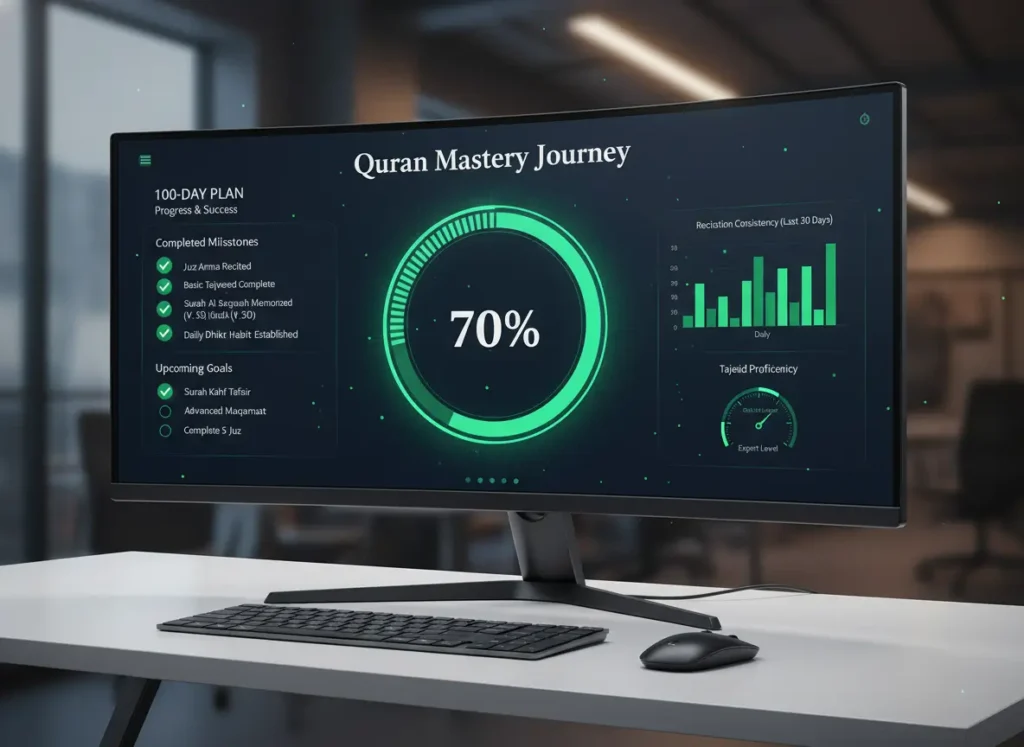
- Progress Tracking: Advanced analytics on memorization, Tajweed accuracy, and reading speed
Virtual Reality (VR) and Augmented Reality (AR):
- Virtual Classrooms: 3D environments simulating traditional halaqat (study circles)
- AR Tajweed Visualization: Real-time articulation point overlays during practice
- Virtual Masjid Tours: Experiencing Masjid al-Haram while learning revelation contexts
Blockchain for Ijazah Verification:
- Digital Ijazah: Blockchain-verified certificates with traceable isnad
- Credential Security: Tamper-proof records preventing fraud
- Global Recognition: Universally verifiable credentials
Pedagogical Innovations
Microlearning Modules:
- 5-10 minute focused sessions for busy schedules
- Spaced repetition optimizing retention
- Mobile-first design for learning anywhere
Gamification Strategies:
- Achievement systems rewarding consistency
- Leaderboards fostering healthy competition
- Progress visualization making mastery tangible
Adaptive Assessment:
- Real-time pronunciation evaluation
- Automated Tajweed checking with correction
- Personalized weakness identification
Growing Accessibility

Breaking Language Barriers:
- Real-time translation enabling immediate start
- Multilingual platforms serving 50+ languages
- Culturally adapted methodologies
Special Needs Accommodation:
- Programs for learning disabilities
- Audio-focused instruction for visual impairment
- Pacing adapted for neurodivergent learners
Economic Accessibility:
- Scholarship programs for financial need
- Community-funded sponsorships
- Sliding scale pricing ensuring inclusivity
Preserving Authenticity Amid Innovation
The Non-Negotiable Core:
- Human Teachers: No AI replaces spiritual transmission (tarbiyyah)
- Ijazah Authenticity: Unbroken chains must remain verified
- Tajweed Precision: Expert human evaluation irreplaceable
- Spiritual Dimension: Teacher-student relationship carries barakah
The Vision: A world where every Muslim, regardless of location or circumstance, has immediate access to qualified Quran teachers. Geography becomes irrelevant. Economic barriers dissolve. The Quran’s light reaches every corner through digital connectivity—all while maintaining the sacred tradition that has preserved Allah’s words perfectly for 1,400 years.
This is the trajectory we’re on. The future of online Quran learning is bright, accessible, and authentically rooted in tradition.
Your Next Steps: Begin Your Online Quran Journey Today
Every Muslim who recites Quran beautifully today started at the beginning—uncertain, possibly overwhelmed, wondering if they could do it.
They did. And so can you.
The difference between those who succeed and those who remain wishful is simple: they started. They found a qualified teacher. They committed to consistent practice. They persisted through challenges.
Online learning has removed every barrier:
- No qualified teacher nearby? Access the best globally.
- Busy schedule? Learn when it works for you.
- Limited budget? Quality teaching is now affordable.
- Feel too old? Age doesn’t matter online.
- Shy or anxious? Comfortable home environment.
The barriers are gone. Only one question remains: Will you start?
How to Begin
Step 1: Acknowledge Your Why Why do you want to learn Quran? Write it down. This becomes your motivation during difficult moments.
Step 2: Research Platforms Look for qualified teachers, structured curriculum, and good reviews. Don’t rush this step.
Step 3: Take Trial Class Experience the teaching before committing. Assess teacher quality, platform usability, and your comfort level.
Step 4: Set Realistic Goals With teacher’s guidance, create clear timeline and milestones.
Step 5: Commit to Schedule Choose class frequency (2-3x weekly minimum) and stick to it. Consistency is everything.
Step 6: Practice Daily Classes teach. Practice builds mastery. 20 minutes daily minimum.
Step 7: Start Today Not tomorrow. Not next week. Today.
Conclusion: The Quran Awaits You Online
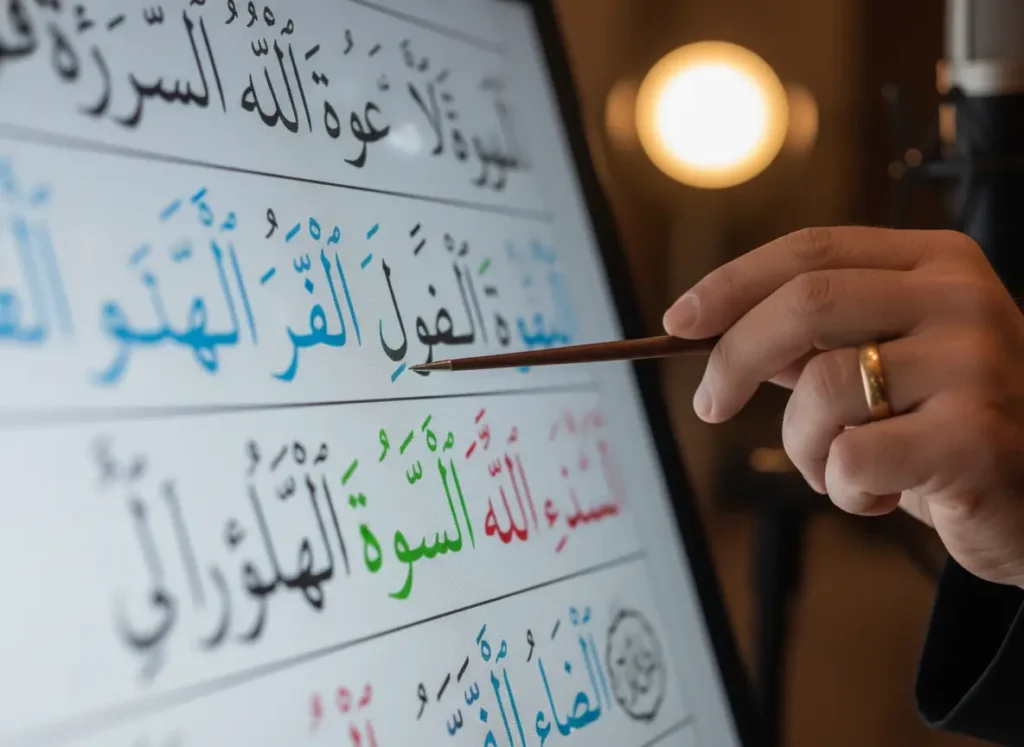
For 1,400 years, Muslims learned Quran from teachers—person to person, generation to generation, preserving Allah’s words exactly.
Now, technology has made this sacred transmission global. The teacher in Cairo, Medina, or Karachi is as accessible as someone across the street. The expertise once limited by geography is now available to everyone, everywhere.
Aisha in Montana learned from a teacher in Egypt. Fatima at 45 went from zero Arabic to confident reciter. Thousands worldwide are experiencing the same transformation.
This isn’t just about convenience. It’s about access to Allah’s words for EVERYONE—regardless of where you live, how busy you are, or how old you are.
The Quran has been waiting for you your entire life.
Online learning has made the wait unnecessary.
👉 Book your free trial Quran class with Alphabet Arabic Academy and begin your transformation today.
“إِنَّ هَٰذَا الْقُرْآنَ يَهْدِي لِلَّتِي هِيَ أَقْوَمُ”
“Indeed, this Quran guides to that which is most suitable.” [17:9]
The guidance is ready. The teachers are waiting. The technology is available.
Your Quran journey begins now.
بسم الله – In the name of Allah.
This guide was created to help Muslims worldwide access quality Quran education online. Whether you’re in a major city or rural village, whether you have hours daily or just minutes—online learning makes Quranic literacy achievable for everyone, everywhere.