

Introduction: The Moment Everything Changed
about Learn Egyptian Arabic Let me tell you about James, one of our most dedicated students at Alphabet Arabic Academy.
James had spent nine months mastering Modern Standard Arabic. He could read news articles, understand formal speeches, and write grammatically perfect essays. Then he landed in Cairo for his new teaching job.
Day one: Taxi from the airport. The driver asked in rapid Egyptian Arabic, “[إنت رايح فين؟]{dir=”rtl”}” (Where are you going?). James froze. His MSA training offered nothing. The driver laughed—not unkindly—and switched to broken English.
Day two: Coffee shop. James tried ordering in MSA: “[أريد قهوة من فضلك]{dir=”rtl”}”. The barista smiled and responded, “[عايز قهوة؟ أي نوع؟]{dir=”rtl”}” (Want coffee? What type?). Again, James couldn’t understand.
Day three: James called me, frustrated. “Why did nobody tell me Egyptians don’t actually speak the Arabic I learned?”
That’s when James discovered Egyptian Arabic (Masri)—the living, breathing dialect that 100 million Egyptians use every single day. Within three months of focused learning, he was chatting with taxi drivers, bargaining in markets, and finally feeling at home in Cairo.
Here’s the truth most Arabic learners discover too late: You can master formal Arabic perfectly and still struggle to order coffee in Cairo. Or you can learn Egyptian Arabic and start communicating naturally from week one.
This isn’t just another Arabic guide. This is your 2026 roadmap to the dialect that opens every door in the Arab world. At Alphabet Arabic Academy, we’ve helped hundreds of students make this transformation. Now, it’s your turn.
if you want to save your time register with the perfect Egyptian arabic course
What Is Egyptian Arabic? (And What It’s Not)
Egyptian Arabic (also called Masri or Ammiya) isn’t “broken” Arabic or a simplified version. It’s a fully developed language variety with its own consistent rules, vocabulary, and musicality that Egyptians use in:
- Homes, streets, and workplaces
- Movies, music, and social media
- Daily conversations and heartfelt connections
The Biggest Misconception:
Many learners think they must choose between “proper” Arabic (MSA) and “street” Arabic (Egyptian). This is a false dichotomy. They’re different tools for different jobs.
| Feature | Egyptian Arabic (Masri) | Modern Standard Arabic (Fusha) |
|---|---|---|
| Primary Use | Daily conversation & media | Formal writing & news |
| Grammar | Flexible & intuitive | Complex & rule-based |
| Pronunciation | Musical & flowing | Clear & formal |
| Learning Curve | Fast (speaking quickly) | Slow (mastery takes years) |
| Emotional Range | High (jokes, sarcasm, warmth) | Limited (formal tone) |
Simple Example:
- MSA: كيف حالك؟ (Kayfa haluk?)
- Egyptian: إزيك؟ (Izzayyak?)
The Egyptian version isn’t “wrong”—it’s how humans actually connect.
if you are interested in other dialects read the full guide
Why 2026 is the Perfect Year to Learn Egyptian Arabic
If you’re reading this, you’re probably asking: “With AI translators and global English, why bother learning a dialect in 2026?”
Here’s why Egyptian Arabic matters more than ever:
1. It’s Your Linguistic Passport
Egypt has been the “Hollywood of the Middle East” for over a century. Because of this cultural dominance, Egyptian Arabic is the most widely understood dialect across the Arab world. Speak it in Dubai, Amman, or Casablanca, and you’ll be understood.
2. The Digital Revolution Has Made It Accessible
Remember James? He asked me: “Can I really learn a street dialect without living in Egypt?” In 2024, the answer was “maybe.” In 2026, it’s a resounding YES.
With immersive online platforms, native tutors on demand, and AI-powered pronunciation tools, you can now Learn Arabic Dialect at Home more effectively than ever before.
3. Career Opportunities Are Exploding
Egypt’s 100+ million population and strategic position create massive opportunities in:
- Tourism & hospitality
- International business
- Tech and startup ecosystems
- Media and content creation
The competitive edge? Most expats never learn beyond survival phrases. Functional Egyptian Arabic makes you stand out dramatically.
The “Universal” Dialect: Why Everyone Understands Egyptian Arabic
Here’s what most courses won’t tell you: Not all Arabic dialects are created equal when it comes to being understood.
Transferability Scorecard:
- Egyptian Arabic: 9/10 – Understood virtually everywhere due to media dominance
- Levantine Arabic: 7/10 – Widely understood through TV dramas
- Gulf Arabic: 6/10 – Growing recognition due to economic influence
- Maghrebi Arabic: 3/10 – Mostly confined to North Africa
Why Egyptian Wins:
- Cinematic Legacy: 90% of classic Arab films are Egyptian
- Musical Influence: From Umm Kulthum to Amr Diab
- Social Media Dominance: Egyptian creators lead Arabic YouTube and TikTok
This means your Beginner’s Egyptian Arabic Course: Start Your Journey Now investment pays dividends across 22 Arab countries, not just Egypt.
Cracking the Code: Pronunciation Secrets That Make You Sound Egyptian
This is where most learners get stuck—and where you’ll get ahead. Egyptian pronunciation has consistent patterns that, once mastered, make you sound instantly more natural.
The Three Big Shifts:
1. The Famous “G” Sound
- MSA: ج = “J” as in “jam”
- Egyptian: ج = “G” as in “game”
- Example: جميل (beautiful) = “gameel” not “jameel”
2. The Missing “Q”
- MSA: ق = deep throaty “Q”
- Egyptian: ق = glottal stop (like the pause in “uh-oh”)
- Example: قهوة (coffee) = “ahwa” not “qahwa”
3. The Softened “TH”
- MSA: ث = “th” in “think”
- Egyptian: ث = “t”
- Example: ثلاثة (three) = “talata” not “thalatha”
Why This Matters:
Mastering these small shifts is the difference between sounding like a textbook and sounding like a friend. This is exactly what we focus on in our Speaking Egypt Dialect Arabic program.
Grammar That Doesn’t Fight You: The Egyptian Arabic Advantage
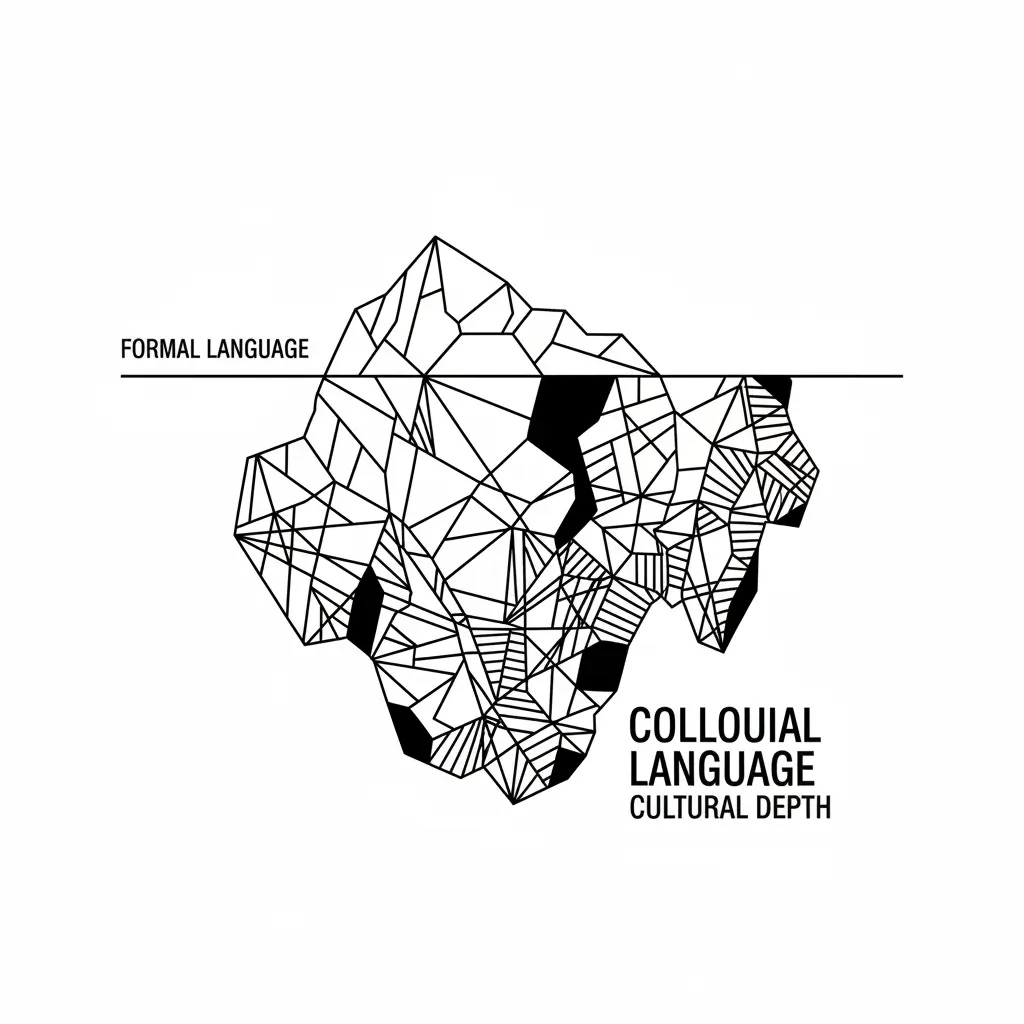
If you’ve ever struggled with MSA’s complex case endings (الاعراب) or felt overwhelmed by verb conjugation tables, here’s your relief: Egyptian Arabic grammar is built for actual human conversation.
The Beautiful Simplification:
While MSA maintains classical structures perfect for poetry and formal discourse, Egyptian Arabic has evolved for speed, clarity, and connection. Think of it like the difference between writing a legal document and texting a friend.
Key Differences That Make Your Life Easier:
1. No More “Dual” Overcomplication
- MSA: Separate forms for singular, dual, and plural
- Egyptian: Just singular and plural (like English!)
- Example: “Two books” in MSA requires special dual form. In Egyptian, you just say “كتابين” (keta-been) – simple.
2. Simplified Verb System
Egyptian uses prefixes that are incredibly consistent:
- Present: باـ (ba-) → أنا باكل (I eat/I am eating)
- Future: هاـ (ha-) → أنا هاكل (I will eat)
- Negation: ماـ…ـش (ma-…-sh) → أنا ماعرفش (I don’t know)
This consistency means you learn one pattern that works for hundreds of verbs.
3. The Magical Egyptian Negation (ما…ش)
This might be the most satisfying grammar rule you’ll ever learn. Instead of different negation words, you simply wrap the verb:
- عارف (I know) → ما عارفش (I don’t know)
- فهمت (I understood) → ما فهمتش (I didn’t understand)
- رحت (I went) → ما رحتش (I didn’t go)
It’s systematic, musical, and unmistakably Egyptian.
Your First 30 Days: The “Survival to Conversation” Roadmap
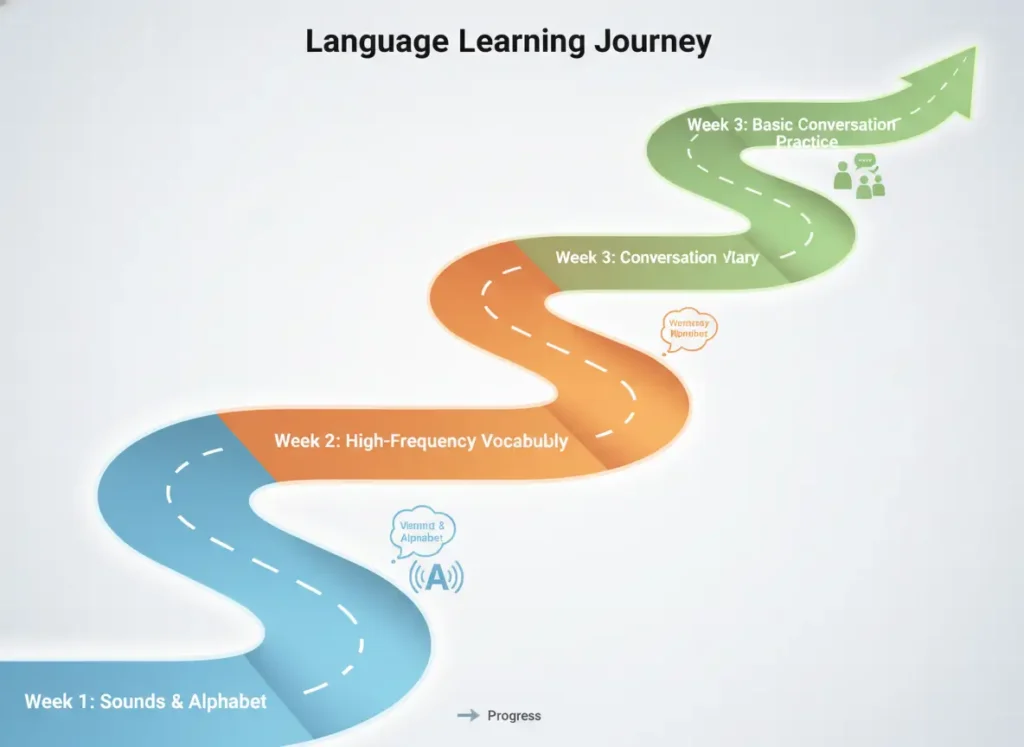
Many learners fail because they try to learn “all the grammar” before speaking. Our approach at Alphabet Arabic Academy is different: Speak first, perfect later.
Here’s your realistic 30-day blueprint:
Week 1-2: The Foundation (Sound & Rhythm)
Goal: Master the Egyptian accent and 50 essential words.
Daily Practice (20 minutes):
- 5 min: Pronunciation drills (focus on ج=G and ق=glottal stop)
- 10 min: Flashcards for survival phrases (use our Anki deck)
- 5 min: Listen to one Egyptian song or short video
Key Phrases to Learn:
- [ازيك؟]{dir=”rtl”} (How are you?)
- [عايز/عايزة]{dir=”rtl”} (I want – m/f)
- [فين؟]{dir=”rtl”} (Where?)
- [بكم؟]{dir=”rtl”} (How much?)
- [مش فاهم/مش فاهمة]{dir=”rtl”} (I don’t understand – m/f)
Pro Tip: Don’t worry about reading Arabic script yet. Focus on listening and repeating. This is the core of our Beginner’s Path: Learn Arabic from Egypt in 2026 Easily approach.
Week 3-4: First Conversations
Goal: Handle 5 daily situations confidently.
Daily Practice (30 minutes):
- 10 min: Role-play with a tutor or language partner
- 10 min: Watch Egyptian vlogs with subtitles
- 10 min: Practice “self-talk” in Egyptian
Situations to Master:
- Ordering food (street food is best to start)
- Taking a taxi (directions and price)
- Shopping basics (asking for things and prices)
- Social greetings (beyond just “hello”)
- Asking for help (“Where is…?” “Can you help me?”)
The Breakthrough Moment: Around day 18-21, most students experience their “first real conversation” – where they understand and respond without translating in their head. This is why we emphasize Learn Colloquial Egyptian Dialect from day one.
Essential Egyptian Arabic: The Phrases You’ll Actually Use
Forget textbook phrases nobody says. Here’s what Egyptians actually use:
The Social Connectors (Make Instant Friends)
| Situation | Egyptian Arabic | Pronunciation | Literal Meaning |
|---|---|---|---|
| Greeting a friend | [عامل إيه؟]{dir=”rtl”} | 3amel eh? | “How are you doing?” |
| Responding positively | [الحمد لله]{dir=”rtl”} | el-7amdu lillah | “Praise God” (I’m good) |
| Getting someone’s attention | [يا باشا]{dir=”rtl”} | ya basha | “Hey, boss” (friendly) |
| Expressing gratitude | [تسلم]{dir=”rtl”} | teslam | “May you be safe” (thanks) |
| Softening a request | [لو سمحت]{dir=”rtl”} | law sama7t | “If you please” |
The Market Masters (Shopping & Bargaining)
- Start friendly: [السلام عليكم]{dir=”rtl”} (peace be upon you)
- Ask price: [بكام ده؟]{dir=”rtl”} (How much is this?)
- That’s expensive: [دي غالية قوي]{dir=”rtl”} (This is very expensive)
- Your final offer: [آخر سعر كام؟]{dir=”rtl”} (What’s your last price?)
- Walk away tactic: [خلاص هشوف حاجة تانية]{dir=”rtl”} (Okay, I’ll look for something else)
The Foodie Essentials (Order Like a Local)
At a Juice Stand:
- [عصير فراولة]{dir=”rtl”} (3aseer frawla) – Strawberry juice
- [عصير مانجو باللبن]{dir=”rtl”} (3aseer mango bel laban) – Mango smoothie
- [بدون سكر]{dir=”rtl”} (bedoon sukkar) – Without sugar
Ordering Koshary (Egypt’s National Dish):
- [صغيرة ولا كبيرة؟]{dir=”rtl”} (Small or large?)
- [مع التقلية]{dir=”rtl”} (With fried onions)
- [وشطة زي ما انت عايز]{dir=”rtl”} (Hot sauce as you like)
The Cultural Code: Understanding Egyptian “Light Blood”
You can’t truly learn Egyptian Arabic without understanding الدَمّ الخَفيف (light blood) – the Egyptian approach to life that values humor, flexibility, and social warmth.
Three Cultural Keys:
1. Humor as Social Lubricant
Egyptians joke in situations where others might complain. A traffic jam becomes material for comedy. Mastering this attitude is as important as mastering grammar.
2. The Art of “Inshallah”
In Egypt, “إن شاء الله” (God willing) has layers:
- With certainty: “Yes, definitely”
- With hesitation: “Maybe, we’ll see”
- As gentle refusal: “Probably not”
The tone tells you everything.
3. “Ma3lesh” Culture
[معلش]{dir=”rtl”} (ma3lesh) is possibly the most useful word. It means:
- “Sorry” (when you bump someone)
- “No problem” (when someone apologizes)
- “It’s okay” (when things go wrong)
- “Don’t worry about it” (in countless situations)
This cultural layer is exactly why our online egyptian arabic course includes “Cultural Intelligence Modules” – because language without culture is like food without flavor.
Realistic Timeline: What to Expect
| Time Frame | What You’ll Be Able to Do | Weekly Time Commitment |
|---|---|---|
| 1 Month | Handle basic transactions, understand simple conversations | 4-5 hours |
| 3 Months | Have 15-minute conversations on familiar topics, understand Egyptian media with subtitles | 3-4 hours |
| 6 Months | Comfortable daily communication, understand most conversations, express opinions | 2-3 hours |
| 12 Months | Near-fluent in daily contexts, understand humor and cultural references, discuss complex topics | 1-2 hours (maintenance) |
The Truth About “Fluency”:
With our Easily Best Way to learn arabic online egypt, most students reach confident daily communication in 4-6 months. “Full fluency” takes longer, but the journey gets exponentially easier after the 3-month breakthrough.
How to Learn Egyptian Arabic : Modern Strategies That Actually Work

The old methods of language learning are dead. Memorizing vocabulary lists from textbooks? Outdated. Learning grammar for months before speaking? A recipe for failure.
In 2026, the winners are those who embrace neurologically-informed, tech-enhanced, conversation-first approaches. Here are the strategies our top students at Alphabet Arabic Academy use to accelerate their learning.
Strategy 1: The 80/20 Rule Applied to Egyptian Arabic
Focus on what gives you 80% of the results with 20% of the effort.
The High-Yield 20%:
- 100 most common verbs (عايز، راح، جه، قال، عمل)
- Negation pattern (ما…ش) – master this and you sound Egyptian instantly
- Question words (إيه، فين، إزاي، ليه، مين، امتى)
- Daily connectors (بس، يعني، خلاص، طيب، أما)
How to implement:
- Week 1-2: Learn just 5 verbs per day, but learn them deeply – with pronunciation, negation, and 3 example sentences each.
- Use our Beginner’s Egyptian Arabic Course: Start Your Journey Now structured deck that’s already optimized with this 80/20 principle.
Strategy 2: The Listening-Speaking Loop
The Problem: Most learners listen passively and speak rarely.
The Solution: Create an active loop.
Daily 25-Minute Routine:
- Minute 0-10: Listen to a 1-minute Egyptian dialogue 3 times
1st time: Just absorb the sounds
2nd time: Catch words you recognize
3rd time: Read the transcript while listening - Minute 10-20: Shadow the dialogue – pause after each phrase and repeat exactly, mimicking intonation
- Minute 20-25: Record yourself saying the dialogue from memory, then compare to the original
This single practice, done daily, will accelerate your progress more than any other method. It’s the core of our Speaking Egypt Dialect Arabic methodology.
Strategy 3: Contextual Learning Beats Random Lists
Bad approach: Learning 50 random animal names.
Smart approach: Learning all phrases related to “ordering at a restaurant.”
Create “Language Clusters”:
The Coffee Shop Cluster:
- [عايز قهوة]{dir=”rtl”} (I want coffee)
- [سكر قد إيه؟]{dir=”rtl”} (How much sugar?)
- [فيها لبن؟]{dir=”rtl”} (Does it have milk?)
- [هاتها هنا]{dir=”rtl”} (I’ll have it here)
- [هاخدها معايا]{dir=”rtl”} (I’ll take it to go)
The Taxi Cluster:
- [فين التاكسي؟]{dir=”rtl”} (Where’s the taxi?)
- [رايح …]{dir=”rtl”} (Going to…)
- [كام؟]{dir=”rtl”} (How much?)
- [في زحمة؟]{dir=”rtl”} (Is there traffic?)
- [على اليمين]{dir=”rtl”} (To the right)
When you learn in clusters, your brain creates stronger neural connections, making recall faster and more natural. This principle guides our Learn Colloquial Egyptian Dialect curriculum design.
The 5 Most Common Mistakes (And How to Avoid Them)
After teaching thousands of students, we’ve identified the traps that slow down 90% of learners. Avoid these, and you’ll progress twice as fast.
Mistake 1: The MSA-Egyptian Hybrid Monster
What happens: You learn Egyptian pronunciation but use MSA vocabulary, creating an unnatural Frankenstein dialect.
Example: Saying “أريد” (MSA for “I want”) with an Egyptian accent instead of “عايز.”
The fix: Commit fully. When you learn a word, learn its Egyptian version first. Use our Easily Best Way to learn arabic online egypt which keeps Egyptian and MSA intentionally separate until you’re ready to bridge them.
Mistake 2: The Perfectionist Trap
What happens: You refuse to speak until you can say it perfectly.
The reality: Egyptians are incredibly forgiving of mistakes. They value the attempt over perfection.
The fix: Implement the “70% Rule” – if you’re 70% sure of a sentence, say it. The feedback you’ll get is worth more than hours of silent study.
Mistake 3: App-Only Learning
What happens: You complete Duolingo’s Arabic course but can’t understand a real Egyptian.
Why it fails: Apps teach generic, often MSA-heavy Arabic. They can’t teach Egyptian-specific patterns or cultural context.
The fix: Use apps for vocabulary reinforcement only. For actual learning, combine:
- Structured lessons (like our online egyptian arabic course
- Real conversations (tutors or language partners)
- Egyptian media consumption
Mistake 4: Ignoring the Music
What happens: You learn words but not the musicality of Egyptian Arabic.
The secret: Egyptian Arabic has a distinct rhythm and melody. Questions rise at the end. Surprise is expressed with pitch changes.
The fix: Spend 5 minutes daily just mimicking the “music” without worrying about words. Listen to how Egyptians say “آه!” or “يا سلاااام!” – the emotion is in the melody.
Mistake 5: Inconsistent Practice
What happens: You study 4 hours on Saturday, then nothing all week.
The neuroscience: Language learning benefits more from daily, shorter sessions than weekly marathons.
The fix: 25 minutes daily > 4 hours weekly. Set a non-negotiable daily appointment. Our Learn Arabic Dialect at Home system includes daily micro-lessons for this exact reason.
Success Story: From Zero to Cafe Conversations in 90 Days
Meet Sarah, a 29-year-old graphic designer from Canada who moved to Cairo for her partner’s work.
The Starting Point (Day 1):
- Knew “مرحبا” (hello) and “شكرا” (thanks) – that’s it
- Terrified of speaking
- Felt isolated in her own neighborhood
Her 90-Day Strategy:
- Weeks 1-4: Our Beginner’s Path: Learn Arabic from Egypt in 2026 Easily program, focusing exclusively on pronunciation and 100 essential words
- Weeks 5-8: Twice-weekly conversation practice with an Alphabet Arabic Academy tutor
- Weeks 9-12: Daily “coffee shop challenges” – ordering something new each day
The Breakthrough Moment (Day 67):
“هيا نتكلم عن الأفلام المصرية القديمة”
(Let’s talk about old Egyptian movies)
Sarah had been watching classic Egyptian films with subtitles. Her tutor noticed and shifted their conversation topic. For the first time, Sarah wasn’t just answering questions – she was initiating topics she cared about.
Where She Is Now (6 Months):
- Holds 45-minute conversations entirely in Egyptian Arabic
- Has Egyptian friends she met at art galleries
- Understands 80% of Egyptian movies without subtitles
- Says: “Learning Egyptian didn’t just teach me a language. It gave me a home in Cairo.”
Her #1 Advice: “Stop trying to learn ‘Arabic.’ Start learning how to connect with Egyptians. The language follows.”
Frequently Asked Questions
Q: I’m overwhelmed. Where do I actually start?
A: Start with sounds, not words. Spend your first week just mastering:
- The Egyptian “G” (ج)
- The glottal stop for ق
- The musical rise at the end of questions
Everything else builds from there. Our Beginner’s Egyptian Arabic Course: Start Your Journey Now is designed specifically for this “non-overwhelming” start.
Q: How many hours do I really need?
A: The magic number is 150 hours to reach basic conversational fluency. That’s:
- 25 minutes daily for 1 year, OR
- 50 minutes daily for 6 months, OR
- 2 hours daily for 3 months (intensive)
Consistency matters more than total hours.
Q: Should I learn to read Arabic script?
A: Yes, but strategically.
- Month 1-3: Focus on speaking and listening
- Month 4: Introduce Arabic script alongside your speaking practice
- Why: Because Egyptians text in Arabic script. Not being able to read it cuts you off from real communication.
Q: Can I learn Egyptian Arabic if I already know MSA?
A: Yes, but you need to switch mental modes. MSA is your “formal writing” brain. Egyptian is your “chatting with friends” brain. Many of our most successful students are those who learned MSA first but felt the gap between textbook and reality. Our Learn Arabic Dialects Online program specifically addresses this transition.
Q: What’s the single most important factor for success?
A: Emotional connection. The students who succeed fastest are those who:
- Love Egyptian music
- Are fascinated by Egyptian culture
- Have Egyptian friends or partners
- Enjoy Egyptian movies
Find your “why” beyond just “I should learn Arabic.” Your emotions will fuel your consistency.
Conclusion: Your Egyptian Arabic Journey Starts Here
Let’s return to James, our student from the beginning of this guide.
When James first called me from Cairo, frustrated and embarrassed, he saw his Arabic knowledge as a failure. Nine months of study, and he couldn’t order coffee.
Six months later, James wasn’t just ordering coffee. He was:
- Debating politics with his taxi driver
- Telling jokes to his Egyptian colleagues
- Understanding the lyrics of his favorite Amr Diab songs
- Feeling, for the first time, that Cairo was home rather than just a place he lived
The transformation wasn’t about learning more grammar or memorizing more vocabulary. It was about switching dialects – from the Arabic of books to the Arabic of life.
This is the promise of Egyptian Arabic:
It’s not just about adding words to your vocabulary. It’s about:
- Turning confusing streets into familiar neighborhoods
- Transforming transactions into conversations
- Changing “foreigner” status into “friend” status
- Moving from observing Egyptian culture to participating in it
At Alphabet Arabic Academy, we’ve built a complete ecosystem for this journey:
For complete beginners: Beginner’s Path: Learn Arabic from Egypt in 2026 Easily
For structured learning: online egyptian arabic course
For conversation focus: Speaking Egypt Dialect Arabic
For natural expression: Learn Colloquial Egyptian Dialect
For self-paced learners: Learn Arabic Dialect at Home
For comparing methods: Easily Best Way to learn arabic online egypt
Your Next Step (The 5-Minute Decision)
You have two options right now:
Option 1: The Slow Path
Bookmark this article. Tell yourself you’ll start “next month.” Watch another year pass wishing you could understand Egyptian movies or talk to Egyptian friends. Remain a spectator of a culture you could be participating in.
Option 2: The 2026 Path
👉 [Book Your Free Egyptian Arabic Assessment]{.underline} with a native Cairene instructor from Alphabet Arabic Academy.
In 25 minutes, you’ll:
- Discover your current level with a personalized evaluation
- See a customized roadmap for your specific goals
- Experience actual Egyptian conversation (yes, you’ll speak from minute one)
- Get all your questions answered by an expert who’s helped hundreds of students make this journey
No commitment. No pressure. Just a clear next step.
أهلاً وسهلاً في رحلتك المصرية
(Ahlan wa sahlan fi rehlatek el-Masriyya)
Welcome to your Egyptian journey.
The Arabic of books waits for you in libraries.
The Arabic of life waits for you in Cairo’s cafes, Alexandria’s corniche, and in the hearts of 100 million Egyptians.
Which will you choose?
This comprehensive guide represents the culmination of thousands of hours of teaching experience at Alphabet Arabic Academy. Every strategy has been tested with real students. Every timeline is based on actual results. Your fluency journey doesn’t have to be a mystery – it can be a clear, achievable path. We’re here to walk it with you.