

Introduction: Why Professional Arabic Changes Everything
Let me tell you something most career advisors won’t: learning Arabic for Professionals isn’t just about adding a skill to your resume. It’s about unlocking opportunities that simply don’t exist for monolingual professionals in global markets.
I’ve watched this transformation dozens of times. A marketing executive who couldn’t break into the Gulf market suddenly closes a seven-figure deal after six months of business Arabic. A doctor struggling to build trust with patients in Dubai becomes the most requested physician in the hospital once she learns medical Arabic. An engineer who felt sidelined in project meetings in Saudi Arabia becomes the team lead after mastering technical Arabic.
This isn’t luck. It’s strategy.
Professional Arabic is different from general Arabic in the same way that knowing “kitchen Spanish” is different from conducting legal proceedings in a Spanish court. The stakes are higher. The vocabulary is specialized. The cultural intelligence required goes deeper.
Whether you’re a business executive preparing for Middle East expansion, a healthcare professional working in Arab countries, a diplomat building international relationships, or an academic conducting research, professional Arabic fluency is no longer optional—it’s essential.
In this guide, you’ll discover exactly how professionals master Arabic, which learning paths deliver real results, and how to avoid the costly mistakes most people make when trying to learn Arabic for career purposes.
This isn’t theory. This is what actually works.
Who Needs Professional Arabic?
Professional Arabic isn’t for everyone. It’s for people whose careers depend on credibility, precision, and cultural fluency in Arabic-speaking environments.

Business Professionals
If you’re in international business, particularly with Gulf countries, North Africa, or the Levant, Arabic fluency is a competitive weapon. You’re not just learning to say “hello”—you’re learning to negotiate contracts, read financial documents, understand legal terminology, and navigate the subtle cultural protocols that make or break deals.
I know a business consultant who lost a $2 million contract because he couldn’t understand the nuances in a partnership proposal written in formal Arabic. His competitor, who had invested in professional Arabic training, spotted the concerns immediately and adjusted the terms. That’s the difference professional Arabic makes.
Healthcare Professionals
Doctors, nurses, and healthcare administrators working in Arab countries face a unique challenge: medical accuracy requires linguistic precision. A misunderstood symptom, a mistranslated prescription, or cultural insensitivity can have serious consequences.
Professional medical Arabic covers anatomy, pharmaceuticals, diagnostic procedures, patient communication protocols, and healthcare ethics within Islamic cultural contexts. It’s not just vocabulary—it’s saving lives through clear communication.
Legal and Government Professionals
Diplomats, lawyers, policy analysts, and government officials need Arabic that goes beyond conversation. You’re reading treaties, drafting legislation, conducting negotiations, and interpreting legal precedent. One mistranslated clause can create international incidents.
Professional legal Arabic requires understanding classical legal terminology, modern legislative language, and the cultural frameworks that shape legal thinking in Arab countries.
Academic Researchers
If you’re conducting research in Arab countries, analyzing Arabic sources, or collaborating with Arabic-speaking scholars, you need university-level Arabic proficiency. This means reading academic journals, writing research papers, presenting at conferences, and engaging in scholarly debate—all in formal Arabic.
Engineers and Technical Professionals
Technical Arabic is its own world. You’re working with specifications, safety protocols, project documentation, and quality standards. Misunderstanding technical terminology isn’t just embarrassing—it’s dangerous.
Engineers working on infrastructure projects in the Gulf, for example, need Arabic proficiency that covers materials science, structural engineering, project management, and occupational safety—all within Arab regulatory frameworks.
Professional vs General Arabic: What’s the Difference?

Most Arabic courses teach you how to order coffee and ask for directions. Professional Arabic teaches you how to negotiate a multi-million dollar contract and present quarterly earnings to a board of directors in Riyadh.
Here’s what actually separates them:
Vocabulary Depth
General Arabic: 2,000-3,000 common words covering daily life, travel, and casual conversation.
Professional Arabic: 5,000-10,000+ words including industry-specific terminology, formal registers, and technical jargon. A business professional needs terms like “liquidity,” “amortization,” and “fiduciary responsibility.” A doctor needs “bilateral pneumonia,” “contraindications,” and “informed consent.”
Formality and Register
General Arabic students often mix Modern Standard Arabic (Fusha) with colloquial dialects. This works fine for making friends or shopping.
Professional contexts demand mastery of formal Arabic. Business contracts, medical records, legal briefs, and academic papers are written in formal Fusha. Speaking informally in a boardroom is like showing up to a corporate meeting in shorts and flip-flops.
Communication Style
Casual Arabic allows for vagueness, repetition, and informal structure. Professional Arabic requires precision, clarity, and adherence to formal communication protocols.
When you’re drafting a partnership agreement or explaining a surgical procedure, every word matters. Ambiguity isn’t charming—it’s liability.
Cultural Intelligence
General Arabic learners pick up basic cultural awareness. Professional Arabic demands deep cultural competence.
You need to understand:
- How hierarchy affects communication in Arab business culture
- Why certain negotiation tactics that work in New York fail in Dubai
- How gender dynamics influence professional interactions
- What Islamic principles shape business ethics and legal frameworks
This isn’t just “being polite.” It’s understanding the unwritten rules that determine whether you’re trusted or dismissed.
| Aspect | General Arabic | Professional Arabic |
|---|---|---|
| Vocabulary Size | 2,000-3,000 words | 5,000-10,000+ words |
| Formality | Mixed (Fusha + dialect) | Formal (Fusha) |
| Focus | Conversation | Writing + Speaking + Reading |
| Goal | Social fluency | Career credibility |
| Timeline | 6-12 months to conversational | 12-24 months to professional |
| Investment | $500-2,000 | $2,000-10,000+ |
Advanced Arabic Course: Professional-Level Training
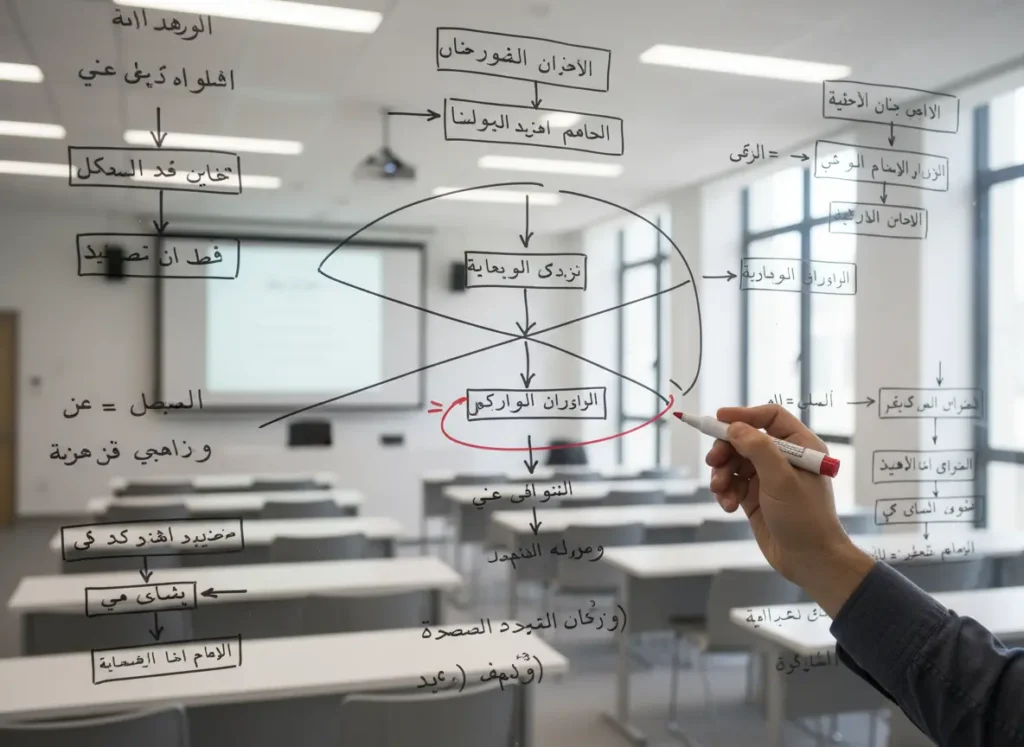
Genuine professional-level training requires more than “advanced” labeling. Here’s what actually matters:
Industry Specialization
Quality programs offer focused tracks: Business Arabic (contracts, negotiations, finance), Medical Arabic (clinical terms, patient care), Legal Arabic (court proceedings, legislation), or Technical Arabic (engineering, IT, construction).
Advanced Grammar Mastery
Professional contexts demand complex structures rarely used casually: conditional clauses in legal language, passive constructions in technical writing, subjunctive mood in correspondence.
Business Writing Excellence
You’ll produce flawless professional documents: formal emails, business proposals, contracts, executive summaries. Every document reflects your credibility.
Presentation Skills
Arab business culture has different expectations for structure, tone, and persuasion. Learn proper formalities, direct vs. indirect communication, and culturally appropriate closing strategies.
For comprehensive training, check Advanced Arabic Course: Cultural.
University-Level Arabic: The Academic Path
Some careers demand more than fluency—they require academic credentials. Diplomacy, international law, Middle Eastern studies, and research all benefit from formal degrees.
What University Programs Deliver
CEFR C1-C2 Proficiency: Near-native fluency for complex texts, research papers, and academic debates.
Classical and Modern Mastery: Study classical literature, religious texts, and contemporary media—building deep cultural expertise.
Research Credentials: Produce original research in Arabic. Professional certifications (ALPT, ACTFL) validate your expertise.
Online University Options
Accredited programs now offer Bachelor’s and Master’s degrees, graduate certificates, and hybrid models—no relocation required.
Choose programs with native-speaking PhDs, recognized accreditation, strong placement rates, and industry alumni networks.
Explore Study Arabic Online University Level
Industry-Specific Arabic: What You Actually Need
Professional Arabic varies dramatically by industry. Here’s what matters most:
Business Arabic
Essential Skills: Contract negotiation, financial terminology, formal correspondence, meeting management
Cultural Key: Arab business culture prioritizes relationships over transactions. Trust comes before deals.
Real Impact: A sales director spent three months on business Arabic before launching in the Gulf. Result? Partnerships her English-only competitors couldn’t access.
Medical Arabic
Essential Skills: Anatomical terms, diagnosis vocabulary, patient communication, healthcare ethics
Cultural Key: Family involvement in medical decisions, gender considerations, religious protocols (prayer, fasting, halal medications)
Real Impact: A Dubai nurse saw patient compliance skyrocket once she could explain procedures in Arabic.
Legal Arabic
Essential Skills: Contract law, court proceedings, legislative language, international diplomacy
Cultural Key: Understanding Sharia principles, hierarchical systems, extreme formality requirements
Technical Arabic
Essential Skills: Engineering specs, safety protocols, project management, quality standards
Cultural Key: Regulatory differences across countries, documentation requirements, professional licensing
For practical training, explore Arabic grammar for adults
Learning Pathways: Three Routes to Professional Fluency
There’s no single “best” path—it depends on your timeline, budget, and career urgency.
Path 1: Fast-Track Professional (3-6 Months)
Who it’s for: Professionals with urgent career needs—relocating for a job, closing a specific deal, preparing for a major project.
Method:
- Intensive daily study (2-3 hours minimum)
- One-on-one tutoring with industry-specialized instructors
- Immersion weekends or short-term stays in Arab countries
- Focused solely on your specific professional vocabulary and contexts
Investment: $3,000-8,000
Results: Functional professional competence in your specific field. You won’t be perfectly fluent, but you’ll handle your job responsibilities in Arabic.
Best for: Business executives, consultants, short-term contractors
Path 2: Balanced Professional Development (12-18 Months)
Who it’s for: Professionals building long-term careers in Arab markets or industries.
Method:
- Structured online courses (3-5 hours per week)
- Weekly conversation practice with native professionals
- Industry-specific reading and writing practice
- Gradual progression from intermediate to advanced
Investment: $2,000-5,000
Results: Solid professional fluency with deep cultural understanding. You can handle complex situations, read professional documents, and build lasting business relationships.
Best for: Healthcare professionals, engineers, academics, mid-career professionals
Explore Online Arabic Classes for Adults for flexible professional programs.
Path 3: Academic Credentials (2-4 Years)
Who it’s for: Diplomats, international lawyers, academic researchers, career changers seeking maximum credibility.
Method:
- Formal degree program (BA, MA, or certificate)
- Comprehensive study of language, literature, culture, history
- Thesis or capstone project
- Study abroad components
- Professional certifications upon completion
Investment: $10,000-50,000+
Results: Near-native fluency, academic credentials, deep cultural expertise, professional certification.
Best for: Diplomats, policy analysts, researchers, career academics
Review options in Arabic Degree Distance Learning.
Success Stories: Professionals Who Made It

Story 1: Sarah – Business Executive
Background: VP of Business Development for a tech company expanding into Saudi Arabia
Challenge: Needed Arabic to negotiate partnerships and understand cultural business dynamics
Method: 6-month intensive business Arabic program (2 hours daily) + monthly trips to Riyadh
Results:
- Month 3: Conducting basic business meetings in Arabic
- Month 6: Negotiating complex partnership terms without translators
- Year 1: Closed $5 million deal that English-only competitors couldn’t access
- Outcome: Promoted to Regional Director, 40% salary increase
Her insight: “Learning Arabic wasn’t just about words—it was about showing respect. My Saudi partners opened up completely once I could communicate directly. Deals that seemed impossible suddenly became easy.”
Story 2: Dr. Ahmed – Healthcare Professional
Background: Egyptian-American physician working in UAE hospital
Challenge: Patients were hesitant to trust him despite excellent medical credentials
Method: Medical Arabic course (8 months) + cultural competency training
Results:
- Month 4: Patient satisfaction scores increased 35%
- Month 8: Became most-requested physician in cardiology department
- Year 2: Appointed Department Head
- Outcome: Deeper patient relationships, better health outcomes, career advancement
His insight: “Patients weren’t doubting my medical skills—they needed to feel understood. Once I could explain procedures in Arabic and show cultural sensitivity, everything changed.”
Story 3: James – International Lawyer
Background: Corporate lawyer handling Middle East transactions
Challenge: Relying on translators created delays and missed nuances in contracts
Method: Legal Arabic certificate program (18 months) + internship in Dubai law firm
Results:
- Month 12: Reading contracts independently
- Month 18: Drafting legal briefs in Arabic
- Year 2: Hired by major international firm specifically for Arabic expertise
- Outcome: Doubled salary, became indispensable in firm’s Gulf practice
His insight: “Legal translation is never perfect. Tiny nuances in contract language can mean millions of dollars. Being able to read Arabic legal documents directly gave me an edge no one else had.”
Common Mistakes Professionals Make
Mistake 1: Treating It Like a Hobby Professional Arabic demands professional commitment. Casual app practice won’t cut it. You need structured curriculum and serious time investment.
Mistake 2: Skipping Cultural Training Perfect Arabic with poor cultural understanding still fails. Business protocols and social norms matter as much as vocabulary.
Mistake 3: Learning the Wrong Register Many waste time on colloquial dialects when they need formal Fusha for boardrooms and legal documents.
Mistake 4: Avoiding Certification Without credentials (ALPT, ACTFL), your fluency is hard to prove. Don’t skip this validation step.
Frequently Asked Questions
How long does it take to reach professional fluency in Arabic?
With intensive daily study and quality instruction, expect 12-18 months to reach functional professional fluency (CEFR B2-C1). True expert-level fluency (C2) typically requires 2-4 years.
Which is more important for professionals: MSA or dialects?
Modern Standard Arabic (Fusha) is essential for professional contexts. Dialects help with social integration but won’t help you read contracts or write reports. Master Fusha first, add a dialect later if needed.
Can I learn professional Arabic entirely online?
Yes. Quality online programs with native instructors, industry-specific curriculum, and regular speaking practice can deliver excellent results. Many professionals never set foot in an Arab country during training.
What’s the ROI on professional Arabic training?
Professionals with Arabic fluency often see 20-40% salary increases, faster promotions, and access to opportunities unavailable to monolingual colleagues. The investment typically pays for itself within 12-24 months.
Do I need a university degree in Arabic to work professionally?
Not always. Business professionals, healthcare workers, and engineers often succeed with intensive professional training and certifications. Academics, diplomats, and lawyers typically benefit from formal degrees.
Your Next Steps: Start Today
Professional Arabic fluency isn’t a distant dream—it’s a strategic decision followed by consistent action.
Here’s what to do right now:
1. Define Your Professional Goal
Why exactly do you need Arabic? Be specific. “I need to negotiate contracts in the Gulf” is better than “Arabic would be nice for my career.”
2. Choose Your Path
Match your timeline and budget to one of the three pathways: Fast-Track (3-6 months), Balanced (12-18 months), or Academic (2-4 years).
3. Find Quality Training
Look for programs with:
- Native instructors with professional experience in your industry
- Industry-specific curriculum
- Recognized certifications
- Proven track record with professionals
4. Commit Fully
Half-hearted effort produces half-hearted results. Professional Arabic requires serious commitment. Treat it like the career investment it is.
5. Start Now
Every day you delay is a day your competitors get ahead. The best time to start was yesterday. The second-best time is today.
For comprehensive professional Arabic training tailored to your career, explore full guide Learn Arabic for Adults.
Conclusion: Professional Arabic Is Career Insurance
The global business landscape is shifting. Arab markets are growing. Gulf countries are diversifying economies. North Africa is emerging as a tech hub. Arabic fluency isn’t just nice to have—it’s becoming essential for serious professionals.
The question isn’t whether you need professional Arabic. The question is whether you’ll invest in it now or regret not starting sooner.
Your career deserves this investment. Your professional goals require it. Your competitors are already learning.
The door is open. The programs exist. The success stories are real.
What’s stopping you?
👉 Book your professional Arabic consultation today and discover the exact path to fluency for your career.
This guide was created to help professionals like you navigate Arabic learning with clarity and purpose. Whether you’re just starting or looking to reach expert-level fluency, the path forward is clearer than you think.