
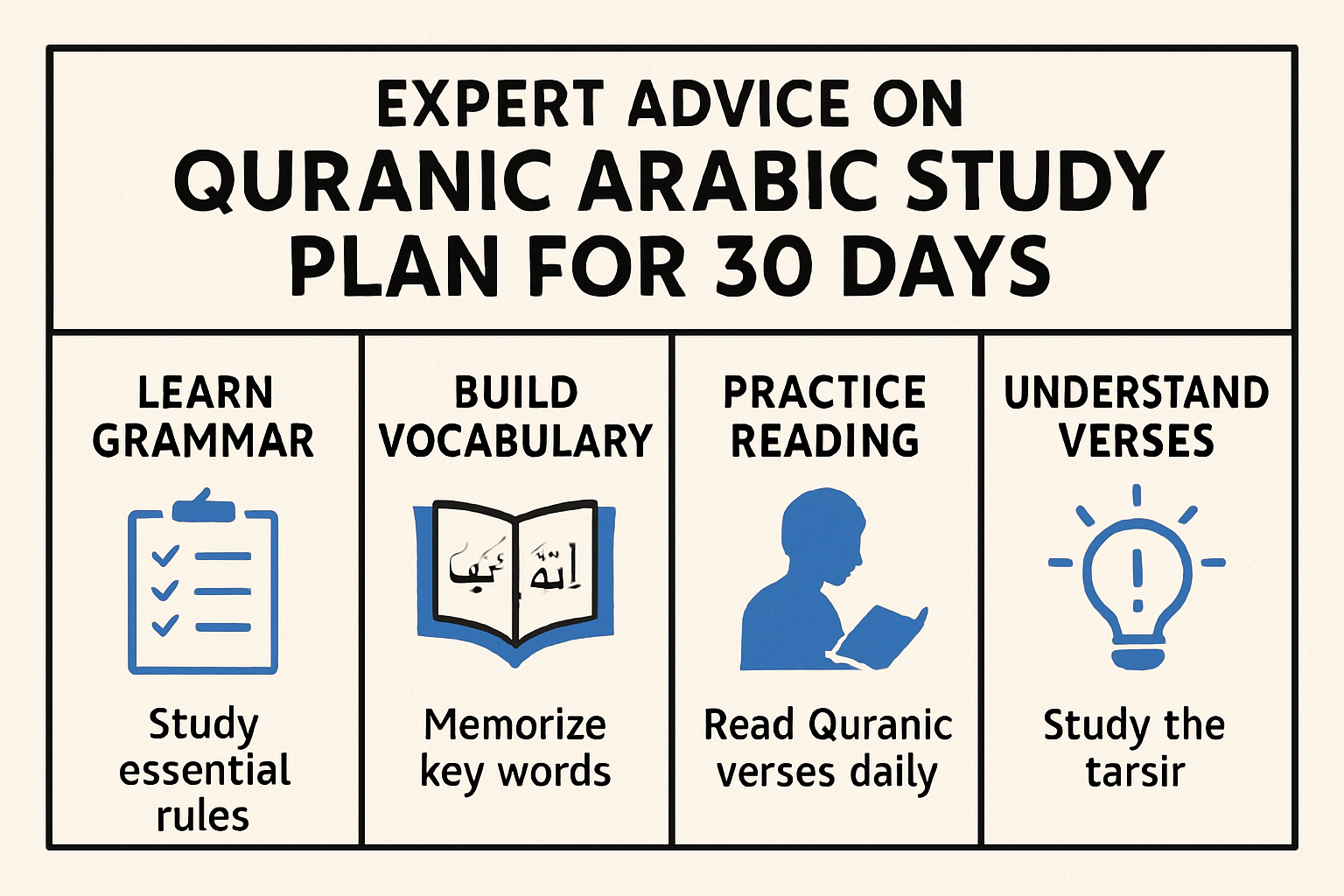
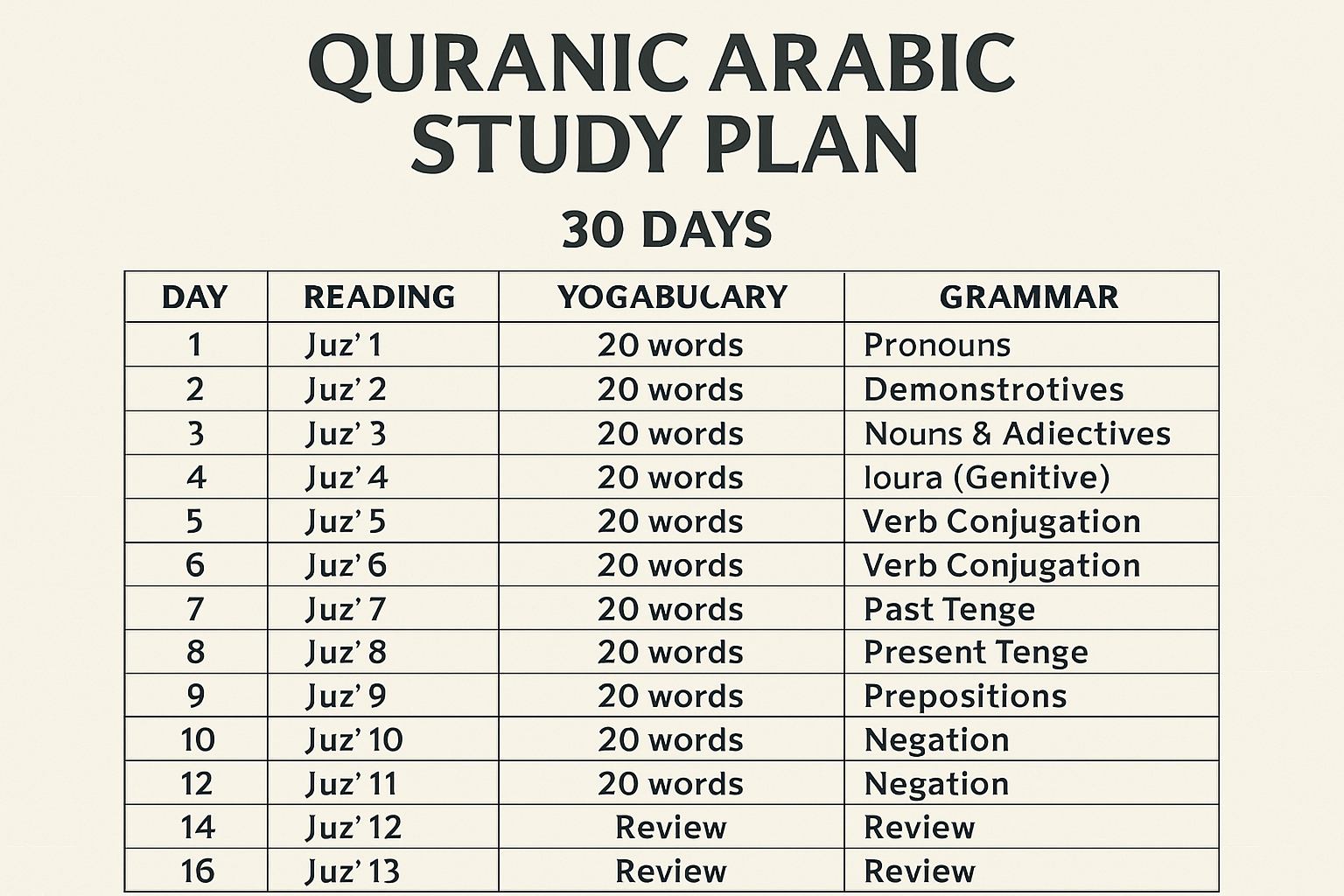
Creating a Quranic Arabic Study Plan for 30 Days is one of the most powerful gifts you can give yourself. Over one month, you can build a strong connection with the Quran, understand essential vocabulary, improve tajweed, and develop reading and memorization skills without feeling overwhelmed. This guide helps Muslims, beginners, and motivated learners follow a structured, realistic schedule designed to help them learn, read, recite, and reflect on Quranic Arabic step by step.
You’ll find clear strategies, daily goals, and practical tips that make your 30-day journey smoother, deeper, and more rewarding—whether your aim is comprehension, recitation, hifz foundation, or fluency in the language of the Holy Quran. To achieve clarity in your recitation and understanding, it is essential to follow a structured Quranic Arabic curriculum for beginners.
Quranic Arabic Study Plan for 30 Days: Day 1 Setup – Foundation
Gather Essential Study Materials – Preparation
Before the first day begins, individuals should prepare all key tools needed for a structured study plan:
- A Mushaf for daily reading and recitation
- A notebook for vocabulary, grammar notes, and reflection
- A printed or digital chart to track daily progress
- Audio Quran recitation for pronunciation and tajweed
- Access to online classes or courses for extra guidance
Having these materials ready keeps your learning journey smooth and reduces wasted time during the month.
Set Daily Learning Goals – Clarity
Your goals for each day should be simple and achievable:
- Read a small portion of Quranic verses
- Memorize a list of new Arabic vocabulary
- Review grammar or basic language rules
- Practice tajweed for a few minutes
- Reflect on the meaning and translation
Clear daily goals prevent confusion and keep you moving consistently.
Building Foundations in Quranic Arabic – Essentials
Understanding the core of the Arabic language is crucial in the first week.
Learn Basic Alphabet and Sounds – StartStrong
This step includes:
- Reviewing Arabic letters and articulation
- Learning correct pronunciation through tajweed
- Practicing reading simple words and short verses
Beginners should take their time here, because a strong foundation helps the entire 30-day plan feel easier.
Essential Vocabulary for Quranic Texts – WordsMatter
Memorize Common Religious Words – CoreLexicon
Quranic Arabic contains high-frequency words repeated across many surahs. Start with:
- Words about worship and faith
- Common verbs used in Quranic stories
- Vocabulary related to people, places, and actions
Memorizing vocabulary daily strengthens understanding and builds confidence.
Practice Vocabulary in Sentences – ContextBoost
To deepen comprehension:
- Write 3–5 sentences using new vocabulary
- Read short verses containing these words
- Practice translation and reflection
This method helps you connect meaning with usage, not just memorization.
Grammar Essentials in Quranic Arabic – Structure
Master Noun and Verb Structures – GrammarPath
Understanding basic grammar makes reading easier:
- Learn singular, dual, and plural nouns
- Study verb forms and how they change in context
- Practice recognizing patterns in Quranic verses
Grammar is a powerful tool that makes the entire Quran feel more accessible.
Pronunciation Tips for Quranic Arabic – Accuracy
Focus on Accurate Letter Articulation – Precision
Correct articulation (makharij) is essential for recitation:
- Practice heavy vs. light letters
- Strengthen tricky sounds like ص ض ط ظ ق
- Review rules of elongation and stops
These small details build excellent pronunciation.
Use Audio Resources for Perfection – SoundGuide
Listening daily to certified reciters:
- Enhances tajweed accuracy
- Helps beginners tune their ear to correct pronunciation
- Supports memorization through repetition
Audio learning is a powerful pillar in any 30-day plan.
Daily Practice Routines – Consistency
Incorporate Repetition Exercises – RoutinePower
Effective daily repetition includes:
- Reading the same verse multiple times
- Writing vocabulary repeatedly
- Reviewing grammar rules each week
Repetition builds long-term memorization and fluency.
Apply Lessons to Short Surahs – RealUsage
Choose short surahs from Juz Amma to:
- Practice recitation
- Apply grammar understanding
- Strengthen Quranic vocabulary
- Build hifz foundations
Hands-on application accelerates progress.
Recommended Tools and Resources – SmartSelection
Select Online Apps and Videos – DigitalBoost
Online tools make the 30-day journey easier:
- Apps for tajweed practice
- Websites that offer structured lessons
- Videos that explain grammar simply
- Online courses for personalized guidance
These resources benefit beginners and advanced learners alike.
Monitoring Your Learning Journey – Tracking
Track Daily Achievements Logically – ProgressFlow
Use a chart or digital tracker to record:
- Daily reading portions
- Vocabulary memorized
- Surahs reviewed
- Tajweed improvements
- Reflection notes
Tracking motivates you and keeps your month well-organized.
Adjust Strategies Based on Progress – SmartAdapt
If you feel overwhelmed:
- Reduce daily load
- Switch to shorter surahs
- Add more review time
- Focus on pronunciation over memorization
Flexibility keeps your plan realistic and achievable.
Quranic Arabic Study Plan for 30 Days: Final Review – Completion
Evaluate Overall Comprehension – Insight
At the end of the month:
- Check how much vocabulary you retained
- Assess your reading fluency
- Review tajweed accuracy
- Test your understanding of simple verses
- Reflect on your spiritual connection
This evaluation helps you set new goals for the next month.
Celebrate Key Milestones Achieved – Motivation
Recognize your achievements such as:
- Completing daily goals consistently
- Memorizing a solid list of vocabulary
- Improving recitation and pronunciation
- Feeling more connected to Quranic Arabic
Celebration encourages long-term learning and stronger consistency.
Ready to take your 30-day plan to the next level with expert teachers?
You can book a personalized plan through our contact page:
👉 https://alphabetarabicacademy.com/contact-us/