
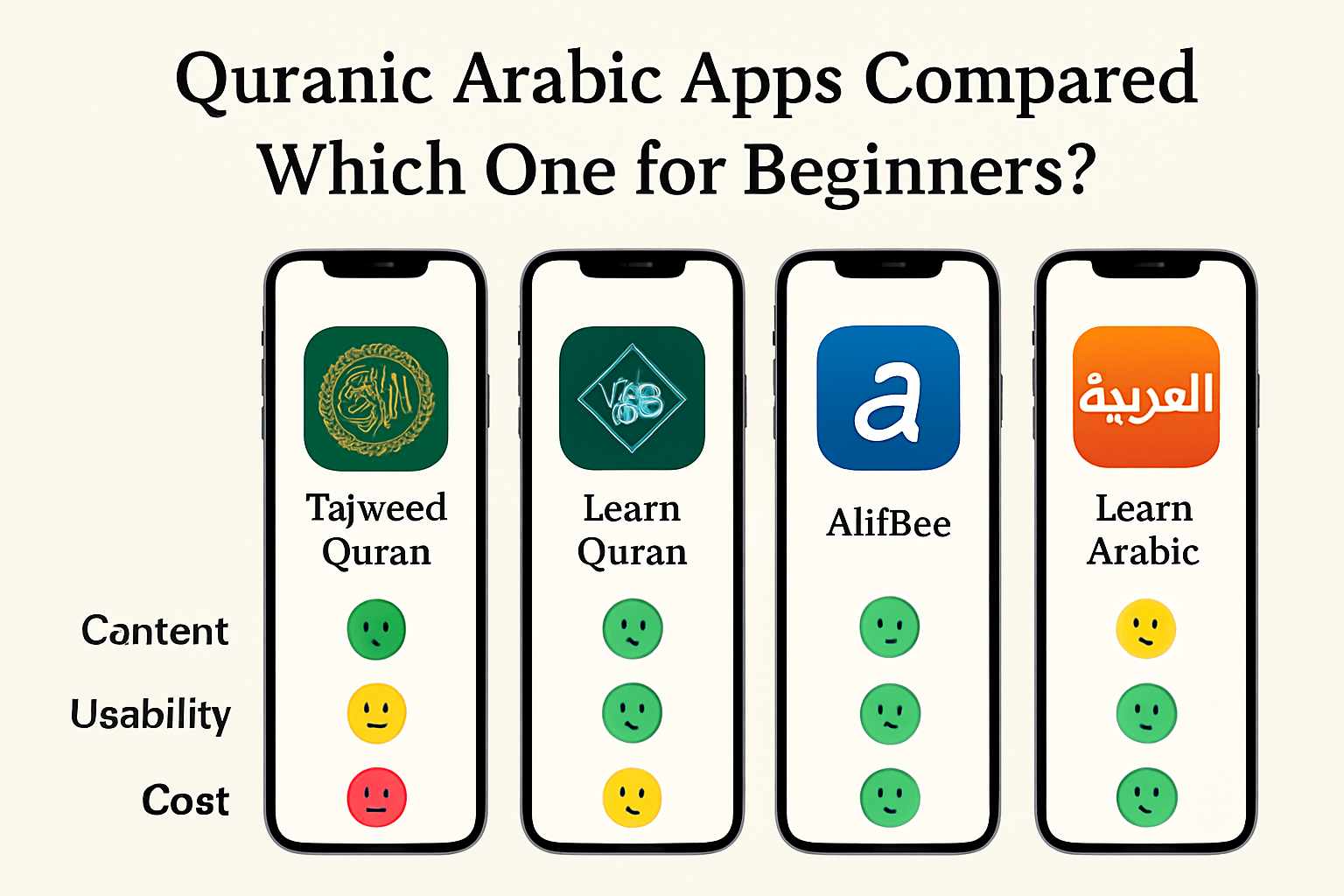

When people search Quranic Arabic Apps Compared, they’re usually overwhelmed by the number of choices. Every app claims to help you learn, read, and understand the holy Quran, but not all apps are truly built for beginners. Some focus on grammar, others push heavy syntax and morphology, and several platforms overload users with advanced corpus analysis before they even grasp simple arabic words.
So this guide breaks everything down in a clean, modern, and friendly way. We compare features, highlight the interactive lessons, analyze reviews, check ratings, and help you find the perfect app to Starting your journey with the Book of Allah is easier than you think; check out our foundational Quranic Arabic program to begin today.
Quranic Arabic Apps Compared: For Beginners — Introduction
Beginners need apps that feel simple, intuitive, and easy to access. The right digital tool gently guides you through vocabulary, meanings, and recitation, without drowning you in technical overload.
Exploring Basic Vocabulary Features — Essentials
A great beginner-friendly Quranic Arabic app usually includes:
- Core word lists from common Quranic verses
- Tap-to-translate english translations for clarity
- Built-in tafsir for deeper meaning
- Audio examples from famous reciters
These features help new learners memorize, discover, and slowly master key language structures.
Interactive Lessons for Novice Users — Engagement
Apps now blend:
- Animated screenshots
- Gamified quizzes
- Step-by-step lessons
- Mini tajwid pronunciation guides
This style makes learning feel more like a fun challenge than a heavy study session.
Key Differences in Quranic Arabic Apps — Comparison
Not every app is created with the same goal. Some apps focus on recitation, some on pure arabic grammar, and others on translations or linguistic analysis.
Audio Pronunciation Tools Preferred — Sound
Beginners rely heavily on:
- Slow-mode recitations
- Repetition tools
- Word-by-word audio
- MSA vs dialect pronunciation comparisons
These tools support users trying to learn correct articulation from day one.
Ideal Apps for First-Time Learners — Selection
The best apps keep things easy, colorful, and beginner-friendly.
Visual Aids Enhancing Comprehension — Clarity
Expect features like:
- Color-coded tajwid rules
- Highlighted words with instant meaning
- Image-based mnemonics
- Grammar charts for quick reference
Visual learning supports all ages, especially kids.
Daily Practice Reminders Integrated — Consistency
Apps with push notifications help users:
- Stay on track
- Build a memorization habit
- Review old lessons
- Make faster progress
Consistency matters more than long study hours.
Quranic Arabic Apps Compared: User Feedback — Community
Real-world user experiences matter when judging any digital education platform.
Community Forums for Support — Connection
Many apps now include:
- Muslim chat groups
- Q&A spaces for questions
- Peer feedback
- Shared prayer and recitation challenges
A supportive muslim community makes learning feel less lonely.
Expert Reviews and Ratings — Insight
Professional reviewers analyze:
- Grammar accuracy
- App stability
- Ease of use for iphone, android, ipad, ipod touch
- Customer ratings, downloads, and responsiveness
These assessments make it easier to compare apps objectively.
Ease of Use Features — Comfort
Beginners need smooth design, clean navigation, and minimal steps.
Mobile Compatibility Options Chosen — Flexibility
Modern Quranic Arabic apps offer:
- iOS and Android versions
- Offline downloads
- Tablet-optimized interfaces
- Online syncing across devices
This makes learning accessible anywhere, anytime.
Cost-Effective Learning Solutions — Budget
Money shouldn’t block spiritual growth or education.
Free vs Paid Versions Compared — Value
Free apps usually offer:
- Basic vocabulary
- Simple translations
- Limited lessons
Paid versions unlock:
- Full courses
- Structured levels
- Long-term memorization tools
- Full reciter libraries
- Deeper linguistic analysis
Choose based on your goals and available time.
Enhancing Skills with App Tools — Progress
Smart apps provide tools that help you measure how far you’ve come.
Progress Tracking Features Preferred — Growth
Look for:
- Scoreboards
- Completion badges
- Streak systems
- Vocabulary mastery percentages
These keep you motivated every day.
Apps Blending Faith and Language — Depth
Some apps combine islamic spirituality with language learning beautifully.
Integration with Holy Texts — Meaning
Expect features like:
- Tap-to-hear verses
- Instant translation
- Recitations from famous qaris
- Tafsir-based explanations
This lets learners feel the connection between language and faith at every step.
Choosing Your Preferred App — Decision
After comparing features, it comes down to your learning style.
Customizable Learning Paths Recommended — Personalization
Choose apps that let you:
- Adjust lesson difficulty
- Switch between languages
- Control audio speed
- Browse levels freely
- Build a spiritual-learning routine that fits your life
A customizable app becomes a long-term companion, not just a tool.
Want a More Structured Quranic Arabic Journey?
Apps are great, but nothing beats a real teacher guiding you step-by-step.
If you want proper foundations, certified tutors, and a structured curriculum, consider learning with Start your Arabic learning journey.
👉 Book your personalized Quranic Arabic class now:
https://alphabetarabicacademy.com/contact-us/
FAQs
Which Quranic Arabic app is best for absolute beginners?
The best Quranic Arabic apps for beginners are the ones that make learning simple, interactive, and stress-free. Look for apps that offer basic vocabulary lists, word-by-word meanings, slow audio recitation, and visual aids like color-coded tajwid. These features help beginners understand the Quranic language step by step without feeling overwhelmed.
Are Quran learning apps enough to understand Arabic grammar?
Apps can help you understand essential grammar concepts, especially basic verb forms, nouns, and sentence structures. However, they usually provide simplified explanations rather than a complete curriculum. For deeper grammar mastery, structured online courses with real teachers work far better than apps alone.
What features make a Quranic Arabic app reliable?
A reliable app has accurate translations, trusted tafsir sources, high-quality audio recitations, and clear explanations of meanings. It should also include progress-tracking tools, user-friendly design, and frequent updates to enhance learning. Apps with verified Islamic content and strong user ratings are usually the safest choices.
Can kids learn Quranic Arabic using mobile apps?
Yes, many Quranic Arabic apps are designed specially for kids with colorful visuals, simple lessons, and fun quizzes. These help children memorize words, recognize letters, and understand basic meanings. Kids progress faster when apps include audio support and interactive exercises.
Do apps improve tajwid and recitation accuracy?
Apps can help you practice tajwid by offering slow audio recitation, repeated playback, and color-coded rules. While apps improve pronunciation basics, the most accurate tajwid correction comes from learning with a qualified teacher who can correct mistakes that apps may not detect.