
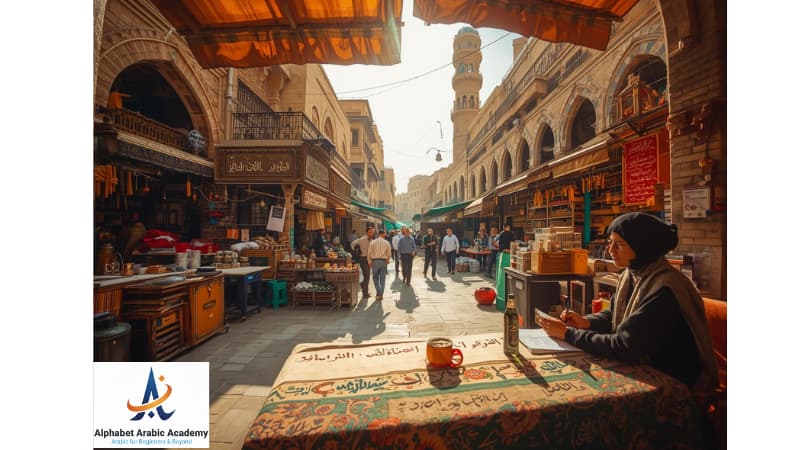
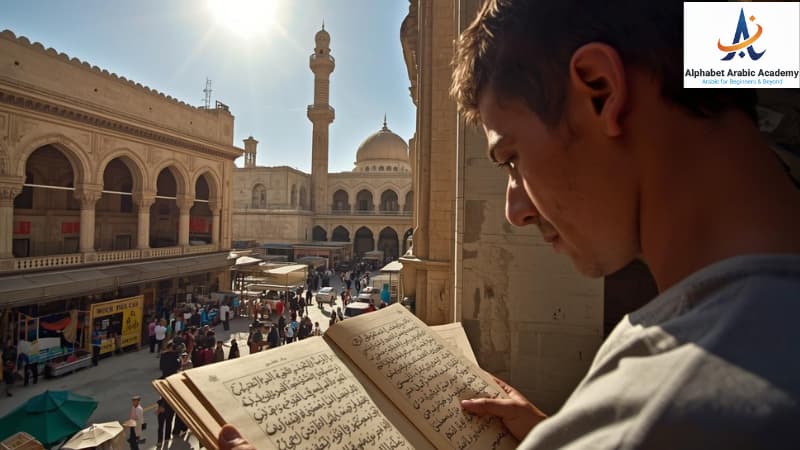
If you want to learn colloquial Egyptian dialect for foreigners, you don’t need magic, talent, or years of academic studies. What you really need is daily exposure to real Egyptian Arabic as it’s spoken in everyday life.
The Egyptian colloquial dialect—often called ECA—is the most widely understood spoken dialect across the Arab world. It’s the language of conversations, media, movies, and music. In this guide, you’ll discover practical daily habits to understand and speak like a native confidently. To sound more like a native and navigate daily life in Cairo easily, we recommend checking out the best way to learn Egyptian Arabic on our academy’s website.
Daily Routines to Learn Colloquial Egyptian Dialect for Foreigners Naturally
Building a daily routine is the foundation of mastering any language. Egyptian Arabic is no exception. Short, consistent habits work better than long, irregular study sessions.
Daily Listening Practices: Immersion
Listening daily helps your brain adapt to Egyptian pronunciation and rhythm.
- Focus on spoken Egyptian, not Modern Standard Arabic.
- Spend 15 minutes listening to native sounds to make the dialect feel natural.
- Don’t translate everything—just aim to be understood and catch the context.
Listening to Egyptian Music: Rhythm
Egyptian music reflects real life, emotions, and commonly used phrases.
- Listen to popular Arab singers to improve your language flow.
- Pay attention to slang and repeated vocabulary in the lyrics.
- Singing along is an essential habit to improve your native accent.
Using Podcasts for Immersion: Context
Podcasts are perfect for passive learning. Look for online content where people talk about everyday topics. This helps you understand how sentences are structured in real conversations.
Speaking Tips for Effective Learning: Confidence
You don’t learn a dialect by staying silent. Speak—even imperfectly—is essential for progress.
Practicing with Native Speakers: Interaction
Speaking with native Egyptian speakers accelerates your teaching journey.
- Focus on communication, not perfection.
- Use essential phrases like “Ezayyak” and “Ma’lesh” daily.
- Accept that mistakes are a cultural bridge to better learning.
Engaging in Language Exchanges: Reciprocity
Join online platforms to practice with native speakers. It’s a great way to use slang and colloquial terms in a real human interaction.
Reading Resources for Colloquial Egyptian Dialect: Visuals
Reading reinforces what you hear in media and everyday life.
Popular Egyptian Novels: Literature
Some modern books includes Egyptian colloquial dialogue. Focus on the dialogue sections to see how native speakers actually speak.
Online Articles in Colloquial Egyptian: Modernity
Many blogs and social media posts use ECA. Observing how Egyptians write as they speak helps you understand the logic of the dialect.
Vocabulary Building Techniques: Retention
Flashcards for Key Phrases: Memory
Instead of isolated words, learn full phrases. Use flashcards for commonly used slang to build your conversational bank.
Mobile Apps for Vocabulary: Efficiency
Use online apps that specifically focus on the colloquial dialect. Combine them with your classes for the best results.
Watching Egyptian Media: Cultural Understanding
Recommended TV Shows: Everyday Life
TV shows are a goldmine for ECA. They show how language is used in family life and social settings.
Understanding Egyptian Cinema: Legacy
Egypt is the heart of Arab cinema. Watching movies helps you understand cultural nuances and humor that you won’t find in books.
Cultural Context in Language Learning: Deeply
Important Dialect Expressions: Idioms
Many Egyptian phrases don’t translate literally. Understanding the cultural weight of words like “Insha’Allah” is essential.
Regional Variations in Colloquial Speech: Awareness
While Cairo’s dialect is the most commonly understood, being aware of regional variations in Egypt makes your language skills more robust.
Consistency in Learning: Mastery
Setting Daily Goals: Precision
Set achievable goals: 10 new phrases a day or 15 minutes of online courses.
Tracking Progress Effectively: Results
Review your progress weekly to stay motivated. Consistency is what transforms a beginner into a native-like speaker.
Frequently Asked Questions (FAQs)
Q1: How long does it take to learn colloquial Egyptian dialect for foreigners?
With daily practice and real exposure, many foreigners start basic conversations within 2–3 months.
Q2: Should foreigners learn Egyptian dialect or Modern Standard Arabic first?
If your goal is speaking and understanding everyday life, colloquial Egyptian (ECA) is the best starting point.
Q3: Can I learn Egyptian Arabic online effectively?
Yes. Online classes with native tutors at Alphabet Arabic Academy provide the structure and practice needed for fast results.
Ready to Master Egyptian Arabic?
Daily habits are powerful, but guided teaching accelerates your results. At Alphabet Arabic Academy, we offer specialized courses to help you speak confidently.
👉 Book your private lesson now: https://alphabetarabicacademy.com/contact-us/