
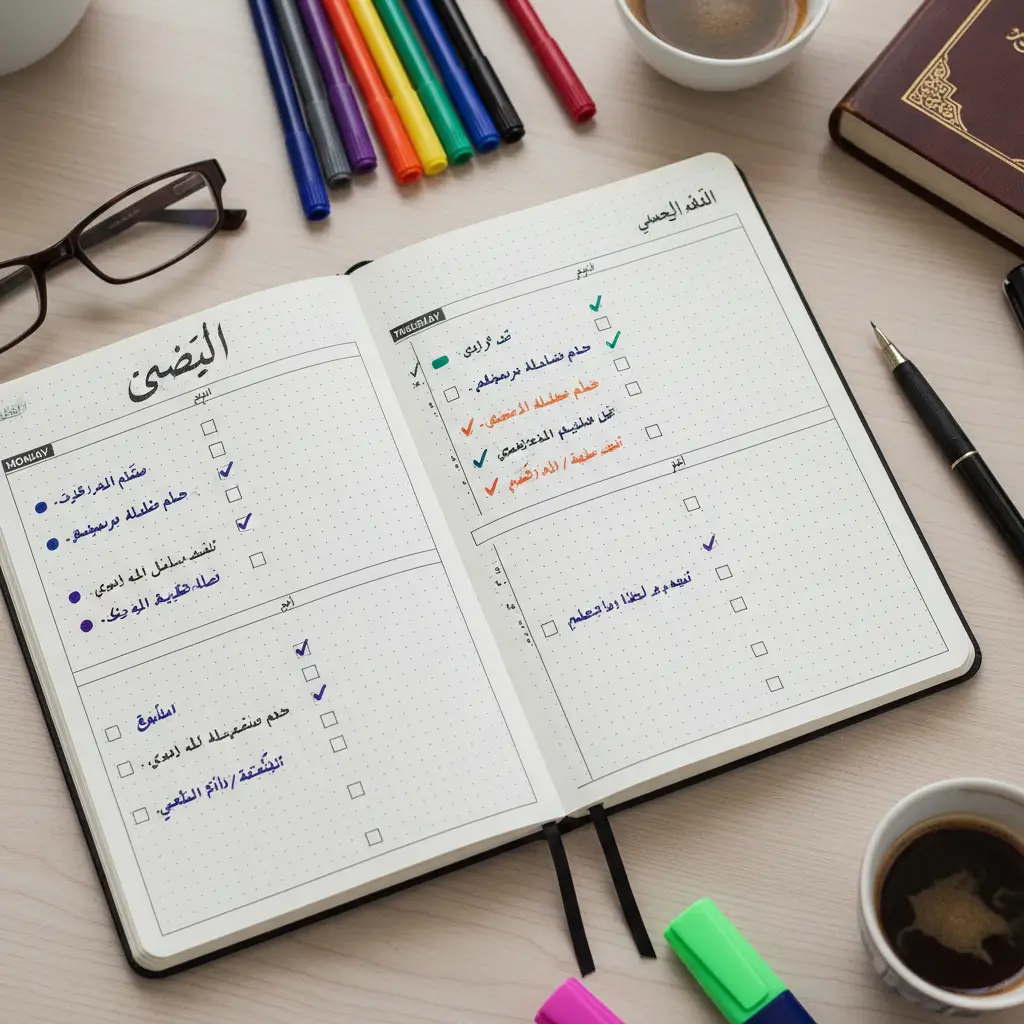

best way to learn arabic at home sounds ambitious. And for good reason — Arabic consistently ranks among the most challenging languages for English speakers to acquire. A different alphabet, unfamiliar sounds, a grammar system unlike anything in European languages, and the added complexity of choosing between dozens of spoken dialects and formal written Arabic.
But here’s what the complexity statistics don’t tell you: thousands of people learn Arabic from home every year without ever stepping foot in an Arabic-speaking country. They do it with the right methods, realistic expectations, and a commitment to consistency over perfection.
This guide breaks down seven methods that genuinely work — not in theory, but in practice, based on how real learners build real Arabic skills from their living rooms.
Before You Start: The Decision That Shapes Everything
Before exploring any method, you need to make one foundational choice that most beginners skip entirely: which Arabic are you learning?
This isn’t a minor detail. Arabic exists in two very different forms. Modern Standard Arabic (MSA) is the formal, written language used in books, news broadcasts, official documents, and pan-Arab communication. It’s the Arabic of education and formality. Egyptian Arabic, Levantine Arabic, Gulf Arabic, and Moroccan Arabic are spoken dialects — the languages people actually use in daily conversation, at home, in markets, and on the phone.
The gap between these two forms is significant. A person fluent in MSA can read a newspaper but may struggle to follow a casual conversation in an Egyptian café. A fluent Egyptian Arabic speaker might not be able to read a formal document without additional study.
Neither choice is wrong. But your goal determines your path. If you want to read the Quran, academic texts, or Arab media — start with MSA. If you want to travel, connect with Arab friends and family, or speak with real people in real situations — start with a spoken dialect, and Egyptian Arabic is the strongest choice because it’s understood across the Arab world thanks to Egypt’s cultural reach in film and television.
Make this decision before Method 1. Everything else flows from it.
At a Glance: The 7 Methods Compared

Not sure where to start or how much time to invest? Here’s a quick reference for all seven methods — daily time commitment and what you can realistically expect:
| Method | Daily Time | Expected Result |
|---|---|---|
| 1. The Alphabet | 15 min | Read basic Arabic within 3 weeks |
| 2. Vocabulary Building | 10–15 min | 500 useful words in 2 months |
| 3. Listening Practice | 20–30 min | Natural ear for Arabic within 6 weeks |
| 4. Speaking From Day One | 10 min | Real conversations from week one |
| 5. Structured Study Sessions | 30 min total | Consistent progress without burnout |
| 6. Grammar as a Tool | 10 min | Accuracy without grammar paralysis |
| 7. Native Teacher Sessions | 2–3x per week | 3x faster progress than self-study |
No single method works in isolation. The learners who reach conversational fluency fastest combine Methods 4, 5, and 7 as their core, with the others layered in as support.
Method 1: Master the Alphabet First — But Don’t Obsess Over It
The Arabic alphabet has 28 letters. Most connect to each other in a flowing script, and letters change shape depending on where they appear in a word. It looks intimidating from the outside. From the inside, once you’ve spent focused time with it, it clicks faster than most learners expect.
Dedicate two to three weeks to the alphabet before worrying about vocabulary or grammar. Use a combination of writing by hand — which research consistently shows improves retention compared to typing — and audio recognition so you can connect the written form to its sound.
A useful benchmark: you should be able to read simple Arabic words aloud, even without understanding their meaning, within three weeks of focused study. This is the minimum foundation for everything that follows.
One important nuance: if your primary goal is spoken Egyptian Arabic for conversation, some learners choose to delay the alphabet and begin with phonetic transliteration instead. This isn’t wrong for getting speaking confidence early — but plan to learn the script eventually. It unlocks a dramatically richer learning experience.
Method 2: Build Vocabulary Around Your Actual Life
Generic vocabulary lists are one of the least efficient ways to learn Arabic at home. Memorizing words like “parliament,” “philosophy,” or “agriculture” when you’re a beginner wastes precious cognitive bandwidth.
Instead, build vocabulary around the specific situations that matter to your life and your goals. If you’re learning Arabic to connect with a partner’s family, your first vocabulary bank should revolve around greetings, family members, food, and home. If you’re learning for travel, start with transport, directions, money, and accommodation.
The 80/20 principle applies powerfully to vocabulary. In most languages, roughly 1,000 to 1,500 high-frequency words cover the vast majority of everyday conversation. In Arabic, finding these high-frequency words specific to your chosen dialect is more valuable than working through a comprehensive textbook from front to back.
Spaced repetition software like Anki makes this manageable. Create your own deck of words relevant to your goals, review them daily in short sessions of ten to fifteen minutes, and your active vocabulary will compound over months in ways that feel almost surprising.
Method 3: Listen Obsessively — Even Before You Understand
One of the most underrated methods for learning Arabic at home is extensive listening to natural Arabic content, starting earlier than feels comfortable.
Your ear needs exposure to the rhythms, sounds, and flow of Arabic long before your brain can decode individual words. Listening to Egyptian Arabic music, podcasts, or YouTube content from day one begins calibrating your ear to sounds that don’t exist in English — the ‘ain, the ghain, the emphatic consonants that are the fingerprints of Arabic pronunciation.
Start with content that has visual context — Egyptian films, Arab cooking shows, or vlogs where the environment provides clues to meaning. You won’t understand most of what you hear at first. That’s expected and entirely fine. Comprehension follows exposure, not the other way around.
As your vocabulary grows, move toward content slightly above your current level. Linguists call this “comprehensible input plus one” — material that stretches you without losing you entirely. Egyptian Arabic TV series are particularly good for this because the dialogue is natural, the speech isn’t artificially slowed, and the cultural context adds richness to what you’re absorbing.
Pair this with shadowing — listening to a short phrase and immediately repeating it aloud, mimicking the speaker’s rhythm, stress, and intonation as closely as possible. Shadowing accelerates pronunciation development dramatically compared to studying pronunciation rules in isolation.
Method 4: Speak From Week One — Mistakes and All

The single biggest mistake home learners make is waiting until they feel “ready” to speak. Readiness, in this sense, never arrives. Fluency is not a prerequisite for speaking — it’s a result of speaking.
Start speaking Arabic in week one. Talk to yourself in the mirror. Narrate your morning routine in whatever Arabic you know. Describe what you’re cooking. Label objects in your home with sticky notes in Arabic script and say the words aloud every time you walk past them.
Yes, you will make mistakes. Yes, your pronunciation will be imperfect. This is not a problem — it’s the mechanism by which improvement actually happens. Every error your brain produces and then corrects is a small piece of learning that passive study cannot replicate.
For home learners specifically, speaking with a native Arabic speaker as early as possible accelerates this process enormously. The feedback loop of a patient, qualified teacher who can hear your errors and correct them in real time is simply irreplaceable. This is exactly why online Arabic conversation courses built around live 1-on-1 sessions with native speakers produce results that self-study alone rarely matches.
Method 5: Structure Your Home Study Sessions Intentionally
Consistency beats intensity. Thirty minutes of focused Arabic study every day outperforms a three-hour session once a week, every time. The Arabic-learning brain needs regular, spaced exposure to consolidate what it’s absorbing.
A practical home study session structure:
Opening (5 minutes): Review yesterday’s vocabulary using spaced repetition. Don’t skip this — it’s where long-term retention is built.
New input (15 minutes): Learn new material. This might be new phrases, a grammar concept, a passage of text, or a listening exercise. Keep this focused on one thing rather than bouncing between topics.
Active production (10 minutes): Write sentences using what you’ve learned. Speak out loud. Record yourself. This is the step most home learners skip because it’s uncomfortable — which is precisely why it’s the most important.
Review (5 minutes): Add new words to your spaced repetition deck. Note anything confusing for your next session or for your next lesson with a teacher.
This structure sounds simple. That’s intentional. Sustainable Arabic study at home is built on boring consistency, not exciting cramming sessions.
Method 6: Use Grammar as a Tool, Not a Foundation
Arabic grammar is complex — there’s no point pretending otherwise. Dual forms, broken plurals, root-based word construction, verb-subject-object sentence order, grammatical gender applied to everything. It’s a lot.
The mistake most home learners make is trying to master grammar before speaking. They work through grammar textbooks, memorizing rules and exceptions, and emerge months later with excellent theoretical knowledge and almost no ability to hold a real conversation.
A more effective approach is to treat grammar as something you discover through exposure and then reinforce through targeted study. When you encounter a pattern in conversation or listening — a verb form you keep hearing, a plural construction that appears again and again — that’s the moment to look up the rule. The rule sticks because you’ve already seen it in context.
For home learners specifically, grammar study works best when paired with a teacher who can answer “why does it work this way?” in real time. Grammar explained in isolation from a textbook is far less memorable than grammar explained in response to a genuine question you’ve had while trying to express something.
This is especially true for spoken dialects like Egyptian Arabic, where many formal grammar rules are simplified or replaced entirely by patterns that feel more intuitive for learners coming from conversational goals.
Method 7: Find a Native-Speaking Teacher — Even Online
This is not a method that replaces the others. It’s the method that makes all the others work better.
Learning Arabic at home does not mean learning Arabic alone. The most successful home learners combine independent study with regular sessions with a native Arabic speaker who can provide real-time feedback, answer questions, keep you accountable, and accelerate your progress in ways that no app, textbook, or YouTube channel can replicate.
The good news is that access to qualified native Arabic teachers has never been easier or more affordable. Online platforms connect you with Egyptian Arabic teachers who work entirely over video call, fitting lessons around your schedule regardless of your time zone.
What to look for in an online Arabic teacher: native speaker status, experience teaching your target variety of Arabic (MSA vs. Egyptian dialect vs. Quranic Arabic), genuine patience with beginner errors, and a lesson structure that prioritizes your speaking over their explaining.
At Alphabet Arabic Academy, all lessons are 1-on-1 with certified native Egyptian teachers, structured around your specific goals — whether that’s Modern Standard Arabic for academic or professional purposes, Egyptian Colloquial Arabic for conversation and travel, Quranic Arabic and Tajweed, or Islamic Studies. Flexible scheduling means your lessons work around your life, not the other way around.
What Real Learners Say
Methods and timelines are useful — but sometimes the most convincing thing is hearing from someone who was exactly where you are now.
“I started with Method 5 — the structured daily session — and within three months I was holding basic conversations in Arabic. I never expected it to happen that fast. The key was the 30-minute daily commitment. I didn’t miss a single day for twelve weeks.” — Ahmed, USA ⭐⭐⭐⭐⭐
“I’d tried apps and YouTube for a year and plateaued completely. The moment I added weekly lessons with a native Egyptian teacher, everything clicked. I went from understanding maybe 20% of what I heard to 70% in about two months.” — Sophie, UK ⭐⭐⭐⭐⭐
“Method 3 — obsessive listening — changed everything for me. I started watching Egyptian series every evening, even when I barely understood a word. After six weeks my ear completely transformed. Words I’d never consciously studied started making sense in context.” — Kareem, Canada ⭐⭐⭐⭐⭐
“The biggest shift for me was Method 4: speaking from week one. I was terrified of making mistakes. My teacher told me mistakes are the lesson, not the obstacle. That mindset change alone was worth more than months of previous self-study.” — Maria, Germany ⭐⭐⭐⭐⭐
These aren’t exceptional cases. They’re the pattern that emerges when learners commit to the right methods with consistency and real human feedback.
How Long Does It Actually Take?
Honest answer: longer than most apps will tell you, and shorter than most people fear.
The US Foreign Service Institute classifies Arabic as a Category IV language — the hardest category for English speakers — estimating roughly 2,200 hours of study for professional working proficiency. That sounds daunting, but professional working proficiency is an extremely high bar.
Here’s a more honest picture of what different levels actually require:
━━━━━━━━━━━━━━━━━━━━━━━━━━━━━━━━━━━━━━━━━━━━━━━━━━━━━━━━━━
  ⏱️  HOW LONG DOES IT TAKE TO LEARN ARABIC?
  Based on FSI research + real learner outcomes
━━━━━━━━━━━━━━━━━━━━━━━━━━━━━━━━━━━━━━━━━━━━━━━━━━━━━━━━━━

  🌱 BEGINNER — First phrases & basic greetings
  ██░░░░░░░░░░░░░░░░░░░░  150–200 hours
  (~30 min/day · 3–6 months)

  💬 EVERYDAY CONVERSATIONS — Travel, daily life, social
  ██████░░░░░░░░░░░░░░░░  400–600 hours
  (~1 hr/day · 6–12 months)

  🗣️ CONVERSATIONAL FLUENCY — Any everyday situation
  ██████████░░░░░░░░░░░░  800–1,000 hours
  (Teacher + self-study · 12–18 months)

  🏆 PROFESSIONAL PROFICIENCY (FSI Standard)
  ██████████████████████  ~2,200 hours
  (Intensive study · 3–5 years)

━━━━━━━━━━━━━━━━━━━━━━━━━━━━━━━━━━━━━━━━━━━━━━━━━━━━━━━━━━
  💡 KEY INSIGHT: Most learners only need Levels 1–2
     for their real goals. That's 6–12 months — not 5 years.
━━━━━━━━━━━━━━━━━━━━━━━━━━━━━━━━━━━━━━━━━━━━━━━━━━━━━━━━━━
For practical conversational ability in Egyptian Arabic — holding real conversations, navigating travel situations, connecting with Arabic-speaking friends and family — many learners reach a comfortable level within twelve to eighteen months of consistent study combining home practice with regular teacher-led sessions.
The variable that matters most is not raw time, but quality of input and consistency of practice. Two focused hours per week with a native teacher plus thirty minutes of daily independent study consistently outperforms sporadic multi-hour sessions with no accountability.
The Trap to Avoid: App Dependency
Language learning apps are genuinely useful tools. They’re accessible, gamified, and lower the barrier to starting. Used correctly, they’re excellent for vocabulary practice and maintaining daily streaks of engagement.
The trap is mistaking an app for a complete Arabic learning system. No app teaches you to think in Arabic. No app corrects your pronunciation the way a native speaker does. No app has a conversation with you that goes off script and demands real-time comprehension and response.
Apps belong in the “supplementary” column of your Arabic learning plan. The core of effective home Arabic learning is structured input, active speaking practice, and regular feedback from a qualified teacher.
Your Next Step

The best way to learn Arabic at home isn’t a single method — it’s a combination of consistent independent study and live practice with native speakers, applied to the right variety of Arabic for your specific goals.
If you’re ready to move beyond self-study and accelerate your progress with a native Egyptian teacher, a free 60-minute trial lesson is the lowest-risk way to experience what structured, conversation-focused Arabic learning actually feels like.
You might also find these resources useful as you plan your Arabic journey:
- How Long Does It Take to Learn Arabic? — A realistic breakdown of timelines by goal and study intensity.
- Egyptian Arabic Phrases: The 50 Most Common — Build your first vocabulary bank with phrases you’ll actually use.
- Arabic for Kids: Online Courses — If you’re helping a child learn Arabic at home alongside your own studies.
- Professional Arabic Course — For learners with specific career or academic goals in Arabic.
Free Tools & Resources to Support Your Home Study
Good tools don’t replace a teacher — but they make your independent study hours far more productive. Here are the best free resources to use alongside the seven methods above:
📚 Arabic-English Dictionary Hans Wehr Dictionary (PDF) is the gold standard for MSA. For Egyptian dialect, Lingualism’s Egyptian Arabic Dictionary is excellent and learner-friendly. Both are searchable online for free.
🎧 Best Podcasts for Arabic Beginners
- ArabicPod101 — Structured lessons from absolute beginner to advanced, available on Spotify and their own platform. Egyptian Arabic episodes are particularly strong.
- Kalimni Arabi — Focused entirely on Egyptian colloquial Arabic with natural dialogue and cultural notes.
- Egyptian Arabic Stories — Short, slow-paced stories in Egyptian dialect, ideal for Method 3 listening practice.
📺 Egyptian TV Series for Learning Arabic Egyptian series are the single best free resource for immersive listening at home. These shows are widely available on YouTube and streaming platforms:
- Tamer & Shawkeyya — Lighthearted and fast-paced Egyptian comedy, excellent for natural colloquial dialogue.
- La Totfi’ El Shams — A popular drama with clear, expressive Egyptian Arabic throughout.
- Selfie — Modern Egyptian humor, contemporary slang, and real conversational rhythm.
Watch with Arabic subtitles where possible. The combination of hearing and reading the same words simultaneously is one of the most powerful accelerators for home learners.
Start today. Not when you feel ready. The learners who make the most progress are the ones who begin before they feel prepared — and adjust as they go.
🎬 Watch Free: Arabic Lessons on YouTube Every Week
Reading about methods is useful. Watching and listening to real Arabic is where the learning actually sticks.
Alphabet Arabic Academy publishes free weekly Arabic lessons on YouTube — Egyptian dialect phrases, pronunciation guides, vocabulary breakdowns, and cultural context videos taught by native speakers.
▶️ Subscribe to our YouTube channel →
Each week you’ll find:
- Egyptian Arabic phrase videos with English explanations
- Pronunciation deep-dives for the hardest Arabic sounds
- Real conversations between native speakers with English subtitles
- Grammar explained simply — no textbook required
- Cultural context that makes Arabic feel human, not academic
Free to watch, no paywall, new content every week. The perfect companion for Method 3 (obsessive listening) in this guide.
📥 Free Download: 30-Day Arabic Starter Plan (PDF)
Knowing the seven methods is one thing. Having a clear day-by-day schedule that tells you exactly what to do each morning is what separates learners who progress from those who drift.
Download the Free 30-Day Arabic Study Plan →
This free 7-page PDF gives you a complete daily schedule for your first month:
- ✅ Days 1–7: Alphabet foundation — 28 letters, first 50 words
- ✅ Days 8–14: Basic phrases + first speaking exercises + your first dialogue
- ✅ Days 15–21: Listening routines + shadowing practice + Egyptian dialect ear training
- ✅ Days 22–30: Mini conversations + vocabulary expansion to 200+ words
- ✅ Weekly progress checklists and milestone markers
- ✅ 30-minute and 60-minute daily session options
No email required. No upsell. Just a practical, well-structured plan so you start tomorrow morning knowing exactly what to do.
Get the Free 30-Day Plan in pdf from our google drive
Ready to start learning Arabic at home with a native Egyptian teacher? Book your free trial lesson — no credit card, no commitment, just one conversation to get started.
How Long Does It Take
to Learn Arabic?
Hours required by proficiency level — based on FSI data & real learner outcomes
Source: US Foreign Service Institute (FSI) · Alphabet Arabic Academy learner data · alphabetarabicacademy.com