

Introduction: Beyond the Textbook – Why Your Arabic Needs a Voice
for arabic conversation classes Let’s be honest with each other: you didn’t start your Arabic journey to become a silent scholar.
You didn’t sign up for classes just to master the art of staring at grammar charts or memorizing lists of nouns you’ll never actually use. You started because you want to talk. You want to sit in a café in Cairo and order with confidence. You want to walk into a boardroom in Dubai and understand the conversation before the translator opens their mouth. You want to connect with your heritage, your family, or the Quran in a way that feels natural and deeply personal.
But here’s the reality most adults face: they spend months—sometimes years—studying, yet they freeze the moment a native speaker says “Assalamu Alaikum.”
This isn’t a failure of intelligence. It’s a failure of methodology.
I’ve taught hundreds of adult students over the years, and I’ve seen this pattern play out again and again. Traditional academic methods treat Arabic like a dead language, a puzzle to be solved on paper. But Arabic is alive. It breathes. It moves. And if you want to speak it, you need to stop treating it like homework and start treating it like a conversation.
In this guide, we’re moving beyond the “memorization phase” and into the “fluency phase.” You’ll discover how adults actually acquire speaking skills, why traditional methods fail, and how you can break the silence barrier for good.
This is why we have built a comprehensive resource hub for Learn Arabic for Adults, designed to move you from a silent observer to a confident speaker.
Why Adults Actually Have an Advantage
Contrary to popular belief, being an adult learner is a power move.
Sure, children are better at “absorbing” sounds without thinking. But adults? We have something kids don’t: logic, experience, and purpose. Looking for structured speaking training? Explore our Arabic Conversation Course Online.
Here’s what you bring to the table:
Analytical Skills: You can understand why a sentence is structured a certain way, not just memorize it blindly.
Contextual Learning: You have a lifetime of experiences to link new words to. When you learn the word for “agreement” (اتفاق – Ittifaq), you can immediately connect it to business meetings or personal negotiations.
Goal Orientation: You know exactly why you’re here, which fuels your discipline. You’re not learning Arabic “just because”—you have a real reason.
The problem isn’t your age. The problem is the method.
If you are looking for a structured roadmap, our guide on Learn Arabic Speaking for Adults breaks down the journey into manageable steps.
The Biggest Obstacle: The Adult Ego
Unlike children who learn through pure imitation and zero self-consciousness, adults have an “inner critic.” We hate sounding silly. We want our sentences to be grammatically perfect before they ever leave our mouths.
This perfectionism is the ultimate enemy of fluency.
I remember Sarah, one of my students. She came to me after six months of self-study. She could read Arabic newspapers. She understood complex grammar. But when I asked her a simple question in Arabic, she froze. Why? Because she was waiting to be “ready” to speak.
Here’s the truth: if you wait until you’re ready to speak, you will never speak.
The Conversation-First Approach: Why It Works
Traditional Arabic education is built “bottom-up”: you spend months learning the alphabet, then months on grammar rules, then you memorize vocabulary lists, and eventually—maybe after a year—you’re finally “allowed” to speak.
I believe this is the fastest way to kill motivation.
At Alphabet Arabic Academy, we flip the script. We use a “top-down” approach: speaking drives your learning, not the other way around.
To bridge the gap between theory and reality, engaging in consistent Arabic Conversation Practice for Adults is the most effective way to build muscle memory.
Why This Works for Adults
When you start with conversation:
Grammar becomes a solution, not a problem: You learn a rule because you need it to say something, not because it’s the next chapter in a book.
You remember what you use: You’ll remember the word for “coffee” (قهوة – Qahwa) because you used it to order your morning drink, not because you saw it on a flashcard.
You get immediate wins: Nothing beats the feeling of successfully introducing yourself or ordering a meal. These small victories keep you coming back.
Real Example: John’s Journey
John was 35, working in tech, with zero Arabic background. He needed conversational Arabic for colleagues in Dubai. Instead of spending six months on grammar, we started with survival phrases and daily conversation practice—just 30 minutes a day.
Within two months, he could handle basic introductions and business greetings. By month six, he was negotiating contracts and conducting meetings in Arabic.
What changed? He stopped studying Arabic and started using it.
The 20-Minute Rule: Your Daily Fluency System
Here’s something most language programs won’t tell you: consistency beats intensity every single time.
Many students fall into the “weekend warrior” trap. They attend a 3-hour class on Saturday, then don’t touch Arabic until the next Saturday. Scientifically, this is the least effective way to learn.
Your brain treats language learning like physical exercise. It requires consistent, low-intensity repetition to move information from short-term memory to long-term “automaticity.”
The Science Behind It
When you learn a new Arabic word, your brain begins to forget it almost immediately—this is called the “forgetting curve.” However, if you review that word just as you’re about to forget it, the memory becomes significantly stronger.
Twenty minutes of focused daily conversation practice is 10x more effective than a single 5-hour session once a week.
This daily “drip” of Arabic keeps your brain in “Arabic mode,” making it easier to recall words during live conversations.
Your Daily Fluency Checklist

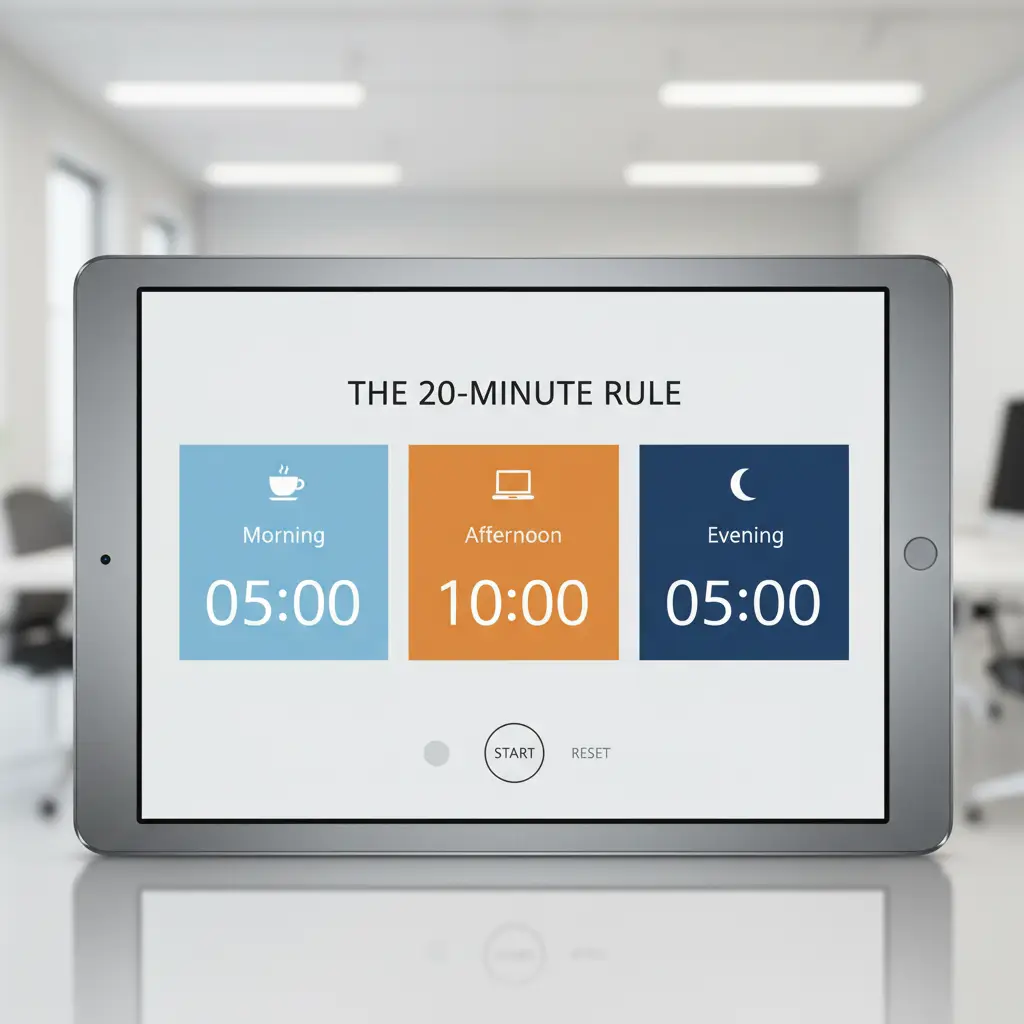
Morning (5 minutes): Review 10 vocabulary “chunks” from your last session—not isolated words, but full phrases you can actually use.
Afternoon (10 minutes): Practice “shadowing” with an Arabic audio clip. Play it, then replay it and try to speak at the same time as the speaker. Don’t just mimic words—mimic emotion, pauses, rhythm.
Evening (5 minutes): Record yourself describing your day in 3-5 Arabic sentences. Yes, it’ll feel awkward at first. Do it anyway.
This simple system—just 20 minutes spread throughout your day—will transform your fluency faster than any intensive weekend course ever could.
Mastering the small talk is key; you can start by practicing how to Learn Arabic Daily Conversation for common everyday scenarios.
Three Core Techniques That Actually Work
Over the years, I’ve tested countless methods with my students. These three consistently produce the fastest results:
1. The Shadowing Technique
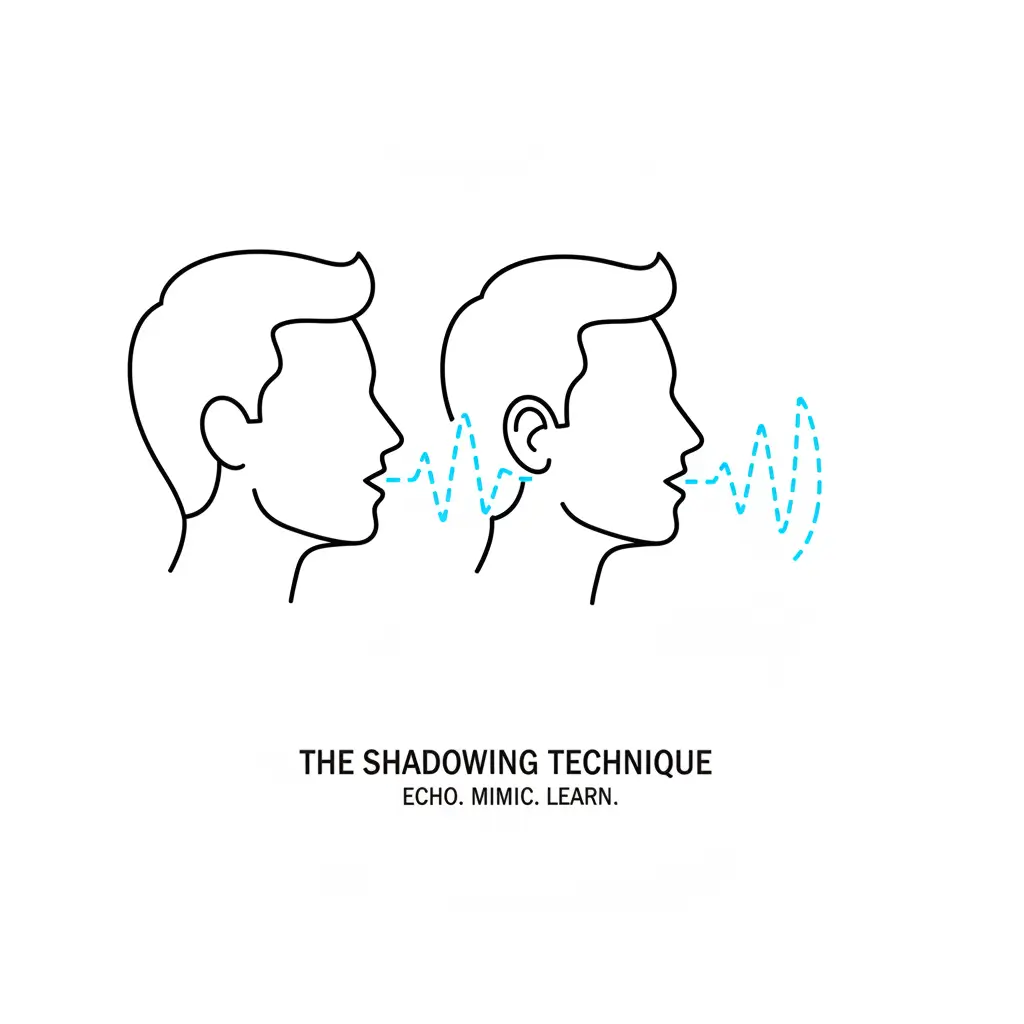
This is the secret weapon of polyglots. Take a 30-second audio clip of a native Arabic speaker. Listen once. Then play it again and try to speak at the same time as the speaker.
Don’t just mimic the words. Mimic the emotion. The pauses. The “music” of their voice.
This trains your mouth muscles to move at the speed of a native speaker. After a few weeks of daily shadowing, you’ll notice your pronunciation improving dramatically.
2. The Inner Monologue Habit
You’re already talking to yourself in English all day. Start swapping small parts of that monologue into Arabic.
Instead of thinking: “I need to go to the kitchen” Think: “أريد أن أذهب إلى المطبخ” (Arid an adhhaba ila al-matbakh)
This builds the mental bridge between your thoughts and Arabic, reducing the “translation lag” during real conversations.
3. Use Fillers Like a Native
Learn Arabic filler words like:
- Ya’ni (يعني – “I mean”)
- Tayyeb (طيب – “Okay/Fine”)
- Wallah (والله – “Honestly/Truly”)
These give your brain time to think without creating awkward silences. Native speakers use them constantly, and so should you.
Online vs In-Person Classes: What’s Actually Better?
I get asked this question at least once a week: “Should I learn online or find a local class?”
Here’s my honest take after teaching both formats for over a decade:
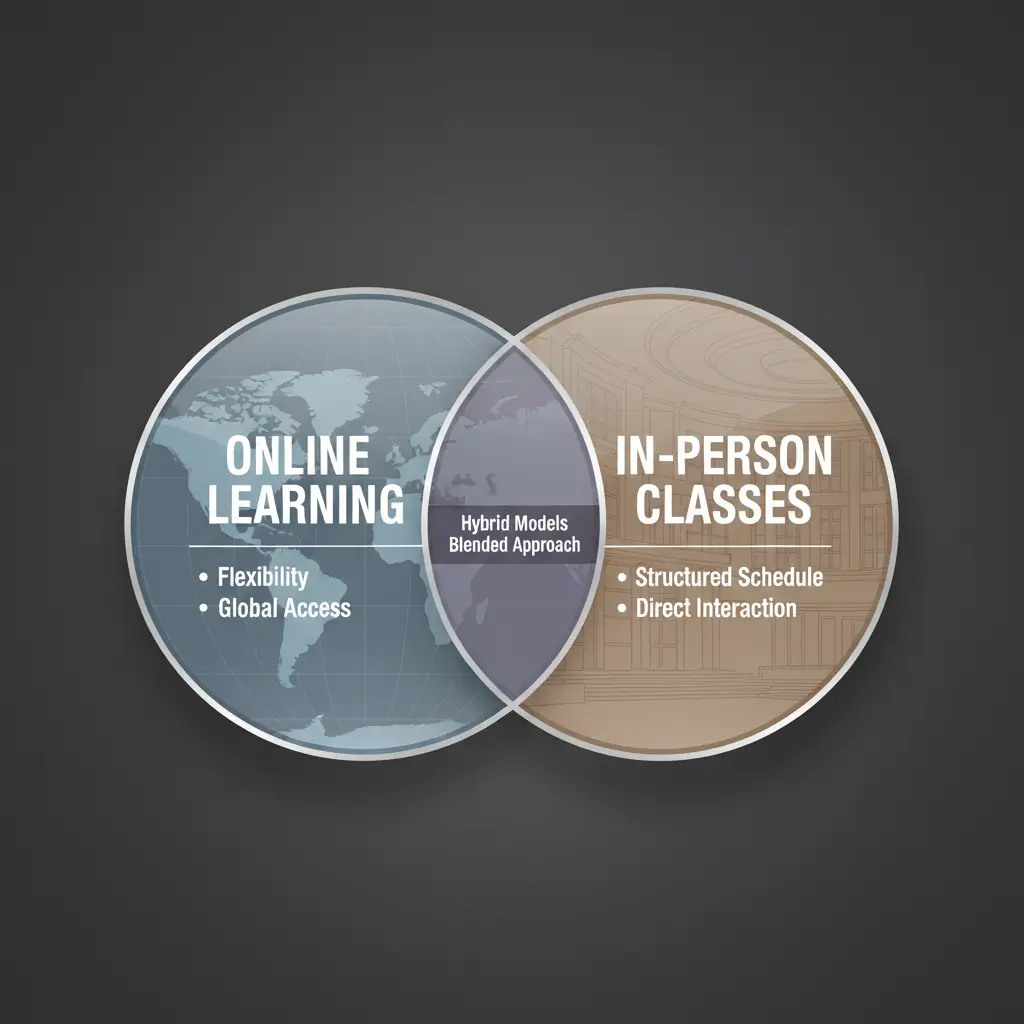
Online Classes Win for Most Adults
Flexibility: Learn at 6 AM before work or 10 PM after the kids are asleep. Your schedule, your choice.
Access to Native Speakers: You’re not limited by geography. You can study with a teacher in Cairo while sitting in London or New York.
Recorded Sessions: Miss a point? Rewatch it. This alone is worth its weight in gold.
Lower Cost: Online classes typically cost 30-50% less than in-person options, with no commute time.
When In-Person Makes Sense
If you’re the type who needs physical presence to stay accountable, in-person might work better. But honestly? Most busy professionals, parents, and retirees find online classes far more sustainable.
Quick Comparison
| Feature | Online Classes | In-Person Classes |
|---|---|---|
| Flexibility | ⭐⭐⭐⭐⭐ | ⭐⭐ |
| Native Teachers | ⭐⭐⭐⭐⭐ | ⭐⭐⭐ |
| Cost | $15-50/hour | $30-80/hour |
| Missed Classes | Recorded | Lost forever |
| Commute | 0 minutes | 30-60 minutes |
My recommendation: Start with online classes. If after 2-3 months you feel you need in-person interaction, then explore local options. But give online a fair shot first.
“For most busy professionals, choosing Conversational Arabic Classes Online provides the perfect balance of flexibility and access to native speakers.”
The Root System: Your Vocabulary Superpower
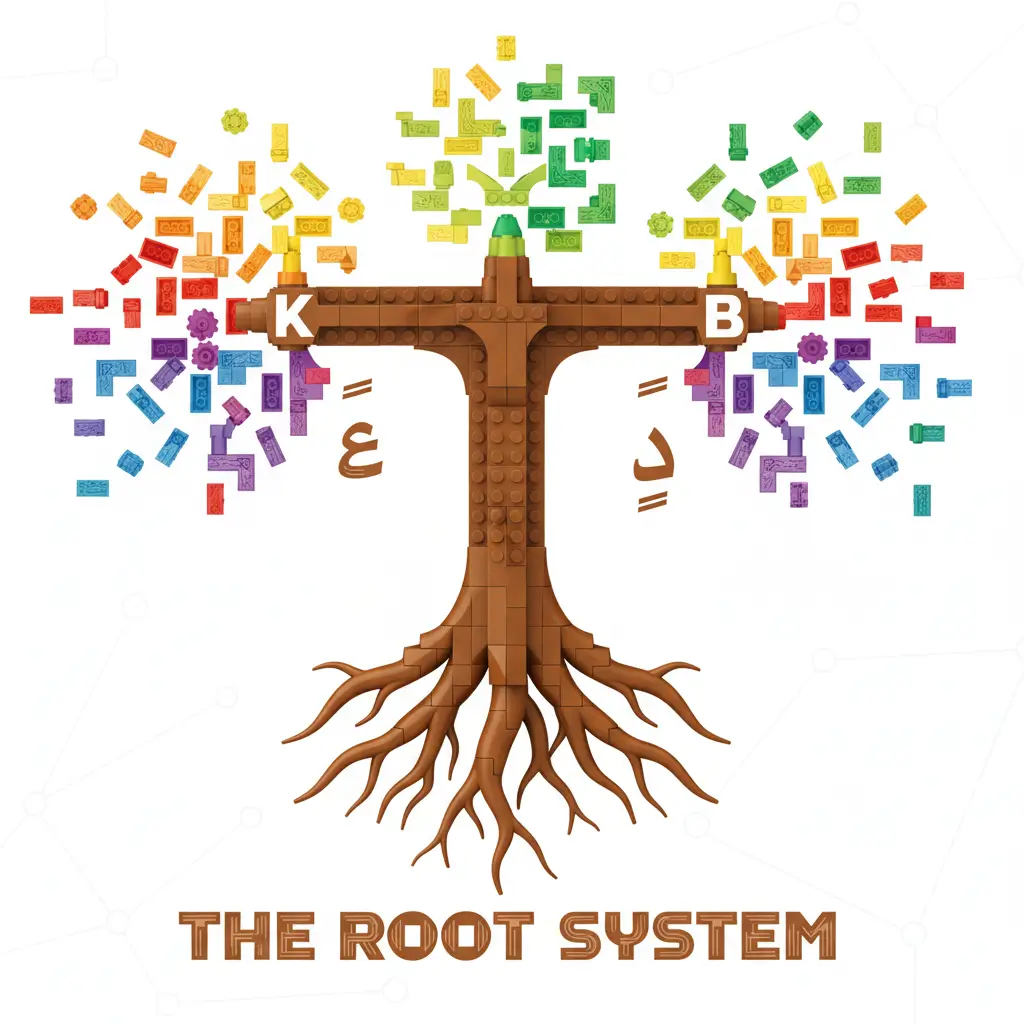
Here’s where Arabic actually becomes easier than English.
Instead of teaching you 50 different, isolated verbs, I teach my students the “root system.” Almost every Arabic word is built from a 3-letter root.
We believe that language learning shouldn’t be stressful, which is why we’ve made Arabic Conversation Online Made Simple for learners of all levels.
Example: K-T-B (ك-ت-ب)
The letters K-T-B always relate to writing.
Once you know this root, you can instantly understand:
- Kataba (كتب) = He wrote
- Kitab (كتاب) = Book
- Maktab (مكتب) = Office/Desk
- Katib (كاتب) = Writer
- Maktaba (مكتبة) = Library
See the pattern? Instead of memorizing 5 separate words, you learned one root and can now “guess” related words.
This turns vocabulary acquisition into a game of logic rather than brute memorization. Once this clicks for students, their vocabulary retention typically doubles.
From Beginner to Confident Speaker: The Path

Let me walk you through what realistic progress looks like for adult learners:
Months 1-2: Foundation Phase
Focus: Survival phrases, greetings, basic sentence structure
What you’ll be able to do:
- Introduce yourself
- Order food at a restaurant
- Ask for directions
- Handle basic small talk
Daily Practice: 20-30 minutes (shadowing + conversation practice)
Example Student: Mark, 47, started from absolute zero. By week 8, he was ordering food in Arabic at restaurants and chatting with taxi drivers during his Dubai trip.
Months 3-4: Building Confidence
Focus: Expanding vocabulary, role-playing scenarios, grammar in context
What you’ll be able to do:
- Discuss your work and hobbies
- Handle phone conversations
- Express opinions and preferences
- Navigate travel situations independently
Daily Practice: 30-40 minutes (+ weekly live conversation sessions)
Example Student: Nora, 32, combined online lessons with role-playing. By month 4, she was discussing work projects with Egyptian colleagues naturally.
Months 5-6: Conversational Fluency
Focus: Complex discussions, cultural nuances, spontaneous conversation
What you’ll be able to do:
- Debate topics and express complex thoughts
- Understand news and media
- Adjust your speech for formal vs informal contexts
- Think in Arabic without translating
Daily Practice: 40-60 minutes (immersion + conversation)
Example Student: Hassan, 38, used intensive daily drills. By month 6, he was handling business calls and negotiations in Arabic confidently.
Practical Tips You Can Use Today
Here are strategies I’ve seen work with hundreds of students:
1. Label Your World
Put Arabic sticky notes on everything in your house. Every time you see باب (door), كرسي (chair), or ثلاجة (refrigerator), you’re reinforcing vocabulary without “studying.”
2. Record and Compare
Record yourself reading a simple dialogue. Then listen to a native speaker reading the same text. Compare. You’ll immediately hear where your pronunciation needs work.
3. Find Your “Why”
Write down your specific reason for learning Arabic. Not “it’s interesting”—be brutally specific. “I want to negotiate contracts in Arabic” or “I want to read the Quran and understand every word.”
Put this somewhere visible. On tough days, this reminder will keep you going.
4. Practice Role-Plays
Don’t just learn phrases—practice them in context:
- Ordering food at a restaurant
- Asking a shopkeeper about prices
- Introducing yourself at a business meeting
- Discussing weekend plans with a friend
The more realistic your practice, the more confident you’ll be in real situations.
Should You Learn Modern Standard Arabic or a Dialect?
This is probably the second most common question I get.
Here’s my straightforward answer: Start with Modern Standard Arabic (MSA), then add a dialect based on your needs.
Why MSA First?
Universal Understanding: MSA is understood across all 22 Arab countries. Dialects are region-specific.
Grammar Foundation: MSA gives you the grammatical structure that makes learning dialects much easier later.
Reading and Writing: All formal documents, news, and books use MSA.
Professional Credibility: If you need Arabic for business or academic purposes, MSA is non-negotiable.
When to Add a Dialect
After 3-4 months of MSA, consider adding a dialect if:
- You’re traveling to a specific region (Egyptian for Egypt, Levantine for Syria/Lebanon/Jordan, Gulf for Saudi/UAE)
- You work with people from a particular country
- You watch a lot of Arabic media from one region
My typical recommendation: Learn MSA for reading, writing, and formal communication. Practice Egyptian dialect for daily conversation (it’s the most widely understood due to Egyptian media).
Travel-Ready Arabic: Essential Phrases
Greetings:
- السلام عليكم (Assalamu alaikum) – Hello
- كيف حالك؟ (Kayf halak?) – How are you?
- شكراً (Shukran) – Thank you
Navigation & Shopping:
- أين…؟ (Ayna…?) – Where is…?
- كم الثمن؟ (Kam al-thaman?) – How much?
- أريد… (Arid…) – I want…
- لا أفهم (La afham) – I don’t understand
Practice these until automatic, and you’ll navigate most travel situations confidently.
Maintaining Long-Term Fluency
Getting to conversational fluency is one thing. Maintaining it is another.
Daily Exposure (15-30 minutes):
- Listen to Arabic podcasts during commutes
- Watch one Arabic show episode weekly
- Read Arabic news headlines daily
Weekly Practice (1-2 hours):
- Schedule conversation sessions with a tutor
- Join online Arabic discussion groups
The Golden Rule: Never let more than 3 days pass without Arabic exposure. Once you break the streak, momentum becomes harder to rebuild.
Success Stories: Real Students, Real Results
Ali’s Business Breakthrough
Ali, 42, needed Arabic for his import-export business. He combined online classes with weekend in-person meetups. Within six months, he was negotiating deals and building relationships with Arabic-speaking partners. His revenue increased 30% that year.
His secret: “I treated every supplier call like a conversation lesson. Even my mistakes became learning opportunities.”
Maya’s Travel Confidence
Maya, 29, wanted to travel across the Middle East independently. She focused on online conversation classes and daily 30-minute speaking exercises. Three months later, she was navigating markets in Cairo, ordering food in Amman, and chatting with locals in Dubai.
Her tip: “I stopped being embarrassed about my accent. The moment I accepted I’d sound like a learner, I started learning faster.”
Omar’s Late Start
Omar was 50 when he started learning Arabic. He thought he was “too old.” Following a daily routine of 20-30 minute practice sessions and weekly tutor meetings, he reached conversational fluency in just 4 months.
His insight: “Age is just a number. Consistency is what matters. Twenty minutes every single day beat any weekend crash course.”
Common Mistakes to Avoid
1. Waiting to Be Perfect: Start speaking from day one, even if it’s just “Ana ismi…” (My name is…). Don’t wait until you “know enough.”
2. Ignoring Pronunciation Early: Fix pronunciation in the first month. Bad habits fossilize quickly and take months to correct later.
3. Studying Without Speaking: Grammar books won’t make you fluent. Speaking must be part of your daily practice.
4. Learning in Isolation: Find a conversation partner, tutor, or online community. Solo learning is the slowest path.
5. Inconsistent Practice: Daily 30 minutes beats weekly 5-hour marathon sessions every time.
Frequently Asked Questions
How long does it take to learn Arabic as an adult? Most adults achieve conversational fluency in 6-12 months with consistent daily practice (30 minutes). Advanced proficiency takes 18-24 months.
Is Arabic harder for adults than kids? Not really. Adults have stronger focus and motivation, leading to faster progress in structured programs. Kids pick up pronunciation easier, but adults excel at grammar and vocabulary.
Can I learn Arabic if I’m over 50? Absolutely. Age isn’t a barrier. I’ve had students in their 60s and 70s achieve fluency. The right method and daily practice work at any age.
Should I learn Modern Standard Arabic or a dialect first? Start with MSA for foundation, then add a dialect based on your needs (Egyptian for general use, Levantine for Syria/Lebanon, Gulf for Saudi/UAE).
How much daily practice is enough? 20-30 minutes daily is the sweet spot. Consistency beats duration—daily 20-minute sessions outperform weekly 2-hour sessions by 3x.
Your Next Steps: Start Speaking Today
Learning Arabic conversation as an adult isn’t about reaching some distant “perfection.” It’s about the joy of being understood and the thrill of understanding others.
Whether you’re learning for business, travel, religion, or family, the key is simple: start speaking today—not next month, not when you “know enough grammar,” but right now.
At Alphabet Arabic Academy, we provide the safe space, native expertise, and structured path to take you from silence to confidence. The “silence barrier” is only as strong as your hesitation.
Your action plan:
- Define your specific goal (be brutally honest about why you want this)
- Commit to 20 minutes daily for 30 days
- Find a conversation partner or tutor for weekly practice
- Track your progress and celebrate small wins
- Don’t wait for perfection—start messy, improve gradually
The door is open. The tools exist. The only step left is starting.
Ready to find your Arabic voice? Book a free trial class with Alphabet Arabic Academy and discover how conversation-first learning can transform your journey from months of frustration to months of progress.
Your future Arabic-speaking self is waiting. Let’s make it happen.