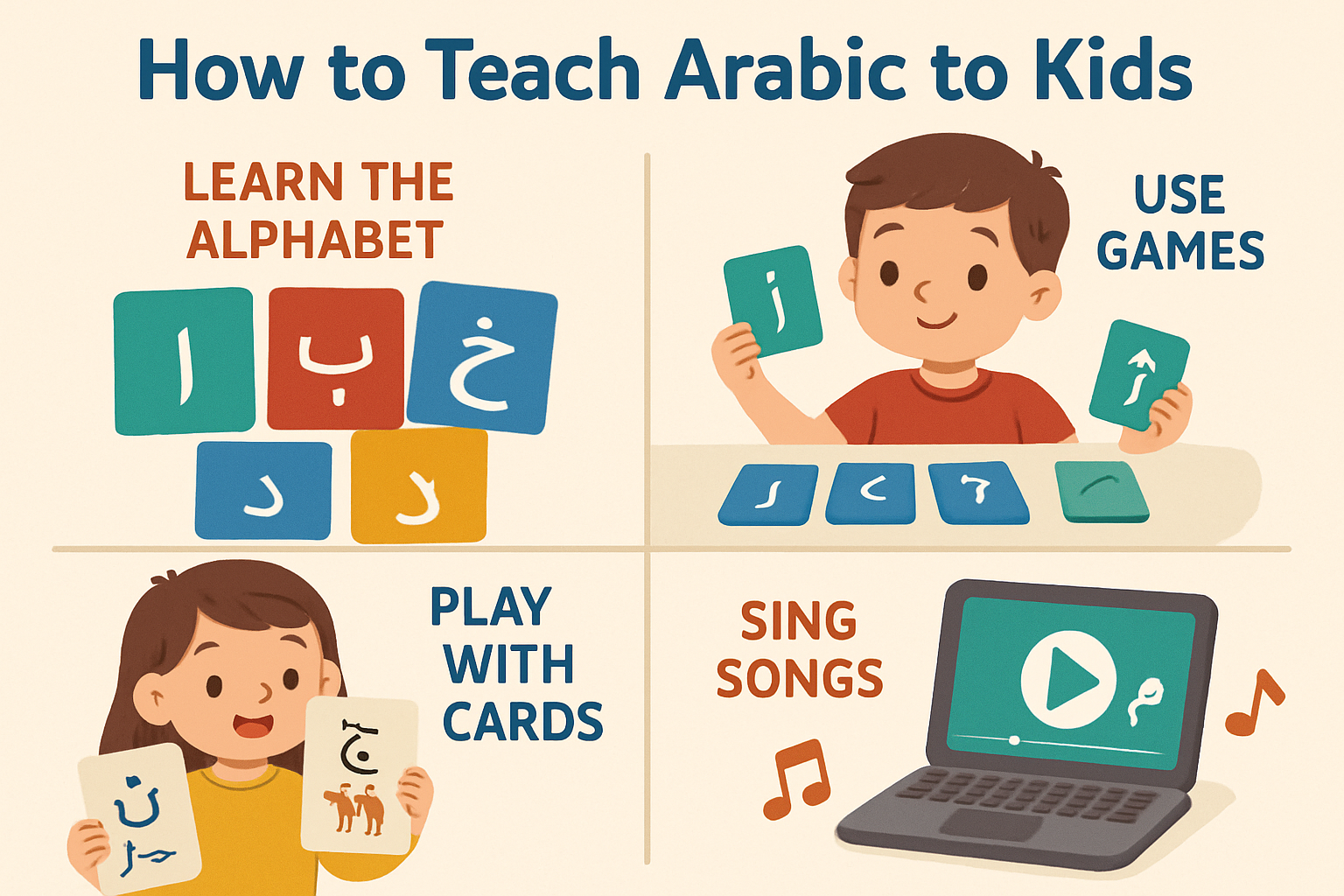
If you’ve ever wondered how to teach Arabic to kids in a way that’s actually fun, you’re not alone. Every parent dreams of seeing their child speak Arabic with confidence — reading, singing, and understanding their culture. Yet, the challenge lies in keeping young learners engaged.
At Alphabet Arabic Academy, we’ve turned that challenge into pure joy by using interactive lessons, playful games, and storytelling that spark curiosity. Whether your child is a total beginner or already knows the Arabic alphabet, this guide will help you discover fresh, exciting ways to teach Arabic effectively at home or online.
How to Teach Arabic to Kids Effectively — the Smart Start
Start with Basic Alphabet Games — the Foundation
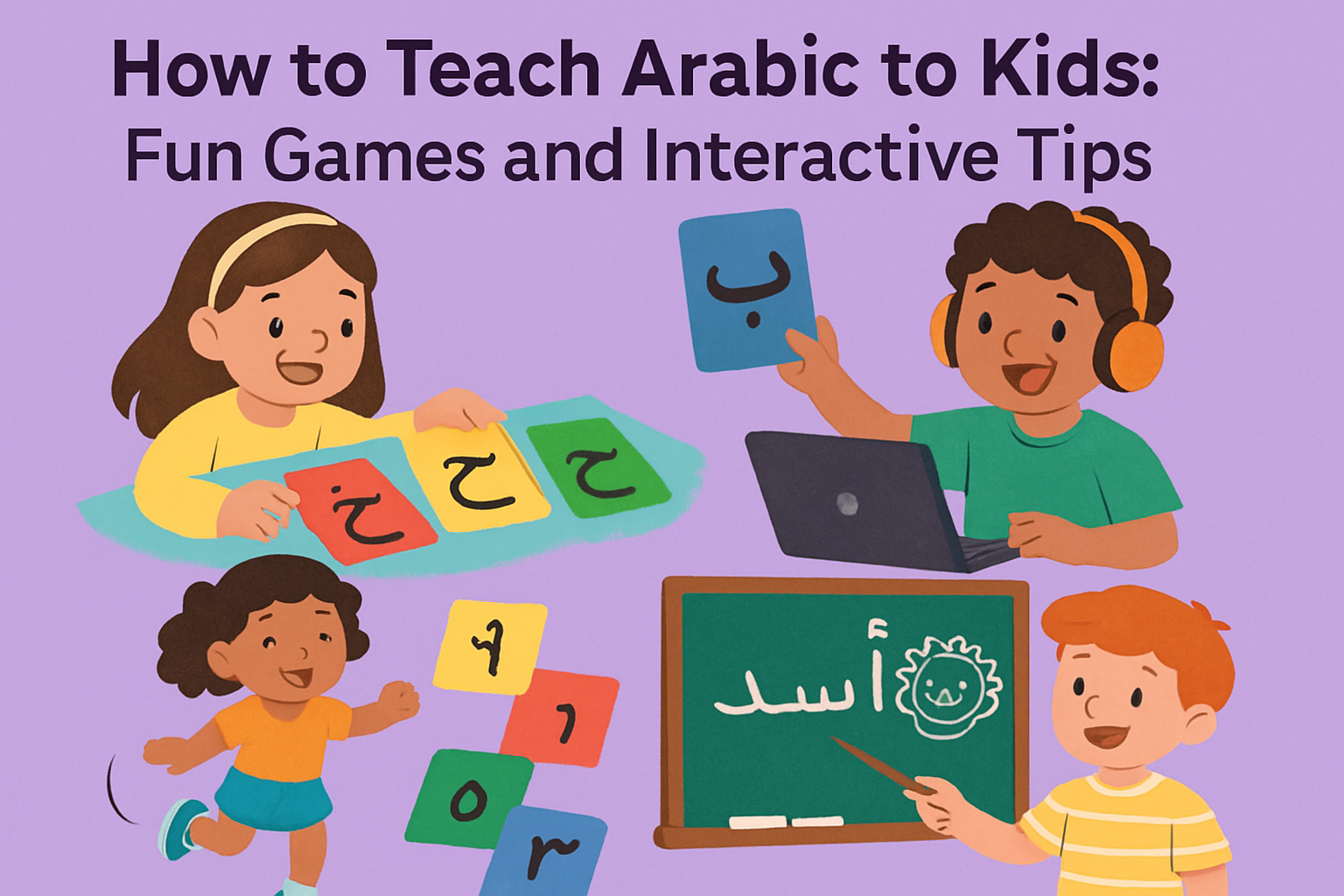
Learning Arabic starts with the alphabet — but it doesn’t have to be boring! Use colorful flashcards, alphabet puzzles, or clay modeling to help your child form each letter. Turn recognition into playtime:
- Create a “Find the Letter” treasure hunt.
- Use magnetic letters on the fridge to spell words together.
- Celebrate each milestone — like learning the letter ب or م — with small rewards.
Children remember through repetition and fun visuals, so keep the energy lively and praise every step forward.
Use Visual Aids for Vocabulary Building — the Creative Way
Kids absorb words faster when they see and hear them in action. Try using:
- Picture books and Arabic cartoons.
- Story cards featuring common words (e.g., بيت, قطة, تفاحة).
- Short interactive videos from Alphabet Arabic Academy, where tutors use gestures, songs, and animations to bring words to life.
Visual learning sticks — especially when combined with movement, rhythm, and color.
Fun Games for Arabic Learning — Making Education a Joy
Play Matching Card Games — the Memory Boost
Games are magic for kids’ brains. Use Arabic-English matching cards to pair words and meanings, or let your child match pictures to Arabic words. You can even play a “guess the word” game using emojis — fun, simple, and effective!
Incorporate Role-Playing Activities — the Confidence Builder
Pretend play works wonders. Set up mini role-plays like:
- Shopping at the market: “بكم هذا؟” (How much is this?)
- Visiting a friend: “كيف حالك؟” (How are you?)
Through imagination, kids not only learn Arabic but live it — and that’s where true language confidence begins.
Interactive Tips for Kids’ Arabic Lessons — Let’s Get Creative
Employ Hands-On Crafts Projects — the Artistic Touch
Kids love creating! Use Arabic letters in crafts:
- Paint each letter with glitter.
- Build words using colored clay.
- Design “My Arabic Word of the Day” posters for their room.
This tactile method strengthens memory and builds fine motor skills while keeping learning deeply enjoyable.
Add Music and Songs Routines — the Happy Habit
Arabic songs are pure gold for children’s memory. Start the day with nursery rhymes or Arabic ABC songs. Singing activates rhythm and language centers in the brain — helping kids memorize faster and pronounce better.
For a full library of songs and rhymes, explore our fun learning collections at Alphabet Arabic Academy.
Storytelling in How to Teach Arabic to Kids — The Magic Connection
Create Simple Folktale Adaptations — the Heartfelt Method
Stories are how children fall in love with a language. Retell Arabic folktales in simple words — like “The Lion and the Clever Rabbit” — using expressive voices and gestures. Add drawings or puppets to make it immersive.
Build Character-Based Dialogues — the Expressive Practice
Encourage your child to act as characters using Arabic phrases.
Example: Omar and Hana go to school — they talk, laugh, and learn greetings like “صباح الخير!”
Story-based learning turns abstract words into memorable life scenes.
Best Apps for Arabic Education — Modern Learning Tools
Select Interactive Language Apps — the Digital Boost
From tracing letters to voice recognition, today’s apps make learning Arabic dynamic. Choose ones designed for kids, with animation and sound. Apps like those used in Alphabet Arabic Academy’s online program combine games, visuals, and speech exercises.
Integrate Gamified Learning Tools — the Engaging Strategy
Gamification keeps kids motivated — they earn stars, levels, or badges for progress. It turns learning into a game where effort feels like adventure.
Daily Practices to Master Arabic — Small Steps, Big Growth
Establish Short Daily Exercises — the Mini Habits
Consistency beats intensity. Set a routine of 10–15 minutes daily. Focus on small goals:
- One new word a day.
- A mini song after breakfast.
- A bedtime story in Arabic.
Encourage Peer Group Sessions — the Social Boost
Kids thrive when learning together. Pair them with a sibling or friend for short practice games or mini storytelling sessions — you’ll be amazed how quickly they improve when it feels like playtime.
Involving Family in Arabic Teaching — A Shared Journey
Organize Family Storytime Events — the Bonding Activity
Gather the family for weekly Arabic story nights. Rotate storytellers, include snacks, and let everyone join in. You’ll strengthen both language and family ties.
Promote Home-Based Conversations — the Real Practice
Sprinkle Arabic words into daily talk — “مرحبا” for hello, “شكراً” for thanks. Even simple exchanges build familiarity. Parents who learn with their kids inspire stronger confidence and curiosity.
Tracking Progress in Kids’ Arabic — The Achievement Path
Use checklists to monitor vocabulary, pronunciation, and comprehension. Encourage your child to track their own milestones with stickers or charts — celebrating every new letter or phrase learned.
Alphabet Arabic Academy’s instructors also provide personalized progress reports to keep learning goal-oriented and rewarding.
Cultural Activities for Arabic Immersion — Living the Language
Explore Traditional Food Tastings — the Sensory Fun
Cook Arabic dishes together — hummus, falafel, or dates — and teach their names in Arabic. Kids love learning through taste and smell.
Participate in Festival Celebrations — the Joyful Experience
Immerse your child in Arabic holiday traditions like Eid, Ramadan, or cultural fairs. It connects the language to community, values, and identity.
FAQs
What age works best for starting Arabic lessons?
Between 3 and 6 is ideal — when children are naturally curious and quick to absorb new sounds.
Which games help kids learn Arabic fastest?
Alphabet puzzles, matching cards, and singing games work wonders for memory and pronunciation.
How can parents support Arabic education at home?
Engage daily: speak Arabic phrases, watch Arabic cartoons, and use storytelling before bed.
Should I focus on the alphabet first?
Yes — start with letters and their sounds, then move toward short words and phrases.
What are the best Arabic apps for kids?
Look for interactive, gamified apps designed for beginners. Our online platform offers structured, tutor-led lessons for all ages.
🎉 Ready to make Arabic part of your home?
Join Alphabet Arabic Academy today and let your child experience the joy of learning Arabic through fun, games, and connection.
👉 Contact us here to book a free trial class!