Understanding Arabic Script Basics
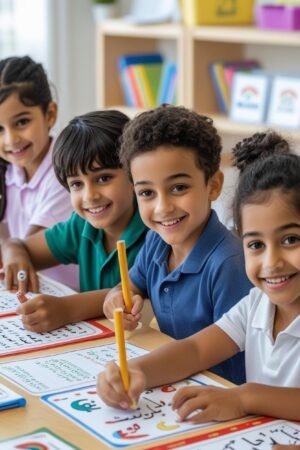
Learning Arabic writing for kids isn’t just about tracing letters — it’s about connecting with a beautiful and meaningful language. Arabic script flows right to left, and each letter has its own charm, curve, and rhythm that sparks curiosity in young learners.
Key Letters and Shapes
Arabic has 28 letters, and most change shape depending on their position in a word. Start by showing children how letters like ب (baa), ت (taa), and ث (thaa) share the same base form but differ in dots. Visual association helps children remember faster.
Forming First Words
Once your child recognizes individual letters, guide them to connect letters into words like “باب” (door) or “بيت” (house). This stage introduces the idea that Arabic writing is both creative and logical, encouraging kids to see patterns rather than memorizing isolated shapes.
Fun Ways to Teach Arabic Letters
Interactive Games for Learning
Turn every lesson into playtime! Try letter-matching games, flashcard challenges, or digital tracing games that let kids write Arabic letters with animation. Using color and sound keeps the brain engaged and helps develop fine motor skills.
Daily Practice Routines
Short, consistent practice wins over long sessions. Just 10–15 minutes daily of tracing, copying, or writing favorite words can transform handwriting. Combine writing with storytelling — for example, write the word for “moon” after reading an Arabic bedtime tale.
Essential Tools for Arabic Writing
Recommended Workbooks
Choose printable Arabic worksheets with dotted letters and gradual difficulty. They guide your child from tracing to independent writing. Make sure they include both isolated and connected letter forms, preparing kids for real reading.
Digital Apps for Practice
Modern learning means combining handwriting with technology. Use interactive Arabic apps that track progress, play writing sounds, and reward completion. These keep children excited while improving handwriting coordination.
Arabic Writing for Kids Practice
Simple Daily Exercises
Start with writing one letter a day. Use large spaces at first to help with stroke control, then narrow it down as confidence grows. Encourage your child to say the sound aloud while writing — it connects speech and motion for faster learning.
Tracing and Copying Techniques
Tracing is the bridge between recognition and fluency. Use printable tracing sheets or sand trays to make it tactile. Kids can trace with fingers, crayons, or stylus pens — the goal is repetition through fun, not pressure.
Overcoming Common Writing Challenges
Fixing Letter Confusion
Some letters look similar, like ج (jeem) and ح (haa) or س (seen) and ش (sheen). Use creative visuals — such as coloring one with stars or drawing tiny “teeth” for seen — to make distinctions stick. Patience and repetition are key.
Engaging Activities for Young Learners
Creative Crafts Projects
Make Arabic writing come alive through arts and crafts! Write letters on clay, cut them from paper, or decorate alphabet cards. The more senses involved, the deeper the memory.
Story-Based Writing Fun
Have your child write their name or favorite Arabic word in stories they create. For example, after reading a story about “أسد” (lion), they can copy and illustrate the word themselves.
Themed Play Sessions
Set weekly themes — like “animals in Arabic” or “colors in Arabic” — and let your child write words that match. This integrates writing into natural play, helping the child connect meaning with movement.
Building Advanced Skills in Arabic
Sentence Construction Basics
Once kids can connect letters into words, it’s time to form short Arabic sentences. Start with phrases like “أنا طفل” (I am a child). Writing full thoughts builds confidence and helps them understand Arabic structure organically.
Parental Tips for Supporting Learning
Home Environment Setup
Create a dedicated Arabic writing corner at home with markers, workbooks, and a display board for written words. Celebrate progress by hanging your child’s Arabic art — positivity builds confidence and motivation.
Advanced Arabic Writing for Kids
Progress Tracking Methods
Use a simple progress chart. Track how many letters, words, or phrases your child can write weekly. Reward achievements with stickers, praise, or short games. This visual motivation keeps learning joyful and goal-oriented.
Don’t Miss These Powerful Resources
FAQs
What age suits Arabic writing for kids?
Usually between 4–7 years, when fine motor skills and focus begin to develop.
How to make Arabic writing fun?
Mix tracing with crafts, songs, and story-based writing to keep the process engaging.
Best tools for Arabic writing practice?
Printable worksheets, tracing apps, and interactive Arabic lessons online.
What if my child confuses letters?
Focus on shape comparison and sound repetition to clarify distinctions.
Should kids learn Modern Standard Arabic or dialect first?
Start with Modern Standard Arabic (MSA). It’s foundational for reading, writing, and Quranic understanding.
Are apps enough?
Apps are great helpers, but combine them with real writing practice for long-term retention.
Should we practice writing or reading first?
Ideally, both together. Reading reinforces writing, and writing strengthens letter recognition.
Is calligraphy good for kids?
Absolutely! It improves hand control and creativity while deepening appreciation for Arabic art.
Ready to help your child master Arabic writing in 2025? ✨
Join Alphabet Arabic Academy today and start your child’s fun, structured journey to fluent handwriting and confidence in Arabic!