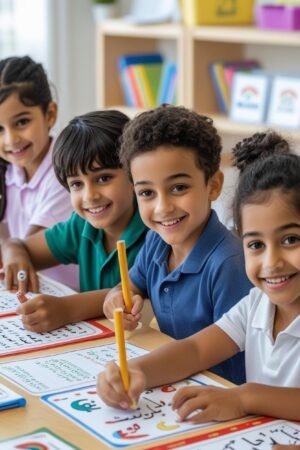
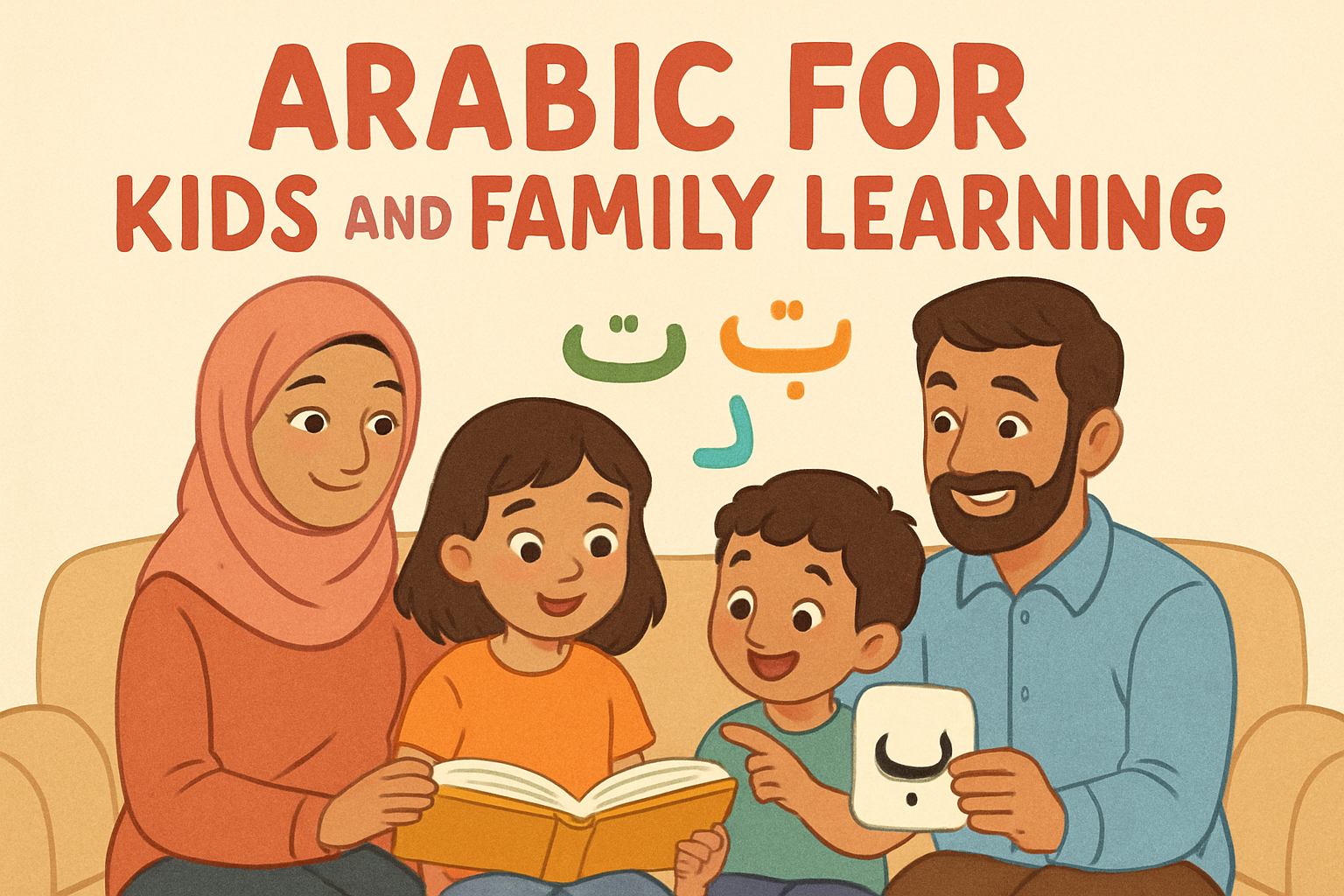
Arabic language for children and family learning Your child will learn Arabic at the hands of expert and specialized teachers from Egypt and with the latest educational methods from scratch to professionalism, whatever his level or free time. We will teach him the official classical Arabic language, which is the language of the Holy Quran. Do not hesitate to book with us and ask about your special offer when you complete the article to the end. Send us a message.
Learning Arabic as a family is one of the most beautiful ways to bond — you’re not just learning a language, you’re building a shared experience filled with laughter, connection, and discovery. The keyword Arabic for kids and family learning isn’t just a phrase — it’s a journey of turning language into play, culture into fun, and lessons into memories. Let’s explore creative, exciting, and engaging ways to make Arabic learning a joyful adventure for both kids and parents.
Fun Ways to Teach Arabic for Kids and Family Learning
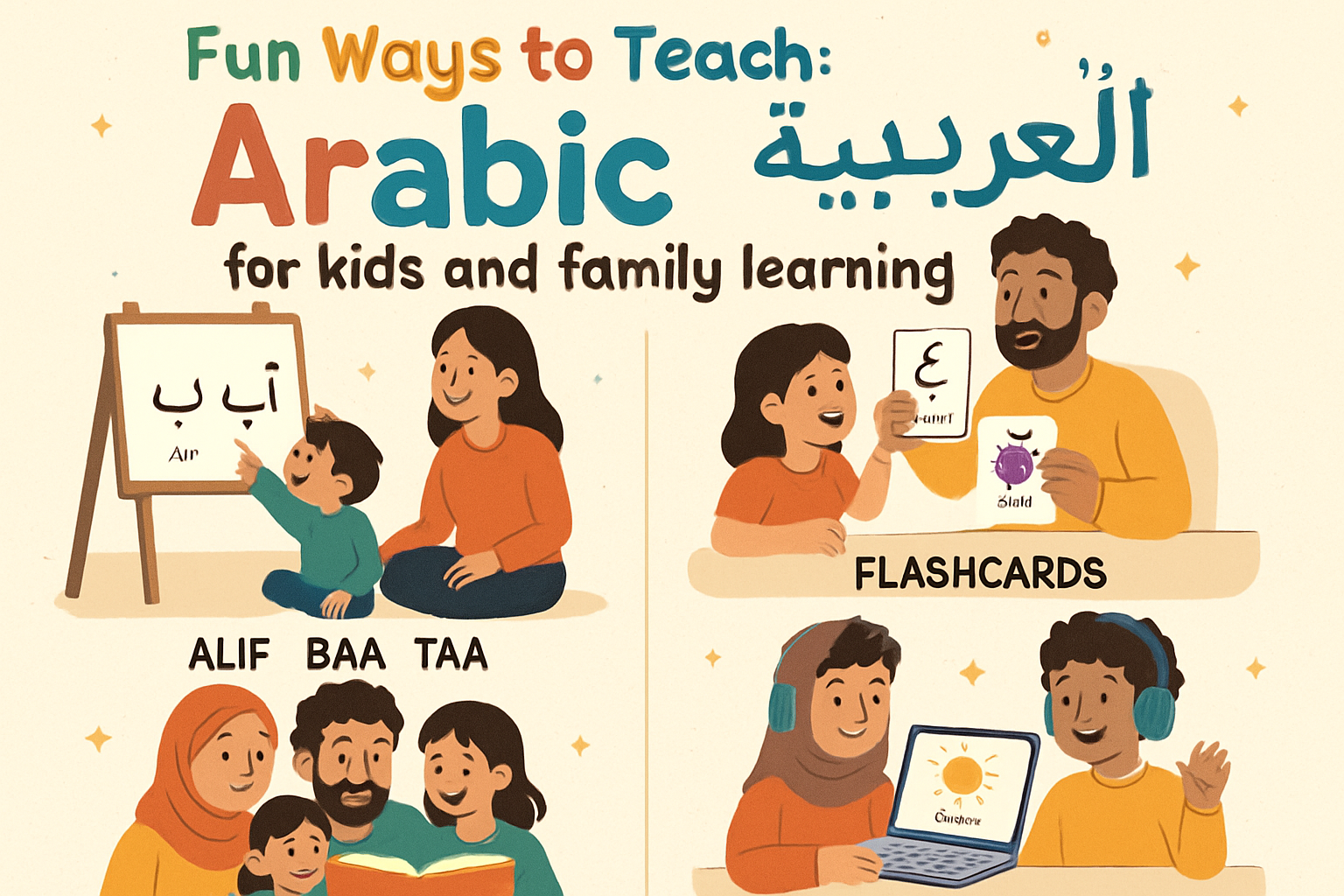
Let’s start with the heart of the matter — fun. Kids learn best when they’re having a blast, and parents enjoy the process even more when it’s interactive and easy to follow. Transform Arabic lessons into daily moments of joy:
- Use colorful flashcards to introduce Arabic letters.
- Turn everyday conversations into mini lessons: ask your child “ما هذا؟” (What’s this?) when naming things around the house.
- Sing Arabic nursery rhymes together — rhythm helps memory.
- Play short videos or cartoons in Arabic to build listening skills.
Discover more fun Arabic learning strategies for kids here”
Learning Arabic isn’t about memorizing — it’s about living the language, together.
Engaging Activities for Arabic Learning — The Family Way
Interactive Play-Based Lessons: Learning through Joy
Kids thrive when lessons feel like games. Build towers labeled with Arabic letters, toss a ball while shouting new words, or use treasure hunts with hidden Arabic clues. These activities connect movement, excitement, and memory — the perfect recipe for learning.
Hands-On Crafts with Arabic Themes: Creativity Meets Culture
Try making Arabic alphabet art, coloring Arabic calligraphy, or designing your child’s name in Arabic letters. Crafts help children recognize shapes and sounds of the language while expressing creativity.
Arabic for Kids and Family Learning — Everyday Simplicity
Simple Daily Vocabulary Building: Step-by-Step Learning
Incorporate Arabic words naturally: say “ماء” for water, “بيت” for house, and “كتاب” for book. Encourage repetition and praise effort over perfection. Repetition in real-life context builds vocabulary fast.
Themed Family Storytime Sessions: Learn and Bond
Choose Arabic storybooks about kindness, animals, or family. Discuss them in both English and Arabic. You can even record yourself reading and let your kids listen later — hearing familiar voices boosts comfort and retention.
Cultural Stories in Arabic — Tales that Connect Generations
Traditional Tales for Young Learners: Wisdom in Simplicity
Introduce classic tales from Arab heritage. These stories carry moral lessons and language rhythm that kids adore.
Heroic Adventures Inspiring Curiosity: Modern Meets Classic
Mix traditional tales with modern heroes — maybe a child exploring Arabic countries or learning new letters on adventures. It makes the culture alive and relatable.
Interactive Games for Beginners — Learning by Playing
Educational Card Games in Arabic: Fast and Fun Learning
Create memory cards with Arabic letters or images. Each match becomes a win and a word learned! Gamification transforms study time into playtime — the secret to keeping kids motivated.
Family Bonding through Arabic — Language of Love
Shared Meal-Time Language Practice: Delicious Dialogue
Turn meals into learning moments. Label food items in Arabic or play a game where each family member must say one new Arabic word before eating.
Joint Project-Based Activities: Teamwork for Learning
Create a “family Arabic wall” with sticky notes for new words learned daily. Everyone participates — even the adults!
Best Online Resources for Arabic — Learning Made Easy
Top Video Tutorials for Families: Visual and Fun
Platforms like Alphabet Arabic Academy offer child-friendly video lessons that simplify Arabic through visuals, sounds, and repetition. They help kids read, write, and pronounce Arabic with fun animations.
Preferred App Recommendations for Kids: Smart Learning Tools
Look for apps that teach Arabic through games, songs, and interactive quizzes. Apps like these make Arabic accessible anywhere — even during car rides.
Pronunciation Techniques for Learners — Speaking Clearly
Fun Sound Imitation Exercises: Listen, Repeat, Laugh
Arabic sounds can be tricky — like the letters ع (‘Ayn) or ق (Qaf). Encourage kids to mimic animal sounds or funny voices while learning pronunciation. It’s playful and effective!
Creative Art Projects in Arabic — Imagination in Motion
Drawing and Coloring Language Sheets: Visual Learning Joy
Let kids color Arabic letters or connect dots to form words. Visual engagement cements recognition — plus, art keeps learning light and enjoyable.
Arabic for Kids and Family Learning — Music and Motivation
Musical Rhymes and Songs Together: Rhythm of Language
Singing Arabic songs together turns repetition into rhythm. Start with simple alphabet songs and move to short vocabulary songs.
Progress Celebration Rituals: Keep the Spirit Alive
Celebrate each milestone — like learning the alphabet or reading the first Arabic word. Make a small “Arabic Certificate Night” to reward progress and motivate continued learning.
FAQs – Your Questions Answered
Q1: What age suits Arabic for kids and family learning?
Children as young as 3 can begin learning Arabic through songs and visuals, while older kids benefit from structured lessons.
Q2: How to make Arabic learning engaging for families?
Mix play with purpose: games, cooking activities, and storytelling in Arabic.
Q3: Are free tools available for Arabic for kids and family learning?
Yes, you can find plenty of free worksheets, apps, and Arabic videos online — or join structured programs at Alphabet Arabic Academy for guided support.
Q4: Should I focus on the alphabet first?
Yes. Start with Arabic letters and basic sounds before introducing words or phrases.
Q5: How do I make it fun enough that my child doesn’t lose interest?
Use music, role-play, and short lessons. Keep sessions light and filled with laughter.
Q6: What are the best Arabic apps for kids?
Apps that combine games, visuals, and storytelling tend to keep kids most engaged.
Q7: Should I teach Modern Standard Arabic or a dialect?
Start with Modern Standard Arabic (MSA) — it’s the foundation for reading and writing across all Arab countries.
Q8: How long does it take a child to start speaking Arabic?
With consistent exposure, most children can start forming simple Arabic sentences within 3–6 months.
Q9: Why is it easier to learn Arabic as a child?
Because the brain is more flexible — children absorb pronunciation and rhythm naturally.
Q10: Looking for fun Arabic learning for your child?
Join Alphabet Arabic Academy, where kids and families enjoy interactive online Arabic courses that blend education, fun, and cultural storytelling.
Ready to start your Arabic learning journey as a family?
Visit Alphabet Arabic Academy Contact Page to book your first family Arabic lesson and turn your home into a lively, bilingual world of discovery. 🌟