Discover Interactive Arabic Classes for Kids
Welcome to a world where Arabic learning meets fun, creativity, and imagination! Interactive Arabic classes for kids are not just about memorizing words—they’re about feeling the language. Children dive into colorful lessons, dynamic games, and interactive activities that spark curiosity. Every child, from beginner to advanced, learns through motion, voice, visuals, and digital play. The goal? To make learning Arabic an experience they’ll never forget.
Engaging Methods Boost Learning
Children learn best when they’re having fun. That’s why interactive Arabic lessons use innovative teaching methods such as digital flashcards, live roleplay, storytelling, and song-based memorization. Each method is tailored to the child’s age and learning level, ensuring progress feels natural and exciting. Our native Arabic teachers focus on building confidence—making each class a safe and enjoyable space for every learner.
Cultural Stories Enhance Immersion
Stories hold magic. Through captivating cultural tales from Arabic heritage, kids get to live the language—learning about traditions, Islamic values, and daily conversations. This immersive approach helps them understand how words carry meaning in real-life situations. When a child hears a story about “Noor” or “Hassan,” they connect emotionally with the characters and vocabulary, turning language into something deeply personal.
Benefits of Interactive Arabic Classes for Kids
Interactive Arabic classes go far beyond textbooks—they create real-world learning. Here’s what makes them so powerful:
Cognitive Skills Development Through Play
Games and puzzles don’t just entertain—they train memory, focus, and problem-solving. When a child matches Arabic letters or connects words with images, they’re building long-term memory and enhancing logical thinking. It’s learning science disguised as playtime!
Social Bonds via Group Activities
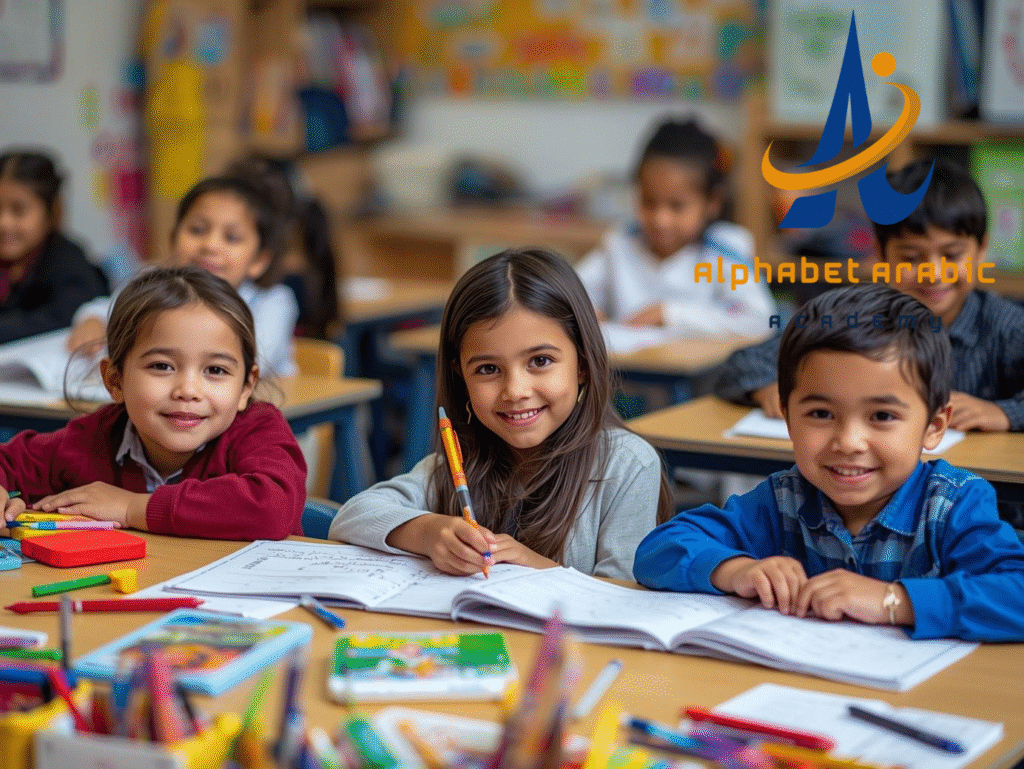
Arabic classes often include small group sessions where kids chat, sing, and collaborate. These moments teach teamwork, patience, and communication. Children make friends from around the world, all united by the joy of learning Arabic together. It’s education and social growth rolled into one.
How Kids Interact in Arabic Classes
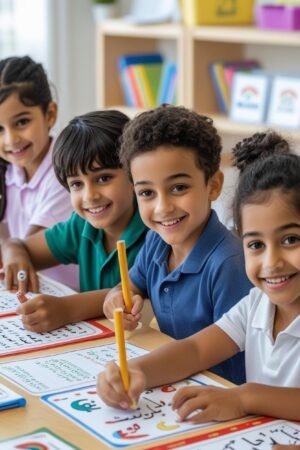
Online or in-person, interactive Arabic classes are designed for active participation. Children aren’t just listening—they’re speaking, reading, and engaging every minute.
Hands-On Tools for Language Practice
Kids use colorful worksheets, online whiteboards, Arabic learning apps, and even printable flashcards. These tools keep their hands and minds busy. Teachers also assign simple tasks—like reading short Quranic verses or labeling objects at home—to reinforce Arabic in everyday life.
Fun Activities in Interactive Sessions
Arabic class is never boring when every lesson feels like an adventure!
Games Make Vocabulary Memorable
Instead of memorizing endless lists, kids play vocabulary games that blend fun and repetition. Word bingo, picture match, and “Find the Arabic Word” challenges make vocabulary stick effortlessly. These playful methods turn learning into a daily habit, not a chore.
Songs Reinforce Pronunciation Skills
Arabic songs are a key feature of beginner classes. Through catchy rhythms and repetitive lyrics, kids improve pronunciation and rhythm naturally. Singing words like “Alif, Baa, Taa” or “Sabah Al Khair” trains their ears and tongues to pronounce Arabic sounds smoothly—just like native speakers.
Stories from Interactive Arabic Classes for Kids
Real-Life Success Tales
Meet Amal, an 8-year-old from Canada, who joined our online Arabic course with zero experience. After three months, she was singing Arabic songs fluently and reading short sentences confidently. Real stories like Amal’s show that with the right mix of fun and consistency, every child can master Arabic at their own pace.
Parents often share that their children can’t wait for the next class—proof that when learning is joyful, progress happens naturally.
Tips for Maximizing Learning Experience
Best Practices for Home Reinforcement
Consistency is key. Encourage your child to use Arabic outside class—label home objects in Arabic, play Arabic nursery rhymes, and review lessons for 10 minutes daily. These small steps make a huge impact.
Preferred Schedules for Optimal Engagement
For best results, children should take 2–3 Arabic classes per week. This balance allows for steady progress without pressure. Morning sessions work best for young learners when their energy and focus are highest.
Why Choose Alphabet Arabic Academy for Kids?
At Alphabet Arabic Academy, we’ve transformed Arabic learning for kids into a fun, modern experience. Our interactive classes feature live lessons with qualified native teachers, personalized feedback, and engaging Arabic activities for all levels—from beginner to fluent.
Our courses are flexible, affordable, and built to inspire love for the Arabic language. Whether your child is learning Arabic for cultural connection, Islamic studies, or school success, this is where their journey begins.
👉 Start your child’s interactive Arabic adventure today!
Visit our Contact Page to book a free trial or enroll now.
Don’t Miss These Powerful Resources
(Place link here to your main pillar article about “Arabic for Kids”)
FAQs
What ages suit interactive Arabic classes?
Kids as young as 4 years old can start interactive Arabic classes—our lessons are tailored by age and attention span.
How much cost interactive Arabic classes?
Prices vary depending on course type, but at Alphabet Arabic Academy, we keep them affordable for every family.
Are classes online or in-person?
All our sessions are conducted online for your convenience—learn from home anytime!
Should I stay with my child during the lesson?
You don’t have to, but younger learners benefit from light parental support in early sessions.
Are classes recorded?
Yes, many sessions can be replayed for revision or if your child misses a class.
Can my child really learn Arabic through games?
Absolutely. Games are one of the most effective teaching methods for language acquisition in children.
Can you combine Qur’an studies with Arabic lessons?
Yes! Many parents choose integrated courses combining Arabic language and Quranic reading.
Why recommend MSA (Modern Standard Arabic) for beginners?
It gives kids a strong foundation for reading, writing, and understanding Arabic across all dialects.